Sockeye Salmon
The sockeye salmon is the most prized of the Pacific salmon at the table and one of the most visually iconic fish in all of fresh water.
🗓️ Last reviewed: June 2026
Overview
The sockeye salmon is the most prized of the Pacific salmon at the table and one of the most visually iconic fish in all of fresh water. Also called "red salmon" or "blueback salmon," it is famous for its deep red-orange flesh and for the dramatic transformation it undergoes at spawning, when its body turns a brilliant scarlet and its head turns green. Sockeye are anadromous: they hatch in fresh water, migrate to the ocean to grow, and return to fresh water to spawn and die. For anglers in Alaska and the Pacific Northwest, the summer sockeye run is a celebrated event, drawing crowds to rivers like the Kenai and Russian. They do not fight by chasing a meal, which makes them a unique and sometimes humbling target, but a fresh sockeye is one of the hardest-pulling fish of its size and the finest salmon most people will ever eat.
Identification & Appearance
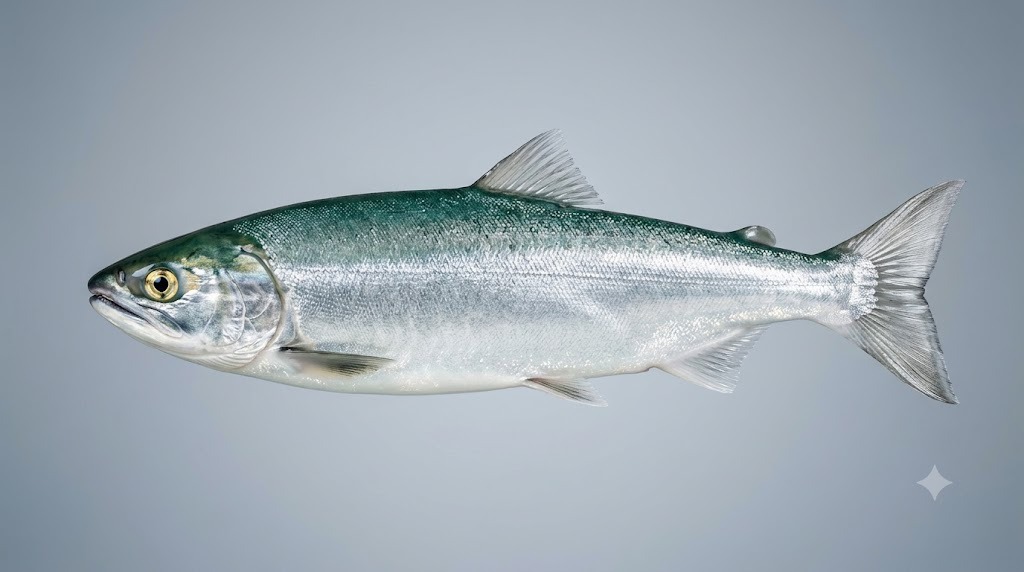
Sockeye change appearance dramatically across their life cycle. In the ocean and as they first enter fresh water, they are bright silver on the sides with a greenish-blue back, which is the origin of the name "blueback." The single best field mark is what is missing: sockeye have very fine or essentially absent spotting on the back and tail, far fewer spots than other Pacific salmon, which is the quickest way to tell them apart. They also have prominent large, glassy eyes with a golden cast. At spawning the change is unmistakable: the body turns a brilliant red and the head turns green, and males develop a humped back, a hooked jaw called a kype, and enlarged teeth. That vivid red-bodied, green-headed spawner is one of the most recognizable images in nature.
Range & Habitat (US waters)
Sockeye are caught primarily in Alaska and the Pacific Northwest, and because they are taken in rivers and lakes they are very much a freshwater-fishing target on the return run. A defining feature of their life cycle is that they require a lake: juveniles typically rear in a freshwater lake for one to two years before going to sea, so sockeye runs are tied to lake-headed river systems. Famous fisheries include the Kenai and Russian Rivers in Alaska and the Columbia River and its tributaries, where fish push upstream toward systems such as Lake Wenatchee and the Okanogan in Washington. The landlocked form, the kokanee, lives its whole life in fresh water and is a popular target in many western lakes and reservoirs. Sockeye are heavily managed, and some stocks are protected: Snake River sockeye are listed as endangered and may not be targeted or kept, so it is essential to know which stock you are fishing.
Behavior & Feeding
Sockeye behavior in fresh water is the key to understanding how they are caught. At sea they are uniquely heavy zooplankton feeders, eating small crustaceans such as copepods and krill, along with some small fish and insects, and that plankton-rich diet is a big reason their flesh is so deeply red-orange. The critical point for anglers is that once sockeye enter fresh water on their spawning run they essentially stop feeding. They are not caught by appealing to hunger and are notoriously reluctant to bite. Instead, anglers in rivers use a legal jaw-hooking drift, often called "flossing," in which a leader is presented through the open mouth of a fish holding in the current so the hook catches in the corner of the jaw; sockeye will also strike small bright flies or lures out of aggression or reflex, especially in clear water and lakes. This is jaw-hooking, which is legal and effective; deliberate snagging or foul-hooking is prohibited, and any fish hooked outside the mouth must be released.
Best Seasons & Times to Catch
Sockeye are a classic summer fishery. In Alaska and the Pacific Northwest the main runs generally come through roughly June through August, though timing varies by river and by run, and some systems see earlier or later pushes. Because openings are tied to escapement, the calendar matters less than the actual run: seasons open and close in-season based on counts and run strength, so checking current forecasts and daily openings is essential before you go. Fish move on tides and flows, and the moving low-light periods around early morning are productive, as are stretches when a fresh wave of fish is pushing through. For the landlocked kokanee, lake fishing runs spring through fall. Always confirm current regulations and limits, which can change week to week as managers respond to the run.
Where to Find Them - Reading the Water
The river game is about finding the fish's migration lane and depth. Sockeye travel upstream in defined paths, hugging current seams and softer water along the bank edges where they can rest and move efficiently. Look for the seams between fast and slow water, inside bends, gravel bars, and the tail-outs of holes where fish funnel through. Walking the bank to locate these travel lanes, then positioning to reach the right lane at the right depth, is the heart of the technique. In clear water you can often sight fish holding and moving. Because sockeye must reach lake-headed systems, you are reading water on a migration route, not searching for ambush cover; find where the fish are concentrated and moving, and you have found your spot. For kokanee in lakes, the fish suspend at specific depths that you find with electronics.
Tackle & Rigs
For river sockeye, the standard is a stout 9 to 10 foot medium or medium-heavy salmon or steelhead rod paired with a sturdy spinning or baitcasting reel, spooled with strong line, often 15 to 30 lb braid or monofilament. The characteristic rig is simple: a weight to hold or tick bottom and a short leader to a single, often barbless, sparse fly or bare hook, drifted at the fish's holding level. The "Russian River fly" and similar small bright sockeye and coho patterns are traditional. Single barbless hooks are required in many of these fisheries, so check the rules before tying up. For kokanee trolling in lakes, the setup is entirely different: light rods, downriggers to reach precise depth, small dodgers or flashers, and tiny pink or red hoochies or spinners, frequently tipped with shoepeg corn.
Best Baits & Lures
Because sockeye are not feeding in fresh water, lure choice is about color and presentation rather than imitating food. In rivers, small sparse bright flies in red, pink, orange, and chartreuse are the standard, along with small spinners, all fished at the fish's depth where they will be drawn through the strike zone. Getting the right color in front of holding fish matters far more than any "tasty" quality. Many sockeye fisheries restrict or prohibit bait entirely, so reflect that and check local rules before adding scent or natural offerings. For kokanee in lakes, small spoons, hoochies, and spinners run behind a dodger are the producers, very often tipped with corn, which is a long-standing kokanee trick. In every case, bright color and correct depth are the deciding factors.
Techniques - How to Fish for It
The river technique is a controlled drift to the holding fish. Cast upstream of a travel lane, let the weight tick along the bottom, and guide the drift so the leader and hook pass through the lane at the fish's level; when you feel the takedown, set firmly to hook the corner of the jaw. The skill is reading the lane and dialing in depth so the hook reaches the fish, then setting cleanly into the jaw rather than foul-hooking. Be ready for a fight: despite not feeding, sockeye pull hard and run powerfully for their size, so strong arms and steady pressure are needed to land them. Walk the bank to find the seams where fish concentrate. Always release any fish hooked outside the mouth. Kokanee technique is the opposite discipline: precise trolling at an exact depth with downriggers and small attractors.
Common Mistakes
The most common error is fishing the wrong depth or lane so the hook never actually reaches the fish, which produces a long, fishless day in a river full of salmon. Other frequent mistakes include foul-hooking fish and failing to release snagged ones, which is both illegal and unethical; horsing these soft-mouthed fish and pulling the hook free during the fight; ignoring in-season closures and daily limits; and using barbed or treble hooks where they are banned. Many anglers also fail because they expect sockeye to chase and bite like a feeding fish, fishing flashy, food-imitating presentations instead of getting a small, sparse fly through the lane at the right depth.
Size, Records & Eating Quality
A typical sockeye runs about 4 to 8 pounds and 20 to 28 inches, making it smaller than a king salmon but prized far out of proportion to its size; larger individuals turn up occasionally. The landlocked kokanee is much smaller, often 10 to 16 inches. The IGFA all-tackle world record sockeye is around 15 pounds, a fish from Alaska's Kenai River. On the table, sockeye are celebrated as some of the best-eating salmon of all, with firm, deep red-orange flesh that is rich, flavorful, and high in oil and omega-3s, which is why they are a premium commercial and table fish. That eating quality is a major draw, but harvest should always be responsible and within current regulations, with protected stocks and foul-hooked fish released.
Pros & Cons (as a target species)
Pros: arguably the best-eating salmon, a hard, powerful fighter for its size, a thrilling summer run that concentrates fish in reachable rivers, a fishery that rewards skill in reading water and dialing in depth, and a simple, affordable terminal rig. Cons: sockeye do not bite in the usual sense and demand a specialized jaw-hooking technique that takes practice; runs are tightly managed with openings and closures that can change in-season; some stocks are endangered and entirely off-limits; popular rivers can be crowded; and barbless, single-hook, no-bait rules apply in many places, so you must stay current on regulations.
Best Suited For
Sockeye fishing suits anglers who enjoy a hands-on river challenge and who care about table quality, since the reward is some of the finest salmon to eat anywhere. They are ideal for those willing to learn a precise, technical method of reading current lanes and presenting at exact depth, and who value fishing within strong conservation rules. Bank anglers who like to walk and find moving fish will thrive on a sockeye run. The kokanee form, by contrast, suits lake anglers who enjoy precision trolling with downriggers and light tackle.
FAQ
What is the best way to catch sockeye salmon in a river? A small, sparse bright fly on a short leader behind a weight, drifted through the fish's travel lane at the right depth, hooking the corner of the jaw on the takedown. Sockeye stop feeding in fresh water, so this legal jaw-hooking drift, not bait that appeals to hunger, is the standard and effective method.
Why won't sockeye bite a normal lure or bait? Once they enter fresh water on the spawning run, sockeye essentially stop feeding. They are caught by reflex and aggression strikes on small bright flies and lures, and by jaw-hooking drifts, rather than by imitating food, which is why presentation and depth matter far more than any "tasty" offering.
Do I need to worry about regulations and closures? Yes, more than with almost any other freshwater fish. Sockeye seasons open and close in-season based on escapement counts, daily limits are strict, single barbless hooks and no-bait rules are common, and some stocks such as Snake River sockeye are endangered and fully protected. Always check current run forecasts, openings, and local rules before fishing.
What is the difference between sockeye and kokanee? They are the same species, Oncorhynchus nerka. Sockeye are the sea-run, anadromous form that grows in the ocean and returns to spawn, while kokanee are the landlocked form that lives its whole life in fresh water, stays much smaller, and is typically caught by trolling small attractors in lakes.
Are sockeye salmon good to eat? They are outstanding, widely considered among the best-eating salmon, with firm, deep red-orange flesh that is rich and high in healthy oils. That table quality is the main reason anglers pursue them, and harvest should always stay within current regulations, releasing any protected stock or foul-hooked fish.