Tiger Trout
The tiger trout is one of the most striking fish you can catch in fresh water: a sterile hybrid that crosses a female brown trout with a male brook trout, named for the bold, maze-like markings that swirl across its sides like the stripes of a tiger.
🗓️ Last reviewed: June 2026
Overview
The tiger trout is one of the most striking fish you can catch in fresh water: a sterile hybrid that crosses a female brown trout with a male brook trout, named for the bold, maze-like markings that swirl across its sides like the stripes of a tiger. Because the two parent species belong to different genera, the cross almost never happens in the wild and the resulting fish cannot reproduce, so nearly all the tiger trout swimming in US waters were produced in a hatchery and stocked into lakes and streams. Fisheries managers love them for two reasons - their wild looks make them a prized novelty for anglers, and their hard-charging, predatory nature makes them a useful tool for thinning out overcrowded panfish and other small fish. For the angler, a tiger trout is an aggressive, willing target that hammers spinners, spoons, streamers, and jerkbaits, fights hard for its size, and rewards you with a fish that looks like nothing else in the net. The big ones are genuine trophies, and most anglers release them.
Identification & Appearance
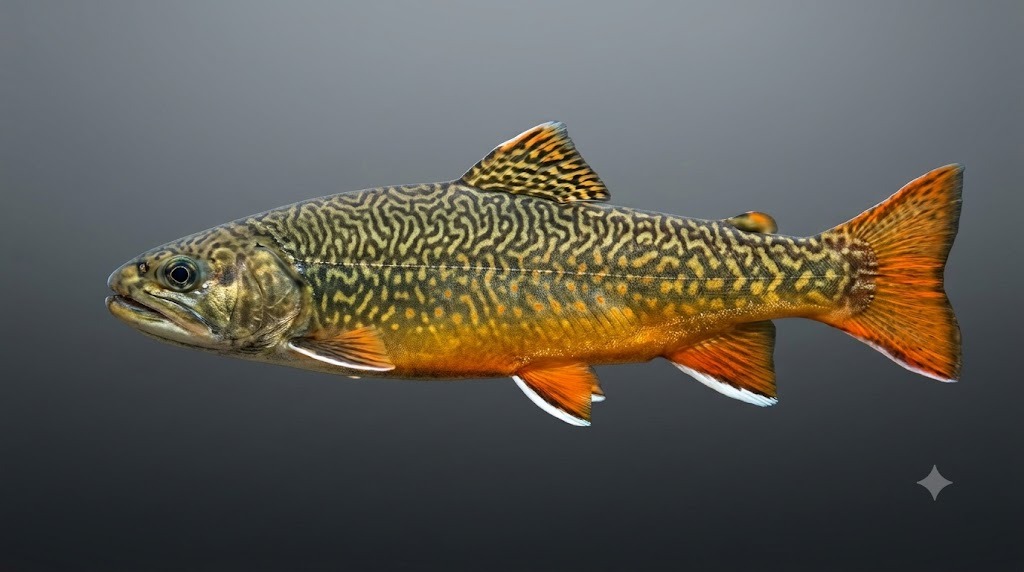
The tiger trout takes its name from the dense, vermiculated pattern of dark, wormlike lines that wind across a lighter background over its back and flanks - far heavier and more maze-like than the markings on either parent. The body color ranges from brassy gold and olive to brown, often with a warm orange or amber wash on the lower sides and belly, and the fins frequently carry orange and white edging much like a brook trout. Unlike a rainbow or brown trout, a tiger trout has no clear spots over most of its body; instead the whole side is covered in those bold squiggling stripes. The body shape is intermediate between the two parents, robust and trout-like, with a slightly forked tail. It inherits the brook trout's white-edged lower fins and the brown trout's heavier build, blending into a fish that is unmistakable once you have seen one. No other trout in North American waters shows that intense, all-over tiger striping, which makes identification easy even for a beginner.
Range & Habitat (US waters)
Because tiger trout are a hatchery cross rather than a naturally reproducing species, their range is wherever fisheries agencies choose to stock them, and that range has grown steadily as the fish has caught on. They are most widely stocked across the Mountain West, with Utah, Wyoming, Colorado, Idaho, and Montana running well-known programs, and they also turn up in waters of the Upper Midwest such as Michigan, Wisconsin, and Minnesota, and across the Northeast including Pennsylvania, New York, and parts of New England. They are stocked into a wide variety of cold, clean water: high mountain reservoirs and lakes, smaller ponds, and cold rivers and streams. Like their parents, tiger trout need cool, well-oxygenated water and do best where summer temperatures stay moderate. In many western reservoirs they are deliberately planted to prey on stunted or overabundant forage fish, so they often thrive in lakes with dense populations of small fish. Because stocking lists change every year, the surest way to know where to find them is to check your state agency's current stocking reports.
Behavior & Feeding
Tiger trout are aggressive, opportunistic predators, and that predatory streak is a big part of why managers stock them. Carrying the genes of two hunting trout, they grow up keyed on eating other fish and tend to be more piscivorous - more fish-eating - than a typical trout of the same size. In a stocked reservoir they patrol for small fish such as young perch, suckers, chubs, sculpins, and other minnows, and they will also take insects, crayfish, and whatever else is abundant. This fish-chasing habit makes them notably willing to attack moving lures: a flash and a wobble that imitate a fleeing baitfish will often draw a hard, reaction-style strike. Because they are sterile, tiger trout put all of their energy into feeding and growth rather than spawning, which can let them pack on weight quickly in a food-rich lake. They feed throughout the cold months and can be caught year-round wherever the water stays cold, including through the ice. Their willingness to chase and their reaction-strike aggression are exactly what make them such a fun fish to target.
Best Seasons & Times to Catch
Tiger trout can be caught all year, but like most coldwater trout they are most active and easiest to reach when the water is cool. Spring and fall are prime, with comfortable water temperatures pushing fish into the shallows and onto the prowl, often within range of shore anglers. In summer the fish in lakes and reservoirs follow the cool, oxygen-rich water down, holding deeper near the thermocline during the warm midday hours, so early morning and evening are the better windows and trolling or fishing deeper produces best. Winter is a genuinely strong season where waters stay open or freeze safely: tiger trout remain active in cold water and are a popular ice-fishing target through hard water across the Mountain West and the northern states. As with most trout, low-light periods around dawn and dusk and overcast days tend to bring the most aggressive feeding. The simple rule is to follow the cool water - shallow in spring and fall, deeper in summer - and fish the edges of the day.
Where to Find Them - Reading the Water
Finding tiger trout means thinking like a fish-eating predator looking for both comfortable water and a meal. In lakes and reservoirs, focus on structure and edges where baitfish gather: rocky points, submerged humps, drop-offs, weed edges, inlets where a stream brings cold water and food, and the mouths of coves. In spring and fall these fish cruise the shallows and the shoreline shelf, while in summer they slide out to the first major drop and hold near the cooler water below the thermocline, which is where a sounder earns its keep. In rivers and streams, treat them like a heavier brown trout: look for deeper pools, undercut banks, the seams beside fast current, and cover such as boulders and logjams where a predatory trout can ambush passing prey. Inlets and outlets, and any place where forage fish concentrate, are reliable producers. Wherever you fish, the combination of cool water plus a nearby supply of small baitfish is the magnet that holds tiger trout.
Tackle & Rigs
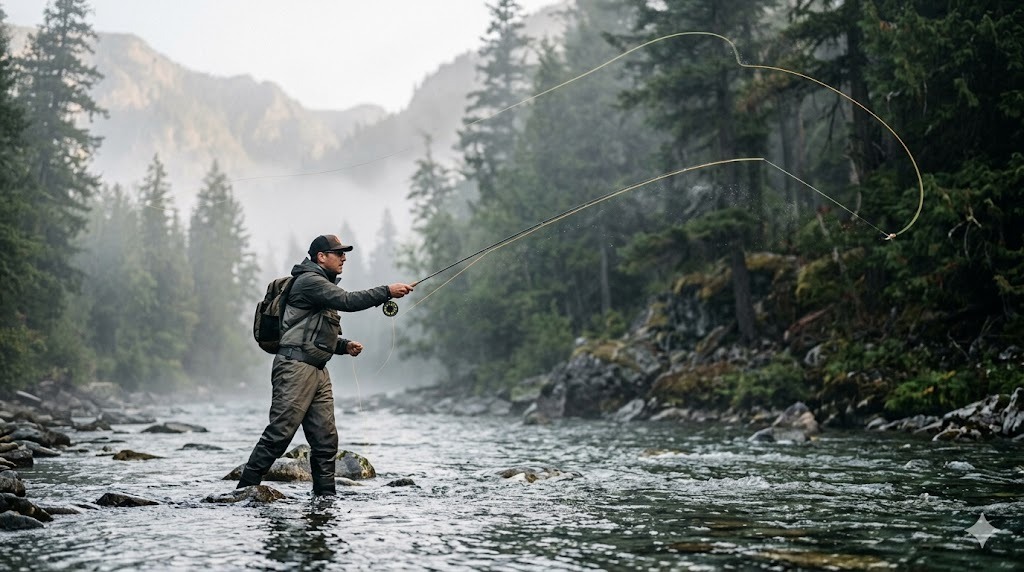
Tiger trout do not demand specialized gear, and standard trout tackle handles them well while leaving room for their hard fight. A light or medium-light spinning rod of around 6 to 7 feet, matched with a 1000 to 2500 size reel and a smooth drag, is the all-around workhorse. Spool up with 4 to 8 pound monofilament, or a light braid in a similar strength backed by a fluorocarbon leader for a little stealth in clear water. For casting and retrieving hardware - spinners, spoons, and small jerkbaits - tie straight to the lure or use a small snap so you can change quickly, and consider a tiny barrel swivel ahead of spinners to cut line twist. For lake fishing from a boat, a light trolling setup or a downrigger lets you reach the depth where summer fish hold. Bait anglers do well with a simple slip-sinker or float rig. Fly anglers find tiger trout a great target on a 5 or 6 weight outfit, throwing streamers on a sinking or sink-tip line. Because these fish often live in clear water and can grow strong, light line with a quality drag is the right balance of finesse and backbone.
Best Baits & Lures
This is where the tiger trout's predatory nature really pays off, because they respond eagerly to lures that imitate fleeing baitfish. Inline spinners such as a Mepps, Panther Martin, or Rooster Tail are classic producers, throwing flash and vibration that trigger reaction strikes. Casting spoons and trolling spoons in trout patterns are excellent, especially over open water and along drop-offs. Small jerkbaits and minnow-style crankbaits that mimic a wounded baitfish can be deadly on the bigger, more fish-eating tigers. For fly anglers, baitfish-imitating streamers like a Woolly Bugger, a sculpin pattern, or a small Clouser are top choices, and tigers will also take nymphs and the occasional dry during a hatch. Natural baits work well too where they are legal: nightcrawlers, a fished or drifted minnow, and prepared dough baits all take fish, and a worm under a float is a reliable shore tactic. As a general approach, lean on flashy, fish-imitating hardware to take advantage of their aggression, and keep natural bait in your kit for slow days or for fishing from the bank.
Techniques - How to Fish for It
The most productive approach plays directly to the tiger trout's habit of chasing baitfish: cover water with moving lures and provoke reaction strikes. Fan-cast spinners and spoons across points, drop-offs, and weed edges, varying your retrieve speed and adding the occasional pause or twitch to imitate a struggling baitfish, since an erratic action often draws the hardest hits. Trolling spoons and minnow plugs along shoreline contours and over open basins is one of the best ways to locate scattered fish in a lake, and running a downrigger or weighted line gets you down to summer fish holding deep. Fly anglers should strip streamers along banks, drop-offs, and through likely ambush cover with sharp, varied strips that look like a fleeing minnow. When fish are finicky or you are working from shore, slow down and soak bait - a worm or minnow under a float, or a slip-sinker rig on the bottom near structure. Because tigers tend to hit hard and fight strong for their size, keep your drag set sensibly and your rod tip ready, and once hooked, expect a determined, dogged battle.
Common Mistakes
A common mistake is fishing too slowly or with bait that just sits, when these aggressive fish usually respond best to a moving, flashy lure that triggers their predatory instinct - if the bite is slow, try covering water and provoking a reaction strike. Another is ignoring water temperature and depth, especially in summer: anglers who keep working the warm surface in the heat miss the fish that have dropped to cooler water deeper down. Many anglers also overlook the value of structure and forage, casting blindly over open, featureless water instead of targeting the points, drop-offs, weed edges, and inlets where tigers hunt baitfish. Using line that is too heavy in clear water can spook wary fish, while gear that is too flimsy gives up too much during a strong fight. Finally, because tiger trout are a relatively uncommon and prized fish, a frequent mistake is mishandling a trophy meant for release - playing it to total exhaustion, keeping it out of the water too long, or handling it roughly - when a quick photo and a careful release would have sent it back strong.
Size, Records & Eating Quality
Most stocked tiger trout caught by anglers run modest, often in the 10 to 16 inch range depending on the water and how long the fish have grown, but in food-rich lakes their sterility and aggressive feeding can drive impressive growth, and trophy fish in the 5 pound class and larger are caught with real regularity in the better western reservoirs. The IGFA all-tackle world record stands around 20 pounds, a fish taken from Lake Michigan waters in 1978, which shows just how large a well-fed tiger trout can get. Because they are uncommon and so distinctive, big tigers are widely regarded as a trophy and most experienced anglers release the larger fish to protect a rare and slow-growing catch. As table fare, tiger trout are good eating, with the same pink-to-orange, mild, clean flesh that makes their brook and brown trout parents popular on the plate, and a stocked tiger of legal size makes a fine meal cooked simply. The usual practice is to keep a modest fish or two for the table where regulations allow and release the bigger trophies. Trout limits, size rules, and bait restrictions vary widely by state and even by individual water, so always check the current regulations for the lake or stream you are fishing before keeping any fish.
Pros & Cons (as a target species)
Pros: tiger trout are spectacularly good-looking, arguably one of the most beautiful fish in fresh water, which makes every catch a treat and a great photo. They are aggressive and willing, hitting lures hard and fighting strong for their size, and their fish-eating habits make them an exciting, active target on hardware and streamers. They can be caught year-round, including through the ice, and they are pursued with ordinary, affordable trout tackle that most anglers already own. Cons: because they are a hatchery hybrid, you can only catch them where they are stocked, so availability depends entirely on your state's stocking program and can change from year to year. They are relatively uncommon compared with rainbows or browns, the bigger trophy fish are not easy to come by, and like all coldwater trout they are sensitive to warm water and need cool, clean conditions, which can limit summer fishing to deeper water or to early and late in the day.
Best Suited For
Tiger trout suit the angler who enjoys actively casting and retrieving lures and wants a fish that rewards an aggressive, run-and-gun style over patient bait-soaking. They are an excellent target for trout anglers in the Mountain West, the Upper Midwest, and the Northeast who want something more unusual and striking than the standard stocked rainbow, and for anyone who values a memorable, photogenic catch. They are a great choice for lake and reservoir anglers, including ice fishers, as well as stream anglers who like to work streamers and spinners through likely water. Just as importantly, they are well suited to catch-and-release-minded anglers who appreciate a rare, beautiful fish and are happy to send the big ones back to be caught again.
FAQ
What exactly is a tiger trout? A tiger trout is a sterile hybrid between a female brown trout and a male brook trout. Because the two parents are different species in different genera, the cross is extremely rare in the wild and the offspring cannot reproduce, so almost all tiger trout are produced in hatcheries and stocked. They are named for the bold, maze-like tiger striping that covers their sides.
Where can I catch tiger trout? Wherever your state stocks them. They are most widely planted across the Mountain West - Utah, Wyoming, Colorado, Idaho, and Montana - and also appear in the Upper Midwest and the Northeast, in cold lakes, reservoirs, ponds, and streams. Stocking lists change yearly, so check your state agency's current stocking reports to find the nearest water.
What is the best lure for tiger trout? Flashy lures that imitate a fleeing baitfish are top choices, because tiger trout are aggressive fish-eaters. Inline spinners, casting and trolling spoons, and small minnow-style jerkbaits all trigger hard reaction strikes, and streamers like a Woolly Bugger or sculpin pattern work well on the fly. Natural baits such as worms and minnows also produce, especially on slow days.
How big do tiger trout get? Most stocked fish run roughly 10 to 16 inches, but in food-rich lakes they can grow much larger, and trophy fish over 5 pounds are caught regularly in the best western reservoirs. The all-tackle world record is around 20 pounds. Because big tigers are rare and prized, most anglers release the larger fish.
Are tiger trout good to eat? Yes. They have the same mild, clean, pink-to-orange flesh that makes brook and brown trout popular on the table, and a legal-size stocked fish makes a fine meal cooked simply. The common practice is to keep a modest fish or two where the rules allow and release the bigger trophies. Always check the current regulations and limits for the water you are fishing.