Fishing by Moon Phase
Anglers have planned trips around moon phases for centuries. Solunar tables, full moon tides, dark of the moon, new moon spawns - every fishing tradition has its lunar lore. How much…
The moon is a real but minor edge, not magic: it drives tides (a big deal in saltwater, much weaker in freshwater) and adds feeding windows through solunar timing, but weather fronts, season, and time of day predict the bite far better. Use moon data as a tiebreaker, not a plan.
Anglers have planned trips around moon phases for centuries. Solunar tables, full moon tides, dark of the moon, new moon spawns - every fishing tradition has its lunar lore. Online tools, fishing apps, and tide charts all factor in the moon. But how much of this is real, how much is myth, and what should you actually do with moon data?
This guide separates the science from the folklore, explains what is actually known about the moon’s effect on fish, and gives practical recommendations for using moon phase as one factor - not the only factor - in your fishing plans. For a quick read on when to head out, our best fishing times tool folds sun, moon, and solunar windows into one estimate.
What the Moon Actually Does
The moon affects fishing primarily through three mechanisms:
1. Tides
This is the only universally accepted, fully proven, and significant effect. The moon’s gravity creates ocean tides, and at the new moon and full moon, the sun and moon align to create the strongest “spring tides.” Saltwater fishing is dramatically affected by tide strength and movement.
For inland fresh water with no tide, this mechanism doesn’t apply.
2. Light
The moon provides ambient light at night. A full moon makes nighttime water bright; a new moon makes it dark. This affects:
- Visual predation - Some predators feed better at night under a full moon (stripers, walleye, large brown trout). Some feed better in darkness (catfish, some inshore species).
- Bait positioning - Bait may move differently under moonlight.
- Spawning - Some species (grunion in California, palolo worms in Pacific) spawn at very specific moon-tide combinations.
3. Solunar Theory
The most contested mechanism. Solunar tables (originated by John Alden Knight in 1926) claim the moon’s position - overhead and underfoot - creates “major” and “minor” feeding periods regardless of tide. Knight observed that fish (and game animals) seemed more active during these windows.
Modern science has mostly debunked the strongest versions of solunar theory. Independent studies find weak or no correlation between solunar tables and fishing success after controlling for weather, time of day, and tide.
What Anglers Actually Observe
Despite mixed scientific support, experienced anglers report consistent moon-related patterns:
Saltwater (Strong Effects)
- Full and new moon tides = stronger current = better feeding windows around tide change.
- Spawning runs of many species correlate with new moon and full moon (snook, tarpon, striped bass).
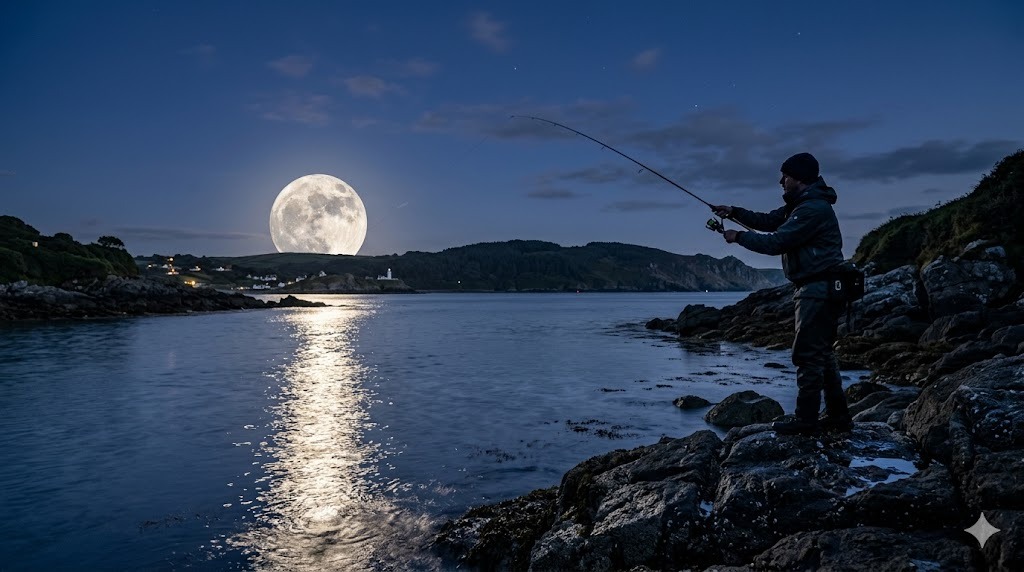
- Night fishing during full moon for stripers, snook, tarpon = often excellent.
Freshwater (Weaker Effects)
- Full moon bass spawn in southern lakes - observed and reported widely by tournament anglers and biologists.
- Walleye night bite during full moon - folkloric but consistent.
- Crappie spawn often around full moons in spring.
Solunar Major/Minor Times
- Some anglers swear by them; others dismiss them.
- Independent studies suggest weather, barometric pressure, and time of day are far stronger predictors of fishing success.
The Bigger Predictors
Before obsessing over moon phase, weight these factors more heavily:
1. Weather Fronts
A passing cold front shuts down fishing for 24-48 hours regardless of moon phase. Stable weather pre-front is the best fishing.
2. Barometric Pressure
Falling pressure (pre-storm) often triggers feeding. Rising pressure post-storm is often slow.
3. Water Temperature
Drives fish activity, location, and seasonal patterns more than any other single factor.
4. Time of Day
Dawn and dusk are reliably the best fishing windows for most species. This dwarfs solunar effects.
5. Wind
Moderate wind = better fishing (oxygen, bait push, fish less wary). Dead calm or storms = harder.
6. Time of Year
Pre-spawn, spawn, post-spawn, summer, fall, winter - each has dramatic effects.
Moon phase is real but secondary to all of the above.
Practical Use of Moon Data
For Saltwater Anglers
Take moon and tide together. Spring tides (new and full moon) push water and concentrate bait. Plan trips for moving water during these periods.
Specific examples:
- Tarpon at new moon flood tides in Florida passes.
- Striped bass on full moon night tides in Northeast inlets.
- Snook on full moon spawning aggregations near beaches.
For Freshwater Bass Anglers
The “full moon spawn theory” holds in southern lakes. Schedule a trip during a full moon in pre-spawn temperature windows (water 60-68°F) and you may see more big females on beds.
For Walleye Anglers
Night-fishing the full moon for walleye in summer is a folk tradition with real results in many lakes. Worth trying.
For Catfish Anglers
Dark moon nights often outperform full moon for catfish (cats prefer low-light conditions).
For Solunar Tables
Treat as a small bonus, not a primary driver. If a major solunar window aligns with dawn, dusk, or moving tide, fish it. If it conflicts with bad weather or wrong season, ignore it.
How to Use Moon-Phase Apps
Popular apps (Fishbrain, Solunar Forecast, FishingReminder, Bassmaster’s Solunar):
- Look at the day’s “rating” but verify with weather and tide.
- Identify major and minor windows (often shaded times of day).
- Combine with sunrise/sunset/tide. Best fishing often happens when multiple factors align.
Don’t reschedule a trip purely based on a moon rating. Tomorrow’s full moon doesn’t help if a 30-mph wind and a cold front arrive simultaneously.
When the Moon Doesn’t Matter
- Stocked trout in ponds - Hatchery fish on artificial schedule; moon irrelevant.
- Deep offshore fish - Affected more by current and bait than light.
- Ice fishing - Light penetration through ice is minimal; moon impact small.
- Highly pressured urban fisheries - Fishing pressure dwarfs moon effects.
When the Moon Does Matter
- Estuarine and inshore saltwater - Tide strength on spring tides matters significantly.
- Bass spawn timing in clear shallow southern lakes.
- Night fishing in saltwater inlets and large open lakes.
- Spawning runs of certain species (snook, tarpon, palolo worms, grunion).
The Honest Verdict
Moon phase is real but overplayed. Tides - driven by the moon - matter enormously for saltwater fishing. Night-fishing light matters for some species. Spawning timing correlates with lunar cycles in some fish. Solunar major/minor windows are weakly supported and shouldn’t override other factors.
If you have to choose between a “perfect moon day” with bad weather and a “neutral moon day” with great weather, choose the weather. If both align - fish.
FAQ
Is the new moon or full moon better for fishing? For saltwater tides, both are similar (both produce spring tides). For freshwater nighttime predation, full moon is usually preferred. For freshwater spawn, both new and full moons are commonly cited.
Do bass really spawn on the full moon? There is evidence - particularly in southern US lakes - that peak bass spawning coincides with full moons when water temperatures are right (60-68°F). The pattern is not absolute but observed widely.
Are solunar tables real science? The strongest claims are not supported by controlled studies. Weak correlations exist for some species and contexts. Don’t structure your fishing entirely around them.
Best app for moon and tide info? Fishbrain, Tides Near Me, FishingReminder, and most state DNR apps all integrate moon and tide. Pick one and stick with it.
Should I fish a full moon at night? Yes - full moon nights are productive for stripers, walleye, snook, large brown trout, and many other predators. Slick calm bright nights are particularly good.
Conclusion
The moon affects fishing - most clearly through tides, somewhat through light, and weakly through solunar theory. Use moon data as one input among many: tides, weather, pressure, time of day, season, and water temperature all matter more. When stars align - moving tide on a new moon at dawn during pre-spawn in stable weather - that’s the magic day. Most days are not perfect, and good fishing comes from showing up on imperfect days and putting your bait in the right place. The moon may give you an edge; effort and time on the water give you fish.
🛒 Recommended Gear on Amazon
- Fishing log book - browse current options and reviews on Amazon.
- Fishing headlamp - browse current options and reviews on Amazon.
- Glow-in-the-dark lures - browse current options and reviews on Amazon.
As an Amazon Associate, we earn from qualifying purchases - at no extra cost to you. This helps us keep producing free, in-depth guides.