Saltwater Jigging Guide: Depths, Jigs, Techniques
Saltwater jigging puts you in direct contact with bottom-dwelling and suspended predators that other techniques never reach. Here is the complete guide to depths, jig types, and the…
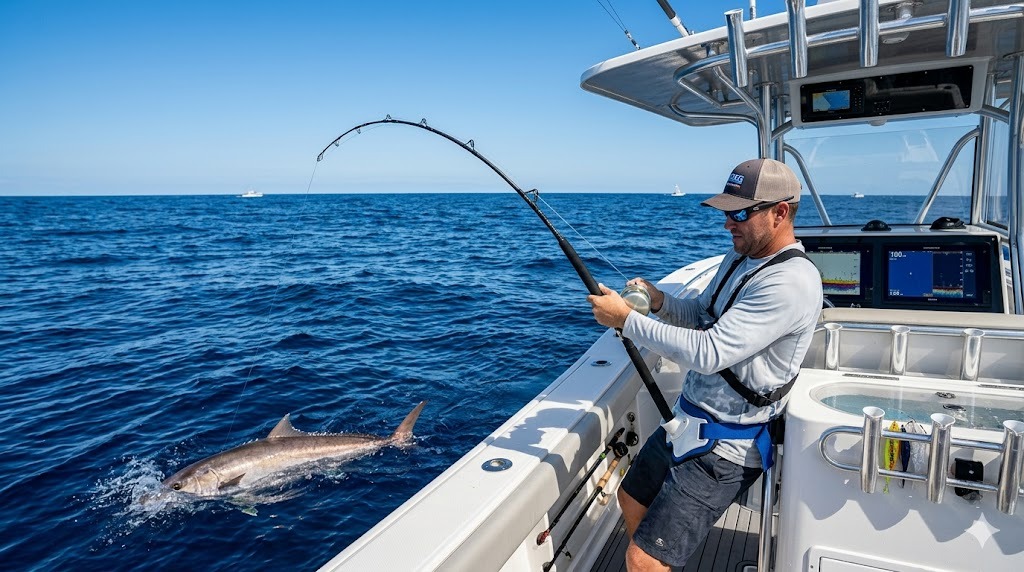
Saltwater jigging puts you in direct contact with bottom-dwelling and suspended predators that other techniques never reach. While trolling covers water and bait fishing waits for fish to find you, jigging is active hunting - you drop a jig to the depth fish are holding and work it back through their strike zone. The takes are vicious, the fights are often vertical and powerful, and the species range from snapper and grouper to greater amberjack, tuna, and yellowtail.
This guide walks through the major jigging styles, the depths and jigs that work, and the techniques that turn a heavy lump of metal into a fish-catching machine.
The Three Main Jigging Styles
Saltwater jigging falls into three families, each with its own gear, jigs, and technique.
Slow-Pitch Jigging
Slow-pitch is the most versatile and beginner-friendly. The jig is worked with rhythmic rod lifts and controlled falls, fluttering side to side on the descent. Many strikes happen as the jig falls. It targets snapper, grouper, amberjack, and almost any bottom-dwelling reef fish. Depths typically 100-600 feet.
Speed Jigging (Vertical Jigging)
High-speed jigging uses fast, aggressive vertical retrieves to trigger reaction strikes from pelagic predators - tuna, amberjack, jacks, kingfish. The jig comes up the water column at full speed, then drops back down. Brutal physically; rewards conditioning. Depths 80-400 feet.
Inshore Jigging
Lighter jigs (1/4 to 2 oz) worked in 10-60 feet of water for fluke, sea bass, striped bass, redfish, snook, and other inshore species. Bucktails, soft plastic jigs, and small metal jigs all work. Technique is closer to bass jigging with vertical lifts and bottom contact.
Reading Depth and Structure
Jigging requires knowing where fish are in the water column. A fish finder is non-negotiable for offshore jigging.
- Bottom marks - Most reef fish hold within 5-30 feet of the bottom. Drop to the bottom, reel up a few cranks, and jig at that level.
- Suspended marks - Tuna and amberjack often suspend in the mid-water column over deep structure. Mark the depth and jig through that band.
- Bait balls - Predators follow bait. Drop the jig to the bait depth, not to the bottom.
- Structure - Wrecks, reefs, ledges, hard bottom drop-offs, and humps are the fish-holding features. Position the boat to drift the jig past them.
GPS-anchored drifts or careful spot-locking with an electric motor put you on structure repeatedly without burning fuel.
Choosing Jigs
Slow-Pitch Jigs
Asymmetric, flat-sided jigs designed to flutter horizontally on the fall. Brands: Sea Falcon, Shimano Butterfly, Hots, Jigging Master, Williamson Benthos. Weights 100-500 grams matched to depth and current. Color: glow, pink, blue/silver, and natural baitfish patterns.
Speed Jigs
Long, narrow, knife-shaped jigs designed to cut up through the water column quickly. Brands: Shimano Butterfly Flat-Fall, Williamson Vortex, Nomad Streaker, Hayabusa Jack Eye. Weights 150-400 grams. Bright colors and chrome work well.
Inshore Jigs
Bucktail jigs (SPRO, Andrus, Joe Baggs), soft plastic shads on lead heads, and small metal jigs (Williamson Gomame, Stillwater). Weights 1/2 to 2 oz.
A starting offshore selection: 150g, 200g, 300g, and 400g in glow, blue, and pink covers most slow-pitch work to 400 feet.
Rod, Reel, and Line
Slow-Pitch
- Rod: Slow-pitch specific, 6 to 6’6”, parabolic action. Brands: Centaur Constellation, OTI Patriot, Black Hole, Daiwa Saltiga Slow-Pitch.
- Reel: Narrow-spool conventional with high gear ratio. Shimano Ocea Jigger, Daiwa Saltiga 15-25, Accurate Valiant 400-600.
- Line: 30-50 lb braid (PE 1.5-3) with 40-60 lb fluorocarbon leader (5-15 feet).
Speed Jigging
- Rod: Heavy jigging rod 5’6” to 6’6”, fast action. Shimano Trevala S, Daiwa Saltiga Jigging, Black Hole Cape Cod.
- Reel: High-speed conventional or large spinning. Stella SW 14000-20000, Saragosa SW 14000-25000, Talica 16-25.
- Line: 50-80 lb braid with 60-100 lb fluorocarbon leader.
Inshore
- Rod: Medium-heavy 7’ fast spinning, lure rating 1/2-3 oz.
- Reel: 3000-5000 size spinning with smooth drag.
- Line: 15-30 lb braid with 20-40 lb fluorocarbon leader.
Slow-Pitch Technique
- Drop the jig to the bottom in free spool, controlling with your thumb to prevent overruns.
- Reel up 2-5 cranks to clear the bottom.
- Lift the rod tip 1-3 feet with a sharp pump, reel a half or full turn on the lift, then drop the rod tip to let the jig flutter.
- Repeat in rhythm. Most strikes happen on the fall - keep slight line tension.
- Set the hook with a sweeping side-set, not a hard upward jerk. The assist hooks bite into the corner of the mouth.
Vary the cadence: short pumps, long lifts, pauses. Let the fish tell you what they want.
Speed Jigging Technique
- Drop fast to the target depth, often the bottom or marked bait/fish.
- Reel and pump at full speed, lifting the rod tip and reeling on the drop.
- After 30-50 feet of fast retrieve, drop back and repeat.
- Pelagic strikes are usually on the upward sweep - be ready.
Speed jigging is exhausting. Pace yourself with shorter sets and rest between drops.
Assist Hooks and Rigging
Slow-pitch jigs use front-mounted assist hooks (small, sharp, on short Kevlar cord) often paired with rear assists. Speed jigs typically use single rear hooks. Replace assist hooks after big fish or signs of wear. Rigging the hook on the right side and balance affects jig action.
When and Where
- Tide - Most species feed on the change of tide. Slack tide can be slow.
- Drift speed - Slow drift (under 0.5 knots) keeps the jig more vertical. Sea anchors or spot-lock help in current.
- Time of day - Dawn and dusk peak; midday can fish well at depth.
- Structure - Wrecks, reefs, humps, and ledges. Marine charts and side-scan sonar reveal them.
FAQ
What is the difference between slow-pitch and speed jigging? Slow-pitch uses rhythmic short lifts with the jig fluttering on the fall, targeting bottom fish. Speed jigging uses fast vertical retrieves through the water column for pelagics.
Do I need a special rod for slow-pitch? Yes - slow-pitch rods have a unique parabolic action that loads on the jig’s weight and works the lure correctly. A standard jigging rod will catch fish but won’t deliver the same jig action.
What weight jig for 200 feet? Generally 150-250 grams in moderate current. Heavier for stronger current, lighter for calm conditions.
Can I jig from a kayak? Yes - inshore and even moderate offshore jigging from a kayak is excellent. Use lighter setups (PE 2-3) and target depths under 200 feet.
What is the best beginner saltwater jigging combo? A medium-heavy slow-pitch rod, a 200-size conventional reel with 40 lb braid, and a selection of 150-300g jigs covers most inshore-to-shelf-edge fishing.
Conclusion
Saltwater jigging is one of the most active and rewarding ways to fish the saltwater species that hold offshore. It demands the right gear, attention to depth and structure, and the patience to find a working cadence - but it produces fish that other techniques cannot reach. Start with slow-pitch for versatility, build a small jig selection in graduated weights, and let the fish finder guide you. Once you feel that first deep-water thump on a jig, you will understand why dedicated jiggers spend small fortunes on their gear.
🛒 Recommended Gear on Amazon
- Vertical saltwater jigs - browse current options and reviews on Amazon.
- Saltwater jigging rod - browse current options and reviews on Amazon.
- Assist hooks - browse current options and reviews on Amazon.
As an Amazon Associate, we earn from qualifying purchases - at no extra cost to you. This helps us keep producing free, in-depth guides.