Greater Amberjack
The greater amberjack - affectionately and not-so-affectionately nicknamed the "reef donkey" - is the bruising heavyweight of the jack family and one of the most powerful fish an angler can hook over offshore structure.
🗓️ Last reviewed: June 2026
Overview
The greater amberjack - affectionately and not-so-affectionately nicknamed the "reef donkey" - is the bruising heavyweight of the jack family and one of the most powerful fish an angler can hook over offshore structure. Built like a torpedo and stubborn to the point of cruelty, an amberjack rewards a hooked angler with a deep, drag-screaming, back-breaking fight that has humbled countless fishermen. They school over wrecks, reefs, oil rigs, and rocky ledges throughout the warm Atlantic and Gulf, where they crush live baits and large jigs with reckless aggression. Amberjack are not subtle - they are pure muscle and attitude, and landing a big one is a genuine physical accomplishment. While their table quality is good when handled properly, most anglers chase them for the sheer brawl. For anyone who wants to know what raw saltwater power feels like, the greater amberjack is the ultimate proving ground.
Identification & Appearance
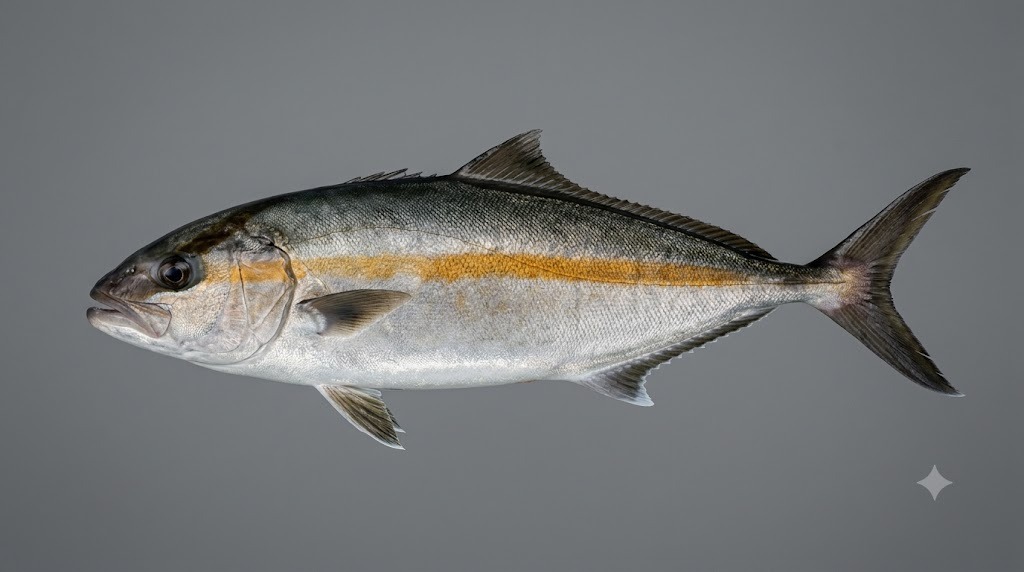
Greater amberjack are large, streamlined jacks with a long, muscular, slightly compressed body, a deeply forked tail, and the powerful build typical of the genus Seriola. They are generally dark bluish, brownish, or olive on the back fading to silvery-white below, often with an amber or brassy stripe running along the flanks - the source of the name. The most reliable identifying feature is a dark, diagonal "amberjack bar" or mask that runs from the mouth up through the eye to the front of the dorsal fin, more pronounced when the fish is excited or feeding. Juveniles are more strongly barred with vertical bands. The greater amberjack is distinguished from the similar lesser amberjack and almaco jack by body proportions, the position of that eye bar, and the count of dorsal fin rays. Big adults are heavy-bodied bruisers with broad shoulders and a thick wrist of muscle ahead of the tail.
Range & Habitat (US waters - inshore / offshore)
Greater amberjack are found in warm and temperate waters worldwide. In US waters they range along the Atlantic coast from roughly the Carolinas and Florida and throughout the Gulf of Mexico, with major fisheries off Florida, the Florida Keys, and the entire Gulf, especially around the abundant artificial reefs and oil platforms.
This is fundamentally an offshore, structure-oriented species. Amberjack school over deep wrecks, natural rocky ledges and reefs, artificial reefs, oil and gas platforms, and underwater high-spots, typically in water from about 60 to 240 feet, with the biggest fish often on the deeper structure. They suspend in the water column above and around the structure rather than hugging the bottom, frequently visible on the sounder as a dense, towering cloud of marks rising off a wreck. Younger fish associate with floating debris, weed lines, and flotsam near the surface in open water before settling onto structure as they grow.
Behavior & Feeding
Greater amberjack are voracious, aggressive, schooling predators that hunt in packs over structure. They are powerful, fast swimmers that ambush and run down baitfish, squid, and crustaceans, and they feed with such enthusiasm that a dropped bait or jig is often inhaled the instant it reaches their depth. They are intensely competitive - when one fish in a school grabs a bait, the others race to compete, which is why amberjack often bite in a frenzy once located. They suspend over and around their structure, rising up the column to intercept prey and using the reef or wreck as both a hunting ground and a place to break off a hooked rival by diving back into it. Their entire fighting strategy is to power straight back down into the structure to cut the line on sharp edges, a brutal and effective tactic. They feed throughout the day and are drawn readily to the commotion of a hooked fish, a chum slick, or a fast-worked jig.
Best Seasons & Times to Catch
Amberjack can be caught year-round throughout much of their warm-water range, but availability is heavily shaped by both seasonal movements and tightly managed harvest seasons. They are often most concentrated and aggressive in the warmer months from spring through fall, with spring (around the pre-spawn period) producing many of the largest fish as big adults gather over structure. Because amberjack stocks are carefully regulated, open harvest seasons in federal waters are limited and change year to year - frequently restricted to specific months - so anglers must check current regulations before targeting them for harvest. Within a day, the bite can be strong at any time given the fish's aggression, but moving water over the structure generally fires them up, and the first drop onto a fresh, un-pressured school is often the most explosive. Calm-weather windows that allow safe travel to deep offshore structure are the practical limiting factor.
Where to Find Them - Reading the Water
Find the structure, find the amberjack. Productive spots are deep wrecks, large natural rock ledges and reef edges, artificial reefs, the legs and crossmembers of oil and gas platforms, and isolated offshore high-spots that rise off an otherwise featureless bottom. A quality sounder is essential - amberjack typically show as a dense, column-like cloud of large marks suspended above and around the structure, often unmistakable once you have seen it. Bigger, more remote, and less-pressured structure tends to hold bigger fish. Position the boat up-current of the marks so baits drift back to the school, and watch the sounder to drop to the exact depth where the fish are stacked. Near the surface in open water, scattered juveniles and the occasional traveling adult relate to weed lines, floating debris, and any flotsam that gathers bait. The presence of bait clouds on the sounder over structure is a strong sign that amberjack are home.
Tackle & Rigs
Amberjack demand heavy, stout tackle - this is no place for finesse. For bait fishing, a powerful 5.5- to 6.5-foot heavy conventional rod with plenty of backbone, matched to a high-capacity lever-drag conventional reel loaded with 65-100 lb braid (often with a top shot of heavy mono) and a 80-130 lb leader, is standard. The drag must be locked down hard to turn a fish away from the structure on the first run.
For live bait, a simple knocker rig or fish-finder rig with a heavy egg sinker (sized to reach the fish in the current), a heavy leader, and a stout 7/0-10/0 circle hook is the workhorse. For jigging, use a strong jigging rod and a high-speed reel capable of cranking heavy speed jigs and butterfly/knife jigs of 4-12 ounces back up through the column. Everything in the system - hooks, swivels, split rings, leader - must be heavy-duty, because amberjack will expose any weak link. Many anglers fish with the drag near maximum and the rod in a fighting belt or harness.
Best Baits & Lures
Live bait is the deadliest approach. Big live baitfish are the gold standard - blue runners (hardtails), goggle-eyes, threadfin herring, pinfish, large pilchards, and small bonito or mackerel are all premium amberjack offerings, and a lively, energetic bait dropped into a fired-up school rarely lasts long. Fresh dead baits and large cut baits will also draw strikes when live bait is scarce.
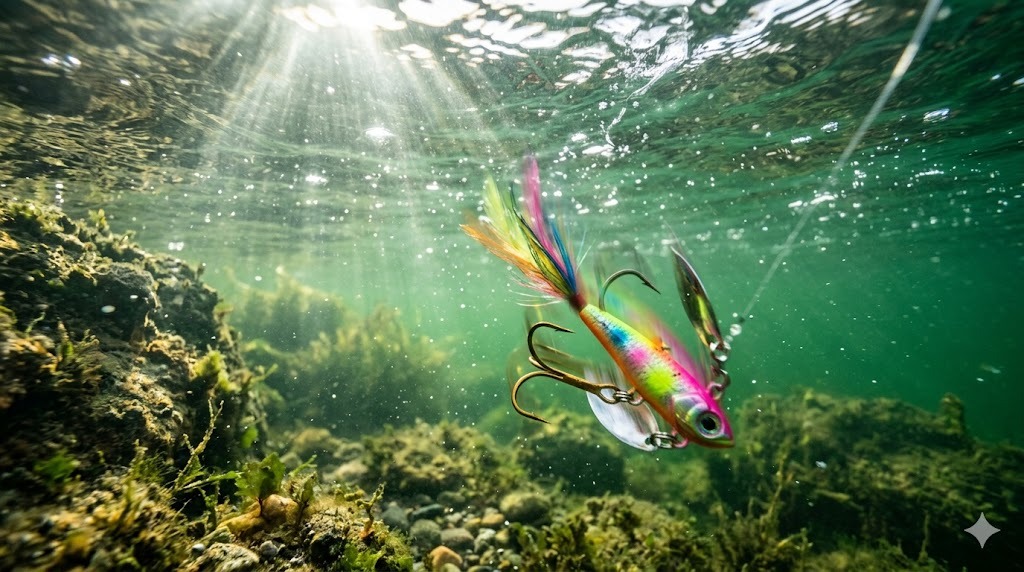
For artificials, heavy vertical speed jigs and knife/butterfly jigs are extremely effective and arguably the most fun way to catch them - dropped to the fish and ripped upward with a fast, aggressive retrieve, they trigger the amberjack's competitive chase reflex. Large bucktails and heavy soft-plastic-bodied jigs work as well, and amberjack will even crush surface poppers and stickbaits when a school is brought up near the boat. Flashy, baitfish-profile lures in silver, blue, pink, and glow patterns excel. Whatever the offering, it must be heavy and rugged enough to survive the violence of the strike and the dive back to the structure.
Techniques - How to Fish for It
The classic technique is to locate a school on the sounder over structure, position up-current, and drop a big live bait down to the marked depth, then hold on - the bite is usually immediate and savage. The instant the fish loads up, the angler must lift hard and crank relentlessly to turn it away from the structure, because every second of hesitation lets the amberjack power back down and cut the line. There is no finesse to the fight; it is a brute-force tug of war where you gain line by short, hard pumps and never give slack. Vertical jigging is the other premier method: drop a heavy speed jig to the school and rip it upward with fast, rhythmic jerks, then be ready for a violent strike on the way up and the same instant battle to gain the upper hand. Many crews use a hooked "teaser" amberjack to fire up the school, then drop baits or jigs into the competitive frenzy. Above all, keep the fish coming up and away from the structure from the first second.
Common Mistakes
The number one mistake is fishing too light - amberjack will break undergunned tackle, straighten weak hooks, and saw through light leaders against the structure without effort. A close second is failing to turn the fish immediately; anglers who let the amberjack run on the initial hookup almost always lose it in the wreck. Setting the drag too loose, hesitating instead of cranking, or giving slack during the fight all spell disaster. Many anglers also drop their baits or jigs to the wrong depth, missing the suspended school entirely - watch the sounder and put the offering right in front of the fish. Underestimating the physical demand is common too; a big amberjack can genuinely exhaust an unprepared angler. Finally, careless handling of these powerful fish at the boat, given their size and strength, leads to injuries and poor releases - have a plan for landing and reviving them.
Size, Records & Eating Quality
Greater amberjack commonly run 20-50 pounds, with fish over 60-70 pounds frequently encountered over good structure, and the species can exceed 100 pounds. The IGFA all-tackle world record is a 156-pound, 13-ounce greater amberjack caught off Ilha do Faial in the Azores in 2010. On the table, amberjack are a good, firm, mild white-fleshed fish often used for grilling, smoking, and even sashimi when very fresh and properly bled and iced, though the flesh is denser and stronger than a snapper or grouper. One important caveat: amberjack flesh commonly hosts harmless parasitic worms in the meat, which are easily trimmed away but can be off-putting, and in some larger reef-associated fish there is a regional ciguatera consideration - anglers should be aware of local advisories. Always bleed and ice them promptly for the best eating, and always check current regulations, as amberjack are strictly managed with size limits and limited harvest seasons that change frequently.
Pros & Cons (as a target species)
Pros: Brutally hard fighting - among the strongest fish for their size; aggressive and willing biters once located, often striking instantly; great targets for exciting vertical jigging; widespread over offshore structure in warm waters; good eating when bled, iced, and trimmed; provide a genuine test of tackle and angler endurance. Cons: Require heavy, expensive tackle and offshore access to deep structure; punishing fight can exhaust anglers and is hard on bodies and gear; flesh commonly carries (harmless but unappetizing) worms and has localized ciguatera considerations; tightly regulated with limited harvest seasons and size limits; tendency to break off in structure means a high lost-fish rate.
Best Suited For
Greater amberjack are best suited to fit, experienced offshore anglers who want a raw, physical, brute-strength battle and have the heavy tackle and seaworthy boat to reach deep structure. They are a favorite of jigging enthusiasts and anyone seeking to test their stamina against pure muscle. They are not a beginner's casual catch, though a strong newcomer fishing with a knowledgeable crew can certainly tangle with one. In short, the amberjack is the reef donkey for a reason - a fish for anglers who measure success by burning forearms, screaming drags, and the satisfaction of out-muscling one of the ocean's toughest brawlers.
FAQ
Why is the amberjack called a "reef donkey"? Because of its relentless, mulish, brute-strength fight - a big amberjack pulls hard, dives for the structure, and refuses to quit, making it one of the most physically demanding fish to land.
Is greater amberjack good to eat? Yes, when properly bled, iced, and trimmed - the firm white meat is good grilled or smoked. Be aware the flesh commonly carries harmless parasitic worms that should be cut out, and check local ciguatera advisories.
What tackle do I need for amberjack? Heavy gear: a stout conventional rod, a high-capacity reel with 65-100 lb braid and a heavy leader, and strong 7/0-10/0 hooks. The drag must be locked down to turn the fish from the structure.
Where do amberjack live? Over offshore structure - deep wrecks, reefs, rocky ledges, artificial reefs, and oil platforms - typically in 60 to 240 feet of water, where they suspend in the column above the structure.
What is the best bait for amberjack? Big lively baitfish such as blue runners, goggle-eyes, threadfins, and pinfish are the top baits, and heavy vertical speed jigs are extremely effective as well.