Striper Fishing: Surf, Boat, Best Lures
Striped bass are the most pursued saltwater gamefish on the East Coast and have established freshwater fisheries that produce 50-pound fish in lakes from California to the Carolinas…
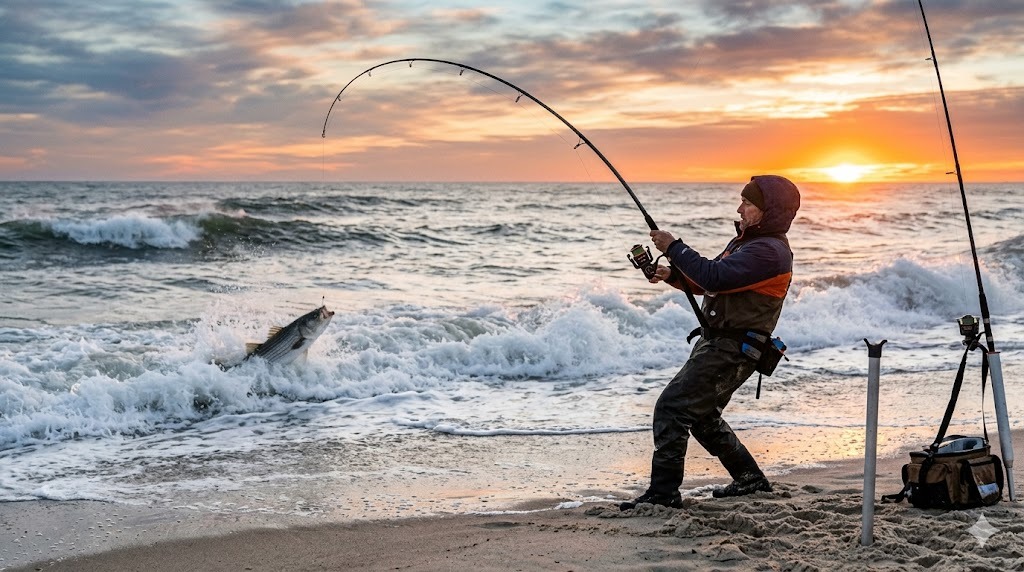
The striped bass is the most pursued saltwater gamefish on the East Coast and has established freshwater fisheries that produce 50-pound fish in lakes from California to the Carolinas. They migrate, school, ambush, and crush bait with a power that breaks rods and souls. They eat huge baits, fight long runs, and reward smart anglers who learn their patterns.
This guide covers striper fishing from the surf, from boats, in fresh and salt, including the best lures, the gear that handles big fish, and the timing that puts you on schools.
The Striper Species
Striped bass (Morone saxatilis) live in:
- Atlantic Coast saltwater - From Florida to Maine, with the major fishery in the mid-Atlantic and New England.
- Chesapeake Bay - Major nursery and migration hub.
- Hudson and Delaware Rivers - Native spawning waters.
- Stocked freshwater lakes and reservoirs - California, Carolinas, Texas, Arkansas, Tennessee, more.
- Hybrid striped bass (palmetto bass, wiper) - Stocked widely in freshwater, and increasingly raised in home aquaculture systems.
Migrations and Seasons
Atlantic Migration
Atlantic stripers migrate north in spring, south in fall. Knowing where the fish are concentrated drives success.
- March-April: Mid-Atlantic (NJ, DE, MD, VA) coast and bays.
- May-June: Long Island, Rhode Island, Massachusetts inshore.
- July-August: Maine and northern New England; offshore canyons.
- September-November: Reverse migration south. The “fall run” is the most explosive striper fishing of the year.
- Winter: Wintering in Hudson, Chesapeake, North Carolina rivers.
Freshwater Patterns
- Spring: Spawning runs up tributaries; concentrated and vulnerable.
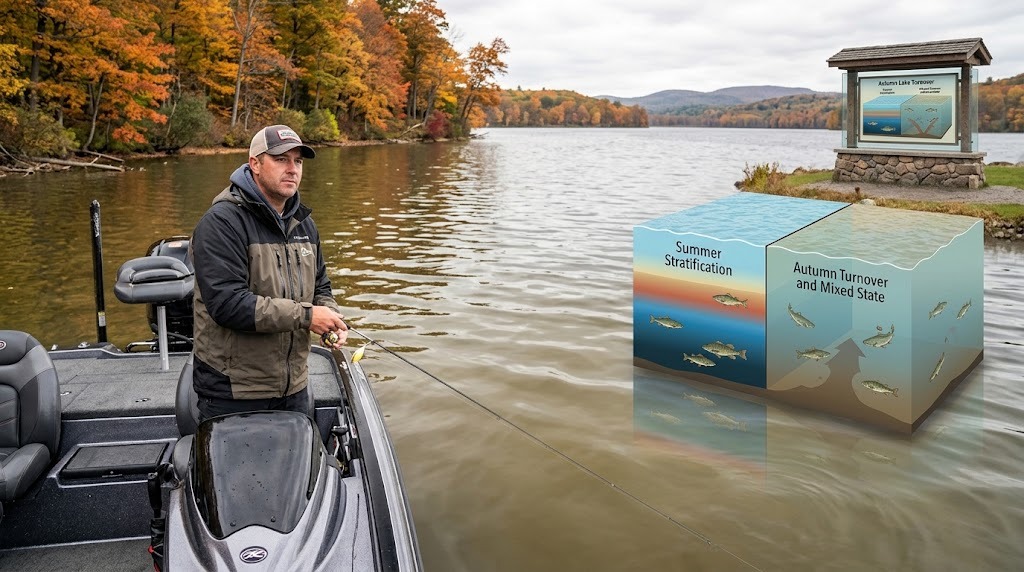
- Summer: Suspended in deep open-lake schools chasing shad.
- Fall: Surface boils chasing shad up tributaries.
- Winter: Deep main-lake schools.
Surf Fishing for Stripers
Reading the Surf
Look for:
- Cuts and sloughs - Channels parallel to the beach that fish use as travel lanes.
- Sandbars - Stripers herd bait against them. Fish the outside edges.
- Points and rip currents - Concentrate bait and predators.
- Inlets - Stripers patrol both incoming and outgoing tide.
- Structure - Jetties, rock piles, submerged wrecks visible at low tide.
Walk the beach at low tide to map structure for high-tide fishing.
Surf Setup
- Rod: 10-11 ft surf rod, medium-heavy to heavy.
- Reel: 6000-10000 spinning (Penn Battle III, Shimano Saragosa SW, Daiwa BG).
- Line: 30-50 lb braid mainline + 30-50 lb fluorocarbon leader.
- Sand spike to hold rod when not casting.
Surf Lures and Baits
Plugs
- Bottle plugs (Super Strike, Stetzko’s) - Heavy darters that punch wind.
- Pencil poppers (Cotton Cordell, Tactical Anglers) - Topwater chaos.
- Swimmers/needlefish (Habs, Surf Asylum) - Subtle subsurface for finicky fish.
- Bucktail jigs - Universal striper killer. 1-4 oz, white, chartreuse, or pink.
Soft Plastics on Jigheads
- 6-9” soft jerkbaits (Tsunami Holographic, Storm WildEye) on 1-4 oz jigheads. Bounce off the bottom or swim through the column.
Live and Cut Bait
- Bunker (menhaden) chunks on a fishfinder rig - slow but steady producer.
- Live eels drifted in moving water - trophy bait.
- Sandworms or bloodworms for spring stripers.
- Live spot or croaker in southern fisheries.
Boat Fishing for Stripers
Trolling
Cover water finding fish.
- Umbrella rigs - Multiple plastic shads on a wire frame; imitates a bait school. Trolled at 2-3 mph.
- Mojo rigs / parachute jigs - Heavy single jigs trolled deep for trophy fish.
- Tube and worm - Surge tube with a worm trailer; classic New England striper troll.
- Wire line for getting depth without weights.
- Planer boards to spread lines.
Live Lining
Drift live menhaden, eels, herring, or spot through structure and schools. Use a circle hook, no weight or light weight, let the bait swim naturally.
Jigging
Vertical jigging on structure with butterfly jigs, vertical bucktails, or AVA jigs. Effective when fish stack on humps and reefs.
Topwater / Run-and-Gun
When stripers blitz on bait at the surface, run to the breaking school, cast topwater plugs (pencil poppers, walking baits) into the chaos. Among the most exciting fishing on earth.
Freshwater Striper / Hybrid Fishing
Open-Water Schooling
Use side imaging to find suspended schools. Drop spoons (Bink’s Pro Series, Slabolu) and jigs into them; or work topwater plugs across breaking surface.
Live Bait
Live shad on a Carolina rig or freelined behind a school is the most consistent freshwater striper technique.
Trolling Umbrella Rigs
Stocked-lake stripers eat umbrella rigs trolled at 2-3 mph just like saltwater stripers.
Trib Runs
In spring, freshwater stripers run up tributaries to spawn. Cast white bucktails or topwater plugs in the current.
Gear by Application
Light Tackle Inshore
- 7-7’6” medium-heavy spinning, 4000-5000 reel, 20 lb braid.
Surf
- 10-11 ft surf rod, 6000-8000 spinning, 30-50 lb braid.
Trolling
- 7’ medium-heavy conventional or trolling rod, 40-50 lb braid, planer boards optional.
Big Bait / Trophy
- 8’ heavy conventional rod, 50-65 lb braid, circle hooks.
Reading Tides
For surf and inshore fishing, moving tide is everything.
- Outgoing tide - Pulls bait out of marshes and back bays; stripers stage at the mouths.
- Incoming tide - Brings fresh bait into estuaries; fish push in to feed.
- Slack tide - Often slow.
- Last 2 hours of outgoing + first 2 of incoming - Often the prime windows.
Conservation Notes
The Atlantic striped bass fishery has been under management pressure for decades. Recent regulations:
- Slot limits in many states (e.g., 28-31” in mid-Atlantic).
- One fish per day in most jurisdictions.
- Circle hooks required for bait fishing in many states.
- Catch and release is widely encouraged for trophy fish.
Check current regulations every year - they change.
FAQ
What’s the best month for stripers? For surf fishing the fall run (October-November) is widely considered peak. Spring (May in New England) is also outstanding.
Do stripers bite at night? Yes - often better than daytime, especially in summer. Eels and dark plugs excel at night.
Why use circle hooks? Circle hooks reduce gut-hooking on bait fishing, dramatically improving release survival. Required by regulation in many striper fisheries.
Hybrid bass vs striper - what’s the difference? Hybrids (palmetto bass, wipers) are a cross between striped bass and white bass. Smaller (typically under 20 lbs) but pull harder pound-for-pound. Stocked in freshwater reservoirs across the US.
Best lure for trophy stripers? Live eels and bunker chunks for surf; live menhaden for boats; large pencil poppers for blitz topwater action.
Conclusion
Striped bass fishing is a year-round, multi-method pursuit. From walking sandy beaches at dawn casting bottle plugs to drifting eels around bridge pilings at night to slinging spoons into surface boils in mid-summer, stripers reward anglers willing to learn their migrations and feeding habits. Match your tackle to the venue, fish moving tide, follow the bait, and the fish of a lifetime is in your reach every season.
🛒 Recommended Gear on Amazon
- Striped bass lures - browse current options and reviews on Amazon.
- Striper circle hooks - browse current options and reviews on Amazon.
- 5000-size saltwater spinning reel - browse current options and reviews on Amazon.
As an Amazon Associate, we earn from qualifying purchases - at no extra cost to you. This helps us keep producing free, in-depth guides.