American Eel
The American eel is one of the strangest and most fascinating fish an East Coast angler can catch.
🗓️ Last reviewed: June 2026
Overview
The American eel is one of the strangest and most fascinating fish an East Coast angler can catch. It is a catadromous fish - it spends most of its life in fresh and brackish water but travels to the sea to spawn, which is the exact opposite of a salmon. Every American eel begins life far out in the Atlantic in the Sargasso Sea, then drifts and migrates to the rivers, creeks, and estuaries of the eastern United States, where it can live for many years before making the long return trip to spawn once and die. With its long, snake-like body and heavy coat of slime, the eel does not look or fight like a typical gamefish, but it is a tenacious, hard-pulling, nocturnal bottom feeder that takes cut bait and nightcrawlers readily after dark. Anglers pursue it for three reasons: it is a tough and unusual catch, it is one of the best live baits in existence for striped bass and other big predators, and it is rich, firm eating that is prized smoked or fried. Because populations have declined, the American eel is also an increasingly regulated fish, with state size and harvest rules that every angler needs to know.
Identification & Appearance
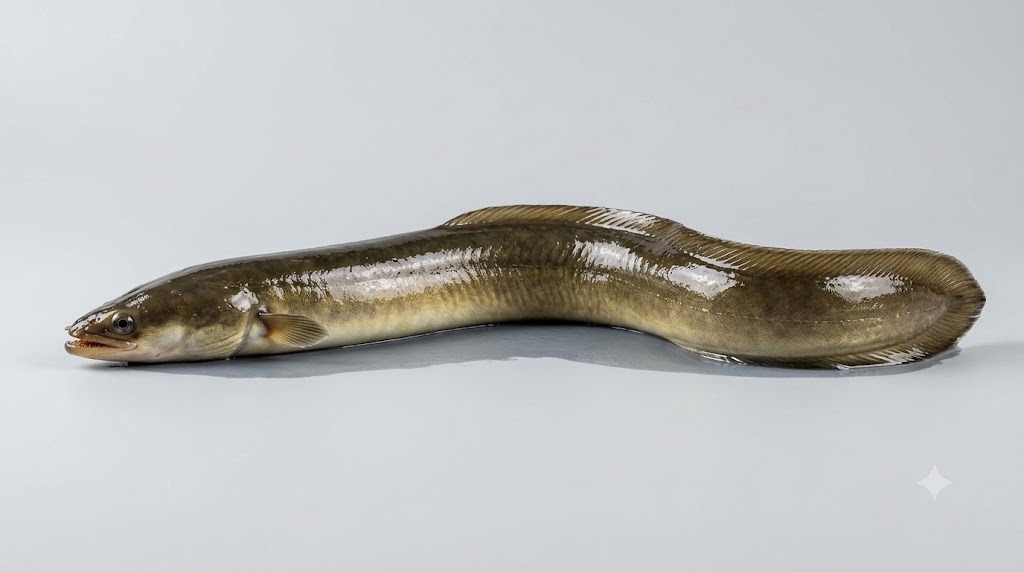
The American eel is unmistakable: a long, slender, snake-like fish with a continuous fin that runs along the back, around the tail, and forward along the belly as a single unbroken dorsal-caudal-anal fin. It has small pectoral fins behind the gills but no pelvic fins at all. The body is covered in tiny, soft scales embedded deep in the skin, so the eel feels smooth and is coated in a thick, slippery layer of slime that makes it very hard to hold. The head is somewhat pointed with a large mouth and a slightly protruding lower jaw, and the eyes are small. Coloration changes with life stage: young river eels, called yellow eels, are yellowish-green to brown on the back and sides with a pale yellow or off-white belly, while mature eels preparing to migrate to sea, called silver eels, turn dark bronze to black on top with a bright silvery-white belly and enlarged eyes. The American eel is easily told from any true gamefish by its snake-like form, and it differs from the marine conger eel and from lampreys - a lamprey has a round, jawless sucker mouth and gill holes rather than the eel's hinged jaws and gill covers.
Range & Habitat (US waters)
The American eel is found all along the Atlantic coast of the United States, from Maine down through the Mid-Atlantic and the Southeast to Florida and around into the Gulf of Mexico. Because it is catadromous, a single eel may use a huge range of water over its life: it enters fresh water as a young eel and can be found far inland in rivers, streams, ponds, and lakes - sometimes hundreds of miles from the sea - as well as throughout tidal creeks, estuaries, bays, and brackish marshes. Eels are remarkably tolerant and adaptable, living over muddy, soft, and weedy bottoms where they can burrow, and they can even wriggle over wet ground to reach landlocked ponds. They favor slow to moderate water with cover - undercut banks, rocks, submerged wood, weed beds, and soft mud - where they hide by day. The one thing every American eel has in common is the Sargasso Sea: that mid-Atlantic region is the species' only spawning ground, and every eel in every East Coast river hatched there before migrating to the coast.
Behavior & Feeding
American eels are nocturnal bottom feeders. By day they hide in mud, under rocks, in weed beds, and among submerged wood and undercut banks, and they come out at night to feed along the bottom. They hunt mostly by smell rather than sight, which is why they are caught so reliably on scent-heavy cut bait and worms fished on the bottom after dark. The eel is an opportunistic predator and scavenger with a broad diet: it eats worms, insects and their larvae, crayfish, crabs, shrimp, clams and other shellfish, small fish, fish eggs, and dead and decaying matter it scavenges off the bottom. Its slippery body and ability to burrow let it forage in soft mud and tight cover where many fish cannot go. Eels are most active in warm months and feed hard at night through the warm season; in cold winter water they slow down and often bury themselves in mud and become dormant. A feeding eel will mouth and worry a bait persistently, and its tendency to swallow bait deep and then twist and roll is a hallmark of the species on the line.
Best Seasons & Times to Catch
The single most important rule for American eels is to fish at night. Eels feed after dark, so the hours from dusk through the night are by far the most productive, and daytime fishing is usually slow. The best season is the warm part of the year - late spring through early fall - when the water is warm and eels are active and feeding hard along the bottom. Warm summer nights are prime time. As the water cools in late fall and winter, eels slow down, bury in the mud, and become dormant, so the cold months are generally poor. A warm, still summer night over a soft-bottomed creek, river hole, or estuary, fished with cut bait or nightcrawlers on the bottom, is the classic eeling situation. Anglers targeting eels specifically for striped bass live bait also key on this warm-season, after-dark window to catch their bait supply.
Where to Find Them - Reading the Water
Finding American eels means finding soft, sheltered bottom in slow to moderate water, and fishing it after dark. In rivers and creeks, target deep holes, slow pools, undercut banks, eddies, and any stretch with a muddy or weedy bottom and cover like rocks and submerged wood. In ponds and lakes, look for soft-bottomed areas, weed edges, and the bottom near cover. In tidal water, fish the estuaries, tidal creeks, brackish bays, and marsh edges where eels are abundant, paying attention to the stage of the tide that concentrates feeding. Because eels hunt by smell along the bottom at night, you do not need to see structure so much as put a scent bait on a soft, food-holding bottom where eels travel and let them find it. The simple approach: pick a muddy or weedy hole in slow water near cover, go after dark, and fish your bait flat on the bottom.
Tackle & Rigs
Eels do not require heavy specialized gear, but they do demand a setup that can handle their habit of swallowing bait deep, burrowing into cover, and twisting line into a slimy tangle. A medium spinning or baitcasting rod with a reel spooled with abrasion-resistant monofilament or braid in a moderate strength is plenty for most eels, with heavier line a help when fishing around rocks and wood where a hooked eel will try to bury. The standard rig is a simple bottom rig: an egg sinker or split shot, or a sliding sinker, above a swivel, with a short leader to a single hook - a baitholder hook or a circle hook in a moderate size. Many anglers prefer a circle hook because eels swallow bait deeply, and a circle hook tends to set in the jaw and makes release easier on fish you intend to put back. A second, separate use of tackle is catching eels as live bait for striped bass: there, an eel is hooked through the jaw or eye sockets on a single hook and fished live on a striper rig. Bring pliers or a hook remover, a rag or sand to grip the slimy fish, and patience for untangling.
Best Baits & Lures
American eels are a bait fishery, not a lure fishery, because they feed by smell along the bottom at night. The best baits are scent-heavy natural offerings fished flat on the bottom: nightcrawlers and other worms are a classic and deadly choice, along with cut bait such as pieces of fish, and shrimp, clams, crabs and other shellfish, and other oily, smelly cut natural baits. Freshness and scent matter - a strong scent trail along the bottom is what draws a cruising nocturnal eel to the hook. Eels are rarely caught on artificial lures, so there is essentially no lure selection to discuss for targeting eels themselves. It is worth noting the flip side of the bait story: the American eel is itself one of the premier live baits in saltwater fishing, especially for striped bass, and live eels are also used for cobia, large bass, and other big predators - so an angler may catch eels both to fish for and to fish with.
Techniques - How to Fish for It
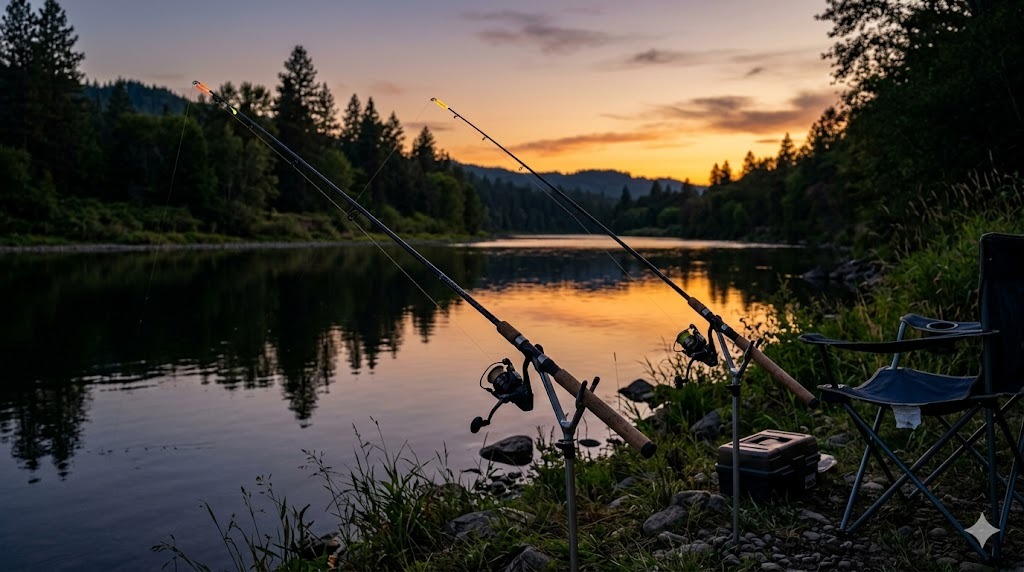
The core technique for American eel is simple bottom fishing after dark. Rig a bottom rig with a sinker and a baited single hook, cast it out onto a soft, sheltered bottom in a creek, river hole, pond, or estuary, and set the rod in a holder or hold it with the bait resting on the bottom. Then wait for the eel to find it by scent. An eel often mouths and worries the bait before taking it, and because eels swallow deep and then twist and roll, a circle hook fished by reeling tight rather than jerking helps set the hook in the jaw and keeps fish hookable for release. Once hooked, an eel pulls hard for its size and immediately tries to wrap the line, dive into cover, and tie itself and your leader into a slimy knot, so steady pressure to keep it out of cover is the key. Landing an eel is its own challenge: the fish is coated in slime and nearly impossible to hold, so a rag, a towel, or a handful of sand to grip it, plus pliers to deal with a deeply taken hook, make the job far easier. When catching eels as striped bass bait, the technique shifts to keeping them alive and lively until they go on a striper rig.
Common Mistakes
The most common mistake is fishing for eels during the day. Eels are nocturnal, so daytime trips are usually slow and the action only really turns on after dark. Another frequent error is not being prepared for how slimy and twisty an eel is: anglers who try to grab a bare eel struggle endlessly, when a rag, towel, or sand makes gripping it simple. Many anglers also lose eels or gut-hook fish they meant to release by using a small bait hook that an eel swallows deeply; a circle hook fished tight reduces deep hooking and helps release. Fishing too light around rocks and wood is another mistake, because a hooked eel bolts straight into cover and buries, and light line lets it break off or tangle hopelessly. Finally, ignoring the regulations is a serious and increasingly important error: American eel populations have declined, states set minimum size limits and harvest rules, and undersized eels and over-limit catches must be released - so failing to check current local rules can put you on the wrong side of the law.
Size, Records & Eating Quality
Most American eels caught by anglers are well under a couple of feet long, and a typical river eel runs from under a foot up to two feet or so. Larger eels, usually older females, can reach three feet and occasionally more, and a big silver eel is a genuinely large, powerful fish for its shape. The IGFA all-tackle world record for the American eel is around 9 pounds 4 ounces, taken in New Jersey waters, which shows how heavy a truly large specimen can be. Eels grow slowly and can live many years - sometimes well over a decade, and far longer in some cases - before maturing into silver eels and migrating to the Sargasso Sea to spawn once and die. That slow growth and single lifetime spawning run is part of why the species is vulnerable and why populations have declined from historic levels. As a result, the American eel is managed with state regulations that commonly include a minimum size limit and daily harvest limits, and these rules vary by state and change over time, so you must check current local regulations before keeping any eel. As table fare, the American eel is excellent: the flesh is firm, rich, and high in oil, and it is considered a delicacy in much of the world. It is outstanding smoked, and it is also commonly fried, grilled, or used in traditional dishes, with the rich, fatty meat taking smoke especially well. Where harvest of legal-size eels is allowed, it is well worth eating; where it is not, or for undersized fish, eels should be released.
Pros & Cons (as a target species)
Pros: the American eel is an unusual and interesting catch with a remarkable catadromous life history, it pulls hard for its size, it is caught on simple and inexpensive bottom-fishing tackle and cheap natural baits, and it is widely available all along the East Coast in everything from inland creeks to tidal estuaries. It is excellent eating, especially smoked, where harvest is legal, and it doubles as one of the very best live baits for striped bass and other big predators, so catching eels can serve a second purpose. Cons: eels are essentially a night fishery, so you have to fish after dark to do well; they are extremely slimy and twisty, making them messy and frustrating to handle and unhook; they tend to swallow bait deeply and tangle the line in cover; and declining populations mean tightening state size and harvest regulations that you must follow, with undersized and over-limit fish released.
Best Suited For
The American eel suits the angler who enjoys an unusual quarry and does not mind fishing after dark, since night is when eels feed. It is ideal for anyone who likes simple, low-cost bottom fishing with natural bait in creeks, rivers, ponds, and estuaries, and for anglers who appreciate a hard-pulling, oddball fish rather than a classic gamefish. It is especially well suited to two kinds of anglers: those who want rich, smoke-worthy table fare where legal harvest is allowed, and striped bass fishermen who catch their own live eels to use as premium bait. As with any declining species, it best suits anglers who take regulations seriously and release undersized and over-limit eels.
FAQ
What is the best bait for American eel? Scent-heavy natural bait fished on the bottom is best, with nightcrawlers and cut fish among the top choices, along with shrimp, clams, and other shellfish. Eels feed by smell after dark, so a fresh, oily, strong-smelling bait resting on a soft bottom is what draws them. Artificial lures rarely work for eels.
When is the best time to catch eels? At night, in the warm months. Eels are nocturnal and feed after dark, so dusk through the night is by far the most productive, and warm summer nights are prime. In cold winter water eels bury in the mud and go dormant, making the cold months poor.
Why is the American eel so slimy and hard to hold? The eel's body is covered in a thick layer of protective slime over tiny embedded scales, which keeps it moist and lets it slip through tight cover and burrow into mud. That slime makes a hooked eel nearly impossible to grip bare-handed, so anglers use a rag, towel, or a handful of sand to hold it.
Are American eels good to eat? Yes, where legal harvest is allowed they are excellent. The flesh is firm, rich, and oily, and eel is prized smoked and also fried or grilled. Because populations have declined, states set minimum size and harvest limits, so keep only legal-size eels within the rules and release undersized fish - and always check current local regulations.
Can I use an eel as bait for striped bass? Yes - live eels are one of the best baits for striped bass, and they are also used for cobia, big bass, and other large predators. Anglers often catch their own eels after dark in the warm season, keep them alive and lively, and fish them on a striper rig. Just be sure the eels you use meet any size and harvest rules in your state.