American Shad
The American shad is the largest member of the herring family, a silvery, deep-bodied fish that spends most of its life in the ocean but returns to fresh water each spring to spawn.
🗓️ Last reviewed: June 2026
Overview
The American shad is the largest member of the herring family, a silvery, deep-bodied fish that spends most of its life in the ocean but returns to fresh water each spring to spawn. For East Coast anglers - and, thanks to a long-ago introduction, for West Coast anglers too - the spring shad run is one of the most accessible and exciting fisheries of the year. Shad are anadromous, pushing up coastal rivers in huge numbers when the water warms, and when they take a small lure in current they fight far above their weight, with hard runs, head-shakes, and acrobatic jumps that have earned them the nickname the "poor man's tarpon." They are caught from boats and from the bank on light tackle, often in big numbers when the timing is right, which makes them a favorite of anglers who want fast action without a lot of expensive gear. Shad are very bony to eat, so most of the sport fishery is catch-and-release, though the roe has long been prized as a seasonal delicacy. More than almost any other fish, success with shad comes down to one thing: timing the run.
Identification & Appearance
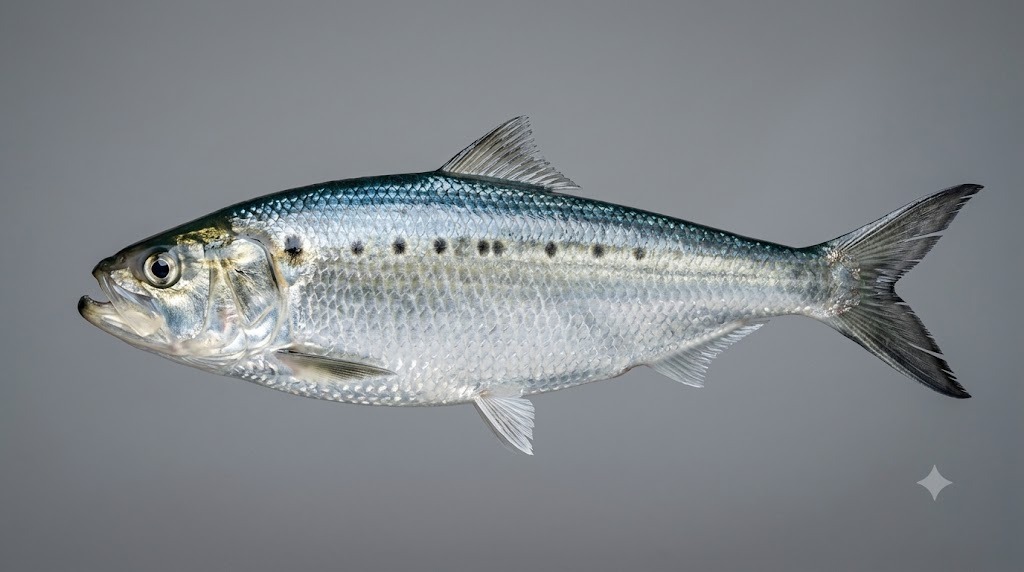
The American shad has a deep, laterally compressed, silvery body that is the classic herring shape, taller through the middle and tapering to a narrow tail. The back is a metallic blue-green to greenish, fading to bright silver on the sides and belly, and a row of distinct dark spots usually runs back along the upper flank behind the gill cover, with the first spot the largest. The scales are large and shed easily, and the belly carries a sharp, saw-edged keel of modified scales called scutes that you can feel by running a finger along it. The mouth is fairly large with a deeply notched upper jaw, and the lower jaw fits into that notch when closed; shad have weak teeth and feed mostly by filtering. The tail is deeply forked. American shad are separated from the smaller hickory shad by jaw structure - the hickory's lower jaw projects noticeably beyond the upper - and from alewife and blueback herring (the "river herring") mainly by their much larger size and body depth. Females, called roe shad, run larger and deeper-bodied than the males, called buck shad.
Range & Habitat (US waters)
American shad are native to the Atlantic coast of North America, historically running up rivers from the Canadian Maritimes south to Florida. Classic shad rivers include the Connecticut, Hudson, Delaware, Susquehanna, Potomac, James, and the rivers of the Carolinas and Georgia. In the late 1800s the species was introduced to the West Coast, where it took hold and now runs in good numbers up rivers such as the Sacramento, the Columbia, and others in California, Oregon, and Washington. As an anadromous fish, the adult shad lives in the open ocean and only enters fresh water to spawn, returning in spring to the river of its birth. During the run the fish are found in the main stems of coastal rivers, holding and moving through current, often stacking up below dams, falls, rapids, and other natural pinch points that concentrate them. They favor moving water and seams where slower water meets faster current. Outside the spawning run, adults are at sea and beyond the reach of the freshwater angler.
Behavior & Feeding
In the ocean, American shad are filter feeders, straining plankton, tiny crustaceans, and small fish from the water with their gill rakers. The key thing for anglers to understand is that once shad enter fresh water to spawn, they largely stop feeding. They do not chase a lure because they are hungry the way a bass does. Instead, shad strike small, bright, fast-moving lures out of what appears to be reflex or aggression as the lure passes through their lane in the current. This is why the fishery is built around tiny, flashy offerings worked in the flow rather than natural bait. Shad move upstream in waves, holding in current seams and behind structure to rest, then pushing on toward the spawning grounds. They are strongly drawn to water temperature and flow: a warming river in spring triggers and sustains the run, and a cold snap or a blowout from heavy rain can stall it. The fish often hold and travel in loose schools, which is why anglers who find one shad frequently find many.
Best Seasons & Times to Catch
For American shad, the season is everything, and that season is spring. The run is driven by water temperature, generally kicking off as the river warms into roughly the upper 50s Fahrenheit and peaking through the 60s, which translates to a window that moves north as spring advances - earlier in the southern rivers, later in New England. Depending on the river and the year, the run can stretch from roughly March into June. The single most important skill in shad fishing is timing your trip to the peak of the run, and serious shad anglers track river temperature and flow reports, fish-passage counts at dams, and local run reports closely. Within a day, low-light periods around dawn and dusk are often productive, and many anglers like the afternoon as the day's warmth nudges the fish to move. Flow matters as much as the calendar: a river at a fishable, stable level fishes far better than one blown out and muddy from spring rain. Hit the run at its peak on good water, and the fishing can be spectacular; miss the window by a week or two, and the same river can seem empty.
Where to Find Them - Reading the Water
Because migrating shad follow current upstream and rest in predictable spots, reading the water is the heart of finding them. Look first for places that concentrate fish: the pools and tailraces below dams, falls, and rapids, where upstream migration is blocked or slowed and shad stack up in numbers. Within a stretch of river, target current seams - the lines where faster current meets slower water - along with the edges of riffles, the heads and tails of pools, eddies behind bridge pilings and large rocks, and channel edges where fish move through. Shad like to hold just off the main push of current where they can rest while still being in the flow. Depth varies with the river and the height of the water, but the fish are often holding in the middle of the water column or near the bottom in the current. A good approach is to fan casts across a likely seam, work the lure through the current at different depths until you find the holding lane, and then, once you hook a fish, work that same lane carefully, because shad school and where there is one there are usually more.
Tackle & Rigs
Shad are a light-tackle fish, which is a big part of their appeal. A light or medium-light spinning rod around 6.5 to 7.5 feet, paired with a small spinning reel and 6 to 10 pound line (mono or braid with a light leader), is ideal and makes the most of the fight. Many anglers also fly fish for shad, using a 6 or 7 weight fly rod with a sinking-tip or full sinking line to get small flies down into the current. The classic spinning rig is built around a shad dart or small spoon, often fished as a tandem rig: two darts on the leader, or a dart trailed behind a small flashy spoon, to imitate a tiny baitfish and a chasing morsel and to double the chances on a school. A small barrel swivel helps prevent line twist from spinning lures, and a split shot or two is often added above the lure to get it down to the holding depth in faster water. Because shad have soft, easily torn mouths, a smooth drag set on the light side and a gentle hand on the fight matter; horsing a shad on heavy gear tends to pull the small hook free.
Best Baits & Lures
Shad fishing is almost entirely an artificial-lure game, because the fish are not feeding during the run and strike small, bright lures by reflex. The undisputed staple is the shad dart - a small, weighted jig head, usually 1/32 to 1/4 ounce, with a slanted painted head and a sparse tail, in hot colors like red-and-white, chartreuse, pink, orange, and combinations of those. The other mainstay is the small flutter spoon, a thin, flashy spoon that wobbles and flashes in the current. These two are frequently combined in a tandem rig. Small curly-tail grubs and tiny jigs also take fish, and fly anglers score with small, flashy, weighted streamers and shad flies in the same bright colors, often with a bit of tinsel or flash and sometimes a bead or dumbbell eyes to sink them. Natural bait is rarely used and is unnecessary, and is restricted on many shad rivers anyway. The real "secret" is less about the exact lure and more about color and depth: carry a range of dart colors and weights, and keep changing color and adjusting weight until you find what the fish want and get the lure into their lane.
Techniques - How to Fish for It
The core shad technique is a controlled drift of a small lure through the current at the depth the fish are holding. From a boat, anglers often anchor above or beside a productive seam or tailrace and cast the dart or tandem rig up and across, letting it swing and tumble naturally with the current while keeping just enough tension to feel the strike - much like swinging a fly. From the bank, the approach is the same: cast up and across, let the lure drift and sink into the seam, and follow it with the rod tip as it swings below you, covering the holding water. The bite is often subtle, a light tap or just a sudden weight or hesitation in the drift, so staying in contact with the lure is important. The takes can also be jarring when an aggressive fish hits on the swing. When a shad is hooked, it fights hard for its size, running, shaking its head, and frequently jumping clear of the water, which is where the "poor man's tarpon" nickname comes from. Keep the rod up and the drag light, let the fish run and jump, and steer it in without forcing it, since the soft mouth gives up a hook easily. Once you locate the right lane and depth, settle in and work it, because a single good seam during the peak run can produce fish after fish.
Common Mistakes
The biggest mistake in shad fishing is simply mistiming the run - showing up too early or too late and fishing water the bulk of the fish have not reached yet or have already left. Watching river temperature, flow, and run reports avoids this. A close second is fishing at the wrong depth: shad hold in a specific lane in the current, and a lure drifting over their heads draws nothing, so failing to add or subtract weight to reach the holding depth is a common reason for a slow day. Anglers also lose fish by using gear that is too heavy and by fighting the fish too hard, which tears the small hook out of a soft mouth - a light drag and a gentle hand land far more shad. Sticking stubbornly with one dart color when the fish are not responding is another error; shad can be surprisingly color-particular day to day, and refusing to experiment leaves fish uncaught. Finally, many anglers overlook the prime concentration spots - the seams and tailraces below dams and rapids - and instead fish featureless water where migrating shad simply are not holding.
Size, Records & Eating Quality
American shad are modest in size compared to many gamefish but large for the herring family. Typical fish run roughly 2 to 5 pounds, with larger roe females reaching 5 to 8 pounds and the biggest fish exceeding that; the IGFA all-tackle world record is around 11 pounds 4 ounces, a fish taken from the Connecticut River in Massachusetts in 1986. On the light tackle they are caught with, even an average shad puts on a memorable, leaping fight. As table fare, shad are famously bony - their flesh is rich and flavorful but laced with a complex network of fine, floating bones that makes filleting them notoriously difficult, a skill that takes real practice or an expert hand. Because of this, most sport-caught shad are released, and much of the modern shad fishery is catch-and-release sport fishing. The great prize for eating is the roe: shad roe, the egg sacs from the females, is a celebrated springtime delicacy, traditionally sauteed and served with bacon, and shad roe season is a genuine seasonal event in parts of the East Coast. It is worth noting that many shad populations have declined sharply from their historic abundance due to dams blocking spawning runs, habitat loss, and past overharvest, and as a result a number of rivers and states now restrict or prohibit the harvest of shad and river herring. Always check current state regulations before keeping any shad or roe, because rules vary widely by river and change over time, and on many waters the fishery is release-only.
Pros & Cons (as a target species)
Pros: American shad offer fast, accessible, light-tackle action during a defined spring season, often in big numbers, and they fight hard for their size with strong runs and acrobatic jumps that make them genuinely fun on light gear. They can be caught from both boats and the bank, the tackle is simple and inexpensive - a handful of shad darts and a light spinning rod will do - and a good day during the peak run can produce dozens of fish. The spring run is also a welcome early-season fishery when many other species are still slow. Cons: the fishing is highly seasonal and depends almost entirely on timing the run, so a trip a week off the peak can be slow or empty; the fish are very bony and difficult to eat, which limits their value as table fare; harvest is restricted or closed on many waters due to population declines; and their soft mouths and the small hooks used mean a fair number of fish are lost in the fight if you are not gentle.
Best Suited For
American shad suit the angler who loves fast, light-tackle action and a hard-fighting fish, and who is willing to pay attention to the calendar and the river to time the spring run. They are excellent for bank anglers and small-boat anglers alike, and a great choice for families and newcomers because the gear is simple and cheap and, when the run is on, the fish can be plentiful and willing. They are ideal for anyone who measures a day by the fight and the number of fish rather than by the fillets in the cooler, since most shad are released. They also suit anglers who enjoy fly fishing in current, as swinging small flies for shad is a classic and effective method. For those drawn to the roe as a seasonal delicacy, shad offer a brief, prized window each spring - just be sure to confirm that harvest is legal on the water you are fishing.
FAQ
What is the best lure for American shad? The classic and most reliable choice is the shad dart, a small painted jig in hot colors like red-and-white, chartreuse, pink, and orange, often fished in a tandem rig or paired with a small flutter spoon. Shad are not feeding during the run, so they strike these small, bright lures by reflex. Carry a range of colors and weights and keep changing until you find what the fish want at the depth they are holding.
When is the best time to catch shad? Spring, during the spawning run, is the only practical time, since adult shad are at sea the rest of the year. The run is driven by water temperature, generally starting as the river warms into the upper 50s Fahrenheit and peaking through the 60s, which means earlier in southern rivers and later in New England, roughly March through June depending on the river. Timing your trip to the peak of the run is the single most important factor in success.
Do American shad fight hard? Yes - that is their main appeal. For their modest size they fight far above their weight, with strong runs, head-shakes, and frequent jumps clear of the water, which is why they are nicknamed the "poor man's tarpon." On the light spinning or fly tackle used to catch them, even an average shad is a genuinely fun, memorable fight.
Are American shad good to eat? The flesh is rich and flavorful but extremely bony, laced with fine floating bones that make filleting them very difficult, so most sport-caught shad are released. The real prize for eating is the roe - shad roe is a celebrated spring delicacy, traditionally cooked with bacon. Note that harvest of shad and their roe is restricted or prohibited on many waters due to population declines, so always check current state regulations first.
Where do I find shad in a river? Look for places that concentrate migrating fish: the pools and tailraces below dams, falls, and rapids where upstream movement is blocked or slowed. Within a stretch, target current seams where fast water meets slow, the edges of riffles, the heads and tails of pools, and eddies behind rocks and bridge pilings. Shad hold just off the main current to rest, and because they school, once you find one you will usually find many in the same lane.