Atlantic Salmon
The Atlantic salmon is often called "the leaper," and for good reason - it is one of the most prized and mythologized game fish in the world.
🗓️ Last reviewed: July 2026
Overview
The Atlantic salmon is often called "the leaper," and for good reason - it is one of the most prized and mythologized game fish in the world. In the United States, wild Atlantic salmon runs were once abundant across New England rivers, but dams, pollution, and overfishing decimated them. Today the fish survives in restored and protected runs, mainly in Maine, and most sea-run fishing is heavily regulated or closed, with catch-and-release the rule where fishing is allowed. There is also a landlocked variety that lives its whole life in freshwater lakes and provides excellent, more accessible sport. For the fly angler, hooking a chrome-bright Atlantic salmon on a swung fly is a bucket-list moment - a fish steeped in tradition, fought with reverence, and released with care.
Identification & Appearance
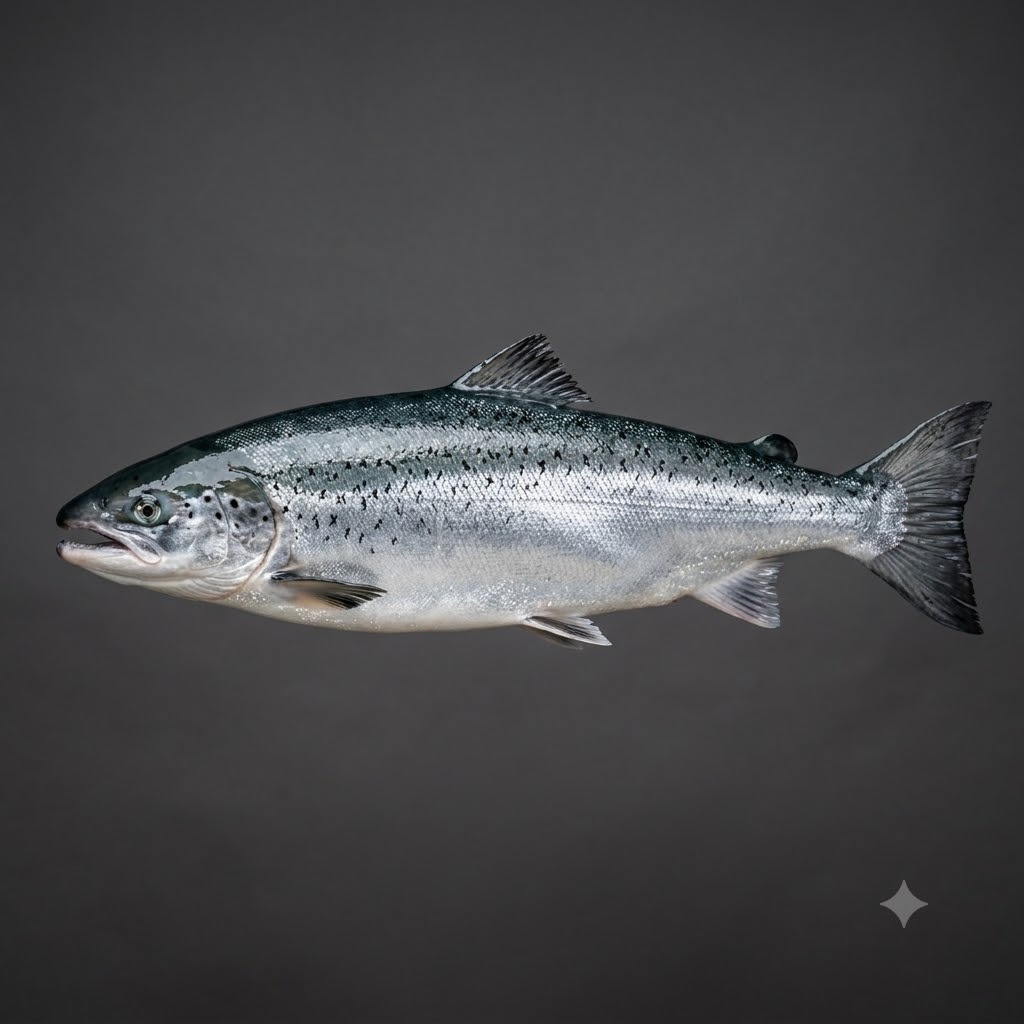
The Atlantic salmon is a streamlined, powerful fish with a slightly forked tail and a small adipose fin. Sea-run fish returning from the ocean are bright silver with a dark blue-green back, a clean white belly, and scattered black spots above the lateral line - typically X-shaped or cross-shaped marks, few or none below the line. As they spend time in freshwater, they darken to bronze and the males develop a hooked lower jaw called a kype. The best marks separating it from a brown trout: the Atlantic salmon has a more slender wrist ahead of the tail (you can nearly grip it), fewer spots on the gill cover, and a mouth that reaches only to about the rear of the eye rather than well past it.
Range & Habitat (US waters)
Wild sea-run Atlantic salmon in the US are now largely confined to a handful of rivers in Maine, where they are federally protected. Historically they ranged across New England from Connecticut to the Canadian border. The landlocked form, sometimes called a "sebago" salmon, is stocked and self-sustaining in cold, deep lakes across Maine, New Hampshire, Vermont, and New York, and in their connected rivers and streams. Both forms need cold, clean, well-oxygenated water. Sea-run fish spawn in gravel-bottomed river reaches, while landlocked salmon roam open lake water chasing baitfish and run up tributaries to spawn in fall.
Behavior & Feeding
Sea-run Atlantic salmon do not actively feed once they enter freshwater to spawn - they live off stored reserves. Anglers instead trigger a reflexive, aggressive strike with a swung fly, provoking the fish rather than feeding it. Landlocked salmon, by contrast, feed actively year-round and key heavily on smelt and other baitfish, chasing them near the surface in cold water. Both forms are famous for their explosive fight: long runs, repeated leaps clear of the water, and stubborn stamina. Water temperature and flow drive their behavior; a fresh pulse of rain that raises and cools a river often gets sea-run fish moving and biting.
Best Seasons & Times to Catch
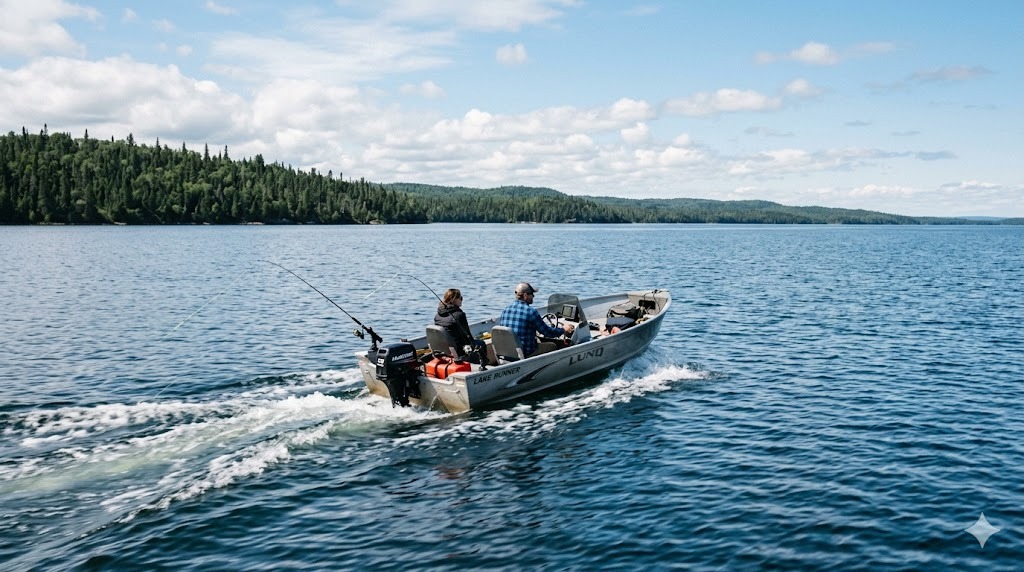
For sea-run fish where seasons are open, summer and early fall coincide with the upstream runs, with the bite improving after rain raises river levels. For landlocked salmon, spring is the marquee time - right after ice-out, salmon feed hard on smelt near the surface in the cold upper layer, and this is the easiest time to catch them by trolling or casting. As the surface warms in summer, landlocked fish drop deeper and require downriggers or lead-core line. Fall brings another strong window as salmon stage near tributary mouths before spawning. Early morning and overcast, cool conditions are generally best.
Where to Find Them - Reading the Water
In rivers, look for salmon in holding lies: the tail-outs of pools, seams where fast water meets slow, behind boulders, and in deeper runs with steady flow. Fresh fish rest in these lies between pushes upstream. In lakes, landlocked salmon relate to cold water and baitfish. Right after ice-out they cruise the surface near shorelines, points, and tributary inflows where smelt concentrate. As water warms, find them along the thermocline over deep basins. In fall, concentrate on the mouths of spawning tributaries. The rule for both: find cold, clean water and, for landlocked fish, find the smelt.
Tackle & Rigs
For sea-run river fishing, the traditional tackle is a fly rod - single-hand rods in the 7-9 weight range or two-handed spey rods for swinging flies across big pools, matched with a reel that has a strong drag and plenty of backing for long runs. For landlocked salmon, trolling is popular using light spinning or trolling rods with monofilament, sometimes lead-core or downriggers to reach depth in summer. Casting anglers use light spinning gear with 6-8 lb line, or fly gear with sinking-tip and floating lines. A smooth, protective drag matters more than raw power - these fish run and leap, and a locked-down drag pops light tippet.
Best Baits & Lures
Fly patterns dominate Atlantic salmon fishing by tradition and often by law. Classic wet flies and hair-wing patterns, along with modern tube flies and bombers (dry flies skated on the surface), are the standard for sea-run fish. For landlocked salmon, the key forage is smelt, so anglers troll or cast streamer flies that imitate smelt, along with spoons and small minnow-shaped plugs in silver and blue. Where bait is legal, live smelt are deadly for landlocked fish. Match the smelt profile - slim, silvery, a few inches long - and you are on the right track.
Techniques - How to Fish for It
The signature sea-run technique is the swung fly: cast across and slightly down, mend the line, and let the fly swing across the current on a tight line while it slowly drops through a holding lie. The take is often a heavy pull. For landlocked salmon at ice-out, troll streamers or smelt imitations near the surface just off the shoreline and tributary mouths. As summer sets in, add depth with lead-core line or downriggers to reach the cold layer. Whatever the method, when a salmon jumps, bow the rod toward it - lowering the tip gives slack so the leaping fish cannot snap the tippet.
Common Mistakes
The biggest mistake is a heavy hand on the drag or rod when a salmon leaps - failing to bow to the fish costs more Atlantics than anything else. Other errors: fishing water that is too warm, since these fish need cold; swinging a fly too fast so it skates unnaturally; ignoring the smelt when chasing landlocked fish and fishing empty water; and, above all, mishandling a fish destined for release. Keep them wet, minimize air time, and revive them fully. Also, always know the regulations - many waters are strictly catch-and-release or closed entirely.
Size, Records & Eating Quality
Sea-run Atlantic salmon commonly range from several pounds up into the teens, with larger fish possible. Landlocked salmon are smaller, often 1-4 pounds, with fish over 5 pounds counting as a real trophy in most lakes. The flesh is famous for its rich, oily quality and prized on the table, but wild US sea-run fish are protected and must be released. Landlocked salmon may be kept within legal limits where regulations allow, and they make fine eating. Because wild runs are fragile, the culture around Atlantic salmon leans heavily toward conservation and release.
Pros & Cons (as a target species)
Pros: a legendary, hard-fighting fish with spectacular leaps, steeped in fly-fishing tradition, and deeply rewarding to catch; the landlocked form offers accessible sport in clean, scenic lakes. Cons: wild sea-run fishing is extremely limited, tightly regulated, or closed in the US; the fish can be maddeningly selective and are not actively feeding on the run; and success often demands specialized fly gear, cold water, and no small amount of patience.
Best Suited For
Atlantic salmon suit the patient, tradition-minded angler, especially the fly fisher who values the pursuit as much as the catch. The landlocked form is a great target for anglers who enjoy trolling clean northern lakes at ice-out or casting streamers to surface-feeding fish. This is not a numbers game - it rewards those drawn to a storied fish, careful catch-and-release, and the thrill of a single explosive strike.
FAQ
Can I fish for wild Atlantic salmon in the US? Only in very limited, tightly regulated situations. Most wild sea-run Atlantic salmon in the US are federally protected, and many Maine rivers are closed to fishing for them. Always check current regulations, as rules change and most fishing is catch-and-release.
What is the difference between sea-run and landlocked Atlantic salmon? They are the same species. Sea-run fish migrate to the ocean and back to spawn, while landlocked salmon spend their whole lives in freshwater lakes. Landlocked fish are smaller and feed actively, making them more accessible to catch.
Why do sea-run salmon strike a fly if they aren't feeding? Once in freshwater, sea-run salmon live off stored reserves and do not feed. A well-presented swung fly provokes a reflexive, aggressive strike - a reaction rather than a feeding response - which is why presentation and provocation matter so much.
What is the best time to catch landlocked salmon? Right after ice-out in spring. Salmon feed hard on smelt near the surface in the cold water, and trolling or casting streamers along shorelines and tributary mouths is the most productive window of the year.
Why should I bow to a leaping salmon? When a salmon jumps, a tight line can snap the light tippet. Lowering the rod tip toward the fish, called bowing, gives momentary slack that absorbs the shock and keeps you connected through the leap.