Bigmouth Buffalo
The bigmouth buffalo is one of North America's most remarkable native fish, and one of its most misunderstood.
🗓️ Last reviewed: July 2026
Overview
The bigmouth buffalo is one of North America's most remarkable native fish, and one of its most misunderstood. Despite a superficial resemblance to carp, it is not a carp at all but a large native member of the sucker family, and it belongs here, unlike the introduced Asian carps. It is a filter feeder that strains tiny plankton from the water, which makes it extraordinarily difficult to catch on a hook and a fascinating challenge for the angler who seeks it out. It is also astonishingly long-lived, one of the oldest-living freshwater fish known, with individuals reaching ages far beyond almost any other fish an angler will encounter. For those drawn to big, unusual, native species, the bigmouth buffalo is a true prize.
Identification & Appearance
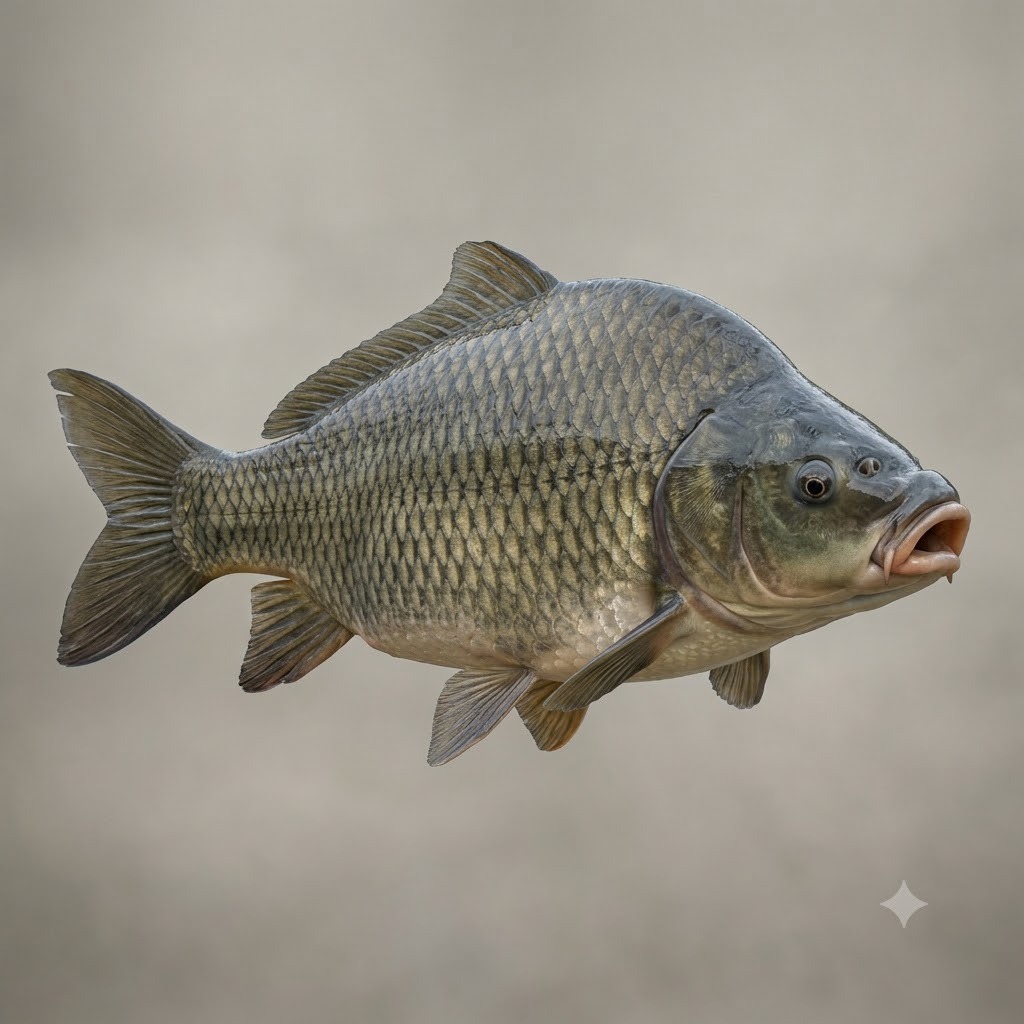
The bigmouth buffalo has a deep, robust, heavy body with a large head and, as its name suggests, a large mouth. The most important identification feature is that mouth: it is terminal and oblique, angled forward and upward, which is unusual for a sucker and reflects its plankton-feeding habit, rather than the downturned, bottom-facing mouth of most suckers. The body is covered in large scales and colored in dull olive, bronze, brown, and slate-gray tones, often with a coppery sheen, fading to a paler belly. It lacks the barbels of a true carp, another key way to tell it apart. Its blunt, humped-back profile and forward-tilted mouth are the surest field marks.
Range & Habitat (US waters)
The bigmouth buffalo is native to the large river systems and associated lakes of central North America, most notably the Mississippi River basin and its many tributaries, along with connected backwaters, oxbows, and reservoirs. It favors large, warm, slow-moving or still waters rich in the plankton it feeds on, including big rivers, floodplain lakes, and shallow productive lakes. It tolerates warm, turbid water well and often thrives in the same fertile waters that support other rough fish. Because it is a native species central to these ecosystems, it plays an important ecological role, and healthy populations are a sign of a productive, functioning river or lake system.
Behavior & Feeding
The bigmouth buffalo is primarily a filter feeder, using fine gill rakers to strain zooplankton and other tiny organisms from the water column. This is the single most important thing to understand about the species, because a fish that feeds on microscopic plankton is very hard to tempt with a baited hook. Unlike predators or even bottom-grubbing suckers, it does not hunt down large food items, so it rarely takes a conventional bait. Buffalo often travel and feed in groups, moving through open water and productive shallows as they filter feed. Their feeding style, more than anything, defines how anglers must approach them and why they are so seldom caught on rod and reel.
Best Seasons & Times to Catch
Warm-water conditions from spring through summer generally offer the best, though still limited, opportunities to catch a bigmouth buffalo on hook and line. Spring, when fish move shallow and gather in warming water, can concentrate them and improve the odds. Because they are filter feeders, though, their willingness to take a bait is unpredictable in any season. This is a major reason that many anglers pursue bigmouth buffalo by bowfishing rather than with rod and reel, since sight-based methods do not depend on the fish choosing to eat. When targeting them with a hook, warm, productive periods when fish are shallow and active are the best bet.
Where to Find Them - Reading the Water
Look for bigmouth buffalo in large, warm, fertile waters where plankton is abundant: the slow sections and backwaters of big rivers, floodplain lakes, oxbows, and shallow productive lakes and reservoirs. In spring they often gather in warming shallows, and their backs or tails may break the surface as they move through shallow water. Because they travel in groups, spotting one often means more are nearby. Turbid, fertile water with plankton blooms attracts them. For anglers, and especially for bowfishers, watching for fish rolling or cruising in shallow, plankton-rich water is the key to locating a school worth targeting.
Tackle & Rigs
Catching a bigmouth buffalo on hook and line is difficult, but anglers who try use stout tackle because these fish grow large and pull very hard. A strong rod, a reel with a dependable drag and good line capacity, and strong line are all appropriate for such a powerful fish. A simple bottom rig with a small hook and a fine natural bait is the usual approach, presented where fish are feeding. Because the fish is such a reluctant biter, patience matters more than any specific rig. Many who pursue bigmouth buffalo skip rod and reel entirely and use bowfishing gear, which is a common and legal method for this species in many waters.
Best Baits & Lures
Because the bigmouth buffalo filters tiny plankton, no bait reliably matches its natural food, which is why it is so hard to catch conventionally. Anglers who do hook them tend to use small, fine natural baits such as dough baits, bits of worm, or other soft offerings fished on the bottom, hoping to tempt a fish opportunistically. Lures designed for predators are ineffective, since this fish does not chase prey. In truth, no special bait unlocks the bigmouth buffalo, and success comes down to patience, timing, and luck. This is precisely why bowfishing, which does not rely on the fish biting at all, is such a popular way to target them.
Techniques - How to Fish for It
For rod-and-reel anglers, the technique is patience: present a small, fine natural bait on the bottom in an area where buffalo are feeding, and wait, accepting that bites will be rare and unpredictable. There is no reliable trick to make a plankton feeder eat a hook. The far more common and effective technique for targeting bigmouth buffalo is bowfishing, where anglers spot fish cruising or rolling in shallow water and take them with a bow and arrow. When a bigmouth buffalo is hooked on a rod, be ready for a strong, dogged, powerful fight, as these heavy native fish do not give up easily. Always check local regulations on methods and harvest first.
Common Mistakes
The most common mistake is treating the bigmouth buffalo like a carp or a predator and expecting it to readily take standard baits and lures. It is a filter feeder, and understanding that changes the whole approach. Other errors include using tackle too light for such a large, strong fish; failing to recognize that bowfishing is often the more practical method; confusing the bigmouth buffalo with common carp or other suckers and misapplying regulations; and, importantly, not checking local rules on legal methods, seasons, and limits, since regulations for native rough fish vary by state and are increasingly important for a long-lived species.
Size, Records & Eating Quality
The bigmouth buffalo grows large, with mature fish commonly reaching well over a foot and, in good waters, growing into big, heavy fish measured in feet and pounds of solid muscle. They fight hard and are among the more powerful native fish an angler can encounter. Just as remarkable is their lifespan, as bigmouth buffalo are among the longest-lived freshwater fish known, with some individuals living far longer than nearly any other fish. This extreme longevity means large old fish are irreplaceable, and many anglers now favor careful release. Where harvested, they are edible, though their many small bones affect their table appeal.
Pros & Cons (as a target species)
Pros: the bigmouth buffalo is a big, hard-fighting native fish with a fascinating biology and extraordinary longevity, and successfully catching one on rod and reel is a genuine accomplishment. It also offers exciting bowfishing opportunities. Cons: as a filter feeder it is extremely difficult to catch on a hook, so rod-and-reel success is unpredictable and often rare. It is easily confused with carp, and its status as a long-lived native fish raises real conservation questions, so anglers must be thoughtful about harvest and careful to follow local regulations.
Best Suited For
The bigmouth buffalo suits the adventurous, curious angler who values unusual native species and is willing to embrace a real challenge with uncertain rewards. It appeals to those fascinated by fish biology and by the idea of pursuing one of the oldest-living freshwater fish in North America. It is also well suited to bowfishers, for whom it is a large and worthy target. Above all, it rewards the conservation-minded angler who appreciates native fish, respects the species' remarkable longevity, and takes the time to understand and follow local regulations.
FAQ
Is the bigmouth buffalo a type of carp? No. Despite looking somewhat like a carp, the bigmouth buffalo is a native member of the sucker family, not a carp. It has no barbels and a distinctive forward-tilted mouth, and unlike Asian carps it is native to North America.
Why is the bigmouth buffalo so hard to catch on a hook? It is a filter feeder that strains tiny plankton from the water rather than eating large food items. Because no bait reliably matches microscopic plankton, it rarely takes a hook, which is why bowfishing is a common way to target it.
How long do bigmouth buffalo live? They are among the longest-lived freshwater fish known, with some individuals living far beyond the age of almost any other fish. This extreme longevity is one of the most remarkable things about the species.
How do most anglers target bigmouth buffalo? Because they seldom take a hook, many anglers pursue them by bowfishing, spotting fish in shallow water and taking them with a bow. Rod-and-reel anglers who try use fine natural baits on the bottom and a lot of patience.
Are bigmouth buffalo good to eat? They are edible where harvest is legal, though they have many small bones that affect their table appeal. Given their extreme longevity and native status, many anglers now choose to release large fish and follow local rules carefully.