Blue Tilapia
The blue tilapia is a hardy African cichlid that has become one of the most widespread non-native fish in the warm waters of the southern United States.
🗓️ Last reviewed: June 2026
Overview
The blue tilapia is a hardy African cichlid that has become one of the most widespread non-native fish in the warm waters of the southern United States. It was introduced decades ago for aquaculture, weed control, and forage, and it has since established wild, self-sustaining populations across Florida, Texas, and much of the South. For anglers, the blue tilapia is an unusual target: it is mostly a vegetarian that grazes on algae and plankton, which makes it one of the harder fish to catch on conventional tackle. It rarely strikes a lure, so the people who pursue it tend to use tiny hooks with bits of bread or vegetable matter, sight-fish for spawning fish on their beds, or skip rod and reel entirely in favor of bowfishing and cast nets. Because it is an invasive species, many states encourage anglers to harvest as many as they can and prohibit moving or releasing them alive. The payoff is a clean, mild, white fillet that most people consider very good eating.
Identification & Appearance
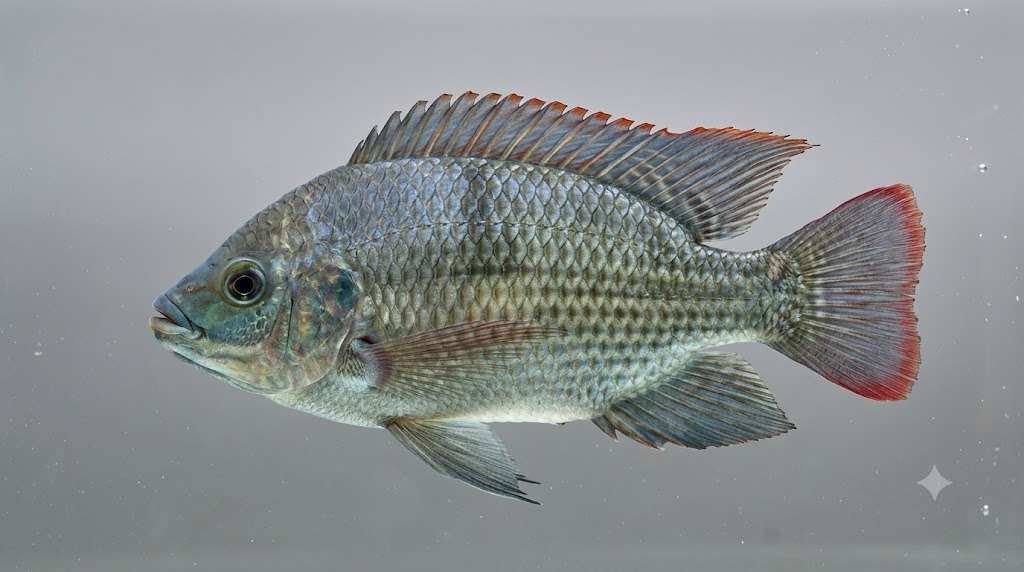
The blue tilapia has the deep, laterally compressed, oval body typical of cichlids, with a single long dorsal fin running most of the length of the back. Its overall color is a grayish-blue to blue-gray, often with a metallic or iridescent sheen on the flanks, fading to a paler, sometimes pinkish or whitish belly. Breeding adults are more vividly marked: spawning males in particular take on bright color, frequently with a reddish or pink edge to the dorsal and tail fins and a more intense blue cast to the head and body. Young fish often show faint vertical bars and a dark spot near the rear of the dorsal fin, a tilapia "tilapia mark" that fades with age. The fish has a small mouth suited to scraping and filtering rather than grabbing prey. Blue tilapia can be told from other introduced tilapia, such as the Nile and Mozambique tilapia, by their blue-gray coloration, the reddish fin margins on breeding fish, and details of the head and fin counts, though hybrids and overlapping ranges can make field identification tricky.
Range & Habitat (US waters)
The blue tilapia is native to northern and western Africa and the Middle East, not to North America. In the United States it is firmly established across the warmer southern states, with especially large populations in Florida and Texas, and scattered populations throughout the Gulf states and the Southwest. Because it cannot survive prolonged cold, its spread is limited by water temperature, and northern populations tend to be confined to power-plant cooling lakes and warm springs where the water stays warm year-round. Within its range it thrives in a wide variety of warm, still or slow-moving waters: lakes, ponds, reservoirs, canals, drainage ditches, slow rivers, and brackish coastal waters. It is remarkably tolerant of conditions that stress other fish, handling warm water, low oxygen, high salinity, and poor water quality that many native species cannot. This toughness, combined with prolific breeding, is exactly why it has spread so widely and why wildlife agencies treat it as an invasive problem.
Behavior & Feeding
Unlike most popular sport fish, the blue tilapia is primarily a vegetarian. Adults feed mainly by filtering and grazing on phytoplankton, algae, and other plant material, supplemented by small amounts of zooplankton, detritus, and tiny invertebrates. They are built to scrape algae off surfaces and to strain plankton from the water, not to chase and ambush baitfish. This feeding style is the single most important thing for an angler to understand, because it explains why blue tilapia almost never hit lures, crankbaits, or live minnows the way bass or panfish do. They simply are not predators looking for a fleeing meal. Blue tilapia are also famous for their breeding behavior: they are mouthbrooders, with the female holding fertilized eggs and then fry in her mouth for protection. During spawning, males fan out and guard distinct circular nests, or beds, in the shallows, and during this period the fish become far more aggressive and territorial, which opens a narrow window for catching them on hook and line.
Best Seasons & Times to Catch
The best time to target blue tilapia with rod and reel is the warm-season spawn, when fish move shallow to build and guard their beds and become aggressive enough to bite or strike at intruders. In the warm southern climates where they live, this can stretch across much of the spring, summer, and into fall whenever the water is warm. Outside of the spawn, grazing fish in open water are very difficult to catch on conventional tackle, so most rod-and-reel success is concentrated around bedding activity in the shallows. For bowfishing and cast netting, warm weather is likewise prime, since the fish hold in shallow, visible water and gather in numbers. Because so much depends on water temperature and the spawning cycle rather than the time of day, the warm months and the bedding period matter far more than the hour on the clock.
Where to Find Them - Reading the Water
Look for blue tilapia in warm, shallow, weedy or algae-rich water. In lakes, ponds, reservoirs, and canals, the shallow flats, shorelines, and back areas where algae and plankton are thick will hold grazing fish, and during the spawn those same shallows fill with the round, swept-out beds that males guard. Spotting those beds, often visible as light-colored circular depressions clustered together in the shallows, is the key to sight-fishing them. Warm-water discharge areas, such as the outflows of power plants and warm springs, concentrate tilapia, especially in cooler weather and toward the northern edge of their range. Canals, ditches, and the margins of slow rivers are also reliable. The simple approach is to find warm, fertile shallows with visible algae and beds, then either sight-fish the bedding fish or set up for bowfishing or netting where they gather.
Tackle & Rigs
Because blue tilapia have small mouths and graze rather than strike, rod-and-reel tackle for them is light and finesse-oriented. A light spinning or even an ultralight outfit with light line is ideal, paired with very small hooks - tiny long-shank or bait hooks in small sizes that fit their small mouths and let you present a little ball of soft bait. A simple rig works best: a small hook with a small split shot or a tiny float to suspend the bait at the right depth, fished in or near the beds. There is no need for heavy gear, since these are not large, hard-fighting fish. For the many anglers who pursue tilapia by other means, the "tackle" looks completely different: bowfishing gear, with a bow, reel, and barbed arrow for shooting fish in the shallows, or a cast net for throwing over concentrations of fish. Each method matches the fish's habits - finesse bait gear for the spawn, bow or net for visible, shallow-holding fish.
Best Baits & Lures
Blue tilapia are caught on bait, not on lures, and the bait that works is plant-based or very small. The classic offerings are tiny pieces of bread, dough balls, canned or cooked peas and corn, and bits of algae or other vegetable matter pressed onto a tiny hook. Some anglers also take bedding fish on very small worm pieces or tiny soft baits, but these usually work because the spawning fish are defending a nest rather than feeding. Conventional predator lures - spinners, crankbaits, jigs, swimbaits - are largely a waste of time for tilapia because the fish are vegetarians and do not chase prey. The most reliable rod-and-reel approach is to present a small bit of bread, dough, or peas on a tiny hook right in or beside an active bed. Outside the spawn, when the fish are grazing in open water and ignoring baits altogether, bowfishing and cast netting become the practical ways to catch them.
Techniques - How to Fish for It
The most effective rod-and-reel technique is sight-fishing the beds during the spawn. Move slowly along warm shallows, look for the clustered circular nests, and present a tiny hook baited with bread, dough, or peas right in the bed where a guarding fish will take it, either to eat or to remove an intruder from the nest. A small float or a light split shot helps keep the bait in the strike zone. Patience and a quiet approach matter, since spooked fish leave the beds. Away from the spawn, conventional fishing is frustrating because grazing tilapia simply will not take baits, which is why so many anglers turn to other methods. Bowfishing is hugely popular for blue tilapia: you stalk the shallows, spot fish, and shoot them with a barbed arrow on a line. Cast netting is another efficient way to take numbers of fish where they concentrate. Because the species is invasive, these high-harvest methods are not only allowed but actively encouraged in many states.
Common Mistakes
The most common mistake is fishing for blue tilapia like a bass or a panfish - throwing lures and live minnows and expecting strikes from a fish that is a vegetarian grazer. Another is fishing with hooks that are too large for their small mouths; tiny hooks and small baits are essential. Many anglers also miss the only real rod-and-reel window by ignoring the spawn, when bedding fish become catchable, and instead trying to catch open-water grazers that will not cooperate. A serious and avoidable mistake is on the legal and conservation side: because blue tilapia are invasive, most states prohibit transporting them alive or releasing them into any water, and moving live tilapia can spread the problem and break the law. Anglers should also confirm local rules for bowfishing and cast netting, since methods and seasons vary, and should be careful to identify the fish correctly given that several similar non-native tilapia can share the same waters.
Size, Records & Eating Quality
Blue tilapia are a small to medium-sized fish. Most are caught at modest sizes, often under a few pounds, though in good habitat they can grow larger, and the species can reach several pounds and over a foot in length. The rod-and-reel record fish are in the single-digit pounds, with the larger specimens taken from rich southern waters, and bowfishers occasionally take heavy individuals. They are not prized for their fight, which is modest, but for the table. The flesh is mild, white, and lean, widely considered very good eating, and tilapia in general is one of the most popular farmed food fish in the world. Wild blue tilapia from clean water make excellent fillets, commonly fried, baked, or grilled. Because the species is invasive, there are typically generous or unlimited harvest allowances - many states encourage anglers to keep everything they catch precisely to help control the population. There is usually no conservation reason to release them, and in fact releasing or transporting live tilapia is often illegal. As always, check current state regulations, since harvest rules, legal methods, and transport restrictions for invasive tilapia vary by state and can change.
Pros & Cons (as a target species)
Pros: blue tilapia are abundant, widespread, and easy to find in warm southern waters; they make a clean, mild, white fillet that is excellent eating; and harvest is generous or unlimited because the fish is invasive, so a successful outing can fill a cooler with no conservation guilt. They also offer variety, from finesse sight-fishing on the beds to active bowfishing and cast netting. Cons: as vegetarians they are genuinely hard to catch on conventional tackle and essentially ignore lures, so rod-and-reel success is mostly limited to the spawn; they are not a strong fighter; identification among similar non-native tilapia can be confusing; and the legal restrictions matter, since transporting or releasing them alive is prohibited in many states and legal methods vary. They are confined to warm water, so anglers outside the southern range will rarely encounter them outside power-plant lakes and springs.
Best Suited For
Blue tilapia suit anglers in the warm South who value a fish for the table over the fight, and who enjoy either the patient challenge of sight-fishing bedding fish on tiny baits or the active pursuit of bowfishing and cast netting. They are a good fit for anyone wanting to put clean, mild fillets in the freezer while helping remove an invasive species, since generous harvest is encouraged. They are well suited to bowfishers and net fishers working shallow, warm, fertile water. They are less suited to anglers expecting a hard-fighting gamefish or hoping to catch them on lures, and to those outside the warm southern range where the species cannot persist except in heated waters.
FAQ
What is the best bait for blue tilapia? Small, plant-based baits work best because tilapia are vegetarians. Tiny pieces of bread, dough balls, canned peas or corn, and bits of algae or vegetable matter pressed onto a very small hook are the classic offerings. Conventional predator lures and live minnows largely do not work, and most rod-and-reel success comes from presenting these small baits to fish on their spawning beds.
Why are blue tilapia so hard to catch on a lure? Because they are primarily vegetarians that graze on algae and plankton rather than chasing prey. They are not predators looking to ambush a baitfish, so spinners, crankbaits, jigs, and minnows mostly get ignored. The main exception is the spawn, when fish guarding their beds will take a small bait, sometimes out of aggression rather than hunger.
Can I release a blue tilapia I catch? In most states, no. Blue tilapia are invasive, and many states prohibit releasing them back into the water or transporting them alive, since that can spread the population. Wildlife agencies generally encourage anglers to harvest and keep them. Always check your state's current regulations on harvest, legal methods, and live transport before fishing.
Are blue tilapia good to eat? Yes. The flesh is mild, white, and lean, and is widely considered very good eating - tilapia is one of the most popular food fish in the world. Wild blue tilapia from clean water make excellent fillets that fry, bake, or grill well, and because the fish is invasive, harvest is usually generous or unlimited.
How do I catch blue tilapia without a rod? Two popular methods are bowfishing and cast netting. Bowfishers stalk warm shallows, spot fish, and shoot them with a barbed arrow on a line, while cast netters throw a net over concentrations of fish. Because the species is invasive, these high-harvest methods are commonly allowed and even encouraged, but confirm local rules first, since legal methods and seasons vary by state.