Bull Trout
The bull trout is one of the most iconic and most threatened native fish of the Pacific Northwest and the northern Rocky Mountains.
🗓️ Last reviewed: June 2026
Overview
The bull trout is one of the most iconic and most threatened native fish of the Pacific Northwest and the northern Rocky Mountains. Despite the name, it is not a true trout at all but a char, a cold-loving cousin of the brook trout, Dolly Varden, lake trout, and Arctic char. To many anglers it represents wild, unspoiled water, because where bull trout still thrive you can be sure the watershed is cold, clean, and connected. It is also a species that demands respect and restraint: the bull trout is listed as threatened under the U.S. Endangered Species Act across the lower 48, and in most waters it is illegal to intentionally target, keep, or harm one. The handful of legal fisheries are special, hard-won opportunities, and the overwhelming ethic surrounding this fish is careful catch-and-release. Hooking a large, aggressive bull trout where the law allows is a genuine privilege rather than an everyday catch.
Identification & Appearance
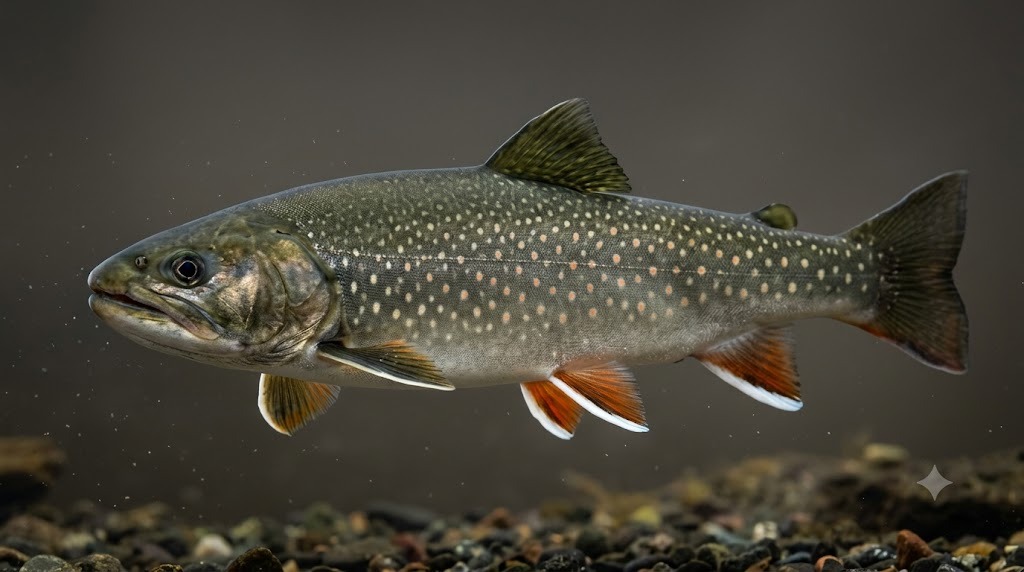
Because it is a char, the bull trout shows light spots on a dark background, never the dark spots or wormlike vermiculations a true trout or a brook trout displays. The back ranges from olive-green to brownish or bluish-gray, fading to lighter sides scattered with pale yellow, cream, crimson, or orange-pink spots, and the lower fins (pelvic, pectoral, and anal) carry clean white leading edges. The single most important field mark for an angler is what is absent: there is NO black on the dorsal fin and no dark marbling on the back. A brook trout, by contrast, has black or olive vermiculation on its back and distinct black markings on the dorsal fin. The fish is named "bull" for its notably large, broad head and mouth relative to its body, and spawning adults flush with bright orange or red bellies. Identification here is not academic - it is a legal necessity, because anglers must never mistake a protected bull trout for a legal-to-keep brook trout. The simple saying many anglers repeat is "no black, put it back."
Range & Habitat (US waters)
Bull trout are native to cold waters of the Pacific Northwest and the northern Rockies, with populations in Washington, Oregon, Idaho, Montana, and Nevada, plus a broad range into western Canada. Throughout the contiguous United States the species is listed as threatened, so the first and most important fact about its range is legal: in most U.S. waters it is illegal to intentionally fish for, keep, or harm bull trout, and any fish hooked incidentally must be released immediately and unharmed. They are among the most habitat-sensitive native fish in North America, requiring the "four Cs": cold water (generally below the mid-50s F and often much colder), clean and clear water, complex habitat such as deep pools, undercut banks, large wood, and boulders, and connected waterways that let migratory fish move between spawning streams and larger rivers or lakes. This extreme sensitivity makes them an indicator of watershed health and explains their decline from dams, logging, warming, sediment, and competition and hybridization with introduced brook trout. A few specifically designated waters - certain lakes and rivers in Montana, Idaho, and parts of the Pacific Northwest - allow limited permit or tag-based harvest or catch-and-release fishing, but rules are strict and vary widely, so you must always check the current local regulations before fishing.
Behavior & Feeding
Bull trout are highly piscivorous, especially as they grow. Young fish feed heavily on aquatic insects, but adults become aggressive predators that hunt other fish, including sculpins, whitefish, smaller trout, and salmon fry. This fish-eating habit shapes everything about how the species behaves and, where fishing is legal, how anglers approach it: large bull trout will chase down and crush sizable baitfish and the lures or streamers that imitate them. They are coldwater specialists, so they remain active in conditions that would slow a bass or even a rainbow trout, and large migratory fish will roam considerable distances in search of prey and the cold, oxygen-rich water they need. Their boldness toward big meals is exactly why they fight so hard and why anglers who hook one - intentionally where allowed, or accidentally where not - should be ready for a strong, deep-running fish.
Best Seasons & Times to Catch
As a cold-water fish, the bull trout stays active when others shut down, so the calendar works differently than it does for warmwater species. Where fishing is legal, summer is often productive in cold high-elevation streams and northern lakes, and fall can be excellent as fish stage and move toward spawning. Spawning takes place in the fall, roughly September through November, in cold tributary streams, and many of those tributaries are closed seasonally specifically to protect spawning fish - respecting those closures is part of the deal. On a daily basis, low-light periods and cooler parts of the day tend to fish best, and in lake systems large adfluvial fish move through predictable staging areas as autumn approaches. Above all, season and timing for this species are governed less by a hatch chart and more by the regulations: know which waters are open, when, and under what rules before you ever make a cast.
Where to Find Them - Reading the Water
Find cold, clean, complex water and you find bull trout. They hold in and around deep pools, undercut banks, log jams, boulder pockets, and the deepest, coldest runs of a river, and in lake systems they relate to cold-water structure and the tributary mouths where prey concentrates. Migratory life-history forms split into "fluvial" fish that live in rivers and spawn in tributaries and "adfluvial" fish that live in lakes and spawn in tributary streams, while resident fish stay in small headwater streams their whole lives - so where you look depends on which form lives in your water. In rivers, target the head and tail of deep pools, current seams beside heavy wood, and the coldest tributary inflows. In lakes, focus on cold inlets and drop-offs near baitfish, especially as fall staging begins. The unifying rule is simple: the colder, cleaner, and more structured the water, the better your odds - and always within waters where the law permits fishing.
Tackle & Rigs
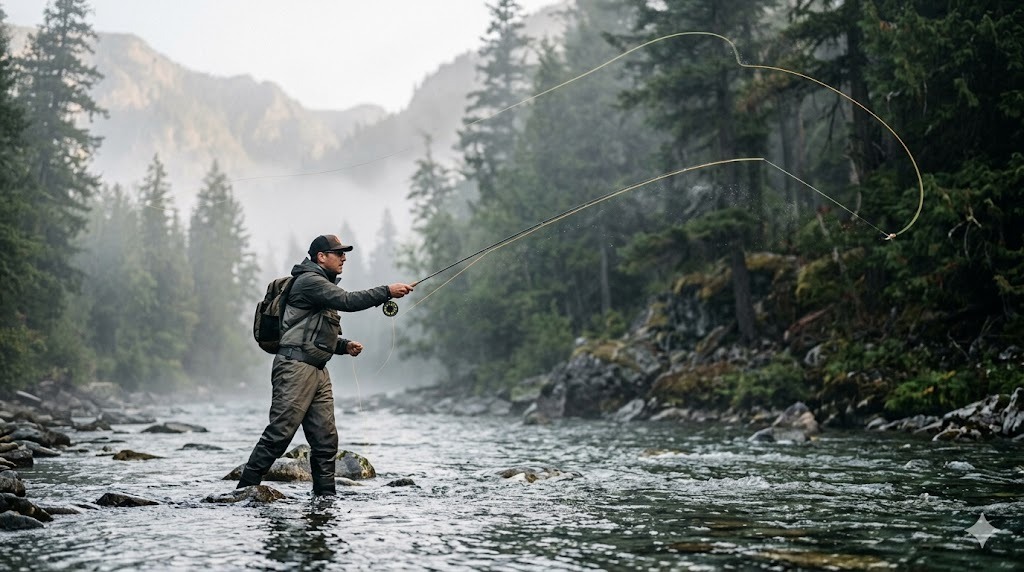
For the legal, frequently catch-and-release fisheries that exist, anglers use medium to medium-heavy trout or light steelhead gear matched to a strong, deep-running fish. Fly anglers favor stout 6-8 weight rods with sink-tip lines to swing large streamers down to where bull trout hold, while spin anglers run medium-heavy spinning outfits with line strong enough to control a big fish without playing it to exhaustion. The most important "rig" rule is regulatory and ethical: single, barbless hooks are required in many bull trout waters and are best practice everywhere for a clean, fast release of a threatened fish. Keep terminal tackle simple and robust - a solid leader, a single barbless hook, and a lure or fly that imitates a baitfish - and skip the multi-hook and treble setups that complicate release. Strong but reasonable line lets you land the fish quickly, which matters enormously when the goal is to send a protected animal back unharmed.
Best Baits & Lures
Because bull trout eat fish, big offerings out-fish small ones, and the old saying "big fly, big fish" genuinely applies. Where fishing is legal, the most effective choices are large streamers tied to imitate sculpins and baitfish, spoons, large inline spinners, and minnow-imitating plugs - presentations that mimic the prey a predatory char is hunting. Live and natural bait is a different matter: many bull trout waters are restricted to artificial lures or are fly-only, and where any bait is allowed it is tightly limited, so lures and flies dominate this fishery by both effectiveness and rule. Match the size of your offering to the fish you hope to move - these are predators that will commit to a substantial meal - and always confirm whether bait is permitted at all before tying anything on. As with every choice for this species, regulations come first and tackle second.
Techniques - How to Fish for It
The defining technique, where it is legal, is presenting a large baitfish imitation to fish holding in deep, cold water and heavy structure. Fly anglers swing and strip big streamers on sink-tips through the throats of pools and along log jams, letting the fly get down to a fish that rarely chases far up in the water column. Spin anglers work spoons, large spinners, and minnow plugs slowly and deep, keeping the lure in the strike zone near wood, boulders, and current seams. Because bull trout are aggressive predators, the strike is often hard, but the priority once hooked is to land the fish quickly and handle it for release rather than to prolong the fight. Avoid fishing closed spawning tributaries, stay on waters that are open, and use barbless single hooks so the fish can be freed fast. Every technique for this species is framed by one question: is it legal to fish for them here, and am I handling this threatened fish responsibly?
Common Mistakes
For bull trout the most serious mistake is one of identification and law: misreading a bull trout as a brook trout and illegally keeping it, when the lack of black on the dorsal fin and the light-on-dark spotting clearly mark it as a protected char. Other frequent errors are just as important: targeting bull trout in waters where it is prohibited, fishing closed spawning tributaries, and handling a threatened fish poorly through excessive air exposure or a slow, exhausting fight. Using treble or barbed hooks where they are banned, failing to revive a fish before release, and lifting it out of the water for photos all reduce its chance of survival. Many anglers also simply skip checking the regulations, which for this species is the single costliest oversight of all. Slow down, identify carefully, confirm the rules, and treat every bull trout as the protected animal it is.
Size, Records & Eating Quality
Bull trout size varies dramatically by life-history form. Resident stream fish are often modest, around a foot long, but large migratory fish - the adfluvial and fluvial forms - commonly reach 20 to 30 inches and several pounds, and the biggest fish in productive lake systems can exceed 20 pounds. The IGFA all-tackle world record is around 32 pounds, a fish taken from Lake Pend Oreille, Idaho, back in 1949, and it is worth noting that many of the waters that once produced such giants are now protected. On eating quality, char flesh can be good, but here the conservation reality dominates: because the bull trout is listed as threatened, harvest is prohibited or tightly restricted in nearly all waters, and the overwhelming ethic is catch-and-release. This is not a fish to glamorize keeping. In the rare, specifically designated waters that permit limited permit or tag-based harvest, anglers must follow the exact local rules; everywhere else, the only acceptable outcome is a clean, careful release.
Pros & Cons (as a target species)
Pros: a true native of wild, cold, beautiful country; a large, powerful, aggressive predator that fights hard and eats big streamers and lures; an indicator of pristine watersheds, so fishing for one means fishing in exceptional water; and a species that rewards skill, patience, and conservation-minded angling. Cons: it is threatened and off-limits to intentional fishing across most of its range, so legal opportunities are scarce and tightly regulated; identification matters legally and mistakes carry real consequences; spawning tributaries are often closed; and the fish demands careful handling and quick release rather than casual catching. For most anglers, the bull trout is less an everyday quarry than a special, rule-bound pursuit reserved for the few waters where it is permitted.
Best Suited For
Bull trout suit the conservation-minded angler who values native fish and wild, cold water over numbers or harvest. They are ideal for experienced fly and spin anglers comfortable with large streamers, sink-tips, and stout gear, and for those willing to study and follow strict, varied regulations. They reward people who enjoy reading complex water, fishing remote rivers and cold lakes, and practicing careful catch-and-release. This is not a beginner's "catch anything" species; it is best for anglers who treat a threatened native predator with the respect, restraint, and homework it requires, and who fish for it only where the law allows.
FAQ
Can I legally fish for bull trout? In most U.S. waters, no. The bull trout is listed as threatened under the Endangered Species Act, so intentionally targeting, keeping, or harming one is illegal in most places, and any fish hooked by accident must be released immediately and unharmed. Only a few specifically designated waters allow limited, often permit or tag-based or catch-and-release fishing, so you must always check the current local regulations first.
How do I tell a bull trout from a brook trout? Look at the spots and the dorsal fin. A bull trout is a char with light spots on a dark body and white leading edges on the lower fins, and crucially it has NO black markings on the dorsal fin and no dark marbling on its back. A brook trout has wormlike vermiculation on its back and black marks on the dorsal fin. The angler's rule is "no black, put it back."
What do bull trout eat, and what lures work where it is legal? Adults are strongly piscivorous, eating sculpins, whitefish, smaller trout, and salmon fry. Where fishing is legal, large streamers, spoons, big inline spinners, and minnow plugs work best, because "big fly, big fish" applies. Many waters are fly-only or artificial-lure-only, and bait is often prohibited.
Why are bull trout so rare and protected? They are among the most habitat-sensitive native fish, needing the "four Cs": cold, clean water, complex habitat, and connected waterways. Dams, logging, warming, sediment, and competition and hybridization with introduced brook trout have caused steep declines, which led to their threatened listing and made them an indicator of healthy watersheds.
How should I handle a bull trout if I hook one? Treat it as the protected fish it is. Keep it wet and in the water, minimize air time, wet your hands, support its body, use barbless single hooks, and revive it fully before release. Land it quickly rather than playing it to exhaustion, especially in warm conditions, and avoid lifting it from the water for photos.