Clown Knifefish
The clown knifefish is one of the strangest and most exciting fish an angler can catch in the United States - and one that should not be here at all.
🗓️ Last reviewed: July 2026
Overview
The clown knifefish is one of the strangest and most exciting fish an angler can catch in the United States - and one that should not be here at all. Native to Southeast Asia, it was introduced through the aquarium trade and is now firmly established as an invasive predator in the canals and lakes of South Florida. Big, silver, and shaped like a curved knife blade, it is instantly recognizable by the row of black spots along its rear body. It is a hard-hitting ambush hunter that feeds at dawn and dusk, takes live bait and lures, and pulls with unexpected strength. Because it is invasive and damaging to native fisheries, anglers are encouraged to catch it, and in many cases not to return it alive to the water. For the adventurous angler, it is an exotic, rod-bending prize hiding in urban canals.
Identification & Appearance
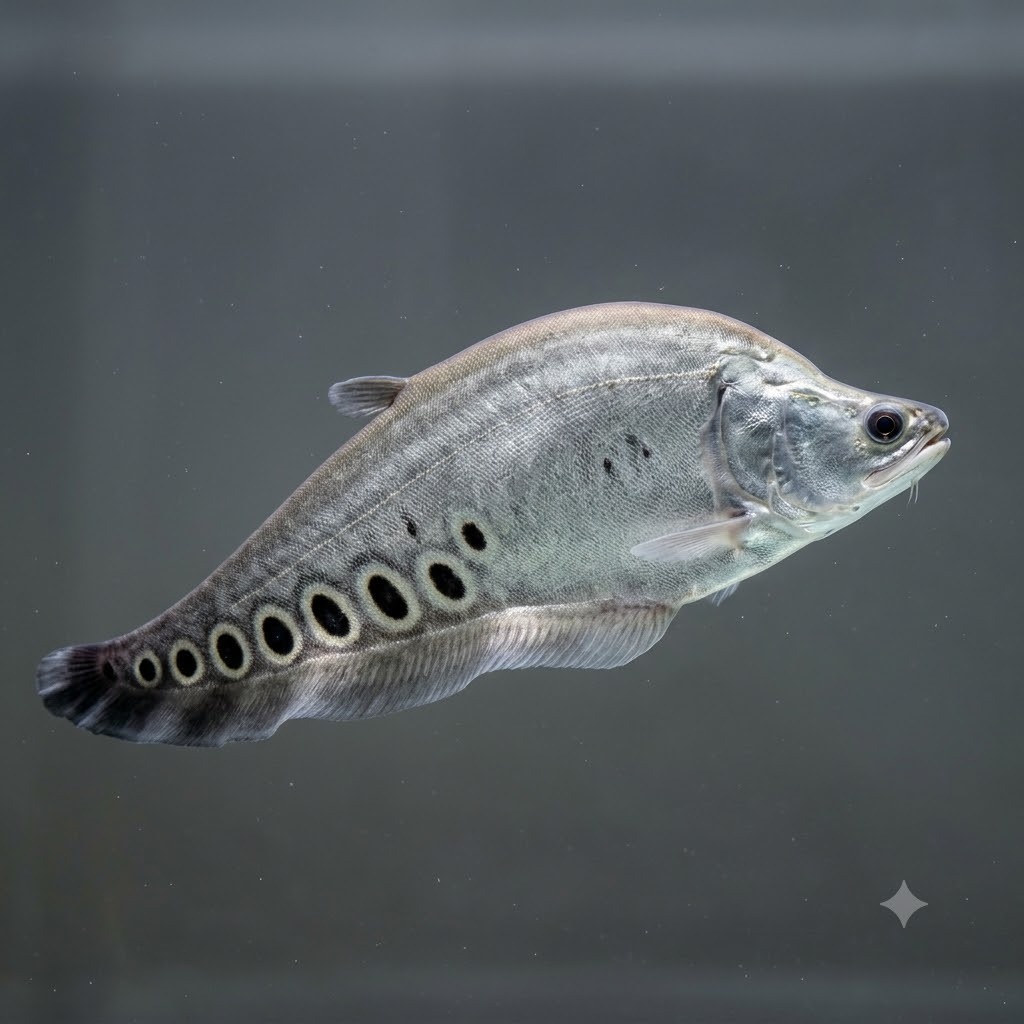
The clown knifefish is unmistakable. Its body is tall, laterally compressed, and tapers to a long, knife-like rear that ends in a single continuous ribbon fin running along the underside - the fish swims by rippling this fin, allowing it to move forward and backward with eerie grace. The overall color is silvery-gray, and the defining field mark is a row of large black spots, often ringed with a pale halo, along the rear half of the body. Big individuals develop a distinct humped back and forehead. There is no mistaking it for any native US fish - the blade shape, the long undulating belly fin, and the ringed spots make identification instant.
Range & Habitat (US waters)
In the US, the clown knifefish is established almost entirely in South Florida, particularly in the canal systems and connected lakes around the greater Miami and Fort Lauderdale area. It thrives in the warm, slow-moving, and still waters typical of the region: urban and suburban canals, lakes, ponds, and backwaters with plenty of cover. It cannot tolerate cold water, which limits its spread northward, but it is well adapted to the warm, low-oxygen conditions of Florida's canals - in part because it can breathe air, gulping at the surface to survive where other fish would struggle. Look for it around structure, docks, culverts, overhanging vegetation, and shaded banks.
Behavior & Feeding
The clown knifefish is a nocturnal and crepuscular ambush predator, most active in low light at dawn, dusk, and after dark. It hangs near cover and structure, then darts out to engulf prey. Its diet is heavily carnivorous - small fish, shrimp, and other aquatic creatures - and it uses its large mouth to inhale prey whole. A notable trait is its ability to breathe air using a modified swim bladder, letting it survive in warm, oxygen-poor water and even endure brief periods out of water. This air-breathing habit is part of why it has thrived as an invasive. When hooked, it fights hard with strong runs and stubborn head-shakes.
Best Seasons & Times to Catch
Because South Florida stays warm year-round, clown knifefish can be caught in every season, though the warmer months see the most consistent activity. The single most important factor is time of day: low light is everything. Dawn and dusk are prime, and night fishing can be excellent. During bright midday hours the fish pull tight to shade and cover and become much harder to tempt. Overcast days can extend the bite into daylight. Warm, stable weather generally fishes best, while a cold snap - rare but possible in Florida - will shut these tropical fish down quickly.
Where to Find Them - Reading the Water
Target structure and shade in warm canals and lakes. The best spots are around docks, bridge and culvert pilings, overhanging trees, seawalls, submerged brush, and any transition where the knifefish can lurk and ambush. Points where canals intersect, shaded banks, and the mouths of side channels all concentrate fish. Because the fish is an air-breather that favors low light, focus your effort at dawn and dusk near these ambush points. In warm, still canal water with visible cover, work the shaded edges and the deeper water beside structure where a big knifefish can hold and wait.
Tackle & Rigs
A medium to medium-heavy spinning or baitcasting outfit with 15-30 lb line, or braided line, gives you the backbone to pull a strong fish away from cover. Clown knifefish have bony mouths, so a sharp, sturdy hook and a solid hookset are important. For live bait, a simple free-line rig or a float rig with a live shiner suspended near structure works well. For artificials, tie on lures directly with a strong knot and enough line strength to handle both the fish and the cover it lives in. Keep the setup rugged - this is a hard-pulling fish fought in tight, structure-filled water.
Best Baits & Lures
Live bait is the top producer. A lively shiner or other small live baitfish, fished near structure at first or last light, is the most reliable way to draw a strike. For artificials, the knifefish responds to lures that imitate small fish: soft-plastic swimbaits, jerkbaits, and shallow minnow-style lures worked slowly near cover in low light. Because the fish is an ambush feeder keyed on baitfish, a natural, fish-shaped profile presented near structure at dawn or dusk is the pattern to match. Slow, deliberate presentations near cover beat fast, open-water retrieves.
Techniques - How to Fish for It
The core approach is fishing live bait or lures near cover during low-light hours. With live bait, position a shiner near a dock, culvert, or shaded seawall and let it work; watch for a sudden take and set the hook firmly to drive it past the bony mouth. With lures, cast to structure and retrieve slowly, pausing near ambush points to trigger a strike. Because knifefish hold tight to cover, accuracy matters - put the bait right where the fish is waiting. Fish dawn, dusk, and night, keep your drag ready for a strong run, and be prepared for stubborn head-shakes near the boat or bank.
Common Mistakes
The most common mistake is fishing in bright midday, when knifefish are inactive and tucked into cover - fish low light instead. Other errors: a weak hookset that fails to penetrate the bony mouth; line too light for the heavy cover, leading to break-offs; fishing open water away from structure; and releasing this invasive fish back into the water, which spreads a harmful species. Retrieving too fast past ambush points also draws fewer strikes. Slow down, target shade and structure at the right time of day, set the hook hard, and handle the catch responsibly.
Size, Records & Eating Quality
Clown knifefish grow large for a canal fish, commonly reaching a few pounds and, with big individuals, substantially more - a hooked adult delivers a genuinely strong fight. The flesh is white and edible, though the fish is quite bony, so it takes care to prepare. In its native range it is a food fish, often ground and formed to work around the bones. Because it is an invasive species harmful to Florida's native fish, anglers are encouraged to harvest rather than release it, and eating a legally caught knifefish is one way to put the catch to good use.
Pros & Cons (as a target species)
Pros: an exotic, unmistakable fish that pulls hard and offers a real thrill in accessible urban canals; catchable on live bait and lures; and a fish you can harvest with a clear conscience since it is invasive. Cons: strictly a warm-water, low-light bite that demands the right timing; a bony mouth that requires a firm hookset; bony flesh that takes effort to prepare; and a limited US range confined mostly to South Florida, so it is out of reach for most of the country.
Best Suited For
The clown knifefish suits the adventurous angler in South Florida who wants something wild and unusual close to home. It is ideal for those who enjoy dawn and dusk missions on urban canals, sight-fishing structure, and the novelty of catching a big exotic predator. Anglers who value hard fights, don't mind a bony mouth and a firm hookset, and want to help remove an invasive species from Florida waters will find the knifefish a uniquely satisfying target.
FAQ
Is the clown knifefish invasive in the United States? Yes. It is native to Southeast Asia and was introduced through the aquarium trade. It is now an established invasive predator in South Florida canals and lakes, where it competes with and preys on native fish, so anglers are encouraged to catch and harvest it.
Should I release a clown knifefish I catch? Generally no. Because it is a harmful invasive species, anglers are usually encouraged not to return it alive to the water. Harvesting it helps limit its spread. Always follow current local regulations on invasive species handling.
When is the best time to catch clown knifefish? Low light is key. Dawn, dusk, and night are by far the most productive times, since the fish is a crepuscular and nocturnal ambush predator. During bright midday it pulls tight to cover and becomes much harder to catch.
What bait works best for clown knifefish? Live bait, especially a lively shiner or small live baitfish fished near structure at first or last light, is the most reliable choice. Soft-plastic swimbaits and minnow-style lures worked slowly near cover in low light also draw strikes.
Can clown knifefish really breathe air? Yes. It uses a modified swim bladder to gulp air at the surface, letting it survive in warm, oxygen-poor water where many fish would struggle. This air-breathing ability is one reason it has thrived as an invasive in Florida's canals.