Dolly Varden
The Dolly Varden is a beautiful, cold-water char of the Pacific Northwest, Alaska, and the far northern reaches of the continent.
🗓️ Last reviewed: July 2026
Overview
The Dolly Varden is a beautiful, cold-water char of the Pacific Northwest, Alaska, and the far northern reaches of the continent. It is not a trout in the strict sense but a char, a close relative of the brook trout and Arctic char, and it wears the same jeweled, spotted coat. For anglers who chase clean, remote rivers, the Dolly is a prize that ties the whole ecosystem together. It follows spawning salmon upriver to feast on drifting eggs and decaying flesh, and a fish caught in a gin-clear Alaskan stream, glowing with orange and pink spawning color, is one of the most striking sights in freshwater fishing.
Identification & Appearance
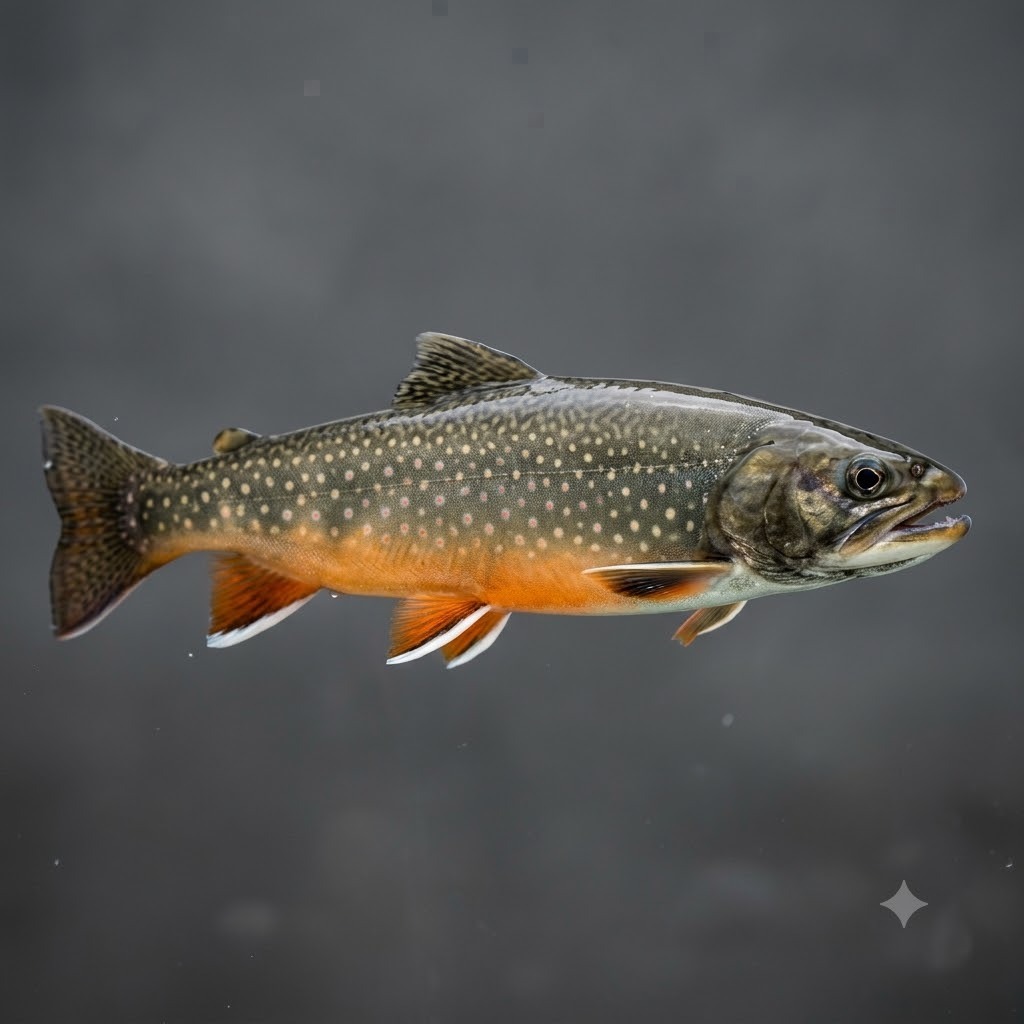
The Dolly Varden has the classic char body plan: a long, streamlined shape, a slightly forked tail, and small scales that give the skin a smooth look. The key char field mark is that its spots are lighter than the background, not darker. The back and flanks are olive to steel gray or brown, scattered with pale cream, pink, or red spots, and there are no wormlike vermiculations on the back like a brook trout. During spawning, males flush deep orange and red along the belly, the lower fins turn bright with white leading edges, and the colors become spectacular. The Dolly closely resembles the bull trout and Arctic char, and separating them often comes down to range and fine detail.
Range & Habitat (US waters)
In the United States, the Dolly Varden is a fish of Alaska and, in more limited form, the coastal drainages of the Pacific Northwest. It lives in cold, clean, well-oxygenated water: mountain streams, glacial and spring-fed rivers, and coastal systems where sea-run forms move between fresh and salt water. Northern and southern forms exist, and many populations are anadromous, running to the sea and returning to freshwater to feed and spawn. Wherever they live, they demand cold, pure water, which makes them a strong indicator of healthy habitat. They are most abundant in the wild, lightly developed watersheds of the north.
Behavior & Feeding
The Dolly Varden's feeding life revolves around salmon. In summer and fall, huge numbers of Dollies move up the rivers behind spawning salmon, positioning downstream of the redds to intercept loose eggs washing free of the gravel. Later they feed on drifting flesh from spent, dying salmon. Outside the salmon runs they eat aquatic insects, smaller fish, and other invertebrates, and sea-run fish feed heavily in the rich saltwater estuaries. They hold in current seams and behind structure, letting the flow deliver food to them. This egg-and-flesh feeding pattern is the single most important thing to understand when fishing for them.
Best Seasons & Times to Catch
The prime season is tied directly to the salmon runs, generally mid-summer through fall, when Dollies stack up below spawning salmon and feed aggressively on eggs. This is when the fishing is at its best and the fish are heaviest and most colorful. Spring can also be productive as fish feed after the long winter. Because these are far-northern waters, the fishable window is shorter than in the lower states, and the long daylight of the Alaskan summer means fish may feed across much of the day. Overcast conditions and softer light often improve the bite in clear water.
Where to Find Them - Reading the Water
Find the salmon and you find the Dollies. Focus your effort just downstream of gravel where salmon are spawning, because Dollies line up there to catch drifting eggs. Look for current seams, the tailouts of pools, deeper runs, and slots behind boulders where a fish can hold out of the main flow and watch the drift. In clear water you can often sight-fish, spotting the char holding in the current. Sea-run fish concentrate near river mouths and estuaries. As a rule, the edge of moving water next to holding cover, downstream of a salmon redd, is the place to start.
Tackle & Rigs
A light-to-medium trout or steelhead setup handles Dollies well. Many anglers use a single-hand fly rod in a moderate weight, or a light spinning outfit for casting spoons and drifting bait. For fly fishing, a floating line with a simple leader is standard, and the classic rig is a bead or egg pattern drifted under an indicator to imitate a loose salmon egg tumbling along the bottom. A flesh fly fished on a swing or dead-drift imitates decaying salmon later in the season. Keep terminal tackle light and natural in clear water, and add just enough weight to reach the fish holding near the bottom.
Best Baits & Lures
Because their feeding is centered on salmon, the most effective offerings imitate eggs and flesh. Single beads in egg colors, egg-pattern flies, and flesh flies in cream and pink are the top fly choices during the runs. Small spoons and spinners in silver, gold, and pink draw aggressive reaction strikes, especially from sea-run and pre-run fish. Where regulations allow bait, natural salmon eggs are extremely effective. Match the size and color of your egg imitation to the eggs actually drifting in the river, and switch to flesh patterns once the salmon begin to die off and decay in the current.
Techniques - How to Fish for It
The signature technique is the dead-drift. Cast your bead or egg fly upstream, let it tumble naturally along the bottom at the speed of the current, and watch the indicator or the end of your line for the slightest hesitation. A drag-free drift is everything, because a Dolly expects an egg to move exactly as the water moves. For flesh flies later in the season, a slow swing through the run works well. When casting spoons and spinners, retrieve just fast enough to keep the lure working and let it swing through the holding water. Set the hook gently and be ready for a strong, dogged fight in cold current.
Common Mistakes
The biggest mistake is fishing away from the salmon. Dollies concentrate around spawning salmon, and anglers who ignore that pattern miss the fish entirely. Other errors: dragging the egg fly unnaturally instead of achieving a clean drift; using an egg color or size that does not match the real eggs in the water; fishing too heavy in clear, low water and spooking the fish; and, importantly, ignoring the regulations. Many of these fisheries have specific rules, seasons, and catch-and-release requirements, and failing to check them is a serious mistake.
Size, Records & Eating Quality
A typical Dolly Varden runs from about the length of your forearm up to a couple of feet in the best waters, with sea-run and well-fed fish reaching the larger end of that range. They are strong for their size and pull hard in cold current. While Dolly Varden are edible and were historically eaten, many modern fisheries emphasize catch-and-release to protect wild char populations, and anglers should follow local rules on retention. Handle these fish gently, keep them in the water, and release them quickly to preserve the fishery.
Pros & Cons (as a target species)
Pros: they live in some of the most beautiful, pristine water in North America, they are gorgeous in spawning color, they feed predictably around salmon, and they fight hard in cold current. Cons: they are largely limited to remote northern and coastal regions, access can be difficult and expensive, the season is short, and regulations are often strict, with catch-and-release rules common. They also demand cold, clean habitat, so they are absent from warmer developed waters.
Best Suited For
The Dolly Varden suits the angler who loves wild, remote places and river fishing in clear water. It is a wonderful target for fly anglers who enjoy reading current and drifting egg and flesh patterns, and for anyone drawn to the drama of the salmon runs. It rewards patience, careful presentation, and respect for the resource, making it ideal for the conservation-minded angler who values the experience of a healthy wild river as much as the catch itself.
FAQ
Is the Dolly Varden a trout or a char? It is a char, a member of the same group as brook trout, bull trout, and Arctic char. Its light spots on a dark body, rather than dark spots, are the giveaway that it is a char and not a true trout.
Why do beads and egg flies work so well for Dolly Varden? Dollies follow spawning salmon and feed heavily on loose salmon eggs drifting free of the gravel. A bead or egg fly drifted naturally imitates exactly that food, which is why it is the most reliable presentation during the runs.
When is the best time to fish for Dolly Varden? The peak is mid-summer through fall, timed to the salmon runs, when Dollies stack up below spawning salmon to eat eggs and later feed on decaying flesh.
Do I need to release Dolly Varden? Many fisheries require or strongly encourage catch-and-release to protect wild char. Always check local regulations, seasons, and gear rules before you fish, because they vary and can be strict.
Where can I catch a Dolly Varden in the US? Alaska is the heart of the range, with more limited populations in the coastal drainages of the Pacific Northwest. They need cold, clean water and are most abundant in wild, undeveloped watersheds.