Golden Trout
The golden trout is California's state freshwater fish and one of the most beautiful trout in the world.
🗓️ Last reviewed: June 2026
Overview
The golden trout is California's state freshwater fish and one of the most beautiful trout in the world. Native to a handful of icy streams in the southern Sierra Nevada, it lives in some of the highest, most remote trout water in the United States, often well above 10,000 feet. For many anglers, catching a golden trout is as much about the journey as the fish: the reward at the end of a long, lung-burning backpacking trip into alpine basins where the air is thin, the water is gin-clear, and the scenery is unforgettable. The fish themselves are usually small, but their colors are extraordinary - bright golden-orange flanks, a crimson stripe down the side, and dark parr marks that most trout lose as adults. Goldens are caught on light tackle with small dry flies and tiny spinners, the fishing is delicate, and because these are a special, range-limited native fish, most anglers release them. It is a fishery defined less by size or numbers than by wild country, clear water, and the satisfaction of a hard hike rewarded.
Identification & Appearance
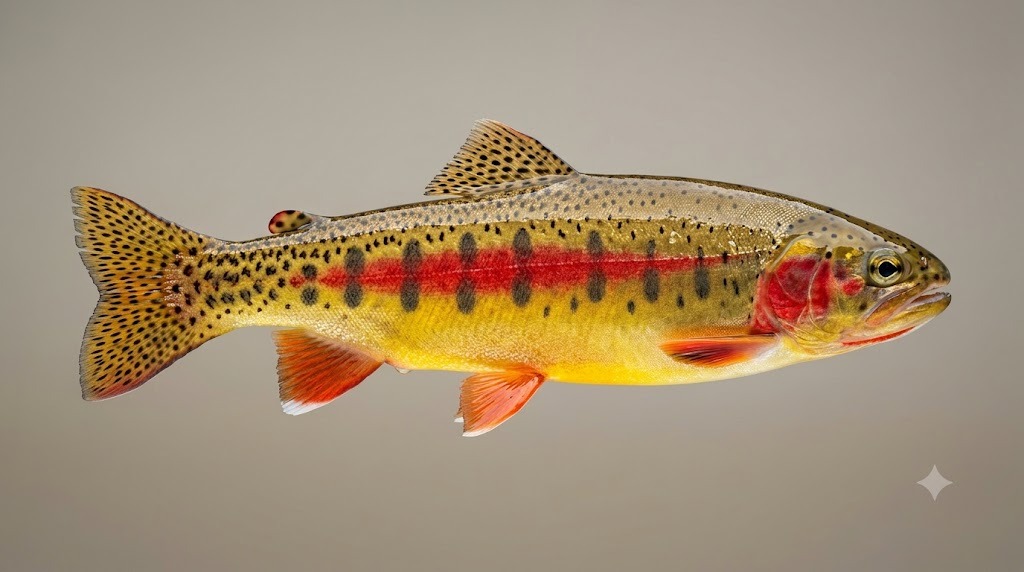
The golden trout is one of the most vividly colored freshwater fish in North America. Its flanks are a brilliant gold to brassy yellow that deepens to red-orange low on the body and along the belly, and a bold crimson or rosy stripe runs the length of the lateral line. A striking feature is the row of dark, oval parr marks along the side - the smudgy thumbprints that most trout carry only as juveniles but that golden trout keep into adulthood, straddling the red stripe. The back is darker olive to greenish, the cheeks and gill covers flush red-orange, and small black spots scatter mainly on the back, the dorsal fin, and the upper tail. The dorsal, anal, and pelvic fins often carry white to orange leading edges. Golden trout are a relative of the rainbow trout and can hybridize with rainbows and with cutthroat, which is one reason truly pure-strain goldens are restricted to isolated headwaters. They are separated from rainbows by their intense gold-and-red coloring and persistent parr marks, and from cutthroat by the lack of the cutthroat's red throat slashes.
Range & Habitat (US waters)
The golden trout is native to a very small original range in the Kern River drainage of the southern Sierra Nevada in California - chiefly the icy headwater streams of the South Fork Kern River and Golden Trout Creek, in the high country of what is now the Golden Trout Wilderness. From that tiny native range, goldens have been transplanted by stocking into many other high-elevation lakes and streams in the Sierra Nevada and into alpine waters in other western states, including parts of Wyoming, Montana, Idaho, Washington, and Nevada, where they survive in cold, high mountain lakes. Their habitat is classic alpine water: small, cold, clear headwater creeks with gravel and meadow bottoms, and high glacial lakes set in granite basins, very often above 10,000 feet. These are nutrient-poor, short-season waters locked in ice for much of the year, which is part of why golden trout typically run small and why their high, remote home country is both their stronghold and the reason reaching them takes real effort.
Behavior & Feeding
Golden trout are opportunistic feeders in a harsh, food-poor environment, so they tend to eat what is available and to feed actively during the short alpine summer. Their diet is dominated by aquatic and terrestrial insects: mayflies, caddisflies, midges, and small stoneflies, along with terrestrial insects like ants, beetles, and grasshoppers that fall onto the water, plus tiny crustaceans and other small invertebrates. In the clear, often shallow water of high lakes and meadow streams they will rise eagerly to insects on the surface, which is what makes dry-fly fishing for them so rewarding. Because the growing season is so short and the water so thin on food, goldens are not fussy in the way fish in rich tailwaters can be - a well-presented small fly or tiny lure usually draws a strike. But that same clear, calm water makes them spooky: in skinny meadow streams and glassy lakes a golden trout can see and feel an angler easily, so a careful, stealthy approach matters more than a perfect imitation.
Best Seasons & Times to Catch
Golden trout fishing is a short-season pursuit dictated entirely by the high country. The lakes and streams that hold them sit at such high elevation that they are frozen, snowbound, or inaccessible for much of the year, so the practical season is the brief alpine summer, roughly from when the snow clears and trails open in early-to-mid summer through early fall. Mid-summer into early autumn is prime, when the water is open, insects are active, and the high basins are reachable on foot. Within a day, the classic trout windows apply: early morning and the cooler hours of evening often see the best insect activity and surface feeding, while bright midday on a calm lake can put the fish down and make ultra-clear water even tougher. Because everything hinges on snowpack and trail conditions, timing a golden trout trip is mostly about when the high country opens up and is safe to reach, and then fishing the cooler, low-light parts of those summer days.
Where to Find Them - Reading the Water
Finding golden trout starts with elevation - they live high, so you are looking for cold, clear water in alpine and subalpine basins, typically above 10,000 feet. In high lakes, focus on the productive edges: inlets and outlets where current brings food, drop-offs along the shoreline, submerged rocks and weed edges, and any shoreline where you can spot cruising fish in the clear water. On a calm lake, polarized sunglasses let you sight-fish to goldens patrolling the shallows. In meadow streams, target the deeper holding water - undercut grassy banks, the heads and tails of pools, plunge pools below small drops, and pockets behind boulders - where fish can hold out of the current and watch for insects. The clarity is both a gift and a challenge: you can often see the fish, but they can see you too, so approach from downstream or from behind cover, keep a low profile, and cast to fish before they know you are there. In thin alpine water, stealth is the single biggest factor in finding and catching goldens.
Tackle & Rigs
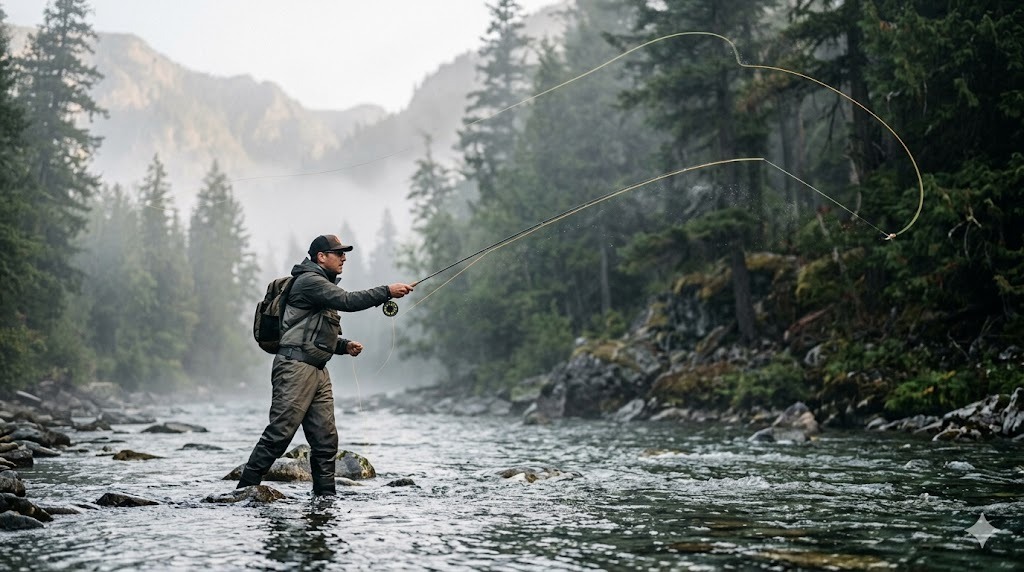
Golden trout are small fish in delicate water, so this is light, finesse fishing. Fly anglers do well with a short, light fly rod, roughly a 7 1/2 to 9 foot rod for a 2 to 4 weight line, which delivers tiny dry flies softly onto glassy water and makes even a modest fish fun to fight; pair it with a matching reel, floating line, and a long, fine leader tapered to a light tippet so the fish do not see it in the clear water. Spin anglers go just as light: an ultralight rod and a small spinning reel spooled with thin 2 to 4 pound monofilament, which casts tiny spinners and small spoons and protects light line on small fish. Rigs stay simple - a single small dry fly or a small nymph for the fly angler, and a single tiny inline spinner or small spoon for the spin angler. A small barbless hook or a pinched barb makes release quick and clean, which matters with a fragile native fish, and the overall theme is to scale everything down: light rods, light line, small offerings, and a gentle presentation onto water where anything heavy-handed will spook the fish.
Best Baits & Lures
Because golden trout feed mostly on insects, the most productive offerings imitate that diet, and in many of their alpine waters artificial-only or fly-only regulations apply, so always check the rules before fishing bait. For fly anglers, small dry flies are the classic and most enjoyable choice - attractor patterns like an Adams, Royal Wulff, elk hair caddis, a small hopper or ant, and various small mayfly and midge imitations all draw eager rises, with small nymphs working when fish hold deeper. For spin anglers, tiny inline spinners and small spoons in gold, silver, or bright finishes are deadly, their flash triggering strikes from opportunistic fish in food-poor water. Where bait is legal, small natural offerings can work, but the spirit of this fishery, and often the regulations, lean strongly toward artificials and catch-and-release. The single best approach in most golden trout water is a small dry fly presented delicately on a clear alpine lake or meadow stream, or a tiny spinner worked through likely holding water, matched to a stealthy, low-profile approach.
Techniques - How to Fish for It
The defining technique for golden trout is a careful, stealthy presentation in clear, shallow water. With a fly rod on a calm high lake, watch for rising or cruising fish, then place a small dry fly softly ahead of a moving fish or along a productive edge, letting it sit and twitching it only slightly; on a meadow stream, drift a small dry naturally through pools, pockets, and undercut banks, mending to avoid drag. With spinning gear, cast a tiny spinner past likely holding water and retrieve it steadily just fast enough to keep the blade turning, or work the edges and inlets of a lake. In every case the approach matters as much as the cast: move slowly, stay low, use the bank and any cover, and keep your shadow and line off the fish, because in this thin, glassy water a golden trout will bolt at the first sign of an angler. The strikes are often quick and the fish small, so a light touch on the hookset and a soft rod protect both the light tippet and the fish. Above all, the real technique is patience and stealth in beautiful, fragile water, treating each fish gently for release.
Common Mistakes
The most common golden trout mistake is approaching the water carelessly - walking up to the bank in plain view, casting a shadow, or stomping along a meadow stream, all of which spook fish in water this clear long before a fly ever lands. Another is fishing too heavy: a stiff rod, thick line, or a heavy leader stands out in glassy alpine water and turns fish off, when light gear and fine tippet would draw strikes. Anglers also overlook regulations, fishing bait or keeping fish where artificial-only and catch-and-release rules apply, which is both unlawful and damaging to a special native fish. Poor fish handling is a serious error with such a fragile, high-value species - playing a small fish to exhaustion, handling it with dry hands, keeping it out of the cold water too long, or fishing barbed hooks that are hard to remove. Finally, underestimating the country itself is a real mistake: these waters are remote and high, and arriving unprepared for the altitude, weather, and effort of reaching them can end a trip before the fishing even starts.
Size, Records & Eating Quality
Golden trout are small fish. In their native high-elevation streams many are only 6 to 10 inches, and a stream golden in the 8-to-10-inch range is a fine fish; in richer high lakes they grow somewhat larger, and a trophy alpine golden might reach into the teens of inches. The species can grow bigger in the most favorable lake environments, and the IGFA all-tackle world record is an 11-pound fish taken from Cooks Lake in Wyoming in 1948, a giant compared with the typical stream fish. For most anglers, though, the appeal has nothing to do with size: a golden trout is prized for its astonishing color and the wild, high country it lives in, not its weight on a scale. Conservation is central to this fishery. The golden trout is a range-limited California native that has faced pressure from hybridization with introduced rainbow and cutthroat trout, competition and predation from non-native fish, and habitat impacts, and considerable effort has gone into protecting pure-strain populations in their native Kern drainage. As a result, catch-and-release is the strong norm, and many golden trout waters carry artificial-only and reduced-limit or no-kill regulations. While the flesh is perfectly good to eat, the spirit of this fishery, and often the law, is to release these fish, especially native-range goldens, so the population and its remarkable genetics endure. Always check current state regulations before keeping any fish, because limits and rules vary by water and change over time.
Pros & Cons (as a target species)
Pros: golden trout are arguably the most beautiful trout in North America, and catching one is a memorable, bucket-list experience set in spectacular high-country scenery. The fishing is classic light-tackle, dry-fly and tiny-spinner sport, the fish are usually willing biters in their food-poor home water, and the whole pursuit is wrapped in the adventure of backpacking into remote alpine basins. Cons: the fish are small, so this is not a fishery for size or big numbers; access is genuinely hard, often requiring long hikes to high elevation with the altitude, weather, and effort that involves; the season is short, limited to the brief window when the high country is open and safe; the clear, shallow water makes the fish spooky and demands real stealth; and as a special, range-limited native, golden trout come with conservation-minded, frequently restrictive regulations and an expectation of careful catch-and-release.
Best Suited For
Golden trout suit the angler who values the experience and the place as much as the catch - someone happy to earn a small, stunning fish with a long hike into wild, high country. They are ideal for backpackers and hikers who combine fishing with alpine trips, for light-tackle and dry-fly enthusiasts who enjoy delicate, stealthy presentations in clear water, and for anyone drawn to beautiful native fish in beautiful places. Just as importantly, they are best suited to anglers who take conservation seriously and are committed to gentle catch-and-release, since protecting this range-limited California native is central to the way the fishery is, and should be, pursued.
FAQ
What is the best lure or fly for golden trout? For most golden trout water, a small dry fly is both the most effective and the most enjoyable choice - attractor patterns like an Adams, Royal Wulff, elk hair caddis, or a small ant or hopper draw eager rises. Spin anglers do well with tiny inline spinners and small spoons in gold or silver. Many golden waters are artificial-only, so always check the regulations before fishing bait.
Can I keep a golden trout I catch? Often you should not. Golden trout are a range-limited California native, and many of their waters carry catch-and-release, artificial-only, or reduced-limit rules, especially in their native Kern drainage. While the fish is edible, the strong norm and frequently the law is to release goldens, particularly native-range fish. Always check current state regulations for the specific water before keeping any fish.
Do I need to hike to catch golden trout? Usually, yes. Golden trout live in high-elevation alpine lakes and streams, often above 10,000 feet, and reaching the best water typically means a backpacking trip or a long hike into remote basins. That effort is a defining part of the experience, so come prepared for the altitude, weather, and distance involved.
When is the best time to fish for golden trout? The season is short and tied to the high country. The practical window is the brief alpine summer, roughly from when the snow clears and trails open in early-to-mid summer through early fall, with mid-summer into early autumn at its best. Within the day, early morning and evening - the cooler, low-light hours - usually offer the most surface activity.
Are golden trout good to eat? The flesh is good, but this is not really an eating fishery. Because golden trout are a special, range-limited native that has faced pressure from hybridization and non-native fish, catch-and-release is the strong norm and many waters require it. The intent of the fishery, and often the regulations, is to release these fish so their remarkable color and genetics endure.