Grass Carp
The grass carp is a giant, plant-eating fish native to Asia that has become a common sight in ponds and lakes across the United States.
🗓️ Last reviewed: July 2026
Overview
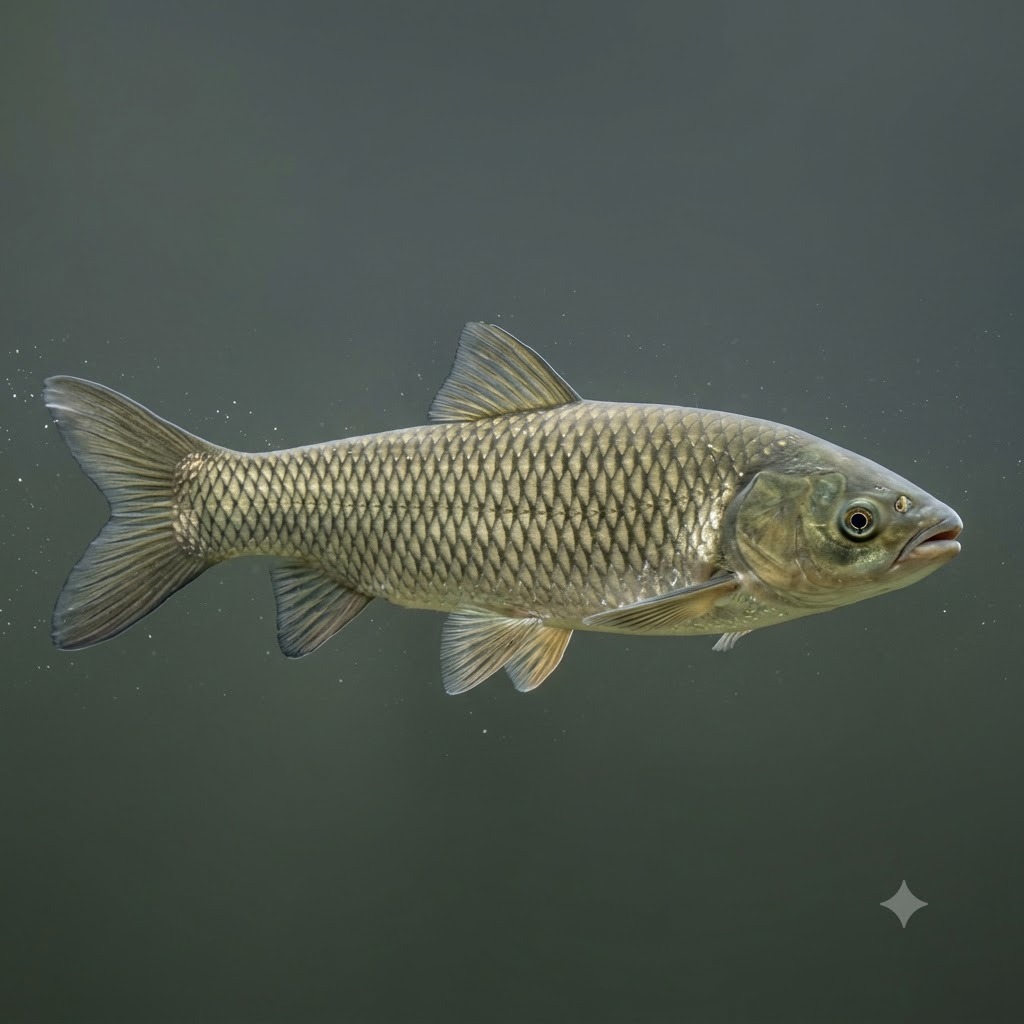
The grass carp is a giant, plant-eating fish native to Asia that has become a common sight in ponds and lakes across the United States. Unlike most large freshwater fish, it is almost purely herbivorous, and that is exactly why it was brought here: fisheries managers, pond owners, and agencies stock grass carp to control nuisance aquatic vegetation, using the fish as a living weed cutter. They grow enormous, feed voraciously on plants, and can clear a weed-choked pond in a season. For anglers, the grass carp is an unusual and demanding target, a huge, wary, hard-pulling fish that will test both your patience and your tackle. Before targeting one, though, you must understand the regulations, because in many places grass carp are protected or off-limits.
Identification & Appearance
The grass carp has a long, torpedo-shaped, heavy body built for cruising and grazing. It is covered in large, distinct scales that give it a crosshatched appearance, and its coloring ranges from olive to silvery bronze on the back, fading to a lighter, almost white belly. The head is broad and blunt with a wide, downturned mouth suited to tearing and swallowing vegetation, and unlike the common carp it has no barbels around the mouth. The eyes sit relatively low on the head. Its overall look is that of a very large, streamlined minnow, which is fitting because it belongs to the minnow family despite its impressive bulk.
Range & Habitat (US waters)
Grass carp are found across much of the United States wherever they have been stocked for weed control, from farm ponds and small lakes to larger reservoirs and slow river systems. They thrive in warm, weedy, slow-moving or still water with abundant vegetation to eat. Many states allow only sterile, triploid grass carp to be stocked so the fish cannot reproduce and establish wild populations, and these controlled stockings are the most common source of the fish. Because they are managed so carefully, the rules governing grass carp vary widely from place to place, and in many waters it is illegal to target, keep, or harm them at all.
Behavior & Feeding
The grass carp is a dedicated herbivore, feeding almost entirely on aquatic plants, algae, and vegetation both in and around the water. It grazes through weed beds like an aquatic lawnmower, and a single large fish can eat many times its own weight in plants over a season. It tends to feed near the surface and along weed edges, and it can often be seen cruising slowly, sipping vegetation or clooping at the surface. Grass carp are famously wary and easily spooked, quick to bolt at the sight of an angler, a shadow, or an unnatural presentation. This combination of a plant diet and extreme caution is what makes them so challenging to catch on hook and line.
Best Seasons & Times to Catch
Grass carp are warm-water fish, so the warmer months are by far the most productive. Late spring through summer and into early fall, when water temperatures are high and the fish are feeding actively on lush vegetation, offers the best chance. During the heat of summer they often feed and bask near the surface, which can create sight-fishing opportunities. They slow down and become very difficult to catch in cold water. On a daily basis, calm, warm mornings and evenings tend to bring cruising, surface-feeding fish, and quiet conditions matter enormously because these fish spook so easily.
Where to Find Them - Reading the Water
Look for grass carp where the food is: along the edges of weed beds, in shallow vegetated bays, near lily pads and reeds, and around any lush growth on the surface or the bank. In warm weather they often cruise the surface or hold just beneath it, and you can spot their backs, tails, or gentle surface disturbances as they graze. Calm, protected water where vegetation is thick is a prime area. Because they are so wary, approach quietly and watch the water carefully before casting, since seeing the fish first and placing a bait in its path is often the key to success.
Tackle & Rigs
Grass carp are large and powerful, so use stout tackle. A strong rod with backbone, a reel with a smooth drag and good line capacity, and strong line are all important because these fish make long, hard runs. A common approach is a simple bottom or float rig with a hook baited to imitate the vegetation they eat, presented as naturally as possible. Because grass carp are so cautious, light, unobtrusive terminal tackle and a natural presentation matter, but it must be balanced against the sheer strength of the fish. Match your setup to a fish that may be very large and will fight long and hard once hooked.
Best Baits & Lures
Since grass carp are herbivores, plant-based and natural baits work best. Bits of bread, dough baits, corn, and pieces of vegetation such as cut grass or tender greens can all tempt them, and floating bread crust can be deadly for surface-feeding fish. The trick is presenting a bait that matches what they are already eating and doing so without spooking them. Because they eat plants rather than prey, standard predator lures are generally ineffective. Patience and a natural, plant-like offering placed in front of a cruising fish are far more important than any particular special bait.
Techniques - How to Fish for It
Sight-fishing is the classic approach. Spot a cruising or surface-feeding grass carp, then quietly present a bait such as a piece of floating bread in its path and wait for it to take. Stealth is everything, since a heavy cast, a shadow, or a clumsy approach will send the fish fleeing. For bottom fishing, position a natural bait along a weed edge and wait patiently for a wary fish to find it. When a grass carp finally takes, be ready for a powerful, sustained fight with long runs, and let the drag and rod absorb the pressure. Above all, know and follow the regulations before you ever make a cast.
Common Mistakes
The most important mistake to avoid is a legal one: fishing for grass carp where it is prohibited. In many waters, especially those stocked with sterile triploid fish for weed control, it is illegal to target, keep, or harm them, and anglers must check the rules first. Beyond that, common errors include spooking these ultra-wary fish with a noisy approach or heavy cast, using predator lures on a plant-eating fish, fishing too light for such a powerful animal and getting broken off, and giving up too soon on a species that rewards patience and careful, quiet presentation.
Size, Records & Eating Quality
Grass carp grow very large, commonly reaching well over a foot in length and, in good waters, growing into truly massive fish measured in feet, with heavy, deep bodies. They are among the strongest freshwater fish an angler can hook, fighting with long, powerful runs. While grass carp are eaten in some parts of the world, in the United States they are usually not harvested, both because many are protected stocked fish and because the emphasis is on their weed-control role. Where they are protected, they must be released unharmed, so always confirm the local rules before keeping any fish.
Pros & Cons (as a target species)
Pros: grass carp are enormous, extremely strong, and provide an exceptional fight, and outwitting such a wary fish is deeply satisfying for anglers who enjoy a challenge. Cons: they are strictly regulated, and in many waters it is illegal to target or keep them, which sharply limits where you can pursue them. They are also difficult to fool, requiring stealth and patience, and their plant diet means standard lures do not work. The legal restrictions in particular make this a species to approach only after checking the rules.
Best Suited For
The grass carp suits the patient, stealthy angler who enjoys a specialized challenge and the thrill of battling a very large, powerful fish. It appeals to those who like sight-fishing and careful, quiet presentation over fast action. Above all, it is best suited to anglers who take the time to understand and respect local regulations, since responsible pursuit of grass carp depends entirely on fishing only where it is legal and releasing protected fish unharmed. It is a rewarding target for the thoughtful angler, not the casual one.
FAQ
Is it legal to fish for grass carp? It depends entirely on where you are. Many waters stock sterile grass carp for weed control and prohibit targeting, keeping, or harming them. Always check your local regulations before fishing for grass carp, because the rules vary widely.
What do grass carp eat? Grass carp are herbivores that feed almost entirely on aquatic plants, algae, and vegetation. This is why they are stocked to control nuisance weeds, and why plant-based baits like bread and greens work while predator lures do not.
Why are grass carp so hard to catch? They are extremely wary and easily spooked, quick to flee at a shadow, a noise, or an unnatural presentation. Catching one requires stealth, patience, and a natural, plant-like bait placed carefully in the fish's path.
How big do grass carp get? They grow very large, often well over a foot and, in good waters, into truly massive fish measured in feet with heavy bodies. They are among the strongest freshwater fish an angler can hook.
Are grass carp good to eat? In the United States they are usually not harvested, both because many are protected stocked fish and because their role is weed control. Where they are protected they must be released unharmed, so check local rules first.