Green Sunfish
The green sunfish is one of the most widespread and adaptable panfish in North America, and for countless anglers it is the very first fish they ever catch.
🗓️ Last reviewed: June 2026
Overview
The green sunfish is one of the most widespread and adaptable panfish in North America, and for countless anglers it is the very first fish they ever catch. A member of the sunfish family alongside bluegill and largemouth bass, the green sunfish punches well above its weight: it is small, but it is bold, aggressive, and astonishingly willing to attack baits and lures that seem far too big for it. It thrives where almost nothing else will, from tiny creeks and roadside ditches to stock tanks and the weedy edges of big reservoirs. For a kid with a worm and a bobber, or an angler unwinding with an ultralight rod, the green sunfish delivers nonstop action and a scrappy, hand-sized fight that never gets old.
Identification & Appearance
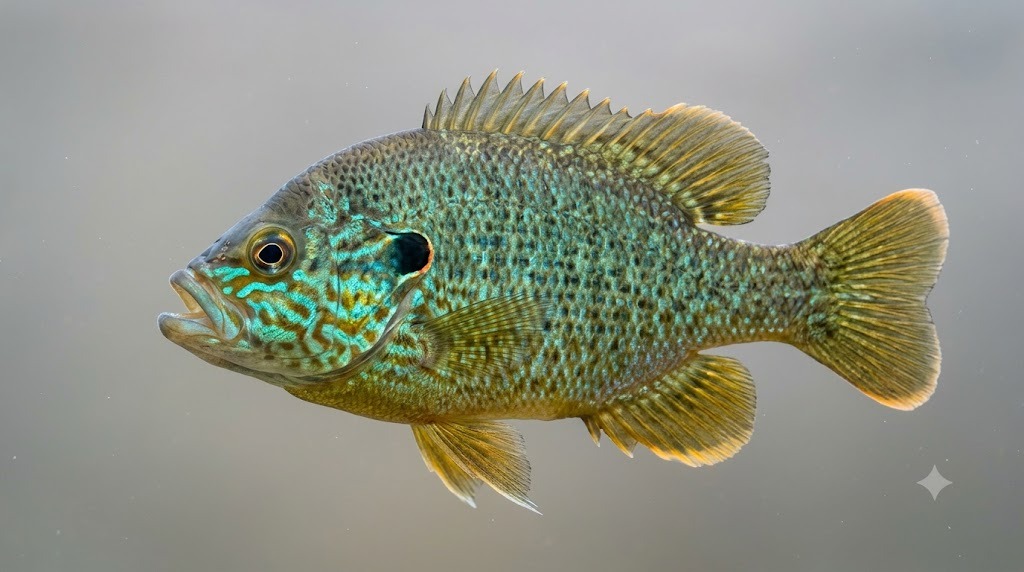
The green sunfish is a stocky, deep-bodied sunfish with a distinctly large mouth for its family, the single best feature for separating it from a bluegill. The upper jaw reaches back to about the middle of the eye, giving it a more bass-like gape than other Lepomis. Its body is blue-green to olive, often with a brassy or yellow-green sheen, and the cheeks and gill cover are decorated with iridescent blue-green to turquoise wavy lines or streaks across the face. The black gill flap (the opercular spot) carries a pale white to orange-yellow margin around its edge, and the dorsal, anal, and tail fins are typically trimmed in yellow to orange. The belly often glows yellow-orange, especially on breeding males. Compared with the bluegill, the green sunfish has a longer, less compressed body, a bigger mouth, and shorter, more rounded pectoral fins.
Range & Habitat (US waters)
The green sunfish is native to a broad swath of central North America, including the Great Lakes region and the Mississippi, Missouri, and Ohio River basins down through the Gulf states. From that native range it has been introduced and stocked so widely that it now turns up in nearly every state, and in some western waters it is considered invasive because it outcompetes native species. Its success comes from sheer toughness. It tolerates warm water, low oxygen, muddy turbidity, and cramped quarters that would kill more sensitive fish. You will find green sunfish in ponds, lakes, reservoirs, slow rivers, creeks, drainage ditches, stock tanks, and quarry pits. It is often the first fish to colonize a new or disturbed body of water, and it can hold on in habitats too marginal for almost anything else.
Behavior & Feeding
Green sunfish are aggressive, opportunistic feeders that rarely pass up an easy meal. They eat aquatic insects and insect larvae, small crayfish, snails, worms, and small fish and fish fry, and a hungry green sunfish will dart out from cover to slam a lure nearly its own length. This boldness is part of their charm and part of the reason they are so easy to catch. They typically hold near cover such as rocks, submerged wood, weed edges, and undercut banks, ambushing prey that drifts past. Because they are so willing and so prolific, green sunfish can overpopulate small ponds and become stunted, producing large numbers of undersized fish that never reach a respectable size. They also hybridize readily with bluegill and other Lepomis, which can make identification of individual fish tricky.
Best Seasons & Times to Catch
Green sunfish bite well throughout the warm months, and their tolerance for heat means they keep feeding through summer when other species slow down. Late spring and early summer are especially productive, coinciding with the spawn, when fish crowd into the shallows and feed aggressively. Spawning kicks off as water climbs into roughly the upper 60s to 70s degree range, and the bedding fish are easy to spot and easy to catch. Action stays strong all summer, with the best fishing in the cooler hours of early morning and evening, though green sunfish are willing enough to bite at midday too. Fall offers steady fishing as water cools, while the coldest part of winter slows the bite considerably. On a daily basis, low-light periods and overcast skies tend to bring fish out from cover.
Where to Find Them - Reading the Water
Green sunfish relate tightly to cover and structure, so look for anything that breaks up the shallows. Rocks, riprap, fallen logs, brush, weed lines, dock pilings, and undercut or shaded banks all hold fish. In creeks and small rivers, target slower pools, eddies behind obstructions, and the edges of riffles where current slows. In ponds and lakes, work the margins, especially near a drop-off, a weed edge, or any submerged wood. During the spawn, scan shallow flats and protected pockets for nest colonies in the silt or gravel. A reliable rule of thumb: find shallow water with cover and a nearby edge, and green sunfish will usually be there in numbers.
Tackle & Rigs
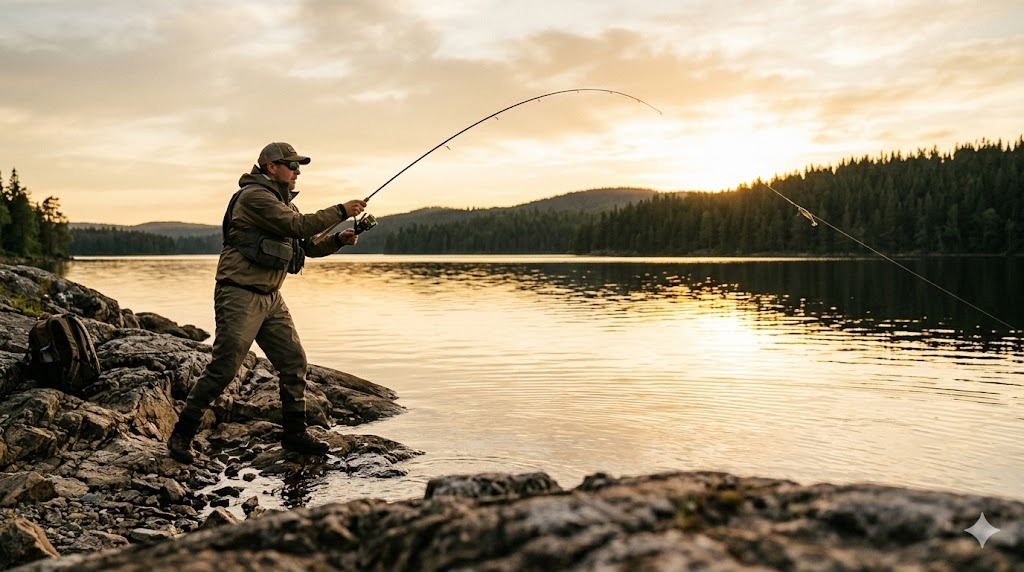
Light is the name of the game. An ultralight or light spinning rod with 2-6 lb monofilament line is ideal, giving you sensitivity and turning even a small fish into a fun fight. Small hooks in sizes 6 to 10 are the right scale for their mouths, even though that mouth is large for a sunfish. The classic rig is a worm or a piece of nightcrawler under a small bobber, fished a foot or two deep near cover, which is also the perfect setup for a beginner or a child. A small split-shot rig fished on the bottom works well in current, and a tiny jig under a float is deadly. Green sunfish are also a wonderful fly-rod target, taking small poppers, wet flies, and nymphs on light tackle.
Best Baits & Lures
Because they are so aggressive, green sunfish will hit a wide range of small offerings. Live bait is hard to beat: worms, nightcrawlers, crickets, mealworms, and small minnows all produce consistently. On the artificial side, tiny inline spinners, small jigs, micro soft-plastics on light jig heads, and small spinnerbaits draw reaction strikes from these bold little predators. Fly anglers do well with small poppers, sponge bugs, woolly worms, and nymphs. Keep everything small and the action steady, and let the fish's natural aggression do the rest. In stained or muddy water, a little flash or a brighter color helps the fish find the bait.
Techniques - How to Fish for It
Fishing for green sunfish is refreshingly simple, which is exactly why it is such a good way to learn. Cast a worm under a bobber near cover and watch for the float to twitch and dive, then lift the rod to set the hook. Around rocks and wood, drift or swim a small jig or spinner past the cover and be ready for an immediate strike, since green sunfish often hit the moment a lure enters their zone. In moving water, drift bait along current seams and into pools, keeping just enough tension to feel the take. Work methodically along a bank, hitting every likely piece of cover, because these fish are usually clustered where conditions are best. The bites are eager and the hooksets are easy, making this a confidence-building species for anyone.
Common Mistakes
The most common mistake is fishing too heavy. Oversized hooks, thick line, and bulky baits cost you bites from a small-mouthed fish, even though the green sunfish has a larger gape than its cousins. Another frequent error is overlooking the smallest waters, the creeks, ditches, and ponds where green sunfish thrive, in favor of bigger lakes. Anglers also sometimes set the hook too hard with light tackle and pull the bait away or snap the line. In ponds where green sunfish have overpopulated, expecting big fish leads to disappointment, since the population may be stunted. Finally, ignoring cover is a mistake, because these fish hold tight to structure and an open-water presentation often gets ignored.
Size, Records & Eating Quality
The green sunfish is a small fish. A typical catch runs about 3 to 7 inches, and any fish reaching half a pound is a genuinely good one. The IGFA all-tackle world record stands at just 2 pounds 2 ounces, caught in Missouri in 1971, which puts the modest size of even a trophy specimen in perspective. In many waters, green sunfish overpopulate and stunt, so harvesting them liberally is often encouraged to improve the size of the remaining fish. As table fare they are like other panfish: the flesh is mild, sweet, white, and quite good, though the fillets are small. Where they are abundant, a bucket of green sunfish makes an excellent fish fry.
Pros & Cons (as a target species)
Pros: green sunfish are abundant, widespread, and incredibly easy to catch, making them perfect for beginners and kids; they are aggressive and willing biters that provide nonstop action; they live in tiny accessible waters close to home; and they are a great ultralight and fly-rod species. Cons: they are small, so they offer little for anglers chasing size; they overpopulate and stunt easily in small ponds; they can become a nuisance or even an invasive problem where introduced outside their native range; and a steady diet of small fish may not satisfy anglers wanting a meaningful fight.
Best Suited For
Green sunfish are tailor-made for beginners, children, and anyone who simply wants to catch fish and have fun. They are the ideal first-fish species: abundant, eager, and found in waters within walking distance for many people. They reward casual bank anglers, families on a pond outing, and ultralight enthusiasts who enjoy a scrappy fight on featherweight gear. They are also a favorite of fly anglers practicing on willing targets. Anyone looking for relaxed, high-action fishing without fuss or specialized equipment will find a perfect match in the green sunfish.
FAQ
What is the best bait for green sunfish? A small piece of worm or nightcrawler is the single most reliable choice. Fished under a small bobber near cover, it is easy to use, irresistible to these aggressive fish, and perfect for beginners.
How can I tell a green sunfish from a bluegill? Look at the mouth. The green sunfish has a noticeably larger mouth, with the upper jaw reaching back to about mid-eye, plus a longer, less compressed body and turquoise streaks across the cheeks. The bluegill has a tiny mouth and a more disk-shaped body.
Do I need special gear to catch green sunfish? No. An ultralight or light spinning rod with light line and a few small hooks is all you need. A simple worm-and-bobber setup catches them consistently and is ideal for kids and newcomers.
Are green sunfish good to eat? Yes. They have mild, sweet white flesh like other panfish, though the fillets are small. Where they are abundant or overpopulated, harvesting them for a fish fry is both tasty and good for the fishery.
Why are green sunfish sometimes considered a problem? They are extremely hardy and prolific, so where they have been introduced outside their native range they can outcompete native fish and become invasive. In small ponds they often overpopulate and stunt, producing many undersized fish.