Guadalupe Bass
The Guadalupe bass is a small, hard-fighting black bass found nowhere else on earth but the rivers and streams of central Texas, and in 1989 it was named the official state fish of Texas.
🗓️ Last reviewed: June 2026
Overview
The Guadalupe bass is a small, hard-fighting black bass found nowhere else on earth but the rivers and streams of central Texas, and in 1989 it was named the official state fish of Texas. It is a true Hill Country native, built for the fast, clear, rocky streams of the Edwards Plateau, where it holds in current and ambushes prey from behind rocks and ledges. What it lacks in size it more than makes up for in fight: a Guadalupe bass hooked in moving water pulls far harder than its modest weight suggests, peeling line and using the current like a smallmouth twice its size. Anglers chase them with light spinning gear and fly rods on intimate, wadeable streams, often from a kayak or on foot, in some of the prettiest river country in the state. Because the species is endemic, limited in range, and threatened by hybridization with introduced smallmouth bass, the Guadalupe bass is also at the center of one of Texas' best-known native-fish conservation efforts, and most anglers treat it as a catch-and-release fish.
Identification & Appearance
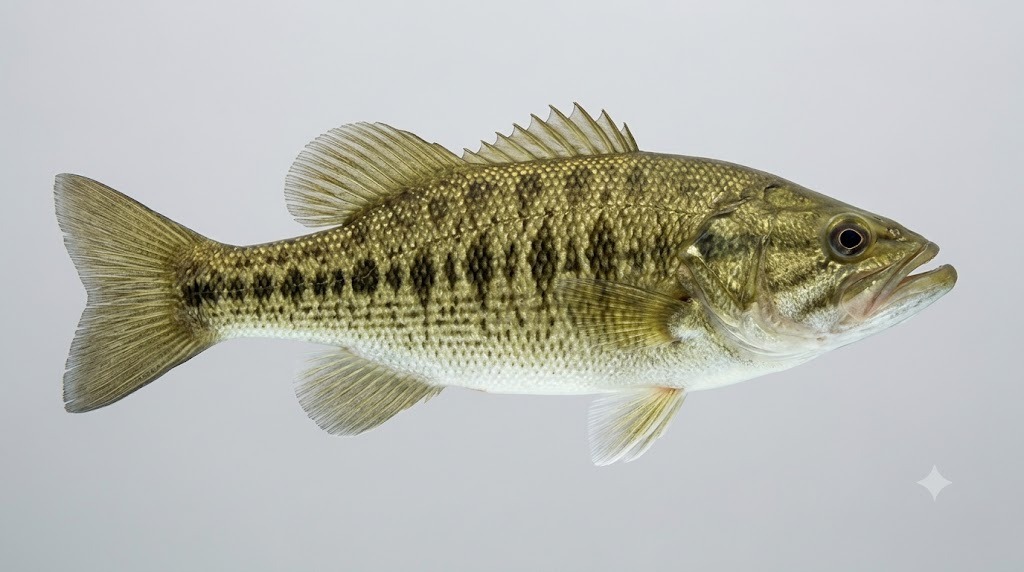
The Guadalupe bass is a slender, streamlined black bass, generally more elongated and less deep-bodied than a largemouth. Its back and upper sides are olive-green to a brassy or bronze-green, fading to a pale belly, and the most useful field mark is a row of 10 to 12 dark, diamond-shaped blotches that run along the side and often connect low on the body rather than forming a single clean horizontal stripe. The dark side markings extend lower, closer to the belly, than they do on a spotted bass, and unlike the largemouth the jaw does not extend past the back of the eye. Like the spotted bass, the Guadalupe has rows of small dark spots below the lateral line and a patch of teeth on the tongue, but it is distinguished by its coloration, the way its side blotches connect, and its central-Texas range. Telling a pure Guadalupe bass from a spotted bass, a smallmouth, or a Guadalupe-smallmouth hybrid can be genuinely difficult, and hybrids in particular often show a confusing mix of features. Guadalupe bass are a small fish: most run well under a foot and only a couple of pounds, with a true trophy being a fish of just a few pounds.
Range & Habitat (US waters)
The Guadalupe bass is endemic to the streams of the Edwards Plateau in central Texas, meaning this is the only place in the world where it occurs naturally. Its native range centers on the rivers of the Hill Country: the Guadalupe River that gives it its name, along with the San Marcos, Comal, Blanco, Llano, Pedernales, San Saba, and the upper Colorado and Nueces drainages. It has also been introduced into a few other central-Texas waters, including the Nueces system. This is a fish of flowing water. It favors small to mid-sized rivers and streams with clear water, noticeable current, and rocky or gravel bottoms, holding in riffles, runs, and the pockets behind boulders and ledges where current delivers food. It is far more at home in living, moving stream water than in still reservoirs - where rivers have been dammed, the slack water of the reservoir generally suits largemouth better, and the Guadalupe bass holds on in the flowing river reaches above and below.
Behavior & Feeding
Guadalupe bass are current-oriented ambush predators. Rather than cruising open water, they tuck into the seams and eddies behind rocks, ledges, and other current breaks, then dart out to grab food the flow carries past before sliding back to cover. This habit of facing into the current and feeding on what it delivers is a lot like the way a stream smallmouth or a trout behaves, and it shapes how you fish for them. Their diet is dominated by aquatic and terrestrial insects, especially in younger and smaller fish, along with small fish, crayfish, and other small invertebrates as they grow. Because so much of what they eat is small - insects, small minnows, small crayfish - the most productive lures and flies for Guadalupe bass tend to be small as well. They feed actively in the moving water of riffles and runs, and a well-presented small lure or fly drifted naturally through a likely current seam will often draw a sharp, aggressive strike.
Best Seasons & Times to Catch
Guadalupe bass can be caught throughout the warmer months, and central Texas offers a long season thanks to its mild climate. Spring and fall are generally the most comfortable and productive times to fish for them, with pleasant water temperatures and active fish. Summer fishing can be excellent as well, especially early and late in the day when the light is low and the heat is off, and wading a cool Hill Country river on a hot summer morning is one of the real pleasures of this fishery. As with most stream fishing, flow matters: a healthy, moving flow keeps fish positioned predictably in riffles and runs, while very low water can make them spooky and concentrated in the remaining deeper pockets. Early morning and late evening tend to bring the most aggressive feeding, and overcast days can extend the bite. Because these are clear-water fish in often shallow streams, low light and good flow generally beat the bright, low-water conditions of a dead-still midday in midsummer.
Where to Find Them - Reading the Water
Finding Guadalupe bass is all about reading moving water and fishing the current breaks. In a Hill Country river, look first at the riffles and the runs just below them, where broken, oxygenated water carries food and gives fish cover. Target the pockets and eddies behind boulders, the seams where fast water meets slow, the edges of current tongues, the heads and tails of pools, and the slack water on the downstream side of ledges and rock shelves. These current breaks are where a Guadalupe bass will sit facing upstream, waiting to dart out for a meal, so a lure or fly that drifts naturally past the edge of the break is far more effective than one dragged through dead, still water. Approach from downstream when you can, since the fish are facing into the current and away from you, and keep a low profile and quiet wading in the clear, shallow water. The simple rule: find clean flowing water over rock, fish the seams and pockets where current meets calm, and present something small and natural right along that edge.
Tackle & Rigs
Guadalupe bass are a light-tackle and fly-rod fish, and matching the gear to a small, hard-fighting stream fish is part of the fun. For spinning, a light or medium-light rod around 6 to 7 feet, paired with a small 1000 to 2500 size spinning reel, spooled with a light monofilament or a light braid to a fluorocarbon leader in roughly the 4 to 8 pound range, is ideal for casting small lures accurately on intimate water and enjoying the fight. Fly anglers do very well with a 4 to 6 weight fly rod and a floating line, which handles small streamers, poppers, and nymphs nicely and turns the Guadalupe bass into a superb light-fly target. Common rigs are simple: a small soft-plastic on a light jighead or a drop-shot, a small inline spinner or compact crankbait tied straight on or to a short leader, and for fly fishing a single weighted nymph or small streamer, sometimes a popper, drifted through the current seams. Because the water is clear and often shallow, lighter line and a careful, accurate cast matter more here than heavy gear.
Best Baits & Lures
Because Guadalupe bass eat small prey - insects, small minnows, small crayfish - the rule is to fish small. Effective lures include small soft-plastic baits such as small finesse worms, craws, creature baits, grubs, and tubes on light jigheads or finesse rigs, small inline spinners, small crankbaits and jerkbaits, and small topwater plugs early and late in the day. Crayfish are an important food, so crayfish-imitating soft plastics and flies in natural brown, green-pumpkin, and similar tones are reliable producers. For fly anglers, the standout patterns are small crayfish patterns, woolly buggers and small streamers, clouser-style minnows, and small poppers, along with nymphs that imitate the aquatic insects these fish key on. Live bait such as worms and small crayfish will also take them where its use is legal and appropriate. The overriding principle is to keep offerings small and natural, present them to drift believably through the current seams and pockets where the fish hold, and let the moving water do the work of carrying your lure or fly to a waiting fish.
Techniques - How to Fish for It
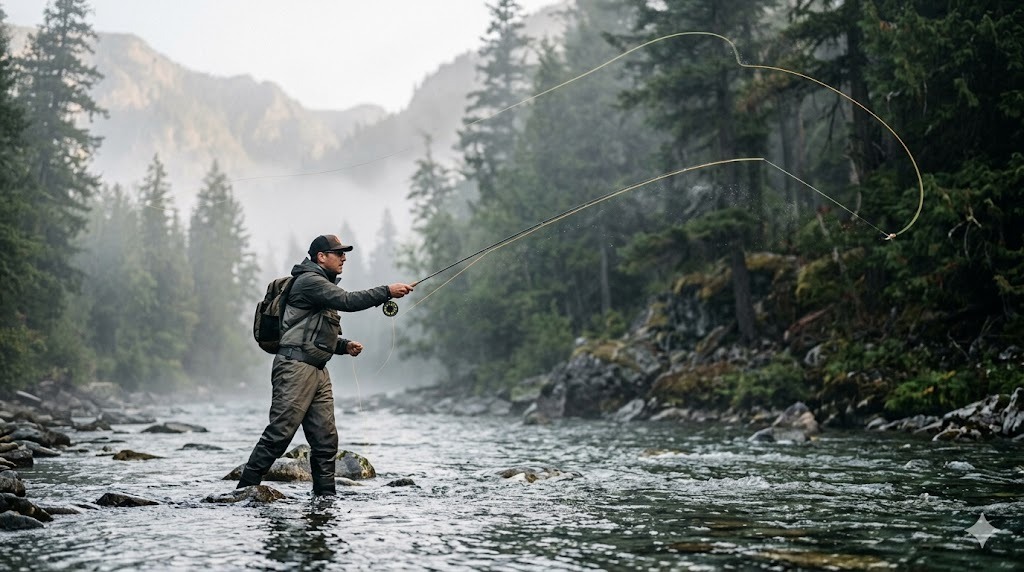
The core technique is reading current and presenting a small lure or fly naturally through the seams and pockets where Guadalupe bass hold. Whether you are wading, fishing from a kayak, or working a bank, position yourself so you can cast up and across the current and let your offering drift or swing down through a likely seam, the edge of a current tongue, or the pocket behind a boulder, much as you would fish a stream smallmouth or a trout. With soft plastics, a light jighead bounced and drifted along the bottom through runs and pocket water draws strikes; with spinners and small crankbaits, a steady retrieve swung across and through the current seams works well; with flies, dead-drifting a nymph or swinging a small streamer or crayfish pattern through the run is deadly, and a small popper fished over likely water can bring explosive surface takes early and late. Approach quietly and from downstream when possible, keep a low profile in the clear water, and make accurate casts to the edges of cover. When a Guadalupe bass eats, set the hook and be ready, because for its size it fights hard and uses the current to its advantage, making a fish of a pound or two feel considerably bigger.
Common Mistakes
A common mistake is fishing lures that are simply too big - these are small fish that eat small prey, and oversized baits draw far fewer strikes than small, natural offerings. Another is fishing dead, still water and ignoring the current breaks, when the fish are actually holding in the seams, riffles, runs, and pockets behind rocks where current delivers food. Anglers also spook fish by approaching carelessly in the clear, shallow water, wading noisily, casting a shadow, or coming at the fish from upstream where they can see the angler coming. Using line that is too heavy and visible in clear Hill Country streams costs bites, as does dragging a lure unnaturally through a seam instead of letting it drift believably with the flow. Perhaps the most important mistake of all is a conservation one: failing to correctly identify your catch and not handling these fish with care. Because Guadalupe bass hybridize with introduced smallmouth and are limited to a small native range, careless handling and confusion with similar species work against a fish that many anglers are actively trying to protect.
Size, Records & Eating Quality
The Guadalupe bass is a small fish. Most are well under a foot long and weigh only around a pound or less, and a genuine trophy is a fish of just a few pounds. The rod-and-reel state record is a fish of roughly 3.7 pounds, and there is no large body of giant fish to chase here - the appeal is the fight, not the size, since a Guadalupe bass pulls far above its weight in current. While the firm white flesh of black bass is perfectly edible, the Guadalupe bass is overwhelmingly treated as a catch-and-release species rather than as food. There are good reasons for this. The fish is endemic to a small slice of central Texas, it has a limited range, and its biggest long-term threat is genetic: introduced smallmouth bass hybridize with Guadalupe bass, and that hybridization can dilute and erode the pure native population. For these reasons there has been a sustained, well-known conservation effort in Texas to protect and restore pure Guadalupe bass, including stocking programs intended to swamp out hybrid genes in key rivers, and anglers are strongly encouraged to release the fish to support the species. Practically speaking, that means most people fish for Guadalupe bass purely for sport, handle them gently, and let them go. As always, check current Texas regulations for any bag and length limits before keeping a fish, but the spirit of this fishery is firmly catch-and-release.
Pros & Cons (as a target species)
Pros: the Guadalupe bass is a Texas original, the official state fish, found nowhere else on earth, which makes catching one a special, place-specific experience. It fights extremely hard for its size, using current like a small smallmouth, and it lives in beautiful, intimate, wadeable Hill Country rivers that are a joy to fish on foot, by kayak, or with a fly rod on light tackle. It is an accessible, affordable fishery that rewards skill at reading water and making accurate casts rather than heavy gear or a big boat. Cons: it is a small fish, so anglers chasing size or numbers of big bass will be disappointed; its range is narrow and confined to central Texas, so it is not a fish most anglers can pursue close to home; and the very real conservation concerns - limited range and hybridization with smallmouth - mean it should be handled carefully and released, and identification against similar species and hybrids can be tricky.
Best Suited For
The Guadalupe bass suits the angler who values the experience and the fight over sheer size, and who enjoys light spinning tackle or a fly rod on small, clear, flowing streams. It is ideal for waders and kayak anglers who like to read current, make accurate casts to seams and pockets, and feel a hard-pulling fish on light gear in pretty river country. It is a natural target for fly anglers drawn to a native, stream-dwelling black bass, and for anyone who appreciates fishing for a unique endemic species. Just as importantly, it is best suited to anglers who take conservation seriously, who are willing to identify their catch carefully and release these fish, and who want to support the ongoing effort to keep a true Texas native thriving in its home waters.
FAQ
What is the best lure for Guadalupe bass? Keep it small. Guadalupe bass eat insects, small minnows, and small crayfish, so small soft plastics on light jigheads, small inline spinners and crankbaits, and small crayfish or streamer flies are the most productive. Natural crayfish colors like brown and green-pumpkin are reliable, and the key is to drift or swing the offering naturally through current seams rather than dragging something oversized through still water.
Where can I catch a Guadalupe bass? Only in central Texas. The species is endemic to the streams of the Edwards Plateau, including the Guadalupe, San Marcos, Comal, Blanco, Llano, Pedernales, San Saba, and the upper Colorado and Nueces drainages. Look for clear, flowing water over rock, and fish the riffles, runs, and the pockets and seams behind boulders and ledges.
Should I keep or release Guadalupe bass? Release them. The Guadalupe bass is a small, endemic fish with a limited range that is threatened by hybridization with introduced smallmouth, and there is an active conservation effort to protect the pure native population. Most anglers treat it strictly as a catch-and-release sport fish. Handle the fish gently, let it go, and always check current Texas regulations.
How do I tell a Guadalupe bass from a smallmouth or spotted bass? It is genuinely tricky, especially with hybrids. A Guadalupe bass is slender and olive to brassy-green with a row of dark, diamond-shaped blotches along the side that often connect low on the body, with the dark markings extending lower toward the belly than on a spotted bass, and the jaw not reaching past the back of the eye. Like a spotted bass it has small spots below the lateral line and a tooth patch on the tongue, but its coloration, connected side blotches, and central-Texas range help separate it. Guadalupe-smallmouth hybrids show a confusing mix of traits and can be very hard to call.
Are Guadalupe bass good to eat? The flesh is edible, much like other black bass, but Guadalupe bass are overwhelmingly fished for sport and released rather than eaten. Because the species is endemic, limited in range, and at risk from hybridization, the strong norm is catch-and-release to support conservation. People fish for the experience and the fight, not for a meal, and releasing these fish helps protect a true Texas native.