Lake Sturgeon
The lake sturgeon is a living fossil and one of North America's most awe-inspiring freshwater fish.
🗓️ Last reviewed: June 2026
Overview
The lake sturgeon is a living fossil and one of North America's most awe-inspiring freshwater fish. Its lineage stretches back well over 100 million years, and an individual fish can outlive the angler who catches it, often living more than 50 years and, in the case of some old females, past a century. In much of its range it is the largest native freshwater fish in the water, a bottom-dwelling giant armored in bony plates that cruises the depths of big rivers and lakes. Hooking one is unlike chasing any game fish: there is no flashy lure-strike, just a slow, powerful pull from something prehistoric. For the small number of anglers lucky enough to fish protected, well-managed waters, landing a lake sturgeon is a once-in-a-lifetime encounter that demands respect for the animal and a commitment to releasing it safely.
Identification & Appearance
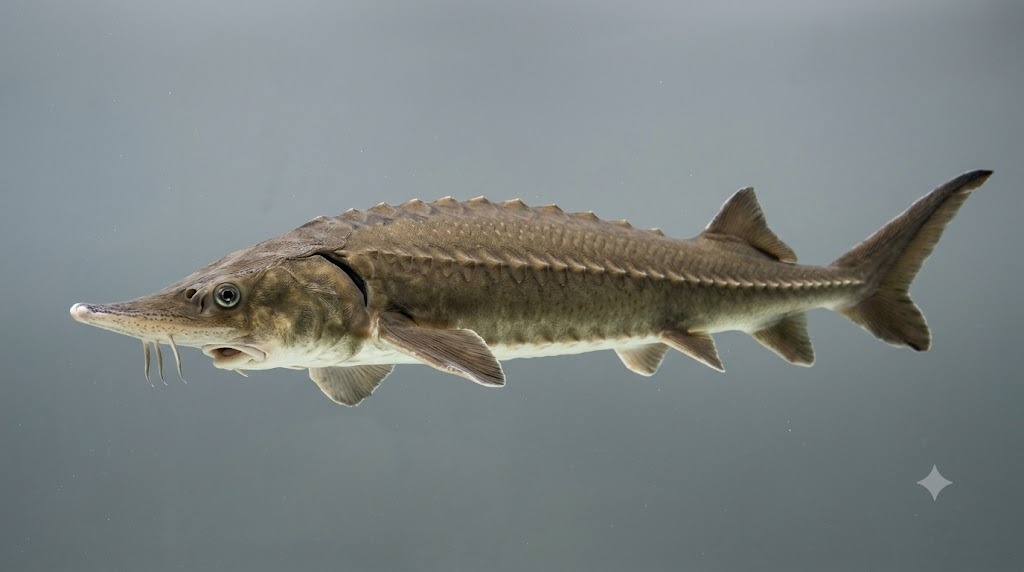
The lake sturgeon is unmistakable. It has a long, torpedo-shaped, conical body supported by a cartilaginous skeleton rather than true bone. In place of scales, its body carries five rows of large bony plates called scutes: a single dorsal row down the back, two rows along each side, and two along the belly. These scutes are sharp and prominent in juveniles and wear smoother on very old adults. The head tapers to a long snout, and on the underside hang four sensory whiskers called barbels positioned just ahead of a toothless, tube-like, protrusible sucker mouth. The tail is heterocercal, sharklike, with a longer upper lobe. Coloration runs from olive-brown to gray on the back and sides, fading to a pale belly. No other freshwater fish in its range combines scutes, barbels, and an underslung vacuum mouth.
Range & Habitat (US waters)
Lake sturgeon are native to a broad swath of central and northeastern North America. Their historic range includes the Great Lakes and their tributaries, the Mississippi, Missouri, and Ohio River drainages, the Hudson Bay drainage, and many large rivers and lakes of the upper Midwest, the Northeast, and central Canada. They are fish of big water, favoring large rivers and expansive lakes with clean bottoms of gravel, sand, or rock. They need free-flowing river stretches with rock and gravel substrate in order to spawn, which is why dams and habitat loss have been so damaging to them. Today their distribution is patchy compared to historic times, concentrated in waters where populations have survived or been restored through conservation efforts.
Behavior & Feeding
The lake sturgeon is a deliberate bottom feeder, not an open-water hunter. It cruises slowly along the bottom dragging its four barbels through the substrate, using touch and taste to detect food, then extends its tube-like mouth to vacuum prey off the bottom. Its diet is made up of benthic, bottom-dwelling organisms: aquatic insect larvae, crayfish, snails, clams and mussels, leeches, small fish, and other invertebrates. Because it feeds by suction on or near the bottom, it does not chase moving lures the way a bass or pike does; it is caught almost exclusively on bait fished on the bottom. Sturgeon are generally most active in moderate water temperatures and will move along feeding lanes and current edges where food collects, but their pace is methodical rather than aggressive.
Best Seasons & Times to Catch
Where seasons are legally open, the window is usually narrow and tightly defined by regulation, so the calendar is often set by the rule book rather than by the fish alone. Biologically, spring is a period of intense activity as adults move toward spawning areas, and many fisheries see strong action in late spring and early summer once water has warmed. Summer and early fall can produce well in deeper river holes and lake basins where sturgeon feed steadily on the bottom. Some of the most famous regulated opportunities, such as Wisconsin's Lake Winnebago system, occur in winter under the ice. On a daily basis, sturgeon will feed around the clock, and low-light periods and overnight hours are often productive, but local regulations and the fish's own seasonal movements matter far more than time of day.
Where to Find Them - Reading the Water
To find lake sturgeon, think deep, think current, and think clean bottom. In rivers, look to the deeper holes, the channels, the seams below rapids, and the tailwaters below dams where food and oxygenated water concentrate. In lakes, look to main-basin flats, deep edges, and the mouths of major tributaries. Clean gravel, sand, and rock bottoms hold the invertebrate forage that sturgeon eat, so areas with hard, productive substrate are far better than soft mud. During spring, fish stack near the rocky, gravelly river reaches they use for spawning, often just below rapids or barriers. A reliable approach is to anchor on or fish into a deep hole with current and a clean bottom and let bait soak where sturgeon travel.
Tackle & Rigs
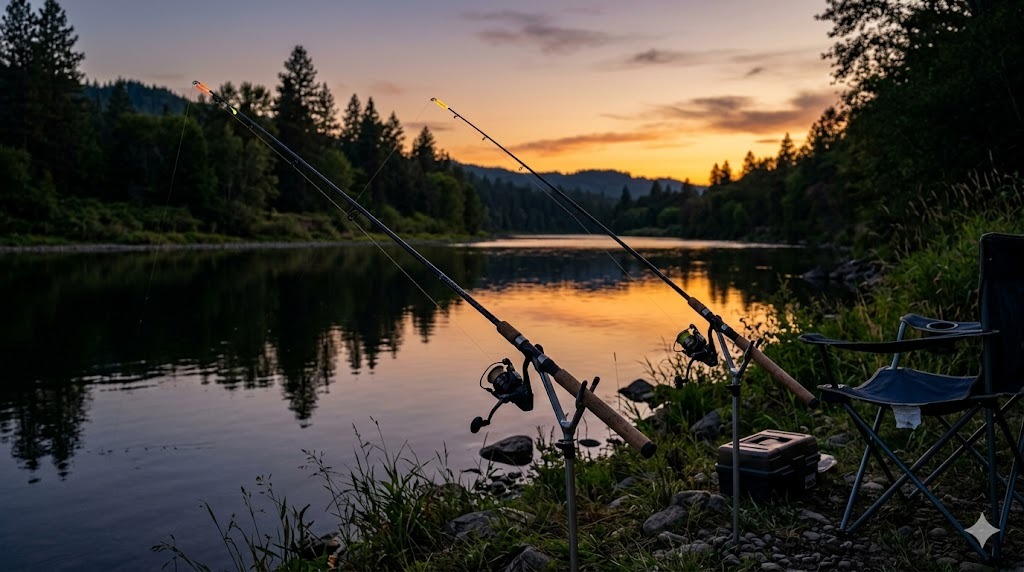
Lake sturgeon are big, powerful fish, so the tackle is heavy. A stout, long rod in the heavy-action class, the kind used for big catfish, salmon, or surf casting, paired with a strong reel that holds plenty of line, is standard. Spool up with heavy braid or monofilament, frequently in the 30 to 80 pound range or more, to handle both the fish and the abrasion of a rocky bottom. The workhorse rig is a sliding-sinker setup, often built around a no-roll or flat sinker that holds bottom in current, with the weight free to slide on the main line above a swivel and leader. Tie on a strong single hook, and use circle hooks, barbless where the rules require them, to improve hooking in the corner of the mouth and to make release easier. A sturdy rod holder is essential gear, because much of sturgeon fishing is patient waiting for the bait to be found.
Best Baits & Lures
Lake sturgeon are caught on natural bait fished on the bottom, not on artificial lures, because they feed by suction on benthic prey rather than chasing fast-moving targets. The most productive offerings are nightcrawlers, often a generous gob of several worms threaded on the hook to make a large, scent-rich target, along with crayfish and cut bait. Other bottom-oriented natural baits that match the sturgeon's invertebrate diet can also work in waters where they are legal. The key is presentation: the bait must sit on or just above the bottom, in current or near a feeding lane, where a cruising sturgeon can detect it with its barbels and vacuum it up. Scent and a substantial profile matter more than flash, which is the opposite of how most game fish are targeted.
Techniques - How to Fish for It
Fishing for lake sturgeon is patient bottom-fishing. Anchor or position on a deep hole, channel, or tailwater with clean bottom and current, cast a bottom rig out, set the rod in a sturdy holder, and wait for the fish to find the bait. The bite can be subtle at first, a series of taps as the sturgeon mouths the offering, building to a steady, heavy pull. With circle hooks, do not rear back with a violent hookset; instead let the fish load the rod and reel down into the weight so the hook slides into the corner of the jaw. Then settle in for a long, strong fight, as a big sturgeon makes powerful runs, shakes its head, and sometimes even rolls or breaches at the surface. The real skill comes after the fight: landing the fish carefully and releasing it unharmed.
Common Mistakes
The single most serious mistake is ignoring the regulations, because lake sturgeon are protected or tightly managed across most of their range and fishing for them illegally or harvesting them where prohibited does real harm to a slow-recovering species. The second most serious mistake is poor handling. Anglers hang big sturgeon vertically by the tail or jaw, hold them out of the water far too long for photos, or touch their gills, all of which can injure or kill these long-lived fish. Other common errors include fishing too light and losing fish or leaving hooks in them, fishing soft mud bottoms instead of the clean gravel and rock sturgeon prefer, setting the hook too hard with circle hooks and pulling the bait away, and lacking the patience that bottom-fishing for sturgeon requires.
Size, Records & Eating Quality
Lake sturgeon grow large and slowly. Many fish caught are several feet long, large adults can exceed six feet and weigh well over 100 pounds, and historically fish topping 200 pounds and seven feet were recorded. The IGFA all-tackle world record stands at well over 150 pounds, around 168 pounds for the recognized lake sturgeon mark, and any genuine trophy is a very old animal that took decades to reach that size. On eating quality, the lake sturgeon's firm flesh and its roe, sold as caviar, were historically prized, and that very demand, combined with overharvest for flesh, eggs, and even oil, drove the species to collapse. Because they mature so late, often not until 15 to 25 years of age, and spawn only every few years, populations recover very slowly. Today most lake sturgeon are released, harvest is closed or strictly capped in the great majority of waters, and any angler must check current state regulations before keeping a fish.
Pros & Cons (as a target species)
Pros: an unforgettable, prehistoric quarry; among the largest and longest-lived freshwater fish in North America; capable of a long, powerful, memorable fight; and a species that connects an angler to deep conservation history and stewardship. Cons: opportunities are limited and tightly regulated, with many waters closed entirely; the fish are slow to find and require patience and heavy gear; access to legal sturgeon fishing can be hard to come by; and the responsibility to handle and release these vulnerable fish perfectly raises the stakes on every catch.
Best Suited For
Lake sturgeon fishing suits the patient, conservation-minded angler who values a rare and meaningful encounter over fast action and big numbers. It rewards those willing to study regulations, fish heavy bottom rigs in big water, wait out a deliberate bite, and handle a powerful fish with care. It is ideal for anglers drawn to river fishing, to giant fish, and to the idea of catching and safely releasing a living fossil. It is not a species for the angler seeking constant casting and quick limits, but it offers something few other fish can: a hands-on link to a creature that predates the dinosaurs' extinction and a personal stake in its survival.
FAQ
What is the best bait for lake sturgeon? A generous gob of nightcrawlers fished on the bottom is the classic, reliable choice, with crayfish and cut bait also producing well. Sturgeon feed by suction on bottom prey, so scent and a substantial profile on a bottom rig matter far more than flash or movement.
Can I keep a lake sturgeon I catch? Usually not. Lake sturgeon are protected or strictly regulated across most of their range, and harvest is closed or tightly capped in the great majority of waters. Always check current state regulations, and treat catch-and-release as the default.
Why don't lake sturgeon hit lures? They are bottom feeders that detect food with sensory barbels and vacuum it up with a toothless, tube-like mouth. They are built to suck invertebrates off the bottom, not to chase fast-moving prey, so they are caught on bottom-fished natural bait rather than artificial lures.
How do I handle a lake sturgeon safely for release? Keep the fish in the water as much as possible, support its body horizontally with two hands, and never hang a big sturgeon vertically by the tail or gills. Minimize air exposure, avoid touching the gills, use barbless or single hooks where required, and revive the fish before letting it go.
How big and how old do lake sturgeon get? They are among North America's largest and longest-lived freshwater fish. Large adults can exceed six feet and 100 pounds, historic fish topped 200 pounds, and individuals can live well over 50 years, with some old females passing 100. A true trophy is always a very old animal.