Longear Sunfish
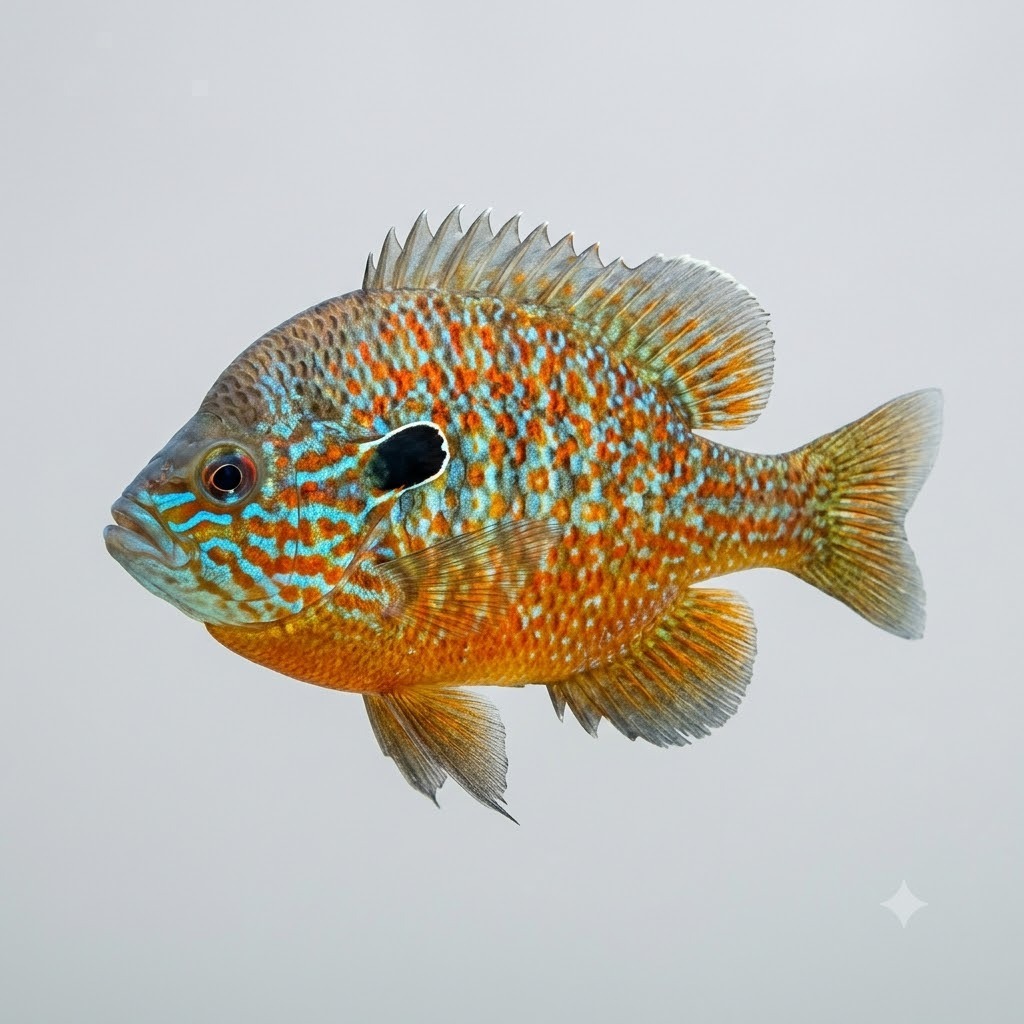
The longear sunfish is one of the most beautiful freshwater fish in North America, a small panfish painted in electric blues, oranges, and turquoise that rival a tropical reef fish.
🗓️ Last reviewed: July 2026
Overview
The longear sunfish is one of the most beautiful freshwater fish in North America, a small panfish painted in electric blues, oranges, and turquoise that rival a tropical reef fish. Named for the long, dark, flexible flap that extends from its gill cover like an oversized ear, this little sunfish is a favorite of small-stream anglers, ultralight enthusiasts, and fly fishers who prize its color and its willingness to bite. It rarely grows large, but what it lacks in size it makes up in spirit and stunning looks. Catching a hand-sized male longear in full breeding color from a clear, gravelly creek is one of the quiet joys of light-tackle fishing.
Identification & Appearance
The longear sunfish is a small, deep-bodied, brilliantly colored panfish. Breeding males are spectacular, with a body of burnt orange and red freckling over a background of iridescent blue and green, and wavy electric-blue lines streaking across the face and gill cover. The signature feature is the long ear flap - a black gill-cover extension, often edged in white or pale blue, that is notably longer than in other sunfish and angles upward or straight back. The body is short and rounded rather than elongated. Females and juveniles are more subdued but still show blue facial lines. The combination of the long light-edged ear flap and the vivid blue-and-orange coloring makes a breeding longear unmistakable.
Range & Habitat (US waters)
Longear sunfish are native to the central and eastern United States, common through the Mississippi River basin, the Great Lakes drainages, and much of the South and lower Midwest. Unlike many sunfish that prefer still ponds, the longear favors clear, warm, flowing water. Prime habitat is small to mid-sized streams and rivers with clear water, gravel or rock bottoms, and moderate current, especially the calmer pools, runs, and vegetated margins alongside the flow. They also live in clear lakes and reservoirs, particularly around rocky or weedy shallows. Clarity and clean bottoms matter to them, so the healthiest longear populations are found in clear, unsilted creeks and rivers.
Behavior & Feeding
The longear sunfish is an active, sight-feeding predator of small prey. It cruises the shallows and pool edges picking off aquatic and terrestrial insects, insect larvae, small crustaceans, tiny crayfish, snails, and the occasional small fish or fish egg. Much of its feeding happens near or at the surface, where it eagerly takes drifting or fallen insects - a habit that makes it a delight for fly anglers. It is most active in warm, sunlit water during the day. In late spring and summer, males build and fiercely guard shallow nests in gravel, often in loose colonies, and become especially aggressive toward anything entering their territory, which makes for fast, eager fishing.
Best Seasons & Times to Catch
Late spring and summer are by far the best times, when warm water has longears feeding actively and spawning in the shallows. The spawn, in the warm months, gathers colorful males over gravel nests where they attack intruders and small lures with abandon - prime time for both numbers and the brightest fish. Early fall remains productive as the fish continue feeding in the warm water. Winter slows them, since they are a warmwater stream fish, and cold, high water pushes them to sluggishness. On a daily basis, the warm, sunny middle of the day can actually fish well for longears, unlike many species, though morning and evening are reliable too, especially for surface feeding.
Where to Find Them - Reading the Water
In streams and rivers, look for clear water over gravel or rock with moderate flow. Longears hold in the calmer water beside the current - the tails and edges of pools, slow runs, eddies behind rocks and logs, and the quiet margins near vegetation and undercut banks. During spawning, scan clear shallow gravel flats for the round, swept nests where males hover. In lakes, target clear rocky and weedy shallows. Because they feed by sight in clear water, they are often visible, and sight-fishing to individual colorful males is both possible and fun. Anywhere clean, clear water meets structure and slack flow is a good bet.
Tackle & Rigs
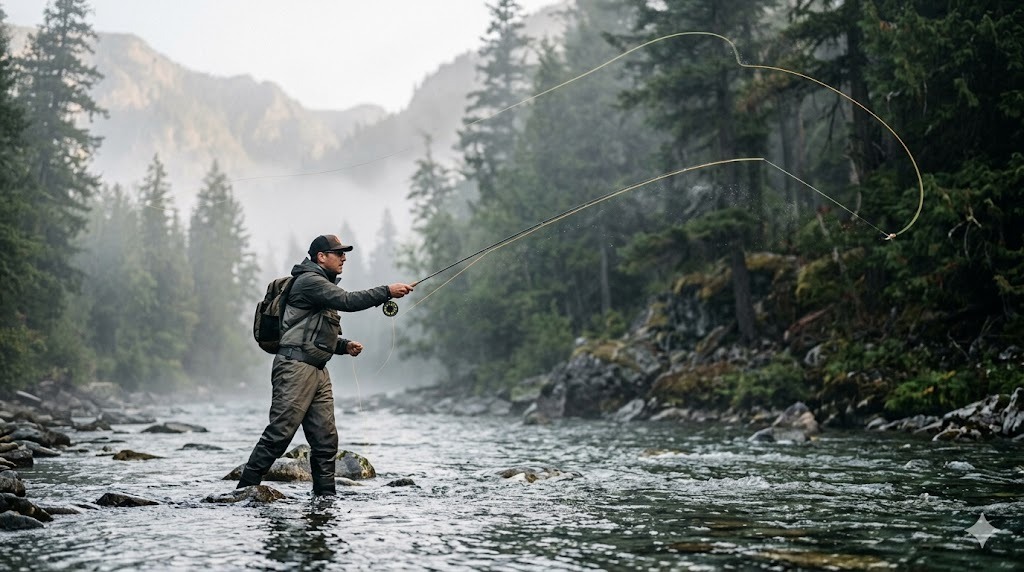
The longear is a small fish, so scale everything down for maximum sport. An ultralight spinning rod of 4.5 to 6 feet with a small reel and 2 to 4 lb line is ideal and turns a hand-sized fish into a spirited fight. A tiny hook baited with a piece of worm or a small insect under a small float, or on a light split-shot rig, catches them readily. Fly anglers do especially well: a light fly rod in the 2 to 5 weight range with small dry flies, poppers, and nymphs is a joyful way to target them. Whatever the method, delicate presentations and small hooks fit the fish's modest mouth and its clear-water habitat.
Best Baits & Lures
Small is the rule. Live bait such as a small piece of worm, crickets, grubs, and other small insects is deadly, presented on a tiny hook. Among artificials, tiny inline spinners, small soft-plastic grubs and tubes on micro-jigheads, and small spoons draw strikes. For fly fishing, small dry flies, foam poppers, and bead-head nymphs are outstanding, playing right into the longear's surface-feeding habits. Because these fish feed by sight in clear water, natural and bright colors both work; a flash of orange or chartreuse often triggers the aggressive breeding males. The key across the board is keeping offerings tiny to match the small mouth.
Techniques - How to Fish for It
Sight-fishing is a highlight with longears in clear water. Spot a colorful male over a gravel nest or holding in a pool edge, then present a small bait or fly gently ahead of it and let it drift or settle naturally. For fly anglers, drifting a small dry fly over a pool or twitching a tiny popper across the surface brings eager, splashy strikes. With spinning gear, cast a small spinner or bait to the quiet water beside the current and retrieve slowly along the seam. In spawning colonies, a small offering dropped near a nest is usually attacked at once. Keep movements soft and approaches quiet, since these clear-water fish spook easily.
Common Mistakes
The most common mistake is using hooks and baits that are too large for the longear's small mouth, resulting in missed strikes. Overly heavy tackle also robs the fish of its sport and can spook it in clear water. Anglers accustomed to still-water panfishing may overlook longears by fishing stagnant ponds instead of the clear, flowing streams these fish prefer. Approaching clear water carelessly - heavy footsteps, casting shadows, sloppy casts - alerts fish that feed by sight and shuts them down. Finally, handling these delicate, colorful fish roughly harms them; wet your hands and release them quickly to protect both the fish and the fishery.
Size Records & Eating Quality
The longear sunfish is a small panfish. A typical adult runs roughly 3 to 6 inches, and a specimen approaching or passing 8 inches is an exceptional trophy for the species. Because of its small size, it is not a significant food fish; while the flesh is edible like other sunfish, there is little of it, and most anglers release these fish to preserve their beauty and the population. The longear's real value is as an ultralight and fly-rod sport fish and as one of the most gorgeous fish an angler can hold. Gentle catch-and-release is the norm and keeps clear-water populations healthy.
Pros & Cons (as a target species)
Pros: stunning, vivid coloration that few freshwater fish can match, eager and aggressive biters especially in the spawn, excellent ultralight and fly-rod sport, often visible for exciting sight-fishing, and abundant in clear healthy streams. Cons: very small size means it is not a food fish and offers a brief fight, its need for clean clear flowing water makes it absent from silted or stagnant waters, the fish spook easily in clear conditions, and their small mouths demand tiny hooks and delicate presentations.
Best Suited For
The longear sunfish is perfect for ultralight and fly anglers who value beauty and lively action over size. It suits small-stream and creek fishers, wading anglers, and anyone who enjoys sight-fishing in clear water. It is a wonderful species for photography, for introducing newcomers to fly fishing, and for a relaxed summer outing on a clear creek. Anglers who appreciate the artistry and color of native fish, and who fish light and quietly, will find the longear one of the most rewarding little species around.
FAQ
Why is it called a longear sunfish? Because of the long, dark, flexible flap extending from its gill cover, which resembles an oversized ear. This flap is notably longer than in other sunfish and is a key identification feature.
What makes longear sunfish so colorful? Breeding males develop brilliant orange and red freckling over iridescent blue and green, with electric-blue wavy lines across the face. The color peaks during the warm-month spawn.
What is the best way to catch longear sunfish? Ultralight spinning gear with tiny baits or lures, or a light fly rod with small dry flies and poppers, both excel. Sight-fishing to visible fish in clear water is especially fun.
Where do longear sunfish live? Mostly in clear, warm streams and small rivers with gravel bottoms and moderate flow, holding in the quiet water beside the current. They also inhabit clear rocky and weedy shallows in lakes.
Are longear sunfish good to eat? They are edible like other sunfish but very small, so most anglers release them for their beauty and to protect the population rather than keep them for the table.