Mayan Cichlid
The Mayan cichlid is a small, gorgeous, and pugnacious fish that has become a favorite light-tackle target in South Florida - even though, like the clown knifefish, it is not native.
🗓️ Last reviewed: July 2026
Overview
The Mayan cichlid is a small, gorgeous, and pugnacious fish that has become a favorite light-tackle target in South Florida - even though, like the clown knifefish, it is not native. Introduced from Central America, it is now well established across Florida's warm canals, lakes, marshes, and even brackish coastal waters. What it lacks in size it makes up for in color, attitude, and willingness to bite. Aggressive and territorial, the Mayan cichlid will pounce on a small jig, fly, or worm fished near cover, and it fights far above its weight on light gear. It is also excellent eating, with clean white flesh. For anglers, it delivers fast, colorful, accessible action, and because it is invasive, there is no guilt in keeping a few for the pan.
Identification & Appearance
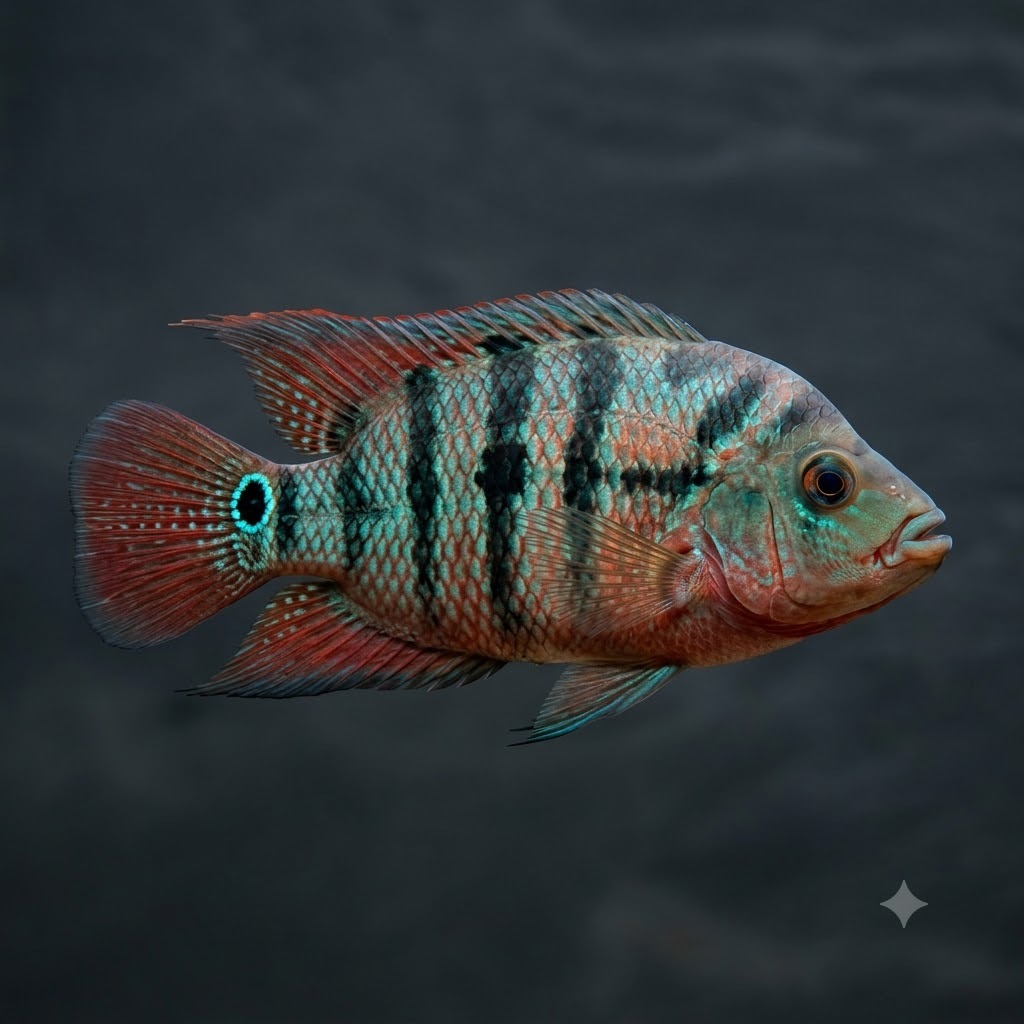
The Mayan cichlid is a compact, deep-bodied fish with a single long dorsal fin running most of the length of its back. Its coloration is striking: an olive-to-tan base overlaid with a series of dark vertical bars along the flanks, often flushed with red, orange, or turquoise, especially in breeding adults. The unmistakable field mark is a prominent eye-like spot, a dark ocellus ringed with a bright turquoise or blue halo, located at the base of the tail. This tail spot, combined with the vertical bars and the long dorsal fin, makes the Mayan cichlid easy to identify. Breeding fish become intensely colored, with fiery red throats and vivid patterning.
Range & Habitat (US waters)
In the US, the Mayan cichlid is established throughout South Florida and has spread widely across the southern peninsula. It occupies a broad range of warm-water habitats: freshwater canals, lakes, ponds, marshes, the Everglades, and even brackish mangrove-lined coastal waters, since it tolerates some salinity. It thrives in warm, still or slow-moving water with plenty of cover and structure. Like other tropical introductions, it cannot handle cold, so its range is limited to the frost-free south. Look for it around vegetation, rocks, docks, culverts, mangrove roots, and any structure it can use to hold territory and ambush prey.
Behavior & Feeding
Mayan cichlids are aggressive, territorial, and opportunistic feeders. They hold near cover and defend their space fiercely, especially when guarding nests during spawning, which makes them quick to strike anything that enters their zone. Their diet is varied - small fish, insects, invertebrates, snails, and plant matter - so they will hit a wide range of small offerings. This aggression is a gift to the angler: a bait or lure worked near cover often draws an immediate, decisive strike. They fight hard for their size, using their deep, broad bodies to turn and pull on light tackle. During spawning they are especially bold and territorial.
Best Seasons & Times to Catch
South Florida's year-round warmth means Mayan cichlids can be caught in every season, with the warmer months offering the most consistent action. Spring and summer bring spawning, when territorial fish become especially aggressive and easy to provoke into striking - an outstanding time to target them near cover. They feed throughout the day, though morning and evening are often most productive in the heat. Stable warm weather fishes best. As tropical fish, they shut down during the rare Florida cold snap, so avoid fishing right after a sharp temperature drop and target them once conditions warm and stabilize again.
Where to Find Them - Reading the Water
Focus on cover and structure in warm, shallow water. The best spots are around vegetation, rocks, submerged brush, docks, culverts, seawalls, and mangrove roots - anywhere a territorial cichlid can hold and guard a spot. Canal edges, the mouths of side channels, and shallow shorelines with structure all concentrate fish. In spawning season, look for cleared, saucer-shaped nests on the bottom in shallow water, often defended by intensely colored adults. Because Mayan cichlids relate so tightly to cover, put your bait right against structure - a foot too far off, and you may miss the strike zone entirely.
Tackle & Rigs
Light tackle is the name of the game. A light or ultralight spinning outfit with 4-8 lb line makes the fight fun and lets you cast small baits accurately. A light fly rod, a 3-5 weight, is also a superb and popular choice for these fish. Rigs are simple: a small jig, a small hook with a split shot for live bait or a worm, or a fly tied directly to the tippet. Because the fish are small and hold tight to cover, accuracy and finesse matter more than power. Keep hooks small and sharp to match the modest mouth of this compact, hard-fighting fish.
Best Baits & Lures
Mayan cichlids will hit a wide variety of small offerings thanks to their aggression. Top choices include small jigs, small soft-plastic grubs, and small flies such as poppers, nymphs, and streamers that provoke a territorial strike. For live and natural bait, a piece of worm, a small live minnow, or a bit of shrimp fished near cover is highly effective. The key is small - match the modest size of the fish's mouth and present the bait right in its territory. Bright, provocative colors often draw aggressive strikes, especially from spawning fish defending a nest.
Techniques - How to Fish for It
The core technique is presenting a small lure or bait tight to cover and letting the fish's aggression do the rest. Cast a small jig or fly right against structure, vegetation, or a visible nest, and work it slowly with short twitches to trigger a territorial strike. With bait, a worm or small minnow fished near cover on light line draws quick bites. Sight-fishing is often possible in clear, shallow water - spot a colored fish or a nest, place the offering in the zone, and hang on. When the strike comes, set the hook with a light, quick motion to match the small mouth and light tackle.
Common Mistakes
The most common mistake is fishing too far from cover - Mayan cichlids hold tight to structure, so a bait that lands even a foot off the mark may be ignored. Other errors: using baits and hooks that are too large for their modest mouth; heavy tackle that dulls the fun of a light-tackle fish; a hookset too hard for the small mouth; and fishing right after a cold snap, when these tropical fish go inactive. Retrieving too fast past a defended nest can also draw fewer strikes. Downsize, get close to cover, and use a light, quick hookset.
Size, Records & Eating Quality
Mayan cichlids are small fish, most running well under a pound, though they punch far above their weight on light tackle. What they lack in size they make up for in numbers, color, and eating quality. The flesh is white, firm, and mild - genuinely excellent on the table - and because the fish is invasive, keeping a legal catch for the pan is encouraged rather than frowned upon. A few Mayan cichlids make a fine meal, and harvesting them helps reduce the impact of a non-native species on Florida's waters.
Pros & Cons (as a target species)
Pros: colorful, aggressive, and abundant, offering fast light-tackle action in accessible South Florida waters; willing to hit jigs, flies, and bait; great fun on ultralight and fly gear; excellent eating; and an invasive you can harvest freely. Cons: small size, so no trophy-class fights; a warm-water-only range confined to South Florida; sensitivity to cold snaps; and a tight relationship to cover that demands accurate casting. For anglers outside the frost-free south, they are simply out of reach.
Best Suited For
The Mayan cichlid suits anglers who love fast, colorful, light-tackle action and don't need a big fish to have a great day. It is ideal for fly fishers working small poppers and streamers to structure, for ultralight spin anglers casting tiny jigs, and for families wanting steady, willing bites in South Florida canals and the Everglades. Anyone who enjoys sight-fishing to visible fish, appreciates a fine panfish for the table, and wants to help remove an invasive species will find the Mayan cichlid a rewarding target.
FAQ
Is the Mayan cichlid native to the United States? No. It is native to Central America and was introduced to Florida, where it is now an established invasive species across the warm waters of the southern peninsula. Because it is non-native, anglers are encouraged to harvest it for the table.
What tackle should I use for Mayan cichlids? Light or ultralight gear is best. A light spinning outfit with 4-8 lb line or a 3-5 weight fly rod makes these small, hard-fighting fish a blast. Keep baits, jigs, and flies small to match their modest mouth.
Are Mayan cichlids good to eat? Yes, they are excellent eating. The flesh is white, firm, and mild. Because they are an invasive species, keeping a legal catch for the pan is encouraged and helps reduce their impact on Florida's native fish.
Why are Mayan cichlids so easy to catch near cover? They are aggressive and territorial, especially when guarding nests during spawning. A small lure or bait placed tight to their cover often draws an immediate, decisive strike as the fish defends its space, making them a very willing target.
Where can I catch Mayan cichlids in the US? Almost exclusively in South Florida. They inhabit freshwater canals, lakes, ponds, marshes, the Everglades, and even brackish mangrove waters throughout the southern peninsula, but as tropical fish they cannot survive the cold farther north.