Mountain Whitefish
The mountain whitefish is a native gem of the cold, clear rivers of the American West, and one of the most underrated game fish in the region.
🗓️ Last reviewed: July 2026
Overview
The mountain whitefish is a native gem of the cold, clear rivers of the American West, and one of the most underrated game fish in the region. Sharing water with prized trout, it is often caught incidentally by anglers chasing rainbows and cutthroats, and just as often dismissed. That is a missed opportunity, because it is a willing, hard-pulling fish that keeps rods bent through the cold months when trout fishing slows. With its small, downturned mouth, it demands tiny nymphs, eggs, and small jigs near the bottom, making it a genuine test of finesse. It also smokes beautifully, giving the winter angler both action and a fine meal.
Identification & Appearance
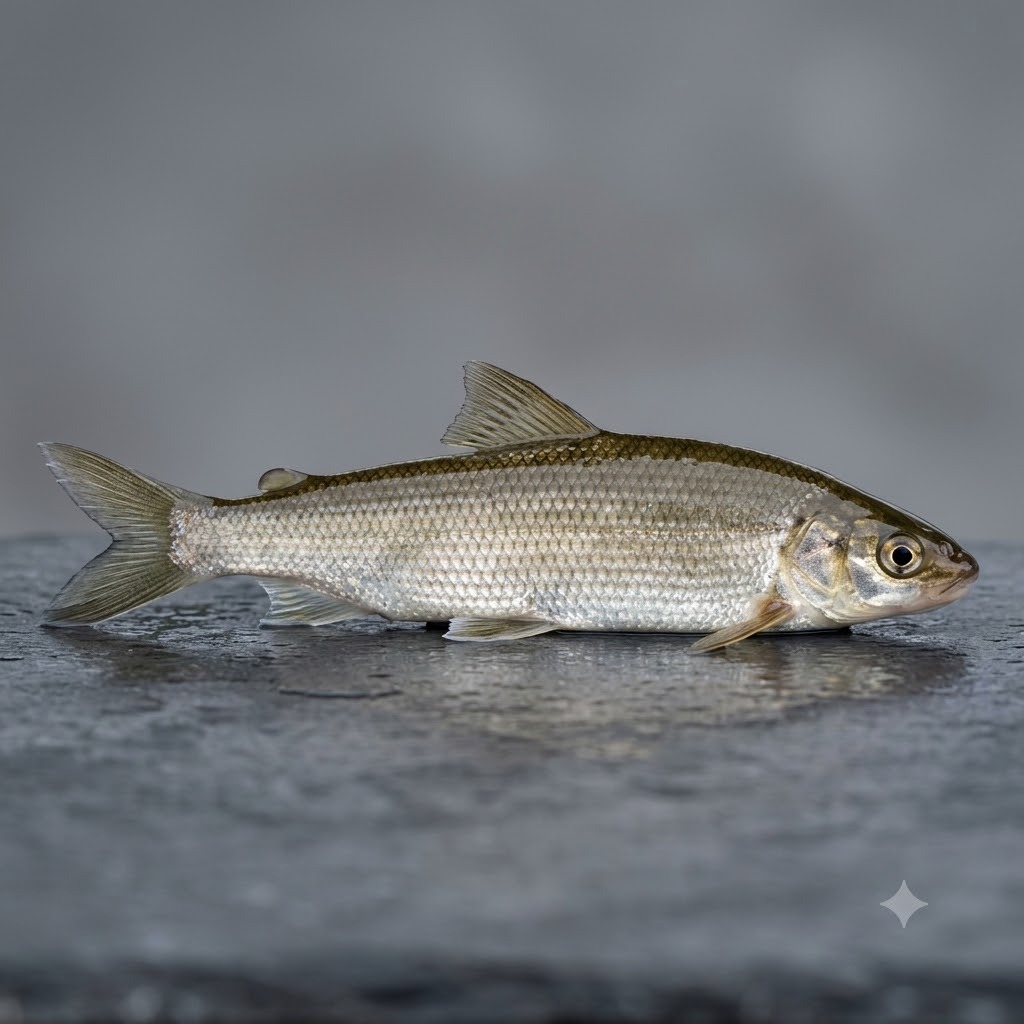
The mountain whitefish has a slender, cylindrical, silvery body that is rounder in cross-section than a trout's. Its coloration is subtle and clean - a silvery flank with a bronze or greenish-brown back and a white belly, with large, distinct scales. The mouth is the key identifier: small and set on the underside of the head, an adaptation for bottom feeding, and it lacks the teeth of a trout. Like its whitefish and salmon relatives, it carries a small adipose fin between the dorsal fin and the tail. Overall it is an elegant, understated fish, easy to tell from the spotted, larger-mouthed trout it shares water with.
Range & Habitat (US waters)
The mountain whitefish is native to the cold rivers and streams of the western United States, ranging through the Rocky Mountains and Pacific Northwest drainages. It is a fish of clean, cold, well-oxygenated water and is a classic inhabitant of freestone mountain rivers and larger cold streams, as well as some cold lakes. Within a river it favors deeper runs, pools, and pockets with steady current and a gravel or rubble bottom where its food collects. It often shares habitat directly with trout but tends to hold in the slower, deeper water. Its presence is a sign of a healthy, cold western river system.
Behavior & Feeding
The mountain whitefish is a bottom-oriented feeder that uses its small, downturned mouth to pick aquatic insect larvae, nymphs, and small invertebrates off and near the streambed. It also readily eats fish eggs during spawning periods, a key seasonal food. Because it feeds on small items near the bottom, it holds low in the water column and requires presentations delivered right to its level. Mountain whitefish gather in loose schools in deeper runs and pools, so a single hookup frequently means more fish are nearby. They feed actively even in cold water, which is why they remain catchable through late fall and winter when trout can be sluggish.
Best Seasons & Times to Catch
Fall and winter are the standout seasons for the mountain whitefish. As trout fishing slows in the cold, whitefish keep feeding and provide reliable, rod-bending action, making them a favorite target for anglers who fish through the cold months. Winter fishing with small nymphs and jigs bounced along the bottom of deep runs can be excellent. Whitefish spawn in late fall and early winter, and egg patterns can be especially productive around this time. Spring and summer fishing is also good, though whitefish often take a back seat to trout then. Overcast days and the low light of morning and evening tend to fish best in the warmer months.
Where to Find Them - Reading the Water
Read the river for deep, steady water with a clean bottom. Mountain whitefish favor the deeper runs, pools, and slots where current is moderate and food collects along gravel and rubble. Look for the softer, deeper water below riffles and rapids, the middle and tail sections of long pools, and pockets behind boulders where insects and eggs settle. They hold lower and in slower water than the trout sharing the same stretch, so target the bottom of the run rather than the shallow, faster edges. Because they school, once you locate a productive run you can often catch several fish before moving on.
Tackle & Rigs
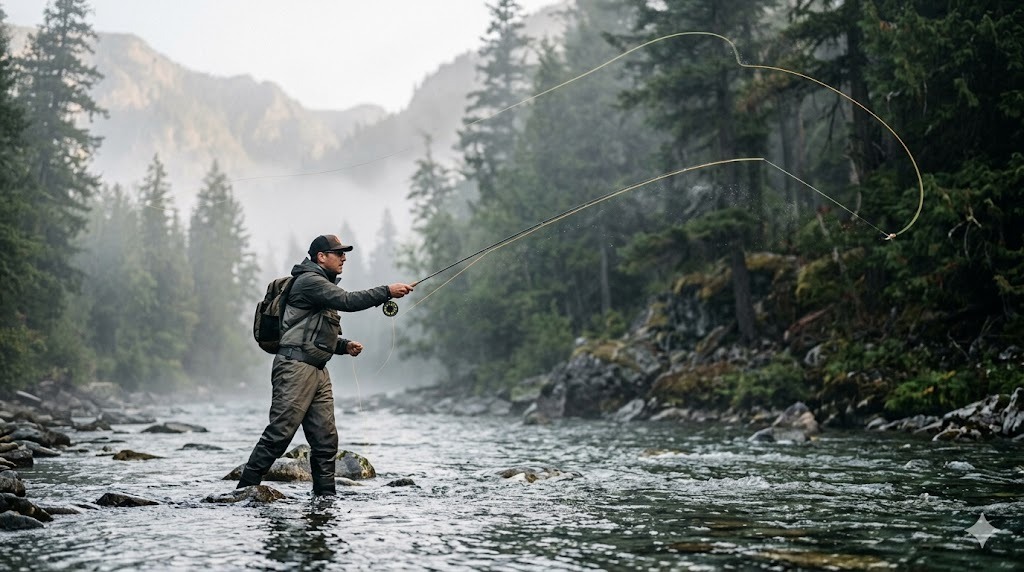
Finesse and a bottom-focused approach define whitefish tackle. Fly anglers favor a light fly rod with a nymphing setup - small nymphs or egg patterns fished under an indicator or tight-line style, with enough weight to reach the bottom of deep runs. Spin anglers use a light or ultralight spinning rod with light line and small jigs, tiny hooks, or bait rigs. Because the mouth is small, small hooks are essential. The unifying principle is getting a small offering down near the streambed where the whitefish feeds, using just enough weight to hold near the bottom without dragging unnaturally.
Best Baits & Lures
Small is essential to match the whitefish's little downturned mouth. The most productive offerings are small nymph patterns imitating aquatic insect larvae, egg patterns that mimic the drifting eggs whitefish key on, and small jigs. Tiny hooks tipped with bits of natural bait such as larvae or a small piece of worm also work well when bait is permitted. Presentations should be subtle and drifted or bounced naturally along the bottom. Bright egg patterns shine around the spawn, while natural nymph imitations produce year-round. Whatever the choice, keep it small and get it down to the fish, because a whitefish will rarely chase a large offering up in the water column.
Techniques - How to Fish for It
The core technique is dead-drifting or bouncing a small offering along the bottom of deep runs and pools. For fly anglers, that means nymphing - drifting small nymphs or egg patterns naturally with the current at the depth of the fish, watching the indicator for the subtle take. For spin anglers, it means working small jigs or bait rigs along the streambed with just enough weight to tick the bottom. The bite is often a gentle stop or tap in the drift, so stay attentive and set with a smooth, controlled motion. Once hooked, the mountain whitefish fights with a dogged, bulldogging pull that surprises anglers expecting a pushover.
Common Mistakes
The biggest mistake is dismissing the mountain whitefish as a nuisance and failing to appreciate a willing, hard-pulling cold-season fish. On the water, the most common technical error is fishing too high in the water column - whitefish feed on the bottom, and offerings drifting overhead go ignored. Hooks and lures too large for the small mouth lead to missed and refused takes. Anglers also miss the subtle bite by not watching their indicator closely, or set too hard on the delicate mouth. Ignoring the prime fall and winter window means missing the season when whitefish shine most.
Size, Records & Eating Quality
The mountain whitefish is a solidly sized fish, commonly running roughly 10 to 16 inches with larger individuals in prime rivers, and it fights above its weight with a strong, dogged pull on light tackle. On the table it is genuinely good, with mild, firm, white flesh, and it is especially prized smoked, where its flavor comes into its own and small bones are rendered soft. Fish from cold, clean water in the colder months are best. For the winter angler seeking both sport and a fine meal, the mountain whitefish delivers on both counts.
Pros & Cons (as a target species)
Pros: reliable action through the cold months when trout slow down, a strong and dogged fighter for its size, native and abundant in healthy western rivers, an excellent finesse and nymphing challenge, and fine eating especially smoked. Cons: an underappreciated reputation that leads many to ignore it, a small mouth that demands tiny offerings and precise bottom presentation, subtle bites that require close attention, and a habitat limited to cold, clean western waters. It is also often a secondary target where trout dominate anglers' attention.
Best Suited For
The mountain whitefish suits the western angler who fishes through the cold season and enjoys the finesse of nymphing and small-jig work along the bottom. It is ideal for fly anglers looking to keep rods bent in fall and winter, and for anyone who values a hard-pulling native fish that eats well when smoked. It rewards patience, precise bottom presentation, and attention to a subtle bite. Anglers who love cold-weather river fishing will find it a genuine and satisfying quarry.
FAQ
How is a mountain whitefish different from a trout? It has a slender, rounder, silvery body, large scales, and a small mouth set on the underside of the head for bottom feeding, without a trout's teeth or spots. It shares an adipose fin with trout but holds lower and in slower, deeper water.
What is the best way to catch mountain whitefish? Fish small nymphs, egg patterns, or small jigs dead-drifted or bounced along the bottom of deep runs and pools. Getting a small offering down to the fish's level is the key.
When is the best time to fish for mountain whitefish? Fall and winter, when trout slow down but whitefish keep feeding reliably. Egg patterns are especially effective around their late-fall and early-winter spawn.
Are mountain whitefish good to eat? Yes. The flesh is mild, firm, and white, and it is especially good smoked. Fish from cold, clean water in the colder months are best for the table.
Why do whitefish need such small hooks and lures? Because their small, downturned mouth is built for picking tiny insects and eggs off the bottom. Large offerings are refused, so small nymphs, eggs, jigs, and hooks are essential.