Redeye Bass
The redeye bass is a hard-fighting stream black bass of the southern Appalachians, prized by anglers who hike small clear rivers for its striking colors and scrappy nature.
🗓️ Last reviewed: July 2026
Overview
The redeye bass is a hard-fighting stream black bass of the southern Appalachians, prized by anglers who hike small clear rivers for its striking colors and scrappy nature. A true native of the Coosa drainage, it is a coveted catch for black-bass enthusiasts.
Identification
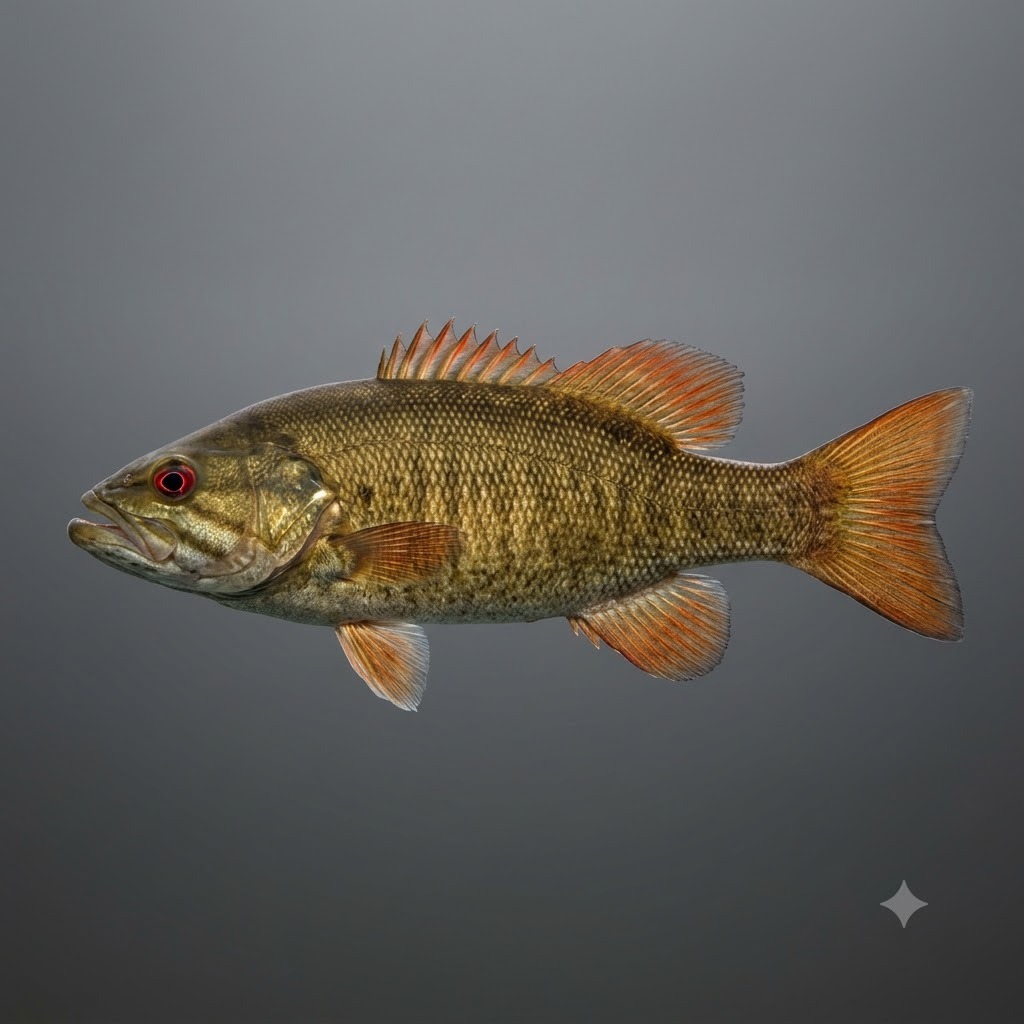
Redeye bass are olive-bronze with a red eye, red-tinged fins, and rows of dark spots, staying smaller than largemouth or smallmouth. Their brick-red eyes and stream habitat are the giveaways.
Range & Habitat
They are native to the cool, clear upland streams and rivers of the Coosa and neighboring drainages in Georgia, Alabama and the southern Appalachians.
Behavior & Diet
Redeye hold in current behind rocks and in pools, ambushing insects, crayfish, small fish and terrestrials that drift by. They rise readily to surface bugs in clear water.
Best Seasons
Best fishing is spring through fall in flowing water, with warm-weather topwater action a highlight in the clear streams.
How to Catch Them
Small crankbaits, spinners, soft plastics and flies drifted and worked through current seams and pools; a stealthy wading approach helps in clear water.
Tackle & Rigs
Light spinning or fly gear, 4-8 lb line, small lures and flies suited to stream fishing.
Landing, Handling & Release
Handle wet-handed and release most fish - stream bass populations are best conserved through catch-and-release.
Table Quality
Edible like other black bass, but most anglers release them to protect native stream populations.
Common Mistakes
Spooking fish in clear shallow streams and confusing them with young smallmouth.
Regulations & Conservation
A native stream bass with waterbody-specific rules; catch-and-release is encouraged. Confirm current state regulations before keeping fish. We do not give legal advice.
FAQ
Redeye or smallmouth? Redeye have brick-red eyes and stay small in headwater streams.
Where are they native? The Coosa drainage of the southern Appalachians.