Shoal Bass
The shoal bass is a hard-fighting river black bass native to a small corner of the Southeast, and one of the most prized fish a river angler in Georgia, Alabama, or Florida can catch.
🗓️ Last reviewed: June 2026
Overview
The shoal bass is a hard-fighting river black bass native to a small corner of the Southeast, and one of the most prized fish a river angler in Georgia, Alabama, or Florida can catch. It is a member of the black bass group - the same family as largemouth and smallmouth - but it is a true current specialist, built for life in fast, rocky shoals rather than still water. Pound for pound, shoal bass are widely considered one of the hardest-pulling freshwater fish in the country, using the river's current to make stubborn, dogged runs that feel far bigger than the fish actually is. They are caught by wading or paddling the rocky stretches of clear, flowing rivers and casting crayfish-imitating lures into seams and pockets of current. Because their range is so limited and they are threatened by hybridization with introduced spotted bass, the shoal bass is also a conservation story, and most anglers today fish for them strictly catch-and-release.
Identification & Appearance
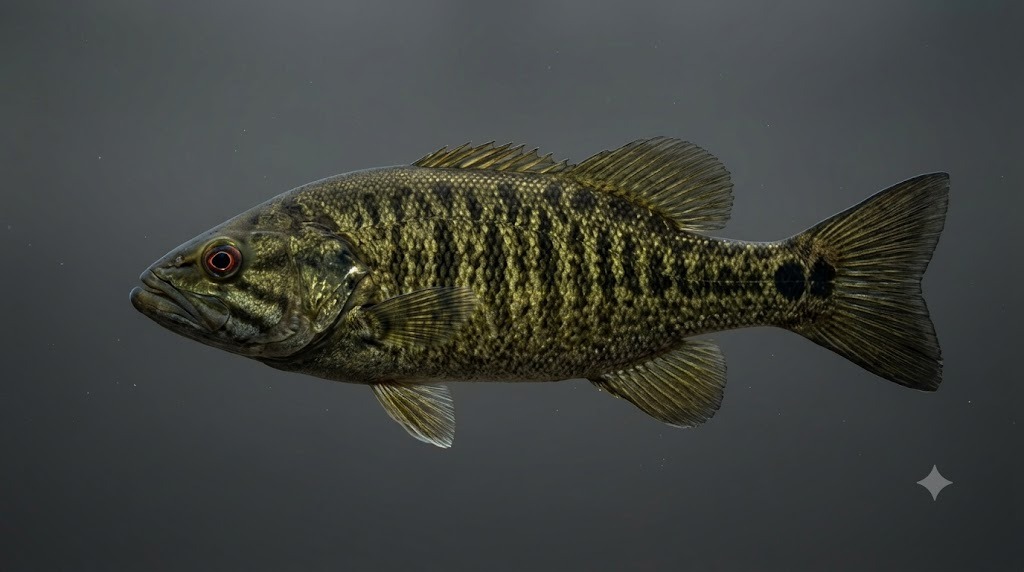
The shoal bass is a streamlined, muscular black bass with a comparatively large mouth and a body clearly built for current. Its most distinctive feature is its coloration: olive to dark green on the back fading to a pale belly, marked along the sides with a row of dark, blotchy, vertical blotches that often run together into ragged tiger-stripe bars, especially on a fired-up fish in current. Many fish show a dark spot at the base of the tail and dark lines radiating back from the eye and snout. The eye itself frequently has a distinct reddish cast, a handy field mark. Shoal bass are most often confused with spotted bass and redeye bass, which share the same waters. Unlike the largemouth, the shoal bass's upper jaw does not extend well past the eye, and unlike the spotted bass it lacks the neat rows of spots forming stripes low on the belly and shows that bolder, blotchy tiger-striped pattern instead. Telling these river bass apart takes a careful look, and where their ranges overlap, hybrids further blur the lines.
Range & Habitat (US waters)
The shoal bass has one of the most restricted ranges of any black bass. It is native only to the Apalachicola River basin in the Southeast, which includes the Chattahoochee and Flint river systems of Georgia and Alabama and the Apalachicola River in the Florida panhandle. As the name says, this is a fish of shoals - stretches of river where the water runs shallow and fast over rock, gravel, and bedrock ledges, broken by boulders and current. They favor clear, flowing rivers and the rocky runs and rapids within them, holding in and around current rather than in slack backwaters. Within that habitat they relate tightly to structure: boulders, rock ledges, bedrock outcrops, and woody cover that break the flow and create eddies and seams. Dams, dredging, and changes in flow and water quality have reduced and fragmented their habitat over the years, and that loss of free-flowing, rocky river is part of why the species is a conservation concern.
Behavior & Feeding
Shoal bass are aggressive, current-oriented ambush predators. They use rocks, ledges, and other structure to break the flow, then dart out from those current breaks to grab food carried past them by the river. Crayfish are a cornerstone of their diet - these are rocky-bottom fish living right where crayfish thrive - along with aquatic insects and larvae, smaller fish and minnows, and terrestrial insects that fall onto the water. Like their black bass cousins they will also take frogs, hellgrammites, and other large invertebrates. Their feeding is closely tied to current: they station themselves where the flow concentrates and delivers food, facing into the current and waiting to ambush whatever drifts or swims through their lane. This habit of holding on current seams and behind current breaks is the single most important thing to understand about how they feed, and it dictates exactly where and how you fish for them.
Best Seasons & Times to Catch
Shoal bass can be caught throughout the warmer months, with the fishing generally strongest from spring through fall when the fish are active in the shoals. Spring, around and after the spawn, can be excellent as fish feed aggressively in and around the rocky shallows; late spring through summer is the heart of the season, with fish holding tight to current and hammering crayfish patterns and topwater. The classic conditions are stable, clear water at a fishable flow - too much rain blows the rivers out and turns them muddy, while extremely low water concentrates fish but can make them spooky in the clear shallows. As with most river fishing, early morning and evening tend to be best, particularly in summer heat, when topwater action over the shoals can be outstanding. Overcast days and the low-light hours often extend the bite. Because these are clear, shallow rivers, watching the flow gauges and timing trips to a clear, moderate flow matters as much as the time of day.
Where to Find Them - Reading the Water
Finding shoal bass means reading current. Start with the shoals themselves - the shallow, fast, rocky stretches the fish are named for - and then look within them for the spots that break the flow. Key targets are boulders and the cushions of slack water in front of and behind them, the seams where fast water meets slow, eddies that swirl behind rock ledges, and the pockets and current breaks created by bedrock outcrops and woody cover. Fish hold on the edges of the heavy current, not usually in the dead-slow backwaters, waiting to ambush food sweeping past. The heads and tails of shoals, drop-offs at the lower end of a rapid, and any rock that creates a defined eddy are all prime. The simple approach is to wade or paddle the rocky water, pick apart every current break and seam with your casts, and keep moving until you find the spots holding active fish.
Tackle & Rigs
Shoal bass do not require heavy gear, and most anglers fish for them with medium or medium-light spinning or baitcasting tackle, much like they would for smallmouth. A 6 1/2 to 7 foot medium or medium-light rod with a fast tip, paired with a smooth spinning reel and 8 to 12 pound line - monofilament, fluorocarbon, or braid with a fluorocarbon leader - covers most situations and gives you the backbone to steer a strong fish away from rocks in current. Common rigs are simple and built for working a rocky bottom: a Texas-rigged or jighead-rigged soft plastic crayfish or creature bait, a finesse jig, a Ned rig, or a small leadhead for swimming a soft plastic through current. Many shoal bass anglers also carry fly tackle, typically a 6 or 7 weight rod with floating line and a stout leader, to throw crayfish and baitfish streamers and poppers. Keep your terminal tackle light enough to get a natural drift but heavy enough to hold contact with the bottom in moving water.
Best Baits & Lures
Because crayfish are such a staple of the shoal bass diet, crayfish-imitating soft plastics are the go-to: craws and creature baits in natural brown, green-pumpkin, and crawfish colors, fished on a Texas rig, a jighead, or a finesse jig and crawled and hopped along the rocky bottom. Soft plastic stick baits, small swimbaits, tubes, and Ned rigs all produce as well. Hard baits earn their place too - shallow crankbaits and squarebills that deflect off rock, inline spinners and small spinnerbaits, and topwater lures like poppers and walking baits worked over the shoals, which can draw explosive strikes in low light. For fly anglers, the shoal bass is a celebrated fly-rod target: crayfish patterns, Clouser-style baitfish streamers, and poppers fished on a 6 or 7 weight rod are deadly and a big part of the fish's reputation. Across all of these, the winning theme is to imitate a crayfish or baitfish being swept along the current and to present it naturally through the seams and pockets where fish are holding.
Techniques - How to Fish for It
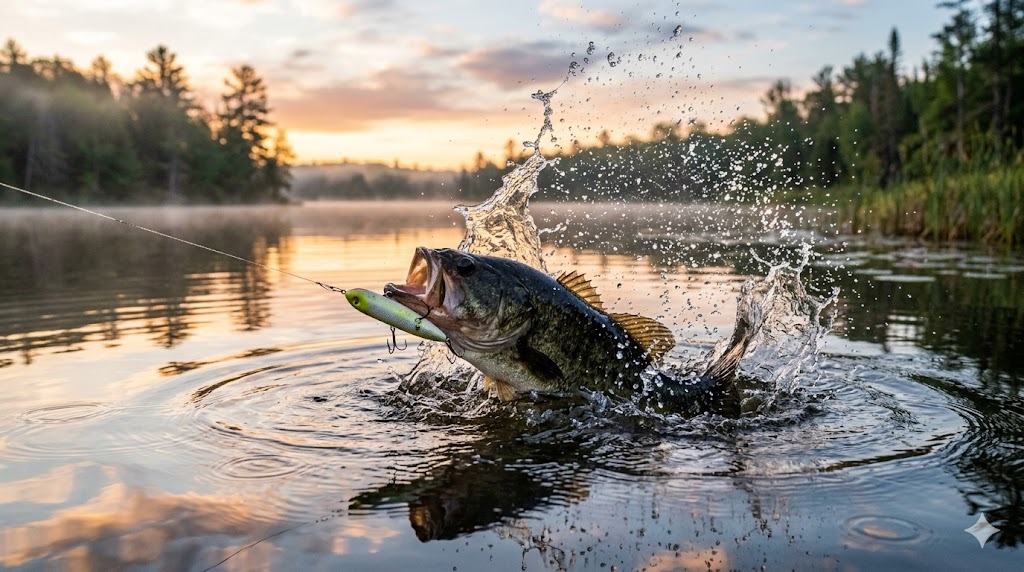
The core technique is presenting your lure naturally in the current and working it through the breaks where fish ambush. Position yourself by wading or from a kayak, canoe, or small boat, and cast up or across the current so your bait drifts and swings naturally past boulders, ledges, eddies, and seams - much like fishing for smallmouth or even working a trout stream. With soft plastic crayfish and jigs, let the bait tumble and hop along the bottom in the flow, staying in contact with the rock without snagging. With moving baits and flies, swing or retrieve them through the current breaks and let the river sweep them into the strike zone. Topwater is fished over the shoals in low light, working poppers and walkers across the rocky flats. When a shoal bass eats, set the hook and be ready, because they pull extremely hard and will immediately use the current to their advantage, so you have to keep them out of the heaviest flow and away from the rocks. Above all, target the current seams and breaks - that is where the fish live and feed.
Common Mistakes
The most common mistake is fishing the wrong water - throwing into dead, slack backwaters instead of the current seams and breaks where shoal bass actually hold. Another is ignoring the flow: trying to fish a river that is blown out and muddy after rain, or so low and clear that fish are skittish, instead of timing trips to a clear, moderate flow. Anglers also lose fish by failing to control them in current - letting a strong fish bury into the rocks or the heaviest flow instead of steering it out - and by fishing line too light to do that around sharp rock. Presenting baits unnaturally, dragging them across the current rather than drifting them with it, turns off these flow-tuned fish. Finally, a serious mistake is misidentifying the fish and not handling them carefully: shoal bass have a small, threatened range, so mistaking conservation rules, keeping fish where catch-and-release is expected, or handling them roughly in warm, low water all work against a species that needs protection.
Size, Records & Eating Quality
Shoal bass are a modest-sized fish that fights well above its weight. A typical shoal bass runs roughly a half pound to a couple of pounds, a good one is in the 3 to 4 pound range, and a true trophy pushes past 5 or 6 pounds, which for this species is an exceptional fish. The IGFA all-tackle world record is a little over 8 pounds, taken from the Apalachicola River in Florida, and Georgia has produced fish in the same class from the Flint River. What the shoal bass lacks in size it makes up for in raw fighting power, using the current to pull harder than almost any freshwater fish its size. On the table, shoal bass are edible and the white flesh is comparable to other black bass, but eating them is strongly discouraged. The species has a tiny native range, faces real threats from habitat loss and hybridization with introduced spotted bass, and is managed as a conservation priority, so the overwhelming ethic among anglers is strict catch-and-release. Handle them quickly, keep them wet, and release them to protect a fish that exists in only a handful of rivers on Earth. Always check current state regulations before fishing, because rules differ by river and state and can change.
Pros & Cons (as a target species)
Pros: shoal bass are one of the hardest-fighting freshwater fish for their size, a genuine prize that pulls like a fish twice as big by using the current. They live in beautiful, clear, flowing rivers, they are aggressive and willing to hit soft plastics, hard baits, topwater, and flies, and they are a celebrated fly-rod target. Wading or paddling a rocky shoal for them is an active, engaging, scenic way to fish. Cons: their range is extremely limited, so simply getting to them often means traveling to a handful of rivers in Georgia, Alabama, and Florida. They demand that you read current well and present baits naturally, the rivers are weather- and flow-dependent and can blow out or drop too low, and the strong conservation concern means this is essentially a catch-and-release fishery where careful handling is expected rather than a fish to take home.
Best Suited For
Shoal bass suit the angler who loves river fishing and wants a hard, scrappy fight in a beautiful setting rather than big numbers or big size. They are ideal for waders and paddlers - kayak, canoe, and small-boat anglers - who enjoy reading current, picking apart rocky shoals, and casting to seams and pockets, much in the spirit of smallmouth or river-trout fishing. They are a natural fit for fly anglers drawn to a renowned fly-rod gamefish. Just as importantly, they are best suited to anglers who value conservation and are happy to fish catch-and-release, handle fish with care, and travel to a small native range to pursue a special, locally treasured species.
FAQ
What is the best bait or lure for shoal bass? Crayfish-imitating soft plastics are the top choice - craws and creature baits in brown and green-pumpkin colors fished on a Texas rig, jighead, or finesse jig along the rocky bottom - because crayfish are a staple of their diet. Soft plastic stickbaits, Ned rigs, tubes, small swimbaits, squarebill crankbaits, inline spinners, and topwater all produce, and crayfish and baitfish flies are excellent on a 6 or 7 weight rod.
Where can I catch shoal bass? Shoal bass are native only to the Apalachicola River basin - the Chattahoochee and Flint river systems of Georgia and Alabama and the Apalachicola River in the Florida panhandle. Within those rivers, fish the rocky shoals: fast, shallow water over rock and ledges, focusing on the current seams, eddies, and breaks around boulders and bedrock.
How hard do shoal bass fight? Very hard. Pound for pound, shoal bass are considered one of the strongest-fighting freshwater fish in the country. They use the river's current to make dogged, stubborn runs, so a 3 or 4 pound fish can feel much larger, and you have to steer them out of the heavy flow and away from the rocks.
Should I keep shoal bass to eat? It is strongly discouraged. The shoal bass has a very small native range and is threatened by habitat loss and by hybridization with introduced spotted bass, so it is managed as a conservation priority and almost always fished catch-and-release. The flesh is edible like other black bass, but the right move is to release them quickly and carefully. Always check current state regulations first.
How do I tell a shoal bass from a spotted bass? Look for the bold, blotchy, tiger-striped vertical bars along the side, a dark spot at the base of the tail, dark lines radiating from the eye, and an often-reddish eye. Unlike a spotted bass, a shoal bass lacks the neat rows of small spots forming stripes low on the belly, and unlike a largemouth its upper jaw does not extend well past the eye. Where ranges overlap the two can hybridize, which makes a careful look important.