Silver Carp
The silver carp is the infamous "flying carp" - the invasive Asian carp that launches itself clear out of the water when startled by a passing boat motor.
🗓️ Last reviewed: July 2026
Overview
The silver carp is the infamous "flying carp" - the invasive Asian carp that launches itself clear out of the water when startled by a passing boat motor. Videos of these fish rocketing through the air and slamming into boaters have made the species famous far beyond fishing circles. Like its cousin the bighead carp, the silver carp is a filter feeder that almost never takes a hook, so it is targeted primarily by bowfishers and by the growing sport of aerial "carp hunting," where anglers use nets, poles, and bows to catch airborne fish. It is also a serious ecological invader that has overtaken long stretches of the Mississippi River system. For anglers, the silver carp is a spectacle, a challenge, and a problem all at once.
Identification & Appearance
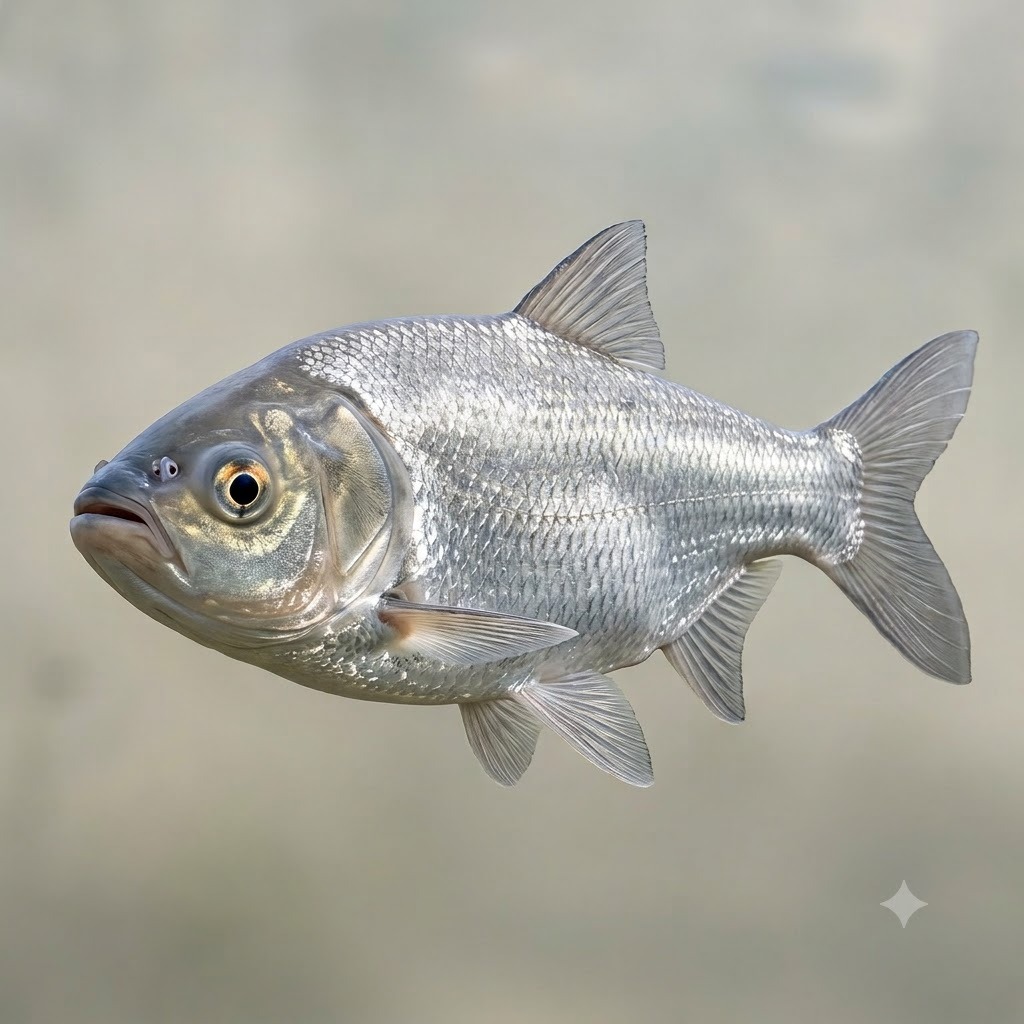
The silver carp is a deep-bodied, laterally compressed fish with bright, shiny silver flanks and a white belly, darker olive-gray along the back. Like the bighead, it has an oversized head with no scales, a large upturned mouth, and no barbels, which distinguishes it from the common carp. Its eyes sit low on the head, below the midline. The key feature that separates it from the bighead carp is a sharp keel on the belly that runs the full length from the throat back to the vent, along with cleaner silver coloring rather than the bighead's dark mottling. Smaller and more streamlined fish are the ones most prone to leaping.
Range & Habitat (US waters)
Silver carp are firmly established throughout the Mississippi River basin, including the Illinois, Missouri, Ohio, and lower Mississippi rivers, and they are among the most numerous large fish in some of these waters. They favor large rivers, backwaters, floodplain lakes, and slow, nutrient-rich stretches where plankton is abundant. They thrive in warm, fertile water and often reach staggering densities in the most productive river reaches. Preventing their spread into the Great Lakes is a major ongoing conservation effort, with barriers and monitoring in place across key waterways.
Behavior & Feeding
Silver carp feed by filtering phytoplankton and small zooplankton from the water, straining it through fine gill structures as they swim. This filter feeding is why they ignore baits and lures. Their defining behavior is the violent leaping response: vibration and noise from boat motors trigger schools to explode out of the water, with fish jumping several feet into the air. This makes running a boat through a dense population genuinely hazardous. They travel in large schools, follow plankton-rich currents, and, like other Asian carp, compete directly with native filter feeders and the young of game fish, undermining the food web.
Best Seasons & Times to Catch
The practical season is the warm-weather bowfishing and carp-hunting season, when fish are active near the surface and most likely to jump. Late spring through summer brings the fish shallow and into fertile backwaters where they are visible and reactive. Warm, calm days are ideal for both spotting cruising fish and triggering the leaping that aerial hunters rely on. Below dams during spring high water, silver carp can concentrate in tailrace areas in tremendous numbers, offering some of the most dramatic bowfishing anywhere.
Where to Find Them - Reading the Water
Look for slow, fertile, plankton-rich water in large river systems. Silver carp stack in backwaters, side channels, tributary mouths, flooded flats, and the slack water behind wing dams and islands. Below dams, they gather in tailrace eddies, sometimes in enormous schools. On the water, their presence is often unmistakable - a passing boat sets off a barrage of jumping fish. Watch for rolling backs, surface disturbances, and the telltale flash of silver bodies breaking the surface as schools move through the upper water column.
Tackle & Rigs
Conventional hook-and-line gear does not work, so the tackle for silver carp centers on bowfishing equipment: a heavy bow or crossbow with a reel spool, tough fiberglass or carbon arrows, and barbed points on heavy line. Aerial carp hunters also use long-handled dip nets and even bare hands to catch fish in mid-air as they leap around the boat, along with padded gear to fend off flying fish. Where snagging is legal, heavy rods with strong braid and weighted trebles are used to foul-hook fish in dense schools. Whatever the method, the gear must handle strong, heavy fish.
Best Baits & Lures
There is no dependable bait or lure for silver carp, and it is worth being honest about that - as filter feeders, they simply do not eat worms, dough, or artificials in any reliable way. A very rare fish is caught on tiny suspended dough or bread in fertile water, but this is a novelty, not a strategy. The productive approaches are bowfishing, aerial catching of jumping fish, and, where legal, snagging - all of which bypass the need for the fish to bite.
Techniques - How to Fish for It
Bowfishing is the core technique: cruise slowly along fertile backwaters and river edges, scanning for fish, and aim low to correct for light refraction when shooting a submerged target. Aerial carp hunting adds a unique twist - drivers run the boat to trigger jumping while catchers use nets, poles, or hands to intercept fish in the air. This is chaotic, fast, and genuinely dangerous, so wearing eye protection and padding is wise. Where snagging is legal below dams, cast heavy weighted trebles into thick schools and sweep to foul-hook a fish, then fight it with firm, steady pressure.
Common Mistakes
The biggest mistake is trying to catch silver carp on normal bait and tackle - it almost never works. Others include failing to prepare for jumping fish, which can injure boaters and passengers who are caught off guard; aiming straight at a submerged fish rather than low to account for refraction; and using gear too light for such powerful animals. The most serious mistake of all is moving live silver carp to new water or using them as bait elsewhere - spreading this invasive species is both illegal in many places and ecologically destructive.
Size, Records & Eating Quality
Silver carp commonly run in the 10-30 pound range, with the largest fish reaching well over 40 pounds, though they tend to be somewhat smaller than bigheads on average. The flesh is white, mild, and reasonably flavorful, but it is loaded with fine intramuscular bones that make cleaning difficult; despite this, it is eaten and increasingly marketed as a food fish to promote harvest. Because the species is invasive, keeping and using harvested silver carp is encouraged wherever local regulations permit.
Pros & Cons (as a target species)
Pros: the leaping behavior makes for uniquely thrilling, action-packed catching; harvest helps control a damaging invasive; they are extremely abundant where established; and the meat is usable. Cons: they almost never take a hook, frustrating traditional anglers; the jumping is a real safety hazard; the fine bones make cleaning tedious; and their presence signals a heavily disrupted ecosystem rather than a healthy fishery.
Best Suited For
Silver carp suit bowfishers, thrill-seekers, and anglers drawn to the spectacle and adrenaline of aerial carp hunting, as well as those motivated to help remove an invasive species. They are a poor match for anyone hoping for a quiet, cooperative fish that bites a bait. For adventurous anglers who want fast, physical, unpredictable action and do not mind an unconventional and slightly hazardous method, the flying carp delivers a genuinely one-of-a-kind experience.
FAQ
Why do silver carp jump out of the water? They leap in response to vibration and noise, especially from boat motors. A startled school can send dozens of fish several feet into the air at once, which is why they are called flying carp.
Can you catch silver carp on a rod and reel? Very rarely. They are filter feeders that strain plankton from the water and ignore baits and lures. Bowfishing, aerial netting, and legal snagging are the effective methods.
Are silver carp dangerous? The jumping can be. Fish weighing 10-30 pounds launching into the air can injure boaters, so eye protection and caution are wise when running through a dense population.
Are silver carp invasive? Yes, seriously so. They are among the most damaging invasive fish in US rivers, competing with native species for plankton. Never move them alive or use them as bait in new water.
Are silver carp good to eat? The flesh is mild and white but very bony. Many people do eat them, and harvest is encouraged to control the population, though the fine bones make preparation challenging.