How to Fish a Jigging Spoon
A jigging (slab) spoon is a heavy metal lure that flutters as it falls. How a spoon attracts fish, the snap-and-flutter retrieve Arkansas Game and Fish describes for winter bass, watching the line on the fall, where it snags, and the fish it catches.
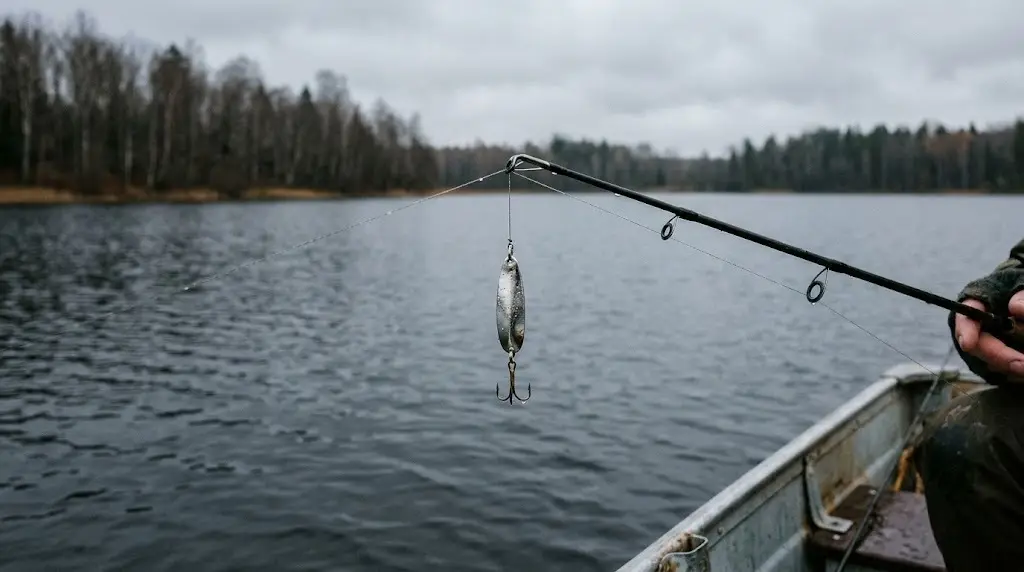
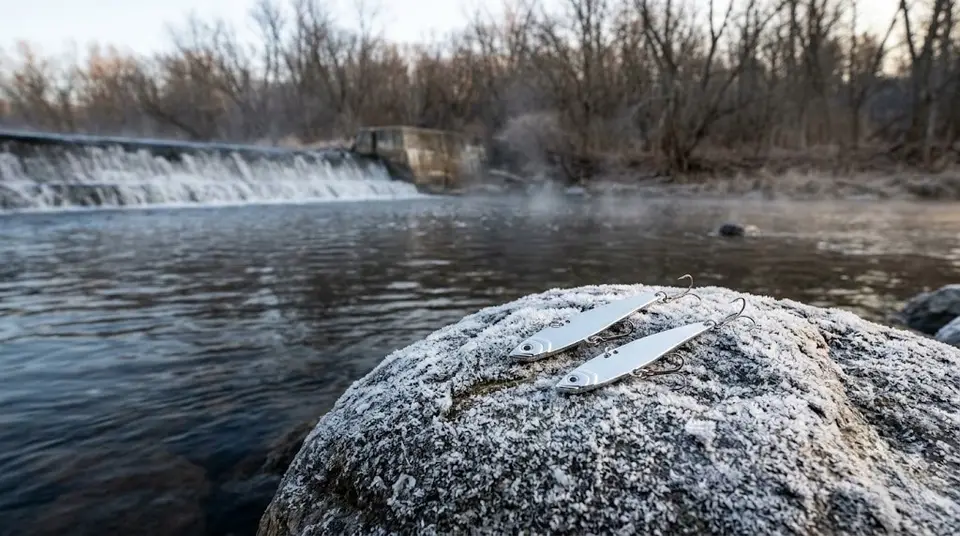
A jigging spoon, also called a slab spoon, is a compact piece of metal with a treble hook, worked up and down near the bottom. The Arkansas Game and Fish Commission (AGFC) describes it as one of its winter presentations: worked properly across the bottom, its fluttering fall gives just the right flash and vibration to trigger a strike from a lethargic bass. This guide covers how spoons attract fish, the retrieve, where to use one and what it catches, following AGFC, Wikipedia and the Missouri Department of Conservation (MDC).
How a spoon attracts fish
Wikipedia explains that a spoon’s oblong, concave shape makes it wobble at random as it moves or sinks, throwing sparkles of light like a baitfish’s scales seen from a distance. The wobble also stirs up turbulence, and fish use their lateral line to follow the swirls made by fleeing prey, which the spoon’s movement can imitate. Heavier casting spoons and thinner trolling spoons are variations on the same idea.
AGFC adds the winter background: cold fronts stun baitfish such as threadfin and gizzard shad, and bass feed on the dying fish. A spoon popped off the bottom and fluttering back looks like a shad that is dying and struggling to get away.
The retrieve (AGFC)
- Cast the spoon and let it fall to the bottom.
- Pop it up with a quick snap of the rod tip.
- Reel up the slack and stay in touch with the lure as it flutters back down.
- Repeat.
AGFC says the hit usually comes as the lure is dropping, so watch your line: if it jumps or stops before the spoon reaches the bottom, set the hook.
Where to use it
- Open bottom: AGFC advises looking for areas without a lot of jagged rocks or woody cover, because the spoon’s open hook can lodge in them.
- Straight down near cover: for walleye, MDC says a vertical presentation of a minnow, spoon or jig near woody or other submerged cover is sometimes the best way to fish and cuts down on hang-ups.
- Finding fish: our reading sonar guide covers reading depth, bottom and fish on the screen.
Our winter fishing guide covers cold-water locations, and a blade bait is fished in a similar lift-and-fall way.
What it catches
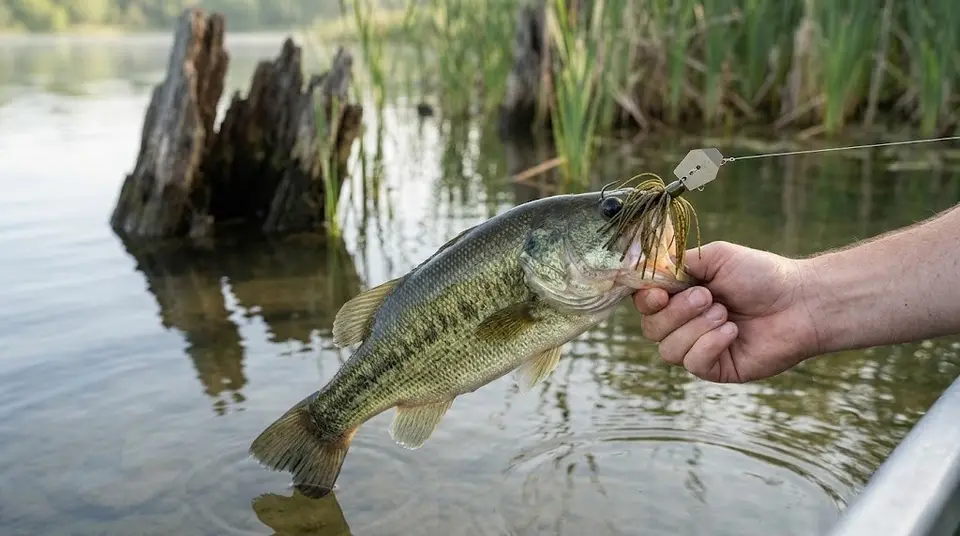
AGFC notes that besides bass, walleye, catfish and even large crappie take a jigging spoon. MDC’s bait guide lists jigging spoons for walleye and says catfish occasionally take them.
Sources
- Arkansas Game and Fish Commission, Take it slow for winter fishing. Read 28 October 2026.
- Wikipedia, Spoon lure. Read 28 October 2026.
- Missouri Department of Conservation, Bait and lures and Walleye and sauger: fishing tips. Read 28 October 2026.
Recommended Gear on Amazon
- Jigging spoons - browse current options and reviews on Amazon.
- Fluorocarbon leader line - browse current options and reviews on Amazon.
- Fishing snaps - browse current options and reviews on Amazon.
As an Amazon Associate, we earn from qualifying purchases - at no extra cost to you. This helps us keep producing free, in-depth guides.