How to Fish a Texas Rig
A Texas rig is a sliding bullet weight, an offset worm hook and a soft plastic, fished slowly along the bottom. How to rig the worm, weedless or Texposed, pegging the weight, weightless versions, and New York DEC's setup and retrieve for bass in vegetation.
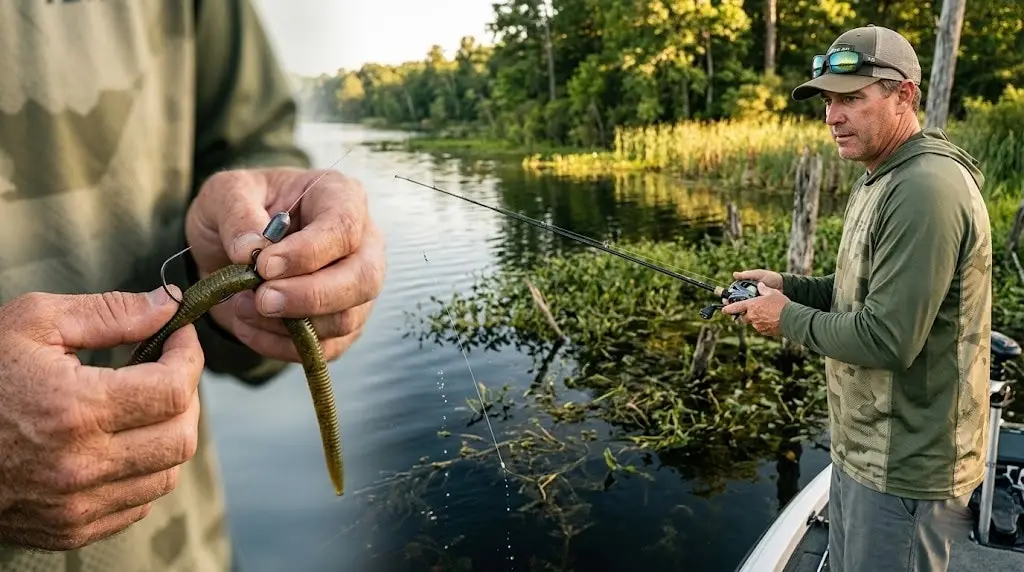
The Texas rig is a rig for fishing soft-plastic lures. Wikipedia describes it as a bullet weight or similar sliding sinker, an offset worm hook and a soft plastic, used most often for largemouth and smallmouth bass. New York DEC lists it among its effective bass rigs for fishing in or around vegetation. This guide covers rigging, variations and the retrieve.
DEC’s setup
- Weight: 1/4-1/2-ounce worm weight.
- Hook: 2/0 to 4/0 worm hook.
- Worm: a 6- to 10-inch ribbon-tail soft worm, in June bug, plum or green pumpkin.
Rigging the worm (Wikipedia)
- Thread the sliding weight onto the line and tie on the hook. Our knot picker helps choose the knot.
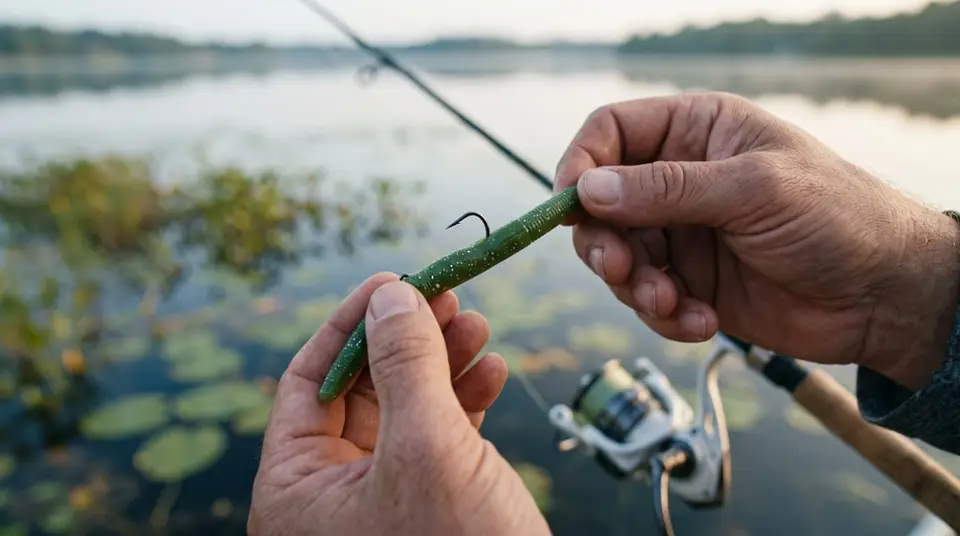
- Push the hook point into the nose of the worm and bring it out about 1/4 inch from the nose.
- Thread the worm up the hook until it reaches the hook’s “shoulder”.
- Turn the hook so the point faces the worm, and push it back into the worm.
Wikipedia notes the worm can be rigged before or after tying the hook to the line.
Weedless or Texposed
- Weedless Texas rig: the hook point is buried fully in the plastic, which makes the hook less likely to catch on debris (Wikipedia).
- Texpose: the point is left just exposed, which raises the chance of hooking a fish that strikes (Wikipedia).
Variations
- Pegged weight: some anglers stop the weight from sliding, with a piece of toothpick wedged between the weight and the line or a bobber stop just above the weight (Wikipedia).
- Bead: a glass or plastic bead between weight and hook; some anglers believe its click, like a crayfish, helps in stained or muddy water (Wikipedia).
- Weightless: leave the weight off for a slower fall and finer control (Wikipedia).
The retrieve
- Wikipedia: cast it out and work it slowly along the bottom; fish will often strike as it first sinks, so watch the line on the fall.
- DEC: let it sink to the bottom and drag it back slowly, or move it a few feet, let it sit a few seconds, then move it again.
- Setting the hook: MDC’s general advice is to reel up loose line and drive the hook home with a powerful upward sweep of the rod.
Related methods
A jig is another bottom bait for cover, and finesse fishing covers lighter rigs. Our largemouth bass guide puts the Texas rig in DEC’s full table of bass rigs.
Sources
- Wikipedia, Texas rig. Read 28 October 2026.
- New York State DEC, Fishing for largemouth and smallmouth bass. Read 28 October 2026.
- Missouri Department of Conservation, Fishing tips. Read 28 October 2026.
Recommended Gear on Amazon
- Bullet weights - browse current options and reviews on Amazon.
- EWG worm hooks - browse current options and reviews on Amazon.
- Soft plastic worms - browse current options and reviews on Amazon.
- Bobber stops for pegging - browse current options and reviews on Amazon.
As an Amazon Associate, we earn from qualifying purchases - at no extra cost to you. This helps us keep producing free, in-depth guides.