Atlantic Bonito
The Atlantic bonito is a small, fast, hard-charging member of the tuna and mackerel family that brings big-fish excitement on light tackle.
🗓️ Last reviewed: July 2026
Overview
The Atlantic bonito is a small, fast, hard-charging member of the tuna and mackerel family that brings big-fish excitement on light tackle. They show up in a hurry - fast-moving schools that blitz bait on the surface, sending baitfish flying and gulls diving overhead. A bonito of just a few pounds pulls with the drag-screaming runs typical of the tunas, punching well above its weight. Surfcasters, boaters, and light-tackle anglers along the Atlantic coast prize them for aggressive strikes and casting into a boiling surface feed. On the table they are a strong, dark-meated fish best bled and eaten fresh.
Identification & Appearance
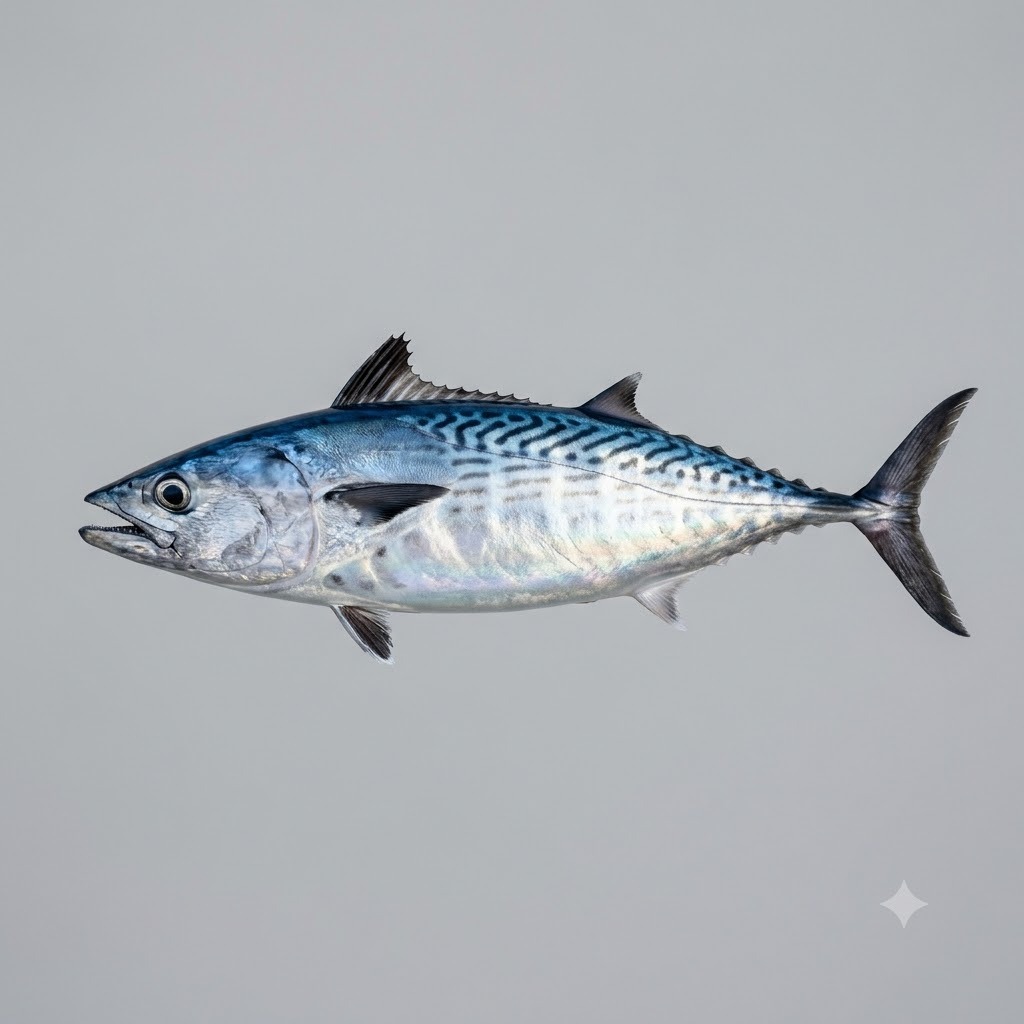
The Atlantic bonito is a compact, torpedo-shaped fish with the classic tuna-family look. Its steel-blue to greenish back carries dark, slanting stripes running diagonally onto the upper sides, fading to bright silvery flanks and belly. Those oblique stripes are the key field mark separating bonito from little tunny and Spanish mackerel. The mouth holds small, sharp teeth, and the firm, muscular body tapers to a slender tail base with small finlets ahead of a crescent-shaped tail - built for fast swimming in open water.
Range & Habitat (US waters - inshore / offshore)
In US waters, Atlantic bonito are common along the Atlantic coast from the Northeast and Mid-Atlantic down the seaboard, and occur in the Gulf as well. They are a migratory, warm-season visitor, moving through as water temperatures suit them.
These open-water schooling fish roam nearshore and coastal waters chasing bait: along beaches, around inlets and jetties, over nearshore reefs and rips, and along temperature and color breaks where bait concentrates. Fast and pelagic, they follow baitfish constantly, so their location shifts daily. Surfcasters catch them near shore; boaters chase them farther out.
Behavior & Feeding
Atlantic bonito are voracious, high-speed schooling predators that hunt small baitfish such as silversides, sardines, and anchovies. They charge through bait at speed, often driving it to the surface in a splashing blitz that draws diving birds - the classic bonito show and the prime moment to catch them. Hunting by sight, they crush a fast-moving lure imitating a fleeing baitfish, hitting with slashing strikes and blistering runs. They can also be selective on tiny bait, so matching the bait size matters.
Best Seasons & Times to Catch
Atlantic bonito are seasonal and migratory, so timing their runs is everything. Along much of the Atlantic coast they show up as the water warms, giving action through the warmer months and often a strong push in the fall. The best fishing comes when bait is thick and the bonito are blitzing. Dawn and dusk are prime, though a blitz can erupt any time of day. Watch for the birds and the bait - when both are present, the bonito are usually not far behind.
Where to Find Them - Reading the Water
Finding bonito is largely about finding bait and reading the surface. The number-one giveaway is diving birds working over a patch of water - beneath them, bonito are almost always slashing through bait. Look for surface commotion: scattering baitfish, swirls, splashes, and slicks. Target rips and current lines, color and temperature breaks, water around inlets and jetties, and nearshore reefs where bait stacks up. From the beach, watch for schools pushing bait against the sand within range. Because bonito move fast, be ready to cast quickly.
Tackle & Rigs
Light to medium tackle is the way to enjoy bonito. A 7- to 8-foot medium spinning rod with a 3000-5000 reel, 10-20 lb braid, and a 20-30 lb fluorocarbon leader is a versatile setup for casting to blitzing fish. Surfcasters use a longer rod to reach schools from the beach, and the thin braid helps cast small lures far when fish are just out of range.
Rigs are simple, since most bonito fishing is casting lures. Tie the lure directly to a fluorocarbon leader; bonito have good eyesight, so a clear leader helps, while a short section of slightly heavier fluorocarbon guards against their small teeth. When trolling nearshore, small feathers or spoons behind planers or weights reach cruising schools.
Best Baits & Lures
Bonito are primarily a lure fishery, and the key is speed and a small profile that matches the bait. Fast-retrieved metal lures - compact casting jigs and spoons - are the classic choice, casting far and imitating a fleeing baitfish when burned across the surface. Small swimming plugs and slender minnow-style lures also draw hard strikes. When fish key on tiny bait, downsizing to slim lures is often the difference between a hookup and a refusal.
Natural, silvery, baitfish-colored lures that mimic the local forage work best in the clear water bonito favor. Live or cut baitfish can also tempt them, especially in a chum slick, but most anglers rely on lures. Above all, retrieve fast - a bonito wants to chase and crush a fleeing target.
Techniques - How to Fish for It
The go-to technique is running and gunning to surface blitzes: spot the birds and breaking fish, get within casting range without running over the school, fire a small metal lure past the fish, then burn it back across or just under the surface. The high-speed retrieve triggers the reaction strike. If fish follow without committing, vary speed and depth - a faster retrieve or a countdown deeper often does the trick. When nothing shows on top, ripping a jig around bait and structure, or trolling until you locate a school, keeps you in the game. When a bonito hits, hold on - the first run is fast and strong, so keep a smooth drag and let it run.
Common Mistakes
A frequent mistake is retrieving too slowly; bonito want a fast-fleeing target, and a lazy retrieve draws far fewer strikes. Another is using lures too big when fish feed on tiny bait - matching the forage size is often essential. Running the boat straight into a feed scatters the school, so approach from the edge. On the table, the biggest error is failing to bleed and chill the fish immediately, since the dark, oily meat turns quickly. Finally, too heavy or visible a leader can reduce bites from these sharp-eyed fish.
Size, Records & Eating Quality
Atlantic bonito are a small member of the tuna clan, with typical fish running a few pounds; larger ones reach the higher single digits and low double digits and measure a couple of feet, notably strong for their size and fighting with the fast runs of their tuna relatives. On the table, they are a dark, rich, strong-flavored fish - very different from mild white-fleshed species - best bled immediately, chilled, and eaten fresh, often grilled or seared. Handled well, they can be very good; handled poorly, the meat suffers. Regulations for coastal migratory species vary and change, so always check current local limits before keeping fish.
Pros & Cons (as a target species)
Pros: Fast, aggressive, and exciting on light tackle; pull hard like miniature tuna; accessible to surfcasters and boaters; thrilling surface-blitz action; abundant when the schools run. Cons: Seasonal and migratory, so timing and location shift; can be selective on tiny bait; dark, strong meat that must be bled and eaten fresh; fast-moving feeds can be brief and hard to reach.
Best Suited For
Atlantic bonito are a perfect target for anglers who love fast, run-and-gun light-tackle action and casting into a boiling surface feed. Surfcasters, kayakers, and boaters all get in on them, and because the fishing is simple - cast a metal lure and reel fast - it suits newer anglers while still thrilling experienced light-tackle and fly fishers who do not mind a strong-flavored catch.
FAQ
Is Atlantic bonito good to eat? It is a dark, rich, strong-flavored fish rather than a mild white one. Bled immediately and eaten fresh, it can be very good grilled or seared, but it must be handled well.
How do you catch Atlantic bonito? Most are caught by casting small, fast-retrieved metal lures into surface blitzes located by watching for diving birds and breaking fish, then burning the lure back across the surface.
What is the difference between a bonito and a little tunny? Atlantic bonito have dark, slanting stripes on the back, while little tunny have wavy markings and dark spots below the pectoral fin. The oblique back stripes are the key mark for bonito.
Why does my bonito taste strong or fishy? Its dark, oily meat spoils fast. If it was not bled and chilled right after the catch, the flavor suffers. Bleed, ice, and eat it fresh.
What lure should I use for bonito? Compact metal casting jigs and spoons retrieved fast are the standard, along with small slender swimming plugs. Match the size of the bait the fish are feeding on.