Atlantic Croaker
The Atlantic croaker is one of the most familiar panfish of the East and Gulf coasts, a small member of the drum family that earns its name from the loud croaking sound it makes with its swim bladder - pull one over the rail and you will hear it grumble in your hand.
🗓️ Last reviewed: July 2026
Overview
The Atlantic croaker is one of the most familiar panfish of the East and Gulf coasts, a small member of the drum family that earns its name from the loud croaking sound it makes with its swim bladder - pull one over the rail and you will hear it grumble in your hand. Croaker are abundant, willing biters, reachable from any pier, jetty, bridge, or surf beach, and they make excellent eating despite their modest size. They are often the first saltwater fish a coastal kid ever catches, yet plenty of seasoned anglers still target them because a cooler of croaker fillets is honest table fare. They eat a simple bottom rig baited with shrimp or squid. For a low-cost, high-action, family-friendly trip, few fish beat the humble croaker.
Identification & Appearance
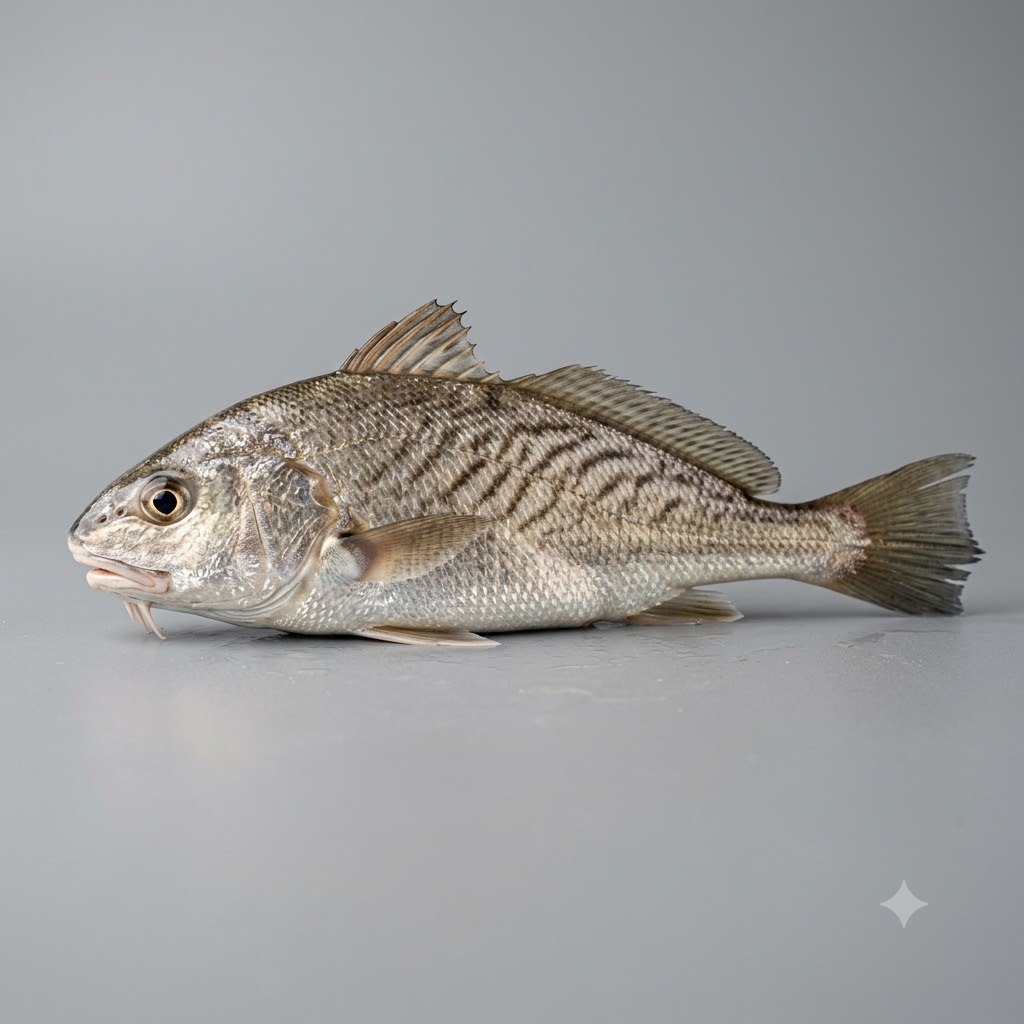
Atlantic croaker are silvery to pinkish-bronze with a coppery sheen, marked by faint wavy bars running diagonally down the upper flanks. The body is moderately deep and slightly compressed, tapering to a pointed snout with an underslung, bottom-feeding mouth. A cluster of small barbels sits under the chin, a classic drum-family trait. The tail is slightly pointed rather than forked. Croaker are sometimes confused with spot, but spot have a distinct dark shoulder spot and lack the wavy barring. Most fish run hand-sized to about a foot, with larger "bull croaker" being heavier and thicker across the shoulders.
Range & Habitat (US waters - inshore / offshore)
Atlantic croaker range from the Mid-Atlantic - the Chesapeake region, New Jersey, and the Carolinas - south around Florida and throughout the Gulf of Mexico to Texas. They are a bay-and-estuary fish at heart, thriving in the brackish waters of sounds, tidal rivers, and marshes, and they tolerate a wide range of salinity.
Inshore, croaker hold over mud and sand bottoms, around oyster beds, along channel edges, near bridge and pier pilings, and in the surf zone. Juveniles use marsh creeks and estuaries as nurseries. As water cools in fall, croaker move out of the shallow bays toward deeper channels and nearshore waters, so the fishery shifts offshore a bit before the fish disperse for winter.
Behavior & Feeding
Croaker are bottom feeders through and through. Guided by their chin barbels and a keen sense of smell, they root along mud and sand for worms, small crustaceans, shrimp, tiny crabs, and organic matter. They travel in schools, sometimes very large ones, so the bite can go from nothing to nonstop the moment a school moves through. They feed actively on moving tide and readily pick up cut or natural bait on the bottom. The croaking sound is produced by muscles drumming against the swim bladder.
Best Seasons & Times to Catch
Croaker fishing peaks from late spring through fall, when the fish are stacked in the bays and along the beaches in warm water. Summer is prime, with croaker available all day but biting best on a moving tide and during the cooler morning and evening hours. Fall offers strong action as they feed heavily before moving to deeper water, and the inshore fishery slows in the cold months. As a rule, fish a moving tide over the right bottom and you will find croaker whenever the water is warm.
Where to Find Them - Reading the Water
Look for croaker over soft mud and sand bottoms where their food lives - the middle of a bay, the slope of a channel edge, and the flats around oyster beds. Bridge and pier pilings, jetty rocks, and deeper holes in a marsh creek all concentrate fish. In the surf, fish the troughs and cuts between sandbars. A depth change, current seam, or patch of shell on an otherwise featureless bottom is worth anchoring on. Croaker school tightly, so if you catch one, stay put - more are usually right there.
Tackle & Rigs
Croaker do not require heavy gear, and light tackle makes them more fun. A 6.5- to 7.5-foot light or medium spinning rod with a 2500-4000 size reel is plenty. Spool with 8-15 lb line, mono or braid, and add a short fluorocarbon leader if you like.
The workhorse rig is a two-hook bottom rig - often sold as a high-low or double-drop rig - with size 4 to 1/0 hooks and a bank or pyramid sinker heavy enough to hold bottom, usually 1 to 3 ounces depending on tide and depth. A simple fish-finder (Carolina) rig with a single small hook also works. Small hooks matter, because croaker have modest mouths and steal bait; a size 2 or 4 long-shank hook helps you connect and makes unhooking easy.
Best Baits & Lures
Natural bait rules for croaker because they feed by scent and taste on the bottom. Fresh shrimp - whole small shrimp or pieces of larger ones - is the classic and hard to beat. Squid strips are tough, stay on the hook, and produce steadily. Bloodworms and other marine worms are outstanding where available, as are pieces of cut fish and small clam or crab bits. Some anglers tip hooks with squid plus shrimp for a double attractant. Croaker are not a lure-oriented fish, though they will occasionally hit a small bait-tipped jig bounced slowly on the bottom. Keep baits small and fresh, and re-bait often.
Techniques - How to Fish for It
The method is simple bottom fishing. Cast or drop your baited rig, let the sinker settle, and keep the line just tight enough to feel the tap. Croaker bites are often a light, rattling series of taps - wait for the rod tip to load or the taps to become a steady pull, then lift into the fish smoothly. On a pier or bridge, drop straight down near the pilings; from the beach, cast into the trough and prop the rod in a sand spike. Fish a moving tide, and when you locate a school, keep baits in the water because the action can be fast and furious.
Common Mistakes
The most common mistake is using hooks that are too large; croaker have small mouths and big hooks lead to missed bites and stolen bait. Setting the hook too early on the first tap is another - patience turns taps into hookups. Anglers also fish dead slack water and wonder why the bite died, when a moving tide is what turns croaker on. Letting bait get old and washed out is a quiet killer, so re-bait often. Finally, some folks give up after one fish and move; croaker school tightly, so staying on a productive spot usually keeps fish coming.
Size, Records & Eating Quality
Most Atlantic croaker caught are hand-sized to roughly a foot long, weighing well under a pound, with larger "bull" croaker being noticeably heavier and thicker. They are a smaller drum, so do not expect the heft of a redfish or black drum. What they lack in size they make up for in numbers and flavor - the flesh is white, flaky, mild, and slightly sweet, excellent pan-fried, fried whole, or filleted, and many coastal cooks rate a mess of fresh croaker among the best cheap eating on the coast. Regulations differ by state and can include minimum sizes or bag limits, so always check your current local size and bag rules before keeping fish.
Pros & Cons (as a target species)
Pros: Abundant and widely available; catchable from piers, bridges, jetties, surf, and boats; cheap and simple to fish for; excellent light-tackle action for families; very good, mild table fare. Cons: Small individual size; primarily a bait-fishing species with little lure appeal; expert bait-stealers that require small hooks and fresh bait; tide-dependent and slows in cold weather.
Best Suited For
Atlantic croaker are a perfect species for beginners, kids, and families looking for steady action and a fish fry at the end of the day. They ask for no special gear, no boat, and no advanced skill - just a bottom rig, fresh bait, a moving tide, and a spot with the right bottom. Experienced anglers enjoy them too, whether filling a cooler or catching them as lively bait for bigger predators. In short, croaker reward anyone who wants dependable, low-cost saltwater fishing with a good meal to show for it.
FAQ
Why is my croaker making a croaking noise? It vibrates muscles against its swim bladder to produce a drumming sound, most noticeable when handled or during spawning season.
Are Atlantic croaker good to eat? Yes. They have white, flaky, mild-sweet flesh that is excellent fried whole or filleted, and a fresh batch is prized coastal table fare.
What is the best bait for croaker? Fresh shrimp is the classic choice, with squid strips and marine worms like bloodworms also producing very well. Croaker feed by scent, so fresh natural bait beats lures.
Do I need a boat to catch croaker? No. Croaker are readily caught from piers, bridges, jetties, and the surf, making them one of the most accessible saltwater fish for shore anglers.
Why do I keep missing the bites? Croaker tap lightly and steal bait with their small mouths. Use small hooks, wait for the rod to load rather than striking at the first tap, and keep fresh bait on the hook.