Atlantic Spadefish
The Atlantic spadefish is one of the most distinctive and underrated fish on the US Atlantic and Gulf coasts - a tall, disc-shaped, silvery fish marked with bold black bars that travels in big, tightly packed schools around nearshore structure.
🗓️ Last reviewed: June 2026
Overview
The Atlantic spadefish is one of the most distinctive and underrated fish on the US Atlantic and Gulf coasts - a tall, disc-shaped, silvery fish marked with bold black bars that travels in big, tightly packed schools around nearshore structure. To a lot of anglers they look like an oversized saltwater angelfish, and the resemblance is no accident, but on the end of a line a spadefish fishes nothing like a pretty reef ornament: it turns its broad, flat body sideways against the pull and fights with a stubborn, dogged, circling power that punches well above its weight on light tackle. Spadefish gather in good numbers around wrecks, reefs, buoys, piers, bridges, and beach jetties through the warm months, often holding high in the water column where you can see them, and they will pile onto a small bait fished on a light rig. They are best known for being caught on pieces of cannonball jellyfish - the "jellyballs" that drift through coastal waters in summer - a bait so effective it has become part of the spadefish's whole identity. Add in mild, white, flaky fillets that make fine eating, and you have a fun, accessible, slightly oddball target that rewards anglers willing to learn its habits.
Identification & Appearance
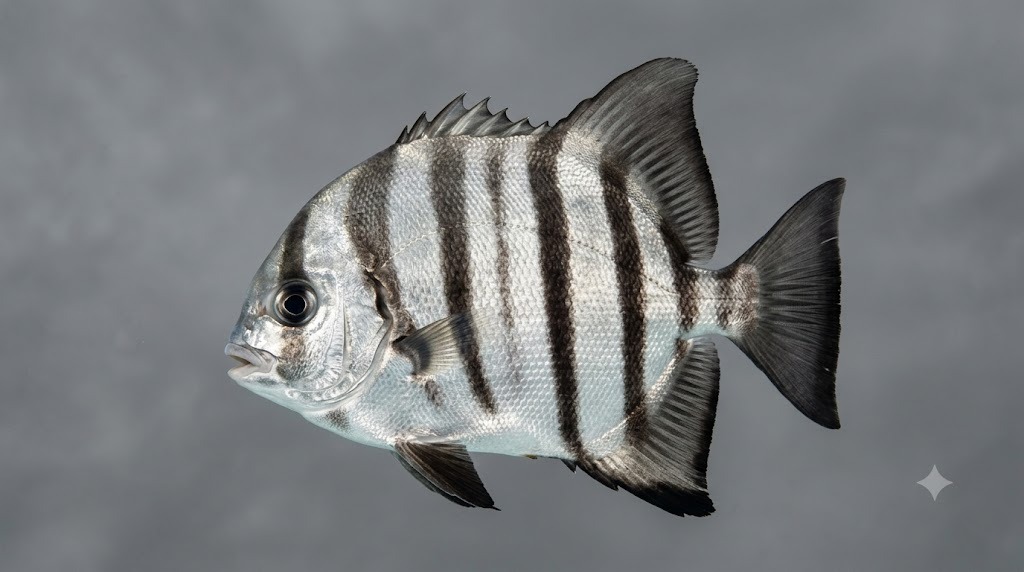
Atlantic spadefish are unmistakable once you have seen one. The body is extremely deep and laterally compressed - nearly round, like a thick silver dinner plate stood on edge - with a small, blunt head and a tiny mouth set at the front. The base color is silver to grayish white, crossed by four to six bold vertical black bars running down the body, the bars often fading or becoming less distinct on larger, older fish so that big spadefish can look almost uniformly silvery gray. The dorsal and anal fins are tall and rounded, sweeping back to give the fish a graceful, sail-like profile, and the front of the dorsal carries a short row of stout spines. Juvenile spadefish are dark, almost black, and drift at the surface mimicking floating leaves or debris for camouflage - a very different look from the silver-and-black adults. The overall impression of an adult is of a high, flat, elegant, strongly barred fish built like a giant angelfish, and that broad flat body is exactly what makes them such surprisingly tough fighters when they turn it against the line.
Range & Habitat (US waters - inshore / offshore)
Atlantic spadefish range along the western Atlantic from roughly Massachusetts and the Mid-Atlantic south through the Carolinas, Georgia, and Florida, all through the Gulf of Mexico, and on into the Caribbean and South America. In US waters the heart of the fishery runs from the Chesapeake Bay and Virginia south through the Carolinas and Florida and across the Gulf Coast, where warm summer water brings them inshore in good numbers.
Spadefish are a structure-oriented, warm-water schooling fish of nearshore and inshore waters. They relate strongly to vertical structure and hard bottom - shipwrecks, artificial reefs, natural live-bottom and ledges, channel buoys and navigation markers, bridge and pier pilings, beach jetties and rock groins, and offshore towers and platforms. They are typically a shallow to moderate-depth fish, holding from the surface down over structure in water from a few feet to a hundred or so feet deep, and they often suspend high in the water column where a school can be spotted near the surface around a buoy or wreck. Inshore, they push into bays, sounds, and around piers and bridges in the warm months; as water cools in fall they move offshore and southward. They are very much a fish of the warm season in most of their US range, concentrated and catchable when the water is warm and scattering when it cools.
Behavior & Feeding
Atlantic spadefish are social, schooling planktivores and pickers, and understanding that diet is the key to catching them. They feed on small drifting and attached invertebrates - jellyfish, comb jellies, small crustaceans, worms, hydroids, sponges, and other soft-bodied prey - using their small mouths to nip and pick rather than to engulf large baits. Cannonball jellyfish, the firm round "jellyballs" that bloom in coastal waters through summer, are a natural and favorite food, which is exactly why a chunk of jellyball is such deadly bait. Spadefish travel and feed in schools, sometimes very large ones, milling around and above structure and moving through the water column together, and that schooling instinct can be used against them: a steady stream of chum or drifting bait fires up competition and brings the whole school up and into a feeding mood. They feed largely by sight and tend to be a bit cautious and finicky - they will follow and inspect a bait, mouth it lightly, and reject anything that looks or feels wrong, so a small, natural, well-presented bait on light line gets far more bites than a clumsy heavy rig. Once hooked, they immediately turn their broad flat side to the angler and bulldog in stubborn circles. The behavior to remember is simple: find the school, feed it, and present a small natural morsel.
Best Seasons & Times to Catch
Atlantic spadefish are overwhelmingly a warm-season fishery. In most of their US range the prime window runs from late spring through summer and into early fall, when warm water draws the schools inshore and concentrates them on nearshore wrecks, reefs, buoys, piers, and jetties. The peak for many areas is the heart of summer, which also happens to be when cannonball jellyfish - the premier bait - are most abundant in coastal waters, so bait and fish line up beautifully in the warm months. As water cools in fall the schools move offshore and drift south, the inshore bite tapers off, and in the cooler parts of the range the fishery effectively shuts down for the winter; in the warmest waters of South Florida and the Gulf they may be available longer. Within a day, spadefish can be caught from morning through the day, and many anglers do well in good light when they can see the schools holding around structure and sight-fish or chum to them. Calm, clear, warm conditions that let you find and stay on a school over a wreck or buoy are ideal. As with most schooling fish, the action is best when you locate an active, feeding school - timing your trip to the warm months when both the fish and the jellyballs are present is the single biggest factor.
Where to Find Them - Reading the Water
Find the structure and the schools, and you find spadefish. Productive spots are nearshore and inshore shipwrecks and artificial reefs, natural ledges and live bottom, channel buoys and navigation markers, bridge and pier pilings, beach jetties and rock groins, and offshore towers and platforms. The best clue is the school itself: spadefish often suspend high in the water column and can be seen as a dark, flickering mass near the surface around a buoy or over a wreck, their tall flat sides flashing as they turn, so a slow look around prominent structure on a calm day can put you right on top of them. A sounder will mark the schools holding over and above structure as well. Buoys and markers are classic, reliable spadefish magnets and a great place for newer anglers to start, because the fish stack on them predictably in summer and the structure is easy to find and fish. From shore, piers, bridges, and jetties that reach into warm structure-rich water are the access points. Once you find a school, a stream of chum or a drifting bait will often bring it up and hold it near the boat. As a rule, look for the meeting of warm summer water and prominent structure - a wreck, reef, buoy, or piling - and then look up in the water column for the tell-tale flash of a stacked-up school.
Tackle & Rigs
Spadefish are a light-tackle delight, and you do not need heavy gear - in fact heavy gear hurts you, because these cautious, small-mouthed fish bite far better on light line and small hooks. A 7-foot medium-light to medium spinning rod with a fast tip, matched to a 2500-4000 size reel loaded with 10-20 lb line or braid and a light leader, is a great all-around spadefish outfit and turns their dogged, flat-sided fight into genuine fun. Lighter and more finesse-oriented generally gets more bites; just make sure you have enough backbone and drag to keep a stubborn fish out of the structure they live in, since a hooked spadefish will try to bury you in the wreck or pilings.
The terminal rig is deliberately simple and small. A small, sharp hook - commonly in the number 1 to 4 range - tied to a light fluorocarbon leader is the heart of it, baited with a small piece of jellyball or clam. Many anglers fish it as a free-lined or lightly weighted bait drifted back into a chum slick so it falls naturally among the feeding school, adding only a small split shot or a light sliding sinker when current or depth requires getting the bait down. The key principles are a genuinely small, very sharp hook to match their small mouths and finicky bite, light and relatively invisible leader, and a presentation that lets the small bait drift naturally. Keep it light, keep it small, keep it simple.
Best Baits & Lures
Atlantic spadefish are a bait fishery, and one bait stands above all others: cannonball jellyfish, the round firm "jellyballs" that drift through coastal waters in summer. Cut into small chunks or strips, jellyball is the premier spadefish bait precisely because it is a natural food, and a piece on a small hook drifted into a chummed school is the classic, deadly method. Many anglers collect jellyballs on the way out and use them both as cut bait and, chopped up, as chum to fire up the school. When jellyballs are not available, small pieces of clam are an excellent and widely used alternative, and bits of squid, shrimp, or other soft cut baits will also take fish. The recurring theme is a small, soft, natural morsel that matches their picking, plankton-and-jelly diet and fits their tiny mouths - big chunks and big hooks get refused.
Chumming is arguably as important as the bait. A steady stream of finely chopped jellyball, clam, or other ground chum brings the school up, holds it near the boat, and lights up feeding competition so the fish drop their guard - drifting your baited hook back naturally in that slick is the proven approach. Lure fishing is a minor pursuit for spadefish given their small mouths and invertebrate diet, though small jigs or flies tipped or fished to mimic their natural food can occasionally take them; for nearly all anglers, a small piece of jellyball or clam fished into a chum slick is the reliable, time-tested producer.
Techniques - How to Fish for It
Spadefish fishing is a sight-and-chum, light-tackle game played around structure. The standard method is to position on a wreck, reef, buoy, piling, or jetty that holds fish, find the school - often visible high in the water column or marked on the sounder - and start a steady chum stream of chopped jellyball or clam to bring the school up and hold it near the boat. Then free-line or lightly weight a small piece of jellyball or clam on a small sharp hook and drift it back into the slick so it falls naturally among the feeding fish, keeping the line as light and unobtrusive as possible. The bite is often a light, finicky take - spadefish inspect and mouth a bait - so watch your line, feel for the gentle pickup, and set with a smooth, firm sweep rather than a violent jerk that can tear the hook from their small mouth. Once hooked, the fish turns its broad flat side to you and bulldogs in stubborn circles, so keep steady pressure and use your drag, and be ready to turn its head and keep it out of the structure it wants to dive into. Stay on the school and keep the chum going; if the bite slows, refresh the slick and downsize your bait or hook. Sight-fishing visible schools around buoys can be especially fun and visual. The whole technique is: find them, feed them, drift a small natural bait, and enjoy a hard light-tackle tug.
Common Mistakes
The most common mistake is going too heavy - thick line, a big hook, and a large chunk of bait will get refused by these cautious, small-mouthed fish, where a small sharp hook on light leader gets bit steadily. Failing to chum, or chumming halfheartedly, is another big one; spadefish fishing is built around bringing the school up and holding feeding competition with a steady slick, and a thin or inconsistent chum stream leaves the fish scattered and uninterested. Setting the hook too hard or too early on their light, picky bite tears the hook free or pulls the bait away, so an over-eager hookset costs fish. Many anglers also fish too far from the structure and the school rather than getting their drifting bait right into the slick among the fish. Bringing the wrong bait - skipping jellyball when it is available, or using stiff unnatural offerings - reduces bites, since matching their soft natural food matters. And using gear too light to turn a stubborn fish away from a wreck or pilings can mean hooked fish that bury and break off in the structure.
Size, Records & Eating Quality
A typical Atlantic spadefish runs roughly 1 to 5 pounds and a foot or so across, with good fish in the several-pound range and larger ones reaching the high single digits and low double digits; a spadefish much over ten pounds is a notably big one. The IGFA all-tackle world record is a 14-pound, even spadefish caught off Chesapeake Bay, Virginia. For their size they fight hard out of proportion thanks to that tall, flat body turned sideways against the line. On the table, spadefish are good eating - mild, white, flaky fillets with a clean flavor, well suited to frying, baking, grilling, or blackening, and many coastal anglers rate them a pleasant and underrated panfish-style food fish. They are a bit of work to clean given the deep body and the need to skin them, and the fillets off a fish of this shape are not huge, but the quality of the meat is good. Regulations for spadefish vary by state and are generally light compared with many managed gamefish, but rules and limits do change, so always check current local regulations before keeping fish.
Pros & Cons (as a target species)
Pros: Hard, stubborn, dogged light-tackle fighter that punches above its weight; mild, white, flaky fillets that make fine eating; accessible and reliable around nearshore structure - wrecks, reefs, buoys, piers, and jetties - including from shore; great fun on light gear and rewarding to sight-fish and chum; a distinctive, striking-looking fish; relatively lightly regulated in much of its range; an excellent target for families and newer anglers around summer buoys. Cons: Strongly seasonal, essentially a warm-months fishery that shuts down as water cools in much of the range; depends heavily on chumming and on a finicky, light bite that frustrates the impatient; the premier bait - cannonball jellyfish - is seasonal and not always on hand; the deep flat body is a bit of work to clean and yields modest fillets; cautious fish that refuse heavy line and big hooks, so it demands a finesse approach; hooked fish will try to bury in structure if you fish too light.
Best Suited For
Atlantic spadefish are well suited to anglers who enjoy light-tackle structure fishing and a visual, interactive, chum-and-sight-fish style of angling, and to families and newcomers looking for a reliable, fun summer target around easy-to-find buoys, piers, and reefs. The finesse demands - small hooks, light line, a careful hookset, and steady chumming - reward a thoughtful, patient approach, but the basics are simple enough that a beginner who finds a chummed-up school around a summer buoy can catch them readily. They are a favorite warm-season change of pace for coastal anglers from the Chesapeake through Florida and across the Gulf, offering a surprisingly strong fight, fine eating, and a striking fish on accessible structure. In short, the Atlantic spadefish is a fun, slightly offbeat, light-tackle prize: a beautiful barred schooling fish that fights hard, eats well, and is best enjoyed on a calm summer day with a chum slick going and a small piece of jellyball drifting back into the school.
FAQ
Is Atlantic spadefish good to eat? Yes - spadefish have mild, white, flaky fillets with a clean flavor that fry, bake, grill, and blacken well. They are a bit of work to clean and yield modest-sized fillets, but the meat quality is good and many coastal anglers rate them underrated table fare.
What is the best bait for spadefish? Cannonball jellyfish - the round firm "jellyballs" of summer - cut into small pieces is the premier bait because it is a natural food. Small pieces of clam are the top alternative, with squid and shrimp also working.
Why do spadefish fight so hard for their size? Because they have a very tall, flat, disc-shaped body. When hooked they turn that broad side against the line and bulldog in stubborn circles, so a small spadefish pulls far harder than its weight suggests on light tackle.
Where do spadefish live? Around nearshore and inshore structure - shipwrecks, artificial reefs, ledges, channel buoys and markers, bridge and pier pilings, and jetties - mostly in warm months. They school and often suspend high in the water column where you can see them.
Do I need to chum for spadefish? It helps enormously. Spadefish school, and a steady stream of chopped jellyball or clam brings the school up, holds it near the boat, and fires up feeding competition so they bite better. Drifting a small bait back into that slick is the classic method.