Black Drum
The black drum is the heavyweight cousin of the redfish and one of the most accessible big-game targets an inshore angler can chase.
🗓️ Last reviewed: June 2026
Overview
The black drum is the heavyweight cousin of the redfish and one of the most accessible big-game targets an inshore angler can chase. Where its red cousin gets the glory shots, the black drum earns respect for sheer brute strength and an appetite for crab and shellfish that makes it a reliable, year-round catch from jetties, piers, bridges, and the surf. Small "puppy" drum are abundant and tasty, while old bulls can push past 80 pounds and fight like a runaway pickup. They thrive in murky, brackish water that frustrates sight-fishermen, feed largely by smell and the drumming sense of their lateral line, and will eat a piece of crab parked on the bottom with little fuss. For families and bank anglers who want a chance at a genuinely huge fish without a boat, the black drum is hard to beat.
Identification & Appearance
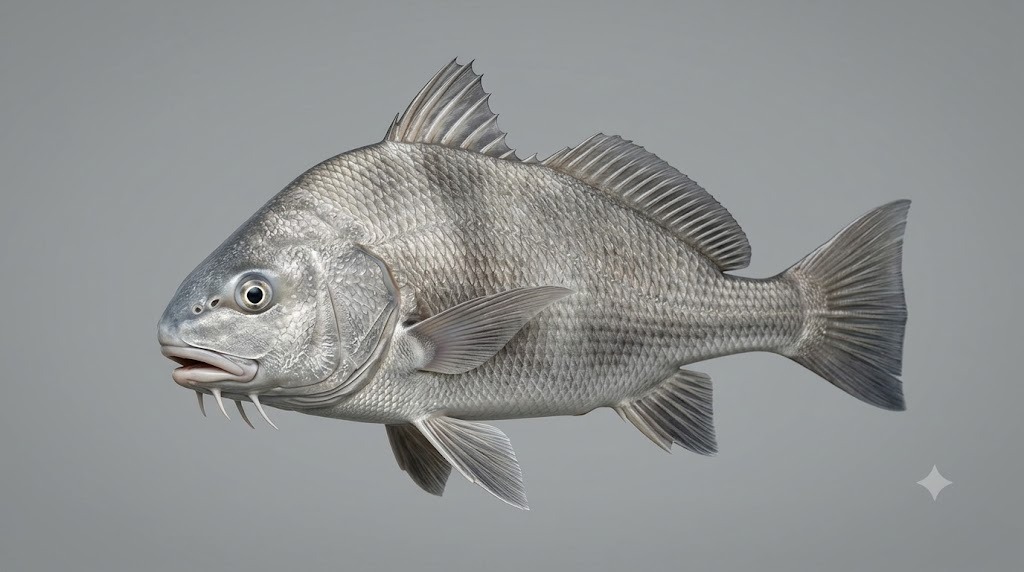
Black drum are deep-bodied, high-backed fish with a blunt, slightly downturned snout and a distinctive cluster of small chin barbels on the underside of the lower jaw - the single most reliable way to tell them from a redfish. Color ranges from silvery-gray to dark charcoal or coppery-bronze, often with a brassy sheen on the flanks. Juveniles wear four or five bold black vertical bars across a pale body, which fade to a uniform dark gray as the fish ages. They have powerful pharyngeal teeth deep in the throat - cobblestone-like crushers built for pulverizing oysters, clams, and crabs. Black drum lack the redfish's signature tail spot, though very large individuals occasionally show faint dark blotches near the tail. The body is robust and slab-sided, and big bulls develop a pronounced hump behind the head.
Range & Habitat (US waters - inshore / offshore)
Black drum range along the Atlantic coast from roughly Massachusetts and New York southward, around Florida, and throughout the entire Gulf of Mexico to Texas and into Mexican waters. They are most abundant from the Chesapeake Bay south and across the Gulf, where vast schools of giant spawning fish gather in spring.
Inshore, black drum haunt oyster reefs, mud flats, channel edges, bridge and pier pilings, jetty rocks, and the deeper holes of bays and estuaries. They tolerate a wide salinity range and push well up into brackish rivers and backwater bayous. Larger fish favor deeper, structure-rich water - ship channels, passes, and the bases of bridges - while smaller drum roam the same shallow flats and creeks as redfish. They are fundamentally a structure-and-bottom species that lives wherever shellfish are plentiful.
Behavior & Feeding
Black drum are deliberate, scent-driven bottom feeders. Their downturned mouth and chin barbels are sensory tools for rooting through mud and shell, and their crushing throat teeth let them eat hard-shelled prey that few other fish can handle - crabs, clams, oysters, mussels, and shrimp make up most of the diet. Like redfish, they will "tail" in shallow water as they tip down to feed, and big schools can be seen pushing wakes or crawling across a flat. They are named for the loud, resonant drumming or croaking sound the males produce with their swim bladder, audible through a boat hull during the spring spawn. Because they hunt by smell more than sight, black drum feed confidently in muddy, off-color water and after dark, and a bait left motionless on the bottom is exactly what they are looking for.
Best Seasons & Times to Catch
Black drum can be caught throughout the year across most of their range, but the marquee event is the spring spawning run. From late winter into spring - roughly February through April depending on latitude - enormous schools of bull drum stack into passes, channels, and bay mouths to spawn, offering shots at fish well over 50 pounds. Smaller eating-sized drum bite reliably all year and are a dependable cool-weather option when other species shut down. Summer fishing is good early and late in the day and after dark, when the water cools and the fish move shallow to feed. Because they rely on scent, black drum are less tide-dependent than many inshore species, but a moving tide that washes scent and food along the bottom still turns the bite up. Night fishing around lit bridges and piers is especially productive in warm months.
Where to Find Them - Reading the Water
Think hard structure and shellfish. Oyster reefs, channel ledges, the rocks of a jetty, the pilings of a bridge or pier, and deep holes adjacent to flats are all classic black drum addresses. In spring, focus on passes, inlets, and the deep channels where spawning schools congregate - sounders will mark them as dense clouds near the bottom. On the flats, watch for tailing fish, mud "blows" where a drum kicked off the bottom, and crawling backs in skinny water, just as you would for redfish. Around bridges, the up-current side of pilings concentrates feeding fish. Cracked-shell bottom, mussel beds, and any place oysters grow are worth a bait. Because the bite is scent-led, you can also simply anchor near structure and let a chunk of crab call them in.
Tackle & Rigs
For puppy drum and average eating-sized fish (roughly 14-25 inches), a 7- to 7.5-foot medium-heavy spinning or casting rod with a 4000-class reel, 15-30 lb braid, and a 30-40 lb leader is plenty. Because drum are not leader-shy, you can fish heavier line than you would for redfish without spooking them.
The workhorse rig is a simple fish-finder (Carolina) rig: a sliding egg sinker of 1-3 ounces above a barrel swivel, then a 12-24 inch leader to a 3/0-6/0 circle hook. A fixed bottom rig or knocker rig also works well around shell and rock. For giant spring bulls in deep channels, step up to a stout 7.5-8.5 foot heavy rod, a 6000-8000 reel, 40-65 lb braid, a 60-80 lb leader, a 4-8 oz weight to hold bottom in current, and a 7/0-9/0 circle hook to match a whole blue crab.
Best Baits & Lures
Black drum are crustacean specialists, so bait is king. Fresh, cut blue crab is the undisputed champion - a half or quartered crab on the bottom is irresistible, and for big bulls a whole crab is the standard. Shrimp (live or fresh dead), clams, sand fleas, and pieces of squid all produce, and fiddler crabs are deadly on smaller fish around pilings. Whatever the bait, freshness matters because these fish key on scent.
Black drum are far less interested in artificials than redfish, but smaller fish will occasionally take a slow-crawled soft plastic, a jig tipped with shrimp, or a crab-imitating soft bait worked right on the bottom. The rule is simple: slow and low. If you must throw a lure, scent it. For the most part, however, a chunk of crab parked on a clean piece of shell bottom out-fishes everything else.
Techniques - How to Fish for It
The bread-and-butter approach is bottom fishing with crab or shrimp on a fish-finder rig near structure. Cast up-current of an oyster reef, bridge piling, or channel edge, let the sinker hold bottom, and keep a semi-tight line so the circle hook can find the corner of the jaw when a fish eats. Black drum often mouth a bait deliberately, so resist the urge to swing - let the rod load and lean into a steady sweep. In shallow water, sight-fishing for tailing and crawling drum works just like redfishing: lead the fish, let the bait settle in its path, and wait for the pickup. For spring bulls in deep channels, anchor up-current of the school and drift baits back, or fish vertically over marked fish, and be ready for a long, dogged fight rather than a screaming run. Patience and a fresh bait beat constant casting.
Common Mistakes
The most common error is striking too soon or too hard - black drum eat slowly and circle hooks need a steady sweep, not a hookset. Using stale, washed-out bait is another killer, since these fish hunt by scent and ignore old offerings. Many anglers fish too light a sinker and let current sweep the bait off the structure; you need enough weight to hold bottom. Overlooking dirty water is a mistake, too, because drum feed happily where visibility is near zero. Finally, anglers chasing big spring bulls often under-gun themselves; a 60-pound drum on light tackle is a recipe for a pulled hook or an exhausted, hard-to-revive fish. Match your gear to the size of fish you expect.
Size, Records & Eating Quality
Eating-sized "puppy" drum typically run 14-25 inches and 2-8 pounds, while mature bulls commonly reach 30-50 pounds and the largest exceed 80. The IGFA all-tackle world record is a 113-pound, 1-ounce black drum caught off Lewes, Delaware, in 1975. On the table, smaller drum (under about 15 pounds) are very good - firm, mild, white-fleshed fish that take well to frying, blackening, or chowder, though the meat can occasionally host harmless parasitic worms that are easily trimmed. Large bull drum have coarse, sometimes tough flesh and are best released as breeding stock; many anglers fish them purely catch-and-release. Always check current state regulations, as size and bag limits vary by region and change over time.
Pros & Cons (as a target species)
Pros: Extremely hard-fighting, especially big bulls; accessible from bank, pier, bridge, jetty, and surf with no boat needed; feed by scent so they bite in muddy water and at night; abundant and catchable year-round; smaller fish are good eating; not leader-shy, so rigging is simple. Cons: Rarely take artificials, so it is mostly a bait fishery; large bulls have coarse, parasite-prone meat and should be released; the deliberate bite frustrates anglers used to aggressive strikes; big fish demand heavy gear and careful handling on release.
Best Suited For
Black drum are an excellent species for beginners, families, and bank or pier anglers who want a real shot at a huge fish using simple bottom-fishing tactics. They are forgiving of off-color water and require no fancy lures or stealthy presentations. At the same time, the spring bull run offers seasoned anglers a genuine brute-strength battle. In short, a black drum can be a kid's first big fish on a chunk of crab or a veteran's 70-pound arm-burner in a spring channel.
FAQ
Is black drum good to eat? Smaller black drum, under about 15 pounds, are very good - firm, mild, white meat. Large bulls are coarse and sometimes carry harmless spaghetti worms, so they are best released.
What's the difference between a black drum and a redfish? Black drum have chin barbels and (when young) bold vertical bars, and they lack the redfish's black tail spot. Redfish are coppery with the signature spot and no barbels.
Do I need a boat to catch black drum? No. They are a favorite of pier, bridge, jetty, and surf anglers because they feed on the bottom around accessible structure.
Why do black drum make a sound? Males vibrate muscles against the swim bladder to produce a deep drumming or croaking sound, especially during the spring spawn - sometimes loud enough to hear through a boat hull.
What is the best bait for black drum? Fresh cut blue crab is the top bait by a wide margin, followed by shrimp, clams, and sand fleas. Freshness matters because these fish feed by scent.