Black Grouper
The black grouper is one of the most prized reef fish in the tropical western Atlantic - a big, powerful, hard-pulling brute anglers chase for both the fight and the outstanding table quality.
🗓️ Last reviewed: July 2026
Overview
The black grouper is one of the most prized reef fish in the tropical western Atlantic - a big, powerful, hard-pulling brute anglers chase for both the fight and the outstanding table quality. Unlike the smaller reef fish it shares structure with, a good black grouper can top well over 50 pounds, and hooking one over a wreck or ledge is a genuine test of tackle and nerve. The battle is simple: the fish eats, instantly bolts back into the rocks, and the angler either turns its head or loses the fight. That brute-force tug-of-war, paired with thick, clean white fillets, makes the black grouper a bucket-list species for reef and offshore fishermen across Florida, the Gulf, and the Caribbean.
Identification & Appearance
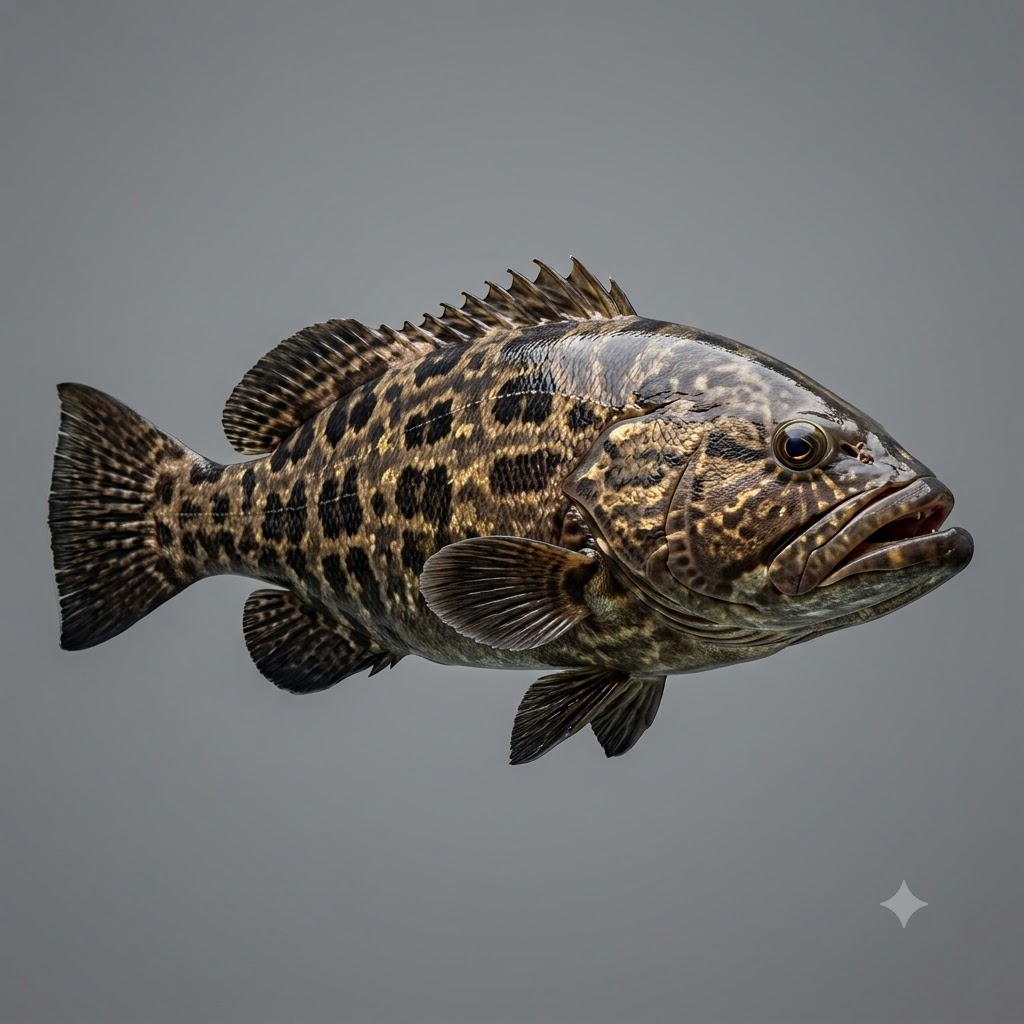
Black grouper are stout, heavy-bodied fish with a large mouth and broad tail. Coloration ranges from olive to dark gray with rectangular black blotches and brassy spots arranged in loose rows along the flanks, giving a chain-link or tile-like look. The fins are edged in black, and the tail has a dark margin. They are frequently confused with gag grouper, a common companion species; black grouper tend to show more rectangular, boxy markings and a squared-off tail without the gag's ragged fin edges. Large adults darken and can flush their pattern up or down. The body is built for short, explosive bursts rather than long runs, which is exactly how they hunt and fight.
Range & Habitat (US waters - inshore / offshore)
Black grouper are found from the Carolinas south around Florida and throughout the Gulf of Mexico, with the strongest fishery in South Florida, the Keys, and the reefs and wrecks of the eastern Gulf. They are a warm-water, structure-loving species.
This is primarily an offshore and nearshore reef fish. Look for them on coral reefs, rocky ledges, drop-offs, artificial reefs, and wrecks anywhere from 60 to 250-plus feet, though smaller fish move shallower onto patch reefs and nearshore hard bottom. The biggest fish hold on the deepest, least-pressured structure. Juveniles use shallow inshore hard bottom and seagrass before moving to the reef as they grow. Wherever there is high-relief structure holding baitfish in warm water, black grouper can be there.
Behavior & Feeding
Black grouper are ambush predators that live in and around structure and rarely stray far from a hole they can dive into. They feed heavily on baitfish, squid, and crustaceans, using a large mouth and powerful suction to inhale prey. This behavior is why grouper fishing is so demanding: the fish sits near cover, rushes out to eat, and immediately rockets back home, where it can wedge in and break the line on sharp coral or rock. They are most active on moving current, which sweeps bait past their ambush points, and a strong tide often triggers the best feeding windows.
Best Seasons & Times to Catch
Black grouper can be caught year-round in their warm-water range, but many areas enforce seasonal closures to protect spawning fish, so the legal season may be shorter than the biological one - always check current regulations before you go. Cooler months often push fish a little shallower and can concentrate them, while summer sees them holding deep. Current is more important than season on any given day: fish a strong moving tide, and time your drops for the first and last of a current change when predators feed hardest. Early morning and late afternoon tend to produce more aggressive bites, but a good current at any hour can turn the fish on.
Where to Find Them - Reading the Water
Finding black grouper means finding structure. Use a good bottom machine to locate ledges, drop-offs, wrecks, and isolated rock piles, and watch for bait stacked over or beside them - grouper hold where the food is. The up-current edge of a wreck or ledge is often the sweet spot, since fish face into the flow to ambush what the current delivers. High-relief bottom holds bigger fish than flat rubble. Once you mark a spot, note how the current sets and position the boat so your bait presents naturally along the structure. Isolated, hard-to-reach pieces of bottom that see less pressure hold the largest, least-wary grouper.
Tackle & Rigs
Black grouper demand heavy tackle - this is a fish you must stop before it reaches the rocks. A stout 6- to 7-foot conventional rod with a strong backbone, matched to a high-capacity conventional reel with a powerful drag, is the standard. Spool with 60-100 lb braid for depth and cutting through current, and use a heavy leader of 60-130 lb depending on fish size and structure.
The workhorse bottom rig is a fish-finder (sliding-sinker) or knocker rig: an egg sinker heavy enough to hold bottom in the current - often 6 to 16 ounces - running to a strong swivel, then a short heavy leader to a stout circle hook (5/0 to 10/0). Vertical jigging with heavy speed jigs is a productive alternative over deep structure. Whatever the rig, everything must be built strong; light or worn components fail on the first surge.
Best Baits & Lures
Live bait is king for big black grouper. A lively blue runner, pinfish, grunt, or small mullet dropped to the structure is hard to beat, and larger live baits select for larger grouper. Fresh cut bait - bonito strips, mullet chunks, squid, or a whole small fish - also produces well and puts scent in the water, which matters in current.
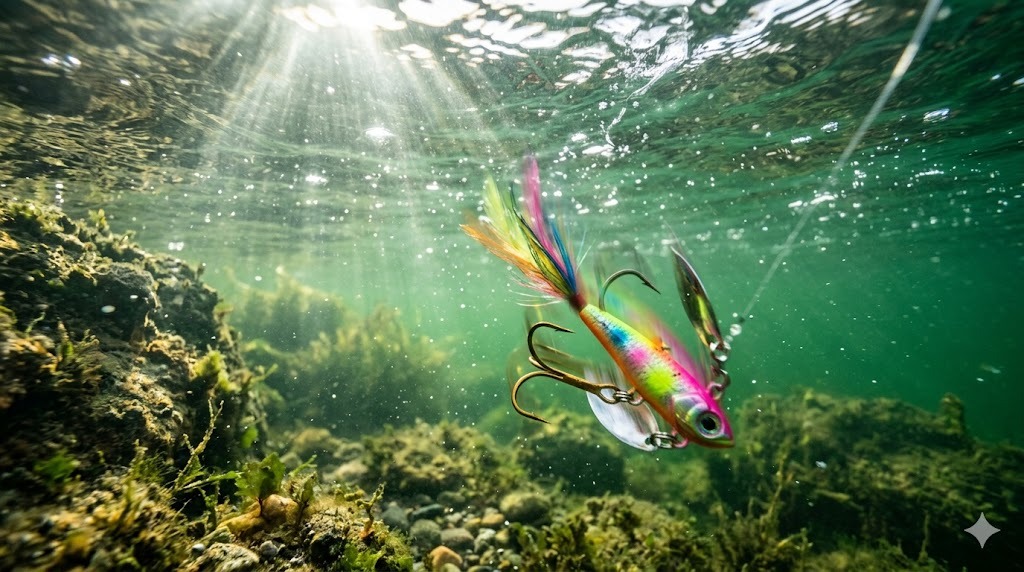
Among artificials, heavy vertical jigs worked aggressively over structure draw reaction strikes, and large deep-diving plugs pulled along reef edges take fish where trolling is practical. But when the goal is a trophy from deep structure, a big live bait on a strong circle hook is the most reliable choice.
Techniques - How to Fish for It
The core technique is a controlled, fast fight. Drop your bait near the up-current edge of structure, then reel up a turn or two to keep it just off the rocks. When a grouper eats, do not give it slack or let it settle - come tight immediately and lift hard to turn its head and pull it away from cover in the first few seconds. This opening moment decides the fight; hesitate and the fish reaches the rocks and breaks off. Keep steady, heavy pressure and gain line whenever the fish lets you. For jigging, work the jig up through the structure zone with sharp lifts, ready for a savage strike. With circle hooks, apply steady pressure to let the hook find the jaw rather than swinging to set.
Common Mistakes
The most common - and most costly - mistake is fishing too light. Grouper simply break undersized line and leaders on structure. The second is being slow or soft on the strike: give a grouper any time and it wins by reaching its hole. Letting the fish run, "waiting to be sure," or feeding it slack all end the same way. Anglers also lose fish by fishing the wrong side of the structure or letting current sweep the bait away. Finally, ignoring regulations is a serious error here - seasons, minimum sizes, and bag limits are strict and change, and mishandling a fish you must release wastes the resource.
Size, Records & Eating Quality
Black grouper are among the larger groupers an angler is likely to encounter, commonly caught at 10 to 40 pounds, with big fish exceeding 50 pounds and the largest reaching well beyond that. They grow slowly and live a long time, which is exactly why they are so heavily regulated. On the table they are outstanding - thick, firm, mild, snow-white fillets that hold together for grilling, frying, or blackening, widely considered some of the best eating in the sea. Because they are slow-growing and vulnerable to overharvest, black grouper are protected by minimum size limits, bag limits, and seasonal closures that vary by region. Always check and follow current state and federal regulations, as limits and seasons change.
Pros & Cons (as a target species)
Pros: Big, powerful, and exciting to fight; excellent, premium table fare; found on identifiable structure you can target; rewards skill and preparation; a genuine trophy species. Cons: Requires heavy, capable tackle and often deeper-water access; break-offs on structure are common; strictly regulated with seasonal closures and size limits; slow-growing and pressure-sensitive; not a beginner's light-tackle fish.
Best Suited For
Black grouper suit anglers ready to fish heavy tackle and win a short, brutal fight over structure - reef and wreck fishermen, offshore bottom anglers, and jiggers looking for a hard-pulling trophy with a superb payoff on the table. They are less suited to beginners or light-tackle enthusiasts, since underpowered gear leads to lost fish. For anyone willing to gear up properly and learn to fish structure and current, few reef species are more rewarding.
FAQ
Is black grouper good to eat? Yes - black grouper is prized eating, with thick, firm, mild white fillets considered among the best of any reef fish. Just be sure the fish is legal to keep before harvesting.
What's the difference between a black grouper and a gag grouper? They look similar and share structure, but black grouper show more rectangular, boxy markings and a squared tail, while gag tend toward more washed, wavy markings. Learn the local ID points, since regulations can differ.
Do I need a boat to catch black grouper? Generally yes. This is mainly an offshore and nearshore reef species requiring structure in deeper water, though smaller fish occasionally hold on shallow hard bottom.
Why do I keep getting broken off? Grouper eat and instantly dive for cover. Fish too light or react too slowly and the fish reaches the rocks and cuts you off. Fish heavy gear and lift hard the instant it bites.
Are there size and season limits on black grouper? Yes. Black grouper are strictly managed with minimum sizes, bag limits, and seasonal closures that vary by area and change over time. Always check current state and federal regulations before keeping one.