Cabezon
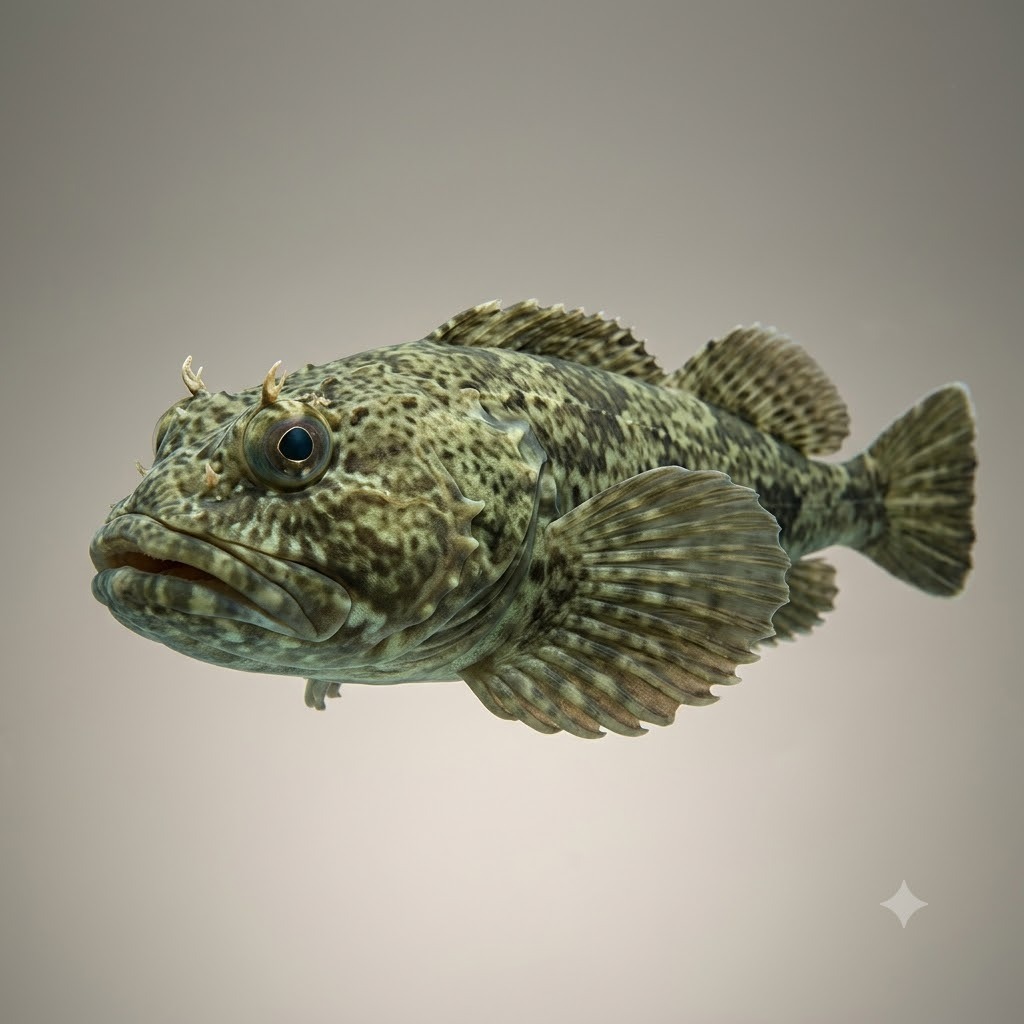
The cabezon is a big, comical-looking sculpin of the Pacific Coast, a hard-fighting ambush predator caught from rocks, jetties and kelp.
🗓️ Last reviewed: July 2026
Overview
The cabezon is a big, comical-looking sculpin of the Pacific Coast, a hard-fighting ambush predator caught from rocks, jetties and kelp. Ugly but excellent on the table, it is a favorite of West Coast rockfishers and shore anglers - with one important safety note about its eggs.
Identification
Cabezon are broad-headed, scaleless and mottled in green, red or brown, with a fleshy flap over each eye, big pectoral fins and a wide mouth. The scaleless body and eye flaps are unmistakable.
Range & Habitat
They live over rocky reefs, kelp, jetties and tide pools along the Pacific Coast from Baja to Alaska, holding tight to structure.
Behavior & Diet
Cabezon are ambush predators that lie in the rocks and grab crabs, small fish, mollusks and other prey, striking hard and holding to the bottom.
Best Seasons
Caught year-round where seasons allow, with spring and summer good from shore and boat over rocky structure.
How to Catch Them
Bait and jigs fished tight to rocks and kelp - crab, squid, shrimp and cut bait all work - with a stout rig to pull them from structure.
Tackle & Rigs
Medium-heavy spinning or conventional gear, braided line, heavy leader and bait or jig rigs fished on the bottom.
Landing, Handling & Release
Pull them from the rocks quickly and handle the wide-mouthed fish with care. Vent or descend deep-caught release fish.
Table Quality
Cabezon is excellent - firm, white, sweet meat (sometimes bluish before cooking) - but the ROE IS TOXIC and must never be eaten.
Common Mistakes
Eating the toxic eggs, and letting a hooked fish bury in the rocks.
Regulations & Conservation
Managed with rockfish-group size and bag limits and closures on the West Coast. Always confirm the current regulations before keeping fish - and never eat the roe. We do not give legal advice.
FAQ
Are cabezon good to eat? Yes, the flesh is excellent - but the eggs are toxic, so discard the roe.
Where do I catch them? Tight to rocks, jetties and kelp.