California Halibut
The California halibut is the West Coast's premier inshore flatfish, a sandy-bottom ambush predator that prowls the bays, estuaries, and open beaches from California into Baja and as far north as Washington.
🗓️ Last reviewed: June 2026
Overview
The California halibut is the West Coast's premier inshore flatfish, a sandy-bottom ambush predator that prowls the bays, estuaries, and open beaches from California into Baja and as far north as Washington. Unlike the deep, cold-water Pacific halibut of Alaska, the California halibut is a fish of warm, shallow, accessible water - the kind you can target by drift-fishing live bait from a small boat, bouncing a rig along a sandy channel, or fan-casting a swimbait from the surf. It is a left-eyed flatfish that lies buried in the sand waiting to explode upward on passing baitfish, and it fights with a series of strong, head-shaking surges and the dead-weight pull of a broad flat body. Add in some of the finest white fillets on the Pacific coast and a generous distribution across some of the most fishable water in the West, and the California halibut becomes a favorite of bay anglers, surf casters, and light-tackle boaters alike. For anglers who love hunting flat, sandy bottom with live bait and lures, it is a rewarding and delicious target.
Identification & Appearance
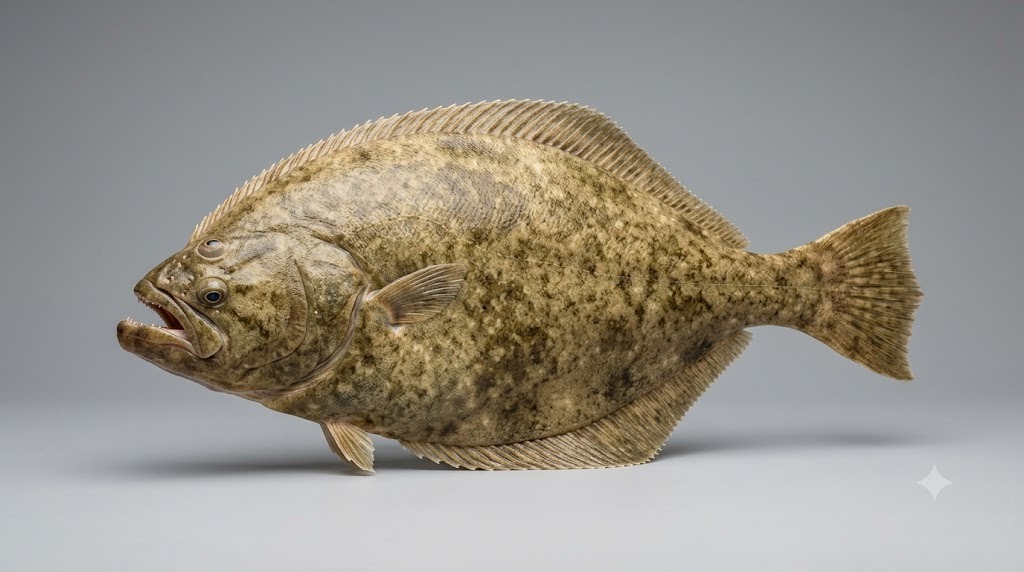
The California halibut is a large, diamond-shaped flatfish with both eyes on one side of its head - and unlike most flatfish, it is often "left-eyed," with the eyes on the left side and the mouth opening to the right, though a significant portion of the population is right-eyed, making it one of the more variable flatfish in this respect. The eyed (top) side ranges from sandy brown to dark gray-green or mottled chocolate, able to shift shade to match the bottom, while the blind (bottom) side is plain white. The body is high and compressed with a long dorsal and anal fin running the length of the fish, and a notably large mouth packed with sharp, prominent teeth - far larger and toothier than the small-mouthed sand dabs and flounders it is sometimes confused with. A useful field mark is the high arch in the lateral line over the pectoral fin. The big jaw and aggressive teeth give away its predatory, fish-eating lifestyle. The overall impression is of a flat, sand-colored, big-mouthed ambush hunter built to lie hidden and strike upward.
Range & Habitat (US waters - inshore / offshore)
The California halibut ranges along the Pacific coast from roughly the Quillayute River in Washington south through Oregon and California and down into Baja California and the Gulf of California, Mexico, with the heart of the fishery in central and southern California - the bays, beaches, and nearshore waters from San Francisco Bay south through Monterey, Morro Bay, the Santa Barbara Channel, Los Angeles, and San Diego. It is a warm-temperate, primarily shallow-water species.
California halibut are sandy- and muddy-bottom specialists of relatively shallow water. They live in bays and estuaries, along open sand beaches in the surf zone, around the mouths of harbors and channels, and over nearshore sand flats and drop-offs, generally from the shallows down to a few hundred feet but most commonly caught in well under a hundred. They favor clean to mixed sand bottom, especially near structure transitions - the edge where sand meets eelgrass, a channel edge, a drop-off, a reef margin, or a sandy patch among rocks - where baitfish concentrate. Juveniles use shallow bays and estuaries as nurseries, while adults move between bays and the open coast and follow bait into the surf. They are a fish of soft, open bottom rather than heavy structure.
Behavior & Feeding
California halibut are sit-and-wait ambush predators built around the sandy bottom they inhabit. A halibut settles onto the sand and shimmies down until it is partly buried and nearly invisible, top side camouflaged to match the bottom, then waits for prey to pass overhead. When a baitfish comes within range, the halibut launches upward off the bottom with a sudden burst, engulfs the prey in its large toothy mouth, and settles back to the sand. They are primarily fish-eaters, keying heavily on anchovies, sardines, smelt, grunion, small surfperch, and shrimp, and they relate strongly to concentrations of these baitfish - find the bait moving over sand and the halibut are likely beneath it. Because they ambush from below, presentations that move slowly and steadily just off the bottom - a drifted live bait, a slow-trolled bait, a swimbait swimming low - draw the strike. The bite can be subtle, a sudden weight or a series of taps as the fish grabs and repositions the bait, and a halibut will sometimes mouth a bait before committing, which is why a slight pause before the hookset is often rewarded. They feed most actively when moving water - tidal current - sweeps bait across their ambush zones.
Best Seasons & Times to Catch
California halibut can be caught year-round across much of their range, but the fishing typically peaks from spring through fall. A classic pattern is the spring and early-summer move of fish into the bays and shallows to spawn and feed, which concentrates halibut in accessible water and often produces excellent action from boats and shore; many anglers consider late spring into summer the prime window in the bays. Through summer and into fall, halibut spread along the open beaches and nearshore flats, providing strong surf and boat fishing, and fall can yield some of the larger fish of the year. Winter fishing slows in the coldest, dirtiest water but remains possible, particularly in southern California where conditions stay milder. Within a day, moving tide is the key - halibut feed best when current is sweeping bait over the sand, so the stronger stages of a tidal exchange, rather than dead slack, are usually most productive, and drift-fishing covers water efficiently during a good tide. Low-light periods around dawn and dusk, and overcast days, can also concentrate feeding, and grunion runs in spring and summer can trigger excellent halibut bites in the surf.
Where to Find Them - Reading the Water
Find clean sandy bottom near bait and structure transitions, and you find halibut. The most productive water includes bay channels and their edges, the drop-offs and flats inside harbors and estuaries, sandy beaches in the surf zone (especially troughs, cuts, and the edges of sandbars), the sandy margins around reefs, jetties, and kelp, and nearshore sand flats with current. The key is the transition: halibut stack on edges where sand meets eelgrass, where a flat drops into a channel, or where a sandy patch borders structure, because these are ambush highways for baitfish. On a boat, use the sounder to find sand at the right depth, watch for bait, and set up drifts that carry your bait across these edges and along channel slopes with the current. From the surf, read the beach at low tide to locate troughs, cuts, and holes that will hold fish on the incoming water, and fish where the bait and the structure of the bottom concentrate. As a rule, look for the meeting of clean sand and something - an edge, a depth change, bait, or nearby structure - rather than featureless flat bottom, and let the tide put you on feeding fish.
Tackle & Rigs
California halibut do not demand heavy gear, and a medium to medium-light setup with good feel is ideal for the shallow, sandy fishing. A 7- to 9-foot medium spinning or conventional rod with a sensitive tip and enough backbone to drive a hook into a halibut's bony mouth is a versatile choice; surf anglers favor longer rods for distance, while bay and boat anglers can fish shorter sticks. Reels in the 3000-5000 class (spinning) or a light conventional, loaded with 10-20 lb monofilament or 15-30 lb braid, cover most situations, with a fluorocarbon leader for abrasion resistance and low visibility in the often-clear water.
Two rigs dominate. The drift rig - frequently a "bouncing ball" or sliding-sinker setup - uses a sliding egg or rubber-cored sinker (a bouncing ball sinker on a slider is a coast favorite) above a swivel, with a leader of a foot or two to a single live-bait hook, letting the bait drift naturally just off the sand while the sinker bounces bottom. The Carolina rig - a sliding sinker, swivel, leader, and hook - is the close cousin used both for drifting and for casting from shore. Hook choice runs to live-bait and octopus-style hooks in roughly 1/0 to 4/0 matched to the bait, and many anglers add a small treble as a stinger because halibut often short-strike. Keep sinker weight just heavy enough to maintain bottom contact during the drift. Sharp hooks matter because of the hard mouth, and the overall rig should let a live bait swim naturally near the bottom.
Best Baits & Lures
Live bait is the gold standard for California halibut, and the best is whatever the fish are eating - small live baitfish that match the local forage. Live anchovies and sardines are top choices where available, along with smelt (especially live shiner or top smelt), small live queenfish and grunion, and live or fresh-dead jacksmelt; in the bays, live shiner perch and small baitfish are deadly. Hook the bait so it swims naturally and drift or slow-troll it along the bottom. Fresh-dead bait, strips of squid, and ghost shrimp will also take halibut when live bait is scarce.
On the lure side, California halibut are excellent targets for soft-plastic swimbaits, which have become one of the most popular and effective methods. A swimbait on a leadhead - in baitfish colors and a size matching the forage - bounced and swum slowly along the sand mimics a fleeing baitfish and draws hard ambush strikes; this is a favorite both from boats over flats and from the surf. Bucktail jigs tipped with a strip of squid or a plastic trailer, metal jigs, and trolling plugs and spoons also produce, and trolling a swimbait or plug slowly along channel edges and flats is a proven search method. The common thread is presenting a baitfish profile low and slow near the bottom where the halibut waits.
Techniques - How to Fish for It
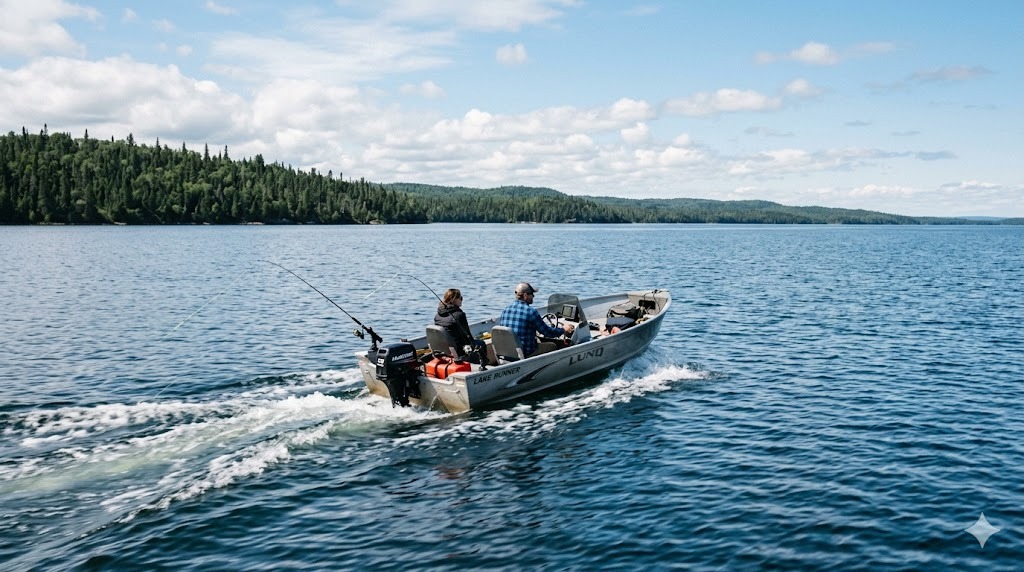
The signature method is drift-fishing live bait over sandy bottom on a moving tide. Set up uptide of productive water - a channel edge, a flat, a transition - and drift with the current, keeping a live bait on a sliding-sinker or Carolina rig just off the sand so it swims naturally through the halibut's ambush zone, maintaining light bottom contact and covering water until you find fish. When a halibut bites, it often feels like sudden weight or a series of taps as it grabs and repositions the bait; the classic advice is to resist setting instantly, let the fish take and turn the bait, then sweep the rod into a firm hookset to drive the hook into the hard mouth. Trolling a bait or swimbait slowly along edges and flats is an effective way to locate scattered fish over large areas of sand. For lure fishing, cast a swimbait or jig, let it sink to the bottom, and retrieve it slowly with a steady swim and occasional bounce so it stays in the strike zone low to the sand; from the surf, fan-cast swimbaits or fish live bait in the troughs and cuts on the incoming tide. Whatever the method, the keys are staying near the bottom over sand, using the tide to present bait naturally, and giving the fish a moment to commit before setting. When you land one, a net is wise - halibut are notorious for thrashing off at the surface or at the rail.
Common Mistakes
The most common error is setting the hook too soon - a halibut frequently grabs and mouths the bait before turning it, and swinging at the first taps pulls the bait away or results in a missed, lightly-hooked fish; waiting that extra beat and then setting firmly hooks far more fish. The opposite mistake, fishing too fast or off the bottom, takes the bait out of the ambush zone entirely, since a halibut buried in the sand strikes upward at prey passing just overhead. Fishing slack water instead of moving tide is another frequent failure, because halibut feed best when current sweeps bait across the sand. Anglers also lose fish at the end of the fight by not using a net - a thrashing halibut at the surface throws hooks easily. Other mistakes include using a hook too dull or too small to penetrate the bony mouth, ignoring the bait and structure transitions in favor of featureless bottom, and dragging a sinker so heavy it kills the natural drift of the bait. Matching the bait to the local forage and presenting it slowly and naturally near the bottom solves most of these.
Size, Records & Eating Quality
A typical keeper California halibut runs from the legal minimum up to several pounds, with good fish in the 8-15 pound range and "barn-door" trophies exceeding 20 and occasionally 30 pounds or more; females grow much larger than males, and the biggest fish are prized catches. The IGFA all-tackle world record is a 67-pound, 4-ounce (about 30.5 kg) California halibut taken at Santa Rosa Island, California, in 2011. On the table, California halibut are superb - lean, mild, sweet, snow-white fillets with a firm flake that is among the most sought-after eating on the Pacific coast, excellent grilled, sauteed, baked, fried, or as ceviche and sashimi when impeccably fresh, and a halibut yields generous, boneless fillets from its broad flat body. Because they are an important and popular species, California halibut are managed with size and bag limits and area rules that differ between regions - notably a 22-inch total-length minimum in California, with bag limits and gear rules that vary north and south of a defined boundary - so always check current regulations before keeping fish.
Pros & Cons (as a target species)
Pros: Excellent, sweet white-meat table fare ranked among the best eating on the Pacific coast; widely distributed across accessible bays, beaches, and nearshore water; catchable by many methods - drift bait, swimbaits, trolling - from boats and from shore; can reach impressive "barn-door" trophy size; light-tackle friendly and a great target for surf casters and small-boat anglers; available year-round across much of the range with strong spring-through-fall fishing. Cons: Notoriously soft, mouthing bite that demands timing and frustrates newcomers who set too early; often short-strikes, prompting stinger hooks; thrashes off easily at the surface without a net; bony, hard mouth requires sharp hooks and a firm set; bite is tide-dependent and can be slow in cold or dirty water; strictly regulated with a sizable minimum length and region-specific limits.
Best Suited For
California halibut are well suited to a broad range of anglers, which is part of their appeal. They are an outstanding target for light-tackle boat anglers who enjoy drifting live bait and working swimbaits over sandy bottom, and they are equally a prize for surf casters who like reading a beach and fan-casting for a hard-fighting, great-eating flatfish. Beginners can absolutely catch them - a live bait drifted over a sandy bay channel on a moving tide is a forgiving way to start - but the soft, mouthing bite means there is a genuine skill in timing the hookset, so they reward anglers who learn the bite and pay attention to tide, bait, and bottom. Anyone who values fine eating, accessible water, and the hunt for an ambush predator over open sand will find the California halibut a satisfying and rewarding fish. In short, it is a versatile, delicious West Coast flatfish for bay, surf, and nearshore anglers who enjoy fishing live bait and lures low and slow on sandy bottom.
FAQ
Is California halibut good to eat? Yes - it is among the finest eating fish on the Pacific coast, with lean, mild, sweet, snow-white fillets that are excellent grilled, baked, fried, or as ceviche and sashimi when very fresh.
What is the difference between California halibut and Pacific halibut? California halibut are a warm-water, shallow inshore flatfish of bays and beaches, usually left-eyed with a big toothy mouth, and much smaller; Pacific halibut are a cold, deep-water North Pacific species, right-eyed, and grow enormously larger. They are different fish caught in very different ways.
Why do I keep missing the bite on halibut? California halibut often grab and mouth the bait before turning it, so setting at the first taps pulls the bait away. Let the fish take and turn the bait for a beat, then set firmly into the hard mouth - and consider adding a stinger hook for short strikes.
What is the best bait or lure for California halibut? Live baitfish that match the forage - anchovies, sardines, smelt, shiner perch - drifted near the bottom are the top bait, and soft-plastic swimbaits on a leadhead, swum slowly low to the sand, are the most popular and effective lures.
What size California halibut can I keep? In California the minimum is 22 inches total length, with bag limits and gear rules that differ north and south of a set boundary. Regulations vary by region and change, so always check current rules before keeping fish.