California Yellowtail
The California yellowtail - simply "yellowtail" or "yellows" to West Coast anglers, and "forktail" or "mossback" to old-timers when they reach big size - is one of Southern California's most prized and hard-fighting inshore gamefish, a sleek, powerful member of the amberjack and jack family that combines blazing speed with raw, dirty-fighting muscle.
🗓️ Last reviewed: June 2026
Overview
The California yellowtail - simply "yellowtail" or "yellows" to West Coast anglers, and "forktail" or "mossback" to old-timers when they reach big size - is one of Southern California's most prized and hard-fighting inshore gamefish, a sleek, powerful member of the amberjack and jack family that combines blazing speed with raw, dirty-fighting muscle. Yellowtail roam the kelp paddies, reefs, hard bottom, and island shores from Southern California down through Baja, hunting baitfish in fast-moving schools, and they are famous for their explosive runs and their nasty habit of diving straight into rocks and kelp the instant they are hooked. They are caught on live bait - sardines, anchovies, and mackerel - and on surface iron and yo-yo jigs worked through the schools, and landing one means winning a brutal tug-of-war against a fish built to break you off in the structure. The reward is a thrilling fight and superb table fare, including some of the best sashimi a West Coast angler can put on the dock. For anglers who love a fast, powerful, structure-hugging fish that tests both tackle and nerve, the California yellowtail is a true Pacific prize and an obsession up and down the SoCal coast.
Identification & Appearance
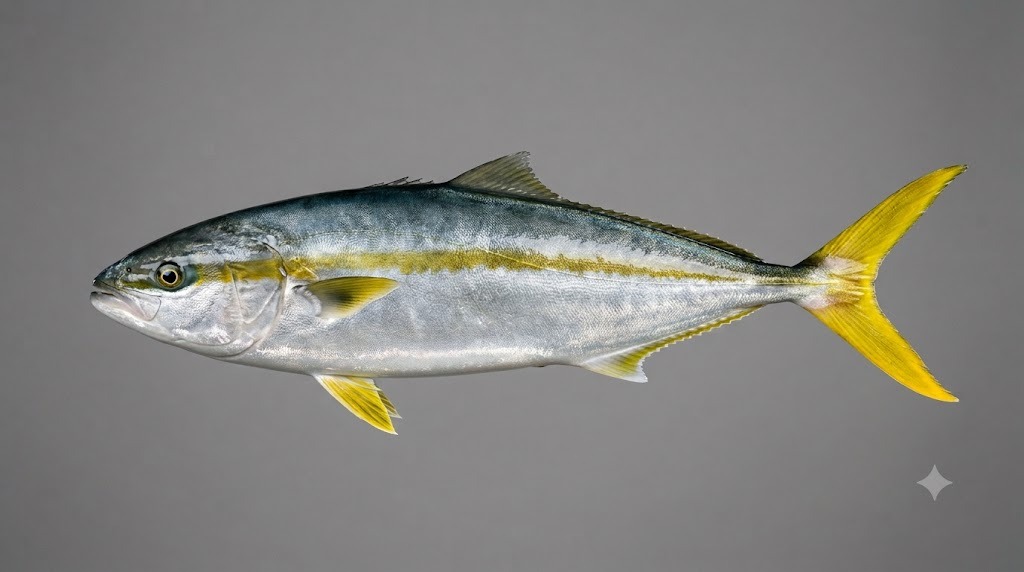
California yellowtail are streamlined, torpedo-shaped fish built for speed, with a long body, a deeply forked tail, and the powerful musculature typical of the jack and amberjack family. Their back is a metallic blue to blue-green, their sides are silvery, and a distinctive brassy-yellow horizontal stripe runs the length of the body from the eye to the tail. The tail itself and often the other fins are a clear yellow, which gives the fish its name. The head is pointed with a relatively large mouth and a strong jaw, and the body tapers to a slim, muscular tail wrist - the engine of those long, fast runs. Smaller fish are bright and clean, while big "mossback" yellowtail develop a heavier, deeper body and darker coloration. The overall impression is of a fast, sleek, hard-charging predator: lean up front, broad through the shoulder, and all power back to a forked tail built for sprinting and diving.
Range & Habitat (US waters - inshore / offshore)
California yellowtail are an eastern Pacific species, ranging from roughly Southern California - occasionally straying as far north as Central California or the Pacific Northwest in warm-water years - south along the Baja peninsula and into the Gulf of California and mainland Mexico. The heart of the US fishery is Southern California, from Point Conception south to the Mexican border, including the famous offshore islands and banks. They are an iconic warm-water gamefish of the SoCal coast.
Yellowtail are structure-oriented, current-loving fish that relate to a variety of features. They hold around the offshore islands - Catalina, San Clemente, the Coronados, and others - along rocky reefs, hard bottom, ridges, and high spots, and around kelp beds and rock structure close to the mainland. One of the most famous yellowtail patterns is the floating kelp paddy: drifting clumps of kelp out in open water that act as oases, gathering baitfish and the yellowtail that hunt them, sometimes far from any bottom structure. Yellowtail also follow warm-water currents and bait schools, so their presence shifts with water temperature and the movements of sardines, anchovies, and squid. They range from the surface down to reef and hard-bottom depths, and they will move shallow to crash bait or hold deep over structure depending on conditions.
Behavior & Feeding
California yellowtail are fast, aggressive, schooling predators that hunt baitfish in coordinated packs and feed with speed and power. They prey heavily on sardines, anchovies, mackerel, squid, and other small fish, often herding and slashing through bait schools near the surface in feeding frenzies that can be visible as boils, splashes, and diving birds. They are strongly drawn to current and to any structure that concentrates bait - kelp paddies, reefs, and ridges - and they use ambush and speed to run down prey. Yellowtail can be aggressive and competitive when a school is fired up, with multiple fish racing to a bait or jig, but they can also turn frustratingly picky and line-shy, especially in clear water or under heavy fishing pressure, refusing all but the most natural presentations. The defining behavior, though, is what happens after the hookset: a yellowtail makes a powerful, sustained run and immediately tries to reach structure - diving for the rocks, the reef, or the kelp to cut the line. They are notorious "dirty fighters," and the whole game is turning that first run and keeping the fish out of the cover it is racing toward.
Best Seasons & Times to Catch
Yellowtail are a warm-water fishery, and the prime windows run from roughly spring through fall, when water temperatures climb and bait moves in. Spring often brings the first strong push of fish as the ocean warms, summer is peak season with yellowtail spread from the kelp lines to the islands and paddies offshore, and fall can offer outstanding fishing as fish feed heavily before the water cools. In warm years, especially during warm-water events, the season can extend and fish can show in unusual numbers and locations; in cold years the bite can be later and shorter. Within a day, the classic prime times are the low-light periods of early morning and evening when yellowtail feed most actively near the surface, and a moving tide and current are generally better than slack water because current positions bait and triggers the bite. Water temperature is a key driver - yellowtail favor warmer water, and finding the right temperature break, where warm and cool water meet and bait concentrates, can be the difference between a quiet day and a wide-open bite.
Where to Find Them - Reading the Water
Finding yellowtail means finding the combination of structure, current, and bait. Productive spots include the offshore islands and their reefs and rock structure, hard bottom, ridges, and high spots out in open water, kelp beds along the coast, and - the signature SoCal pattern - floating kelp paddies drifting in the open ocean. Look for the signs that bait and predators are present: diving and working birds, surface boils and splashes where yellowtail crash bait, bait schools marking on the sounder, and floating kelp paddies, which are worth checking individually because a single good paddy can hold a school of yellowtail. A quality sounder is invaluable for marking fish and bait over reefs and hard bottom and for finding the high spots and structure yellowtail relate to. Temperature breaks, current edges, and color changes in the water all concentrate bait and fish and are worth searching. From shore and at the islands, fish the rocky points, kelp edges, and structure. As a rule, where you find concentrated bait holding on or near current and structure - especially a paddy or a reef lit up with bait - you have found the likely address of yellowtail.
Tackle & Rigs
Yellowtail fishing demands stout, capable tackle because you must turn a powerful fish and keep it from diving into rocks and kelp on its first run. For live-bait fishing, a 7- to 8-foot medium-heavy to heavy fast-action rod matched to a strong conventional reel (or a heavy spinning reel) with a smooth, powerful drag is standard, loaded with 30-60 lb line - many anglers fish 40-50 lb braid or monofilament depending on conditions and structure. A strong drag and plenty of line are essential to handle the run and the dive. Heavy fluorocarbon leader is the rule, both for abrasion resistance against structure and because yellowtail can be line-shy in clear water; leaders in the 25-50 lb range are common, scaled to the conditions and the size of fish. Around heavy structure and bigger fish, go heavier; in clear water on wary fish, you may need to lighten the leader to get bit, accepting more risk.
For live bait, a simple rig is best: a live sardine, anchovy, or mackerel hooked on an appropriately sized live-bait hook, fished either with no weight (fly-lined) so the bait swims naturally near the surface, or with a sliding sinker or a sinker rig to get the bait down to fish holding deeper. Hook size is matched to the bait and the fish. For jig fishing, the lure is tied directly to the leader (often via a strong knot or a quality snap), and the heavy iron jigs themselves serve as the terminal tackle. Whatever the method, strong hooks, abrasion-resistant leader, and a reel with the drag and capacity to stop a structure-bound fish are the priorities, because yellowtail punish weak links.
Best Baits & Lures
Live bait is the backbone of the yellowtail fishery, and a lively, well-chosen baitfish is hard to beat. Sardines are the classic and often the top live bait, with anchovies excellent when that is what the fish are keyed on, and mackerel - especially Pacific mackerel - a premium bait for larger yellowtail, fished live and sometimes preferred when bigger fish are around. Squid, live or fresh-dead, is another outstanding bait when yellowtail are feeding on it. A lively, properly hooked bait that swims naturally is the goal, and matching the bait to what the fish are eating is key. Fresh-dead and cut baits can also produce, particularly fished on the bottom or when live bait is scarce.
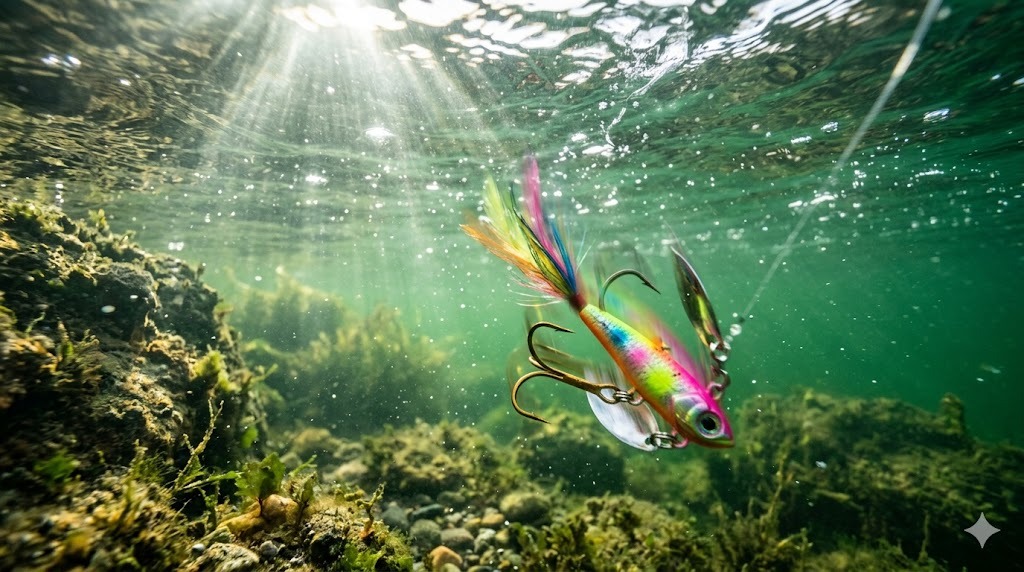
Yellowtail are also a celebrated jig fishery, and two iron-jig methods define it. Surface iron - long casting jigs thrown out over the schools and retrieved fast across or near the surface - is a thrilling, visual way to draw explosive strikes when fish are up and feeding. Yo-yo iron - heavy metal jigs dropped straight down to fish marked on the sounder over structure and then cranked back up fast and steadily - is deadly on yellowtail holding deeper on reefs and hard bottom. Both surface and yo-yo iron come in colors and weights suited to conditions, and working iron through a school of yellowtail is one of the most exciting techniques in West Coast fishing. Some anglers also throw swimbaits and other lures, but live bait and iron remain the proven producers.
Techniques - How to Fish for It
Yellowtail fishing is fast, opportunistic, and built around getting a good bait or jig in front of a feeding fish and then immediately stopping its run. With live bait, the classic approach is to find a school - on a kelp paddy, over a reef, or under working birds - and present a lively sardine, anchovy, or mackerel into it, fly-lined near the surface for fish boiling up top or weighted to reach fish holding deeper. A well-hooked, naturally swimming bait fished in the strike zone draws the bite. The instant a yellowtail eats, set the hook hard and immediately lock down and turn the fish, because its first move is a powerful run straight for the rocks or kelp - the first few seconds decide the fight. There is no letting a yellowtail have its head near structure; you must pull hard and steer it away from cover, then fight it with steady, strong pressure. With iron, the two modes are surface iron - long casts over a feeding school with a fast retrieve to trigger reaction strikes - and yo-yo iron - dropping a heavy jig straight down to marked fish over structure and winding it back up fast and steadily, which provokes savage strikes. In all cases, the keys are finding the fish, presenting the right bait or jig naturally and in the zone, and winning the immediate battle to keep a dirty-fighting fish out of the structure. When fish are line-shy, lighten up and refine the presentation; when they are wide open, get baits in fast and hang on.
Common Mistakes
The classic mistake is fishing too light around structure - undergunned rods, reels, line, or leader that cannot stop a yellowtail's first run, so the fish reaches the rocks or kelp and cuts you off. The opposite error, going so heavy in clear water that line-shy fish refuse the bait, costs bites, and balancing the two for the conditions is a real skill. Failing to set up and turn the fish immediately - letting it run toward structure before you apply heavy pressure - loses many hooked yellowtail in the first few seconds. Poor or unlively bait is another common failure; yellowtail want a fresh, frisky baitfish, and a dead or sluggish bait often goes ignored. Running and gunning past good water - blowing by kelp paddies and bait schools without checking them - means missing fish that were there to be caught. Ignoring the conditions, such as fishing slack water or the wrong temperature zone instead of the moving current and warm-water edges where bait concentrates, makes the day harder. And underestimating how hard and dirty a yellowtail fights, with too little drag or a casual hookset, is a reliable way to get broken off.
Size, Records & Eating Quality
A typical SoCal yellowtail runs in the 8-20 pound range, with good fish in the 20-30 pound class and trophy "mossbacks" reaching 30, 40, and occasionally beyond; fish in the 40s are exceptional in California waters. The IGFA all-tackle world record for California yellowtail is a 70-pound, 6-ounce fish caught off Baja California, Mexico, in 2017. On the table, yellowtail are excellent - firm, mild, and rich white-to-pink flesh that is outstanding raw as sashimi (a West Coast favorite, often compared to its relatives served in Japanese cuisine) and also delicious grilled, seared, broiled, or smoked. The meat is best when the fish is bled and iced immediately after the catch, which keeps the flesh clean and firm. Larger fish occasionally carry parasites in the meat, as many wild fish do, which is normal and easily handled by trimming and proper preparation, and is one reason many anglers prefer to freeze fish intended for raw consumption. Because yellowtail are a popular and heavily targeted gamefish, they are managed with size and bag limits that can vary and change, so always check current California regulations before keeping fish.
Pros & Cons (as a target species)
Pros: Fast, powerful, dirty-fighting gamefish that tests tackle and skill with explosive runs; superb table fare, including some of the best sashimi available to a West Coast angler; a thrilling variety of methods - live bait, surface iron, and yo-yo iron; an iconic, widely available inshore and island fishery throughout Southern California; exciting visual fishing around kelp paddies and surface boils. Cons: Hard on tackle and quick to break off in rocks and kelp, demanding stout gear and an immediate, aggressive fight; can be frustratingly line-shy and picky under pressure or in clear water; the bite is condition-dependent and tied to warm water and bait that shift year to year; requires a boat for most of the best fishing (paddies, islands, offshore structure); strong drag, fast reflexes, and experience are needed to land them consistently.
Best Suited For
California yellowtail are best suited to active, hands-on anglers who relish a fast, powerful fight and enjoy the hunt for fish around kelp paddies, reefs, and islands. They reward anglers who can read the water and conditions, present a lively bait or work iron through a school, and then muscle a hard-charging fish away from structure in the critical first seconds. The variety of methods - fly-lining live bait, casting surface iron, dropping yo-yo jigs - makes them engaging for anglers who like to fish aggressively and adapt. Beginners can certainly catch yellowtail, especially live-baiting from a party or charter boat that puts them on a fired-up school, but consistently landing them in structure-heavy water takes stout gear and learned reflexes, so there is a real skill curve to mastering them. In short, the California yellowtail is a West Coast classic: a fast, strong, delicious, structure-loving gamefish for anglers who love an explosive fight and a hard-earned, top-quality fish.
FAQ
Is California yellowtail good to eat? Yes - yellowtail are excellent eating, with firm, mild, rich flesh that makes outstanding sashimi and is also delicious grilled, seared, or smoked. Bleed and ice the fish immediately for the best quality.
Why do yellowtail break off so easily? Yellowtail are "dirty fighters" that run straight for rocks and kelp the instant they are hooked. If you do not stop and turn that first run with stout gear and heavy pressure, the fish reaches structure and cuts the line.
What is the best bait for California yellowtail? Lively live bait - sardines, anchovies, and mackerel - is the top choice, with mackerel often preferred for bigger fish and squid excellent when fish are keyed on it. Surface iron and yo-yo iron jigs are also highly effective.
Where do California yellowtail live? Around Southern California and Baja - the offshore islands, reefs, hard bottom, ridges, kelp beds, and especially floating kelp paddies out in open water. They follow warm water, current, and bait.
When is the best time to catch yellowtail? The warm-water months from roughly spring through fall are prime, with summer the peak. Early morning and evening on a moving tide, around warm-water breaks and bait, are the best windows.