Crevalle Jack
The crevalle jack - often just called "jack crevalle" or simply "jacks" - is the inshore angler's bare-knuckle brawler, a fish that pulls so hard, so relentlessly, that it has ruined more drags and humbled more anglers than almost anything else its size.
🗓️ Last reviewed: June 2026
Overview
The crevalle jack - often just called "jack crevalle" or simply "jacks" - is the inshore angler's bare-knuckle brawler, a fish that pulls so hard, so relentlessly, that it has ruined more drags and humbled more anglers than almost anything else its size. Wherever they roam, crevalle jacks travel in marauding schools that blitz bait against beaches, in passes, and across flats with explosive, water-churning ferocity. They will smash a topwater, a fly, a jig, or a live bait with abandon, and once hooked they bulldog in dogged, circling runs that seem to last forever. They are not prized for eating - the dark, bloody flesh is strong and oily - so crevalle are very much a sport fish, beloved purely for the savage fight and the heart-stopping visual of a feeding blitz. For light-tackle anglers who want maximum pull for the price of a cast, the crevalle jack delivers like few others.
Identification & Appearance
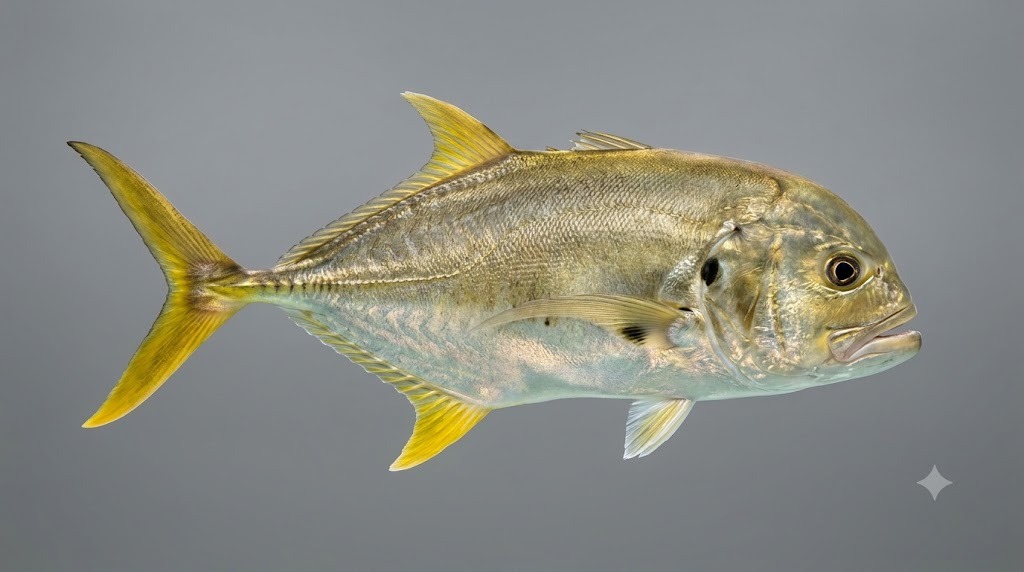
Crevalle jacks have the classic jack profile: a deep, compressed, blunt-headed body that tapers to a slender tail wrist armed with a row of hard, sharp bony scutes along the rear of the lateral line - a hallmark of the genus Caranx. They are silvery to brassy or greenish-gold, often with a yellowish belly and fins, and the body has a steep, rounded forehead that gives larger fish a distinctly bull-headed look. Two reliable field marks separate the crevalle from other jacks: a prominent round black spot on the gill cover (operculum) and a dark blotch at the base of each pectoral fin. The deeply forked tail and the streamlined, muscular build broadcast the fish's speed and power. Juveniles are more strongly barred and roam in tight schools, while big adults become heavy-shouldered, almost slab-sided bruisers with a powerful, broom-like tail.
Range & Habitat (US waters - inshore / offshore)
Crevalle jacks are found in warm Atlantic waters and in US waters range from roughly the Mid-Atlantic and the Carolinas (as summer strays farther north) southward around Florida and throughout the entire Gulf of Mexico to Texas. They are most abundant and reliable from Florida and across the Gulf, where they are a year-round inshore staple.
Crevalle are highly adaptable and roam an enormous range of water types. Inshore, they prowl beaches and the surf, inlets and passes, bays, harbors, channels, flats, and even push far up into low-salinity rivers and brackish backwaters chasing bait - it is not unusual to find them blitzing in nearly fresh water miles from the sea. They also range nearshore and offshore around bait pods, weed lines, channel edges, and structure, and around piers, bridges, and jetties they are a familiar and powerful nuisance-or-thrill, depending on your tackle. Wherever bait concentrates, crevalle are likely to show.
Behavior & Feeding
Crevalle jacks are voracious, fast, pack-hunting predators built for the chase. They travel in schools - from a handful of fish to enormous roving wolfpacks - and corral baitfish into tight balls, then attack from below and the sides in a coordinated, explosive blitz that churns the surface white and sends bait showering into the air. They feed primarily on baitfish such as menhaden, mullet, herring, and pilchards, along with shrimp and crabs, and they hunt largely by sight and by the commotion of feeding, which is why a school will charge a topwater or a fast-moving lure from a great distance. Their feeding is highly aggressive and competitive; once a school is fired up, nearly any lure thrown into the melee gets crushed. They are strong, tireless swimmers that use their deep, broad bodies to fight in long, grinding, circling battles. Crevalle feed throughout the day and are notorious for showing up suddenly, blitzing hard, and then vanishing just as fast as they follow the bait.
Best Seasons & Times to Catch
Crevalle jacks can be caught year-round across the warmer parts of their range, particularly Florida and the Gulf, but they are most active and abundant in the warmer months from spring through fall, when bait is thick and the water is warm. Big adult jacks often roam the beaches and passes in spring and early summer, frequently as huge schools chasing menhaden and mullet, and the fall mullet run along the southeastern beaches can produce spectacular crevalle blitzes. They follow bait, so the bite peaks whenever and wherever baitfish are concentrated. Within a day, low-light periods at dawn and dusk are classic for surface blitzes, but a fired-up school will feed hard at any hour, and moving tides that sweep bait through inlets and along beaches strongly improve the action. The practical key is being on the water with eyes open when the bait shows.
Where to Find Them - Reading the Water
Crevalle are a sight-and-commotion fishery: find the bait and the birds, and you find the jacks. Watch for diving and wheeling birds, showering baitfish, and the unmistakable white-water churn of a surface blitz along a beach, in a pass, or across a flat. Likely areas include inlets and passes on a moving tide, beachfronts during a bait run, the mouths of rivers and creeks, channel edges, harbor and marina basins, and the up-current sides of bridges and jetties where current funnels bait. Nervous, balled-up bait, slicks, and sudden eruptions of spray all signal a feeding school. In rivers and backwaters, look for them busting bait in the current and around dock lines. Because schools move fast, success often comes from running and looking, then racing to intercept a blitz and putting a cast into or just ahead of the feeding fish. Big solitary jacks also cruise the surf and flats and will charge a well-placed lure.
Tackle & Rigs
Crevalle pull far above their weight, so tackle should be stout and reliable - drags get a workout. For average inshore jacks (5-15 pounds), a 7- to 7.5-foot medium-heavy fast-action spinning rod with a 4000-6000 reel, 20-40 lb braid, and a 30-50 lb leader handles the job. For the big beach and pass bruisers (20-40 pounds), step up to a heavy 7.5-8 foot rod, a 6000-8000 reel with a smooth, high-capacity drag, 40-65 lb braid, and a 50-80 lb leader, because a big crevalle will run a long way and grind for a long time.
Rigs are simple. For lures, tie directly to a heavy fluorocarbon or mono leader - crevalle are not leader-shy, and the abrasion resistance helps against their scutes and rough mouth. A short length of single-strand or heavy mono is fine; wire is rarely needed since jacks lack cutting teeth. For live or cut bait, a fish-finder rig with a circle hook, or a simple free-lined live bait under a float around inlets and bridges, works well. Use strong split rings and upgraded hooks on plugs, as a big jack will straighten or shatter weak terminal tackle.
Best Baits & Lures
Crevalle will eat almost anything when fired up, which makes them a wonderful lure target. Topwater plugs are the most exciting choice - a walk-the-dog or popper buzzed fast across a blitz draws savage, water-exploding strikes. Loud poppers, large soft-plastic swimbaits and paddletails on heavy jigheads, big bucktails, swimming plugs, and flashy spoons all produce, and fast, erratic retrieves trigger the chase reflex best. Fly anglers do exceptionally well throwing large baitfish patterns and poppers into a school. The general rule with lures is big, bright, and fast.
For bait, live offerings are deadly: live menhaden (pogies), mullet, pilchards, pinfish, and shrimp dropped near a blitzing or staging school rarely last long. Cut bait - chunks of menhaden or mullet - works around inlets, bridges, and piers, especially when fished on the bottom near current. Because crevalle hunt the same baitfish that drive the whole inshore food chain, matching the local forage in size and profile is a reliable strategy when the fish are pickier.
Techniques - How to Fish for It
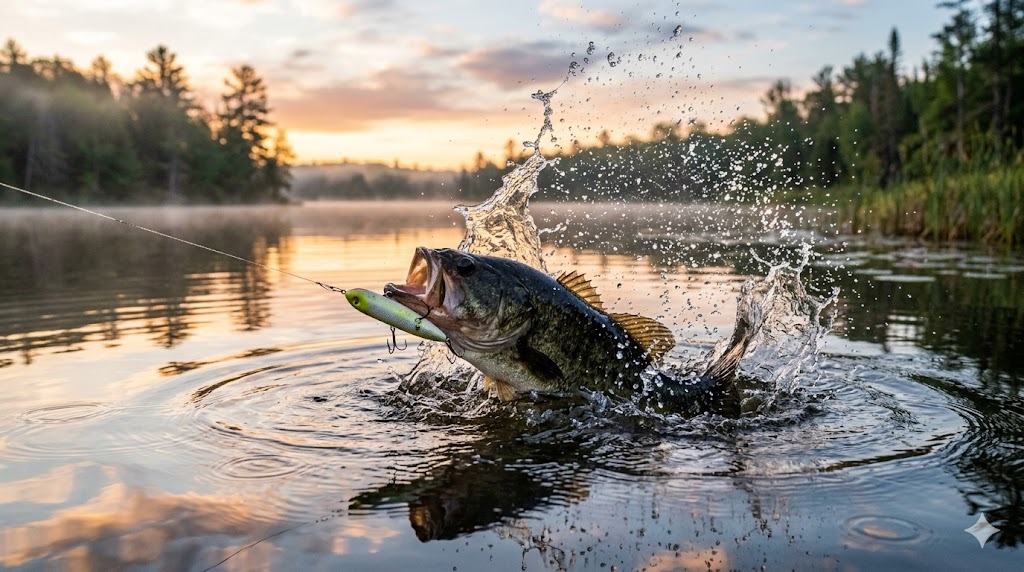
The signature method is run-and-gun blitz fishing: cover water, watch for birds and busting bait, then ease within casting range of a surface-feeding school and fire a topwater or fast lure into or just ahead of the melee. Retrieve quickly and erratically - crevalle want to chase, and a fleeing, splashing lure draws the hardest strikes. When the strike comes, it is violent; let the fish turn and come tight, then settle in for a long fight, keeping steady pressure as the jack circles and bulldogs, and being patient because they rarely give up easily. Around inlets, bridges, and piers, free-line or fish a live bait in the current, or work a jig through the structure-funneled bait. In rivers and backwaters, cast to busting fish and to current seams where they ambush bait. Throughout, expect long runs and use smooth, firm drag pressure rather than horsing, and be prepared to chase a big fish if it dumps line. The fight, more than the catch, is the whole point.
Common Mistakes
The most common mistake is under-gunning the tackle - anglers used to fish of similar size are shocked when a crevalle smokes a light drag and grinds for twenty minutes, often leading to broken lines, pulled hooks, or fish fought to exhaustion. Retrieving lures too slowly is another error; jacks want speed and commotion, and a sluggish retrieve gets ignored by fish that would have crushed a fast one. Many anglers also approach a blitz too aggressively, running the boat right into the school and putting the fish down - ease in and cast from the edge. Casting behind or into the center of a fast-moving school rather than leading it loses shots. Finally, people sometimes burn out chasing the wrong signs; learning to read birds and bait separates those who consistently find blitzes from those who only stumble onto them. And weak terminal tackle - light hooks, cheap split rings - simply will not survive a big jack.
Size, Records & Eating Quality
Crevalle jacks commonly run 3-15 pounds inshore, with big beach and pass fish frequently in the 20-30 pound class and the largest exceeding 50. The IGFA all-tackle world record is a 60-pound, 8-ounce crevalle jack caught off Barra do Kwanza, Angola, in 2010. On the table, crevalle are generally considered poor to mediocre eating - the flesh is dark, bloody, oily, and strong-flavored, and most anglers release them. Those who do keep them usually bleed the fish immediately, remove the dark red bloodline, and prepare the meat smoked or in strongly seasoned dishes, where the rich flavor is more palatable. Because they are not a food fish for most anglers, crevalle are overwhelmingly a catch-and-release sport target, valued entirely for their fight. There are typically few harvest restrictions compared to prized food species, but anglers should still check current local regulations.
Pros & Cons (as a target species)
Pros: Pound-for-pound among the hardest-fighting inshore fish; aggressive, willing biters that smash topwaters and lures; provide spectacular visual surface blitzes; widely available year-round in warm waters and reachable from beach, pier, bridge, kayak, and boat; tolerate a huge range of conditions including near-fresh water; abundant and rarely fussy when fired up. Cons: Poor eating for most anglers - dark, oily, strong-flavored flesh; punishing fight is hard on light tackle and on the angler; fast-moving schools can be hard to locate and intercept; can be a frustrating "nuisance" when they intercept baits meant for other species; require stout gear and good terminal tackle to land the big ones.
Best Suited For
Crevalle jacks are perfect for anglers who fish for the fight rather than the fillet - light-tackle and fly anglers, beach and pier fishermen, kayakers, and anyone who wants a maximum-pull battle without offshore travel. They are forgiving in the sense that a fired-up school will eat almost anything thrown at it, which makes hookups easy and exciting even for less experienced anglers, while the long, grinding fight rewards anyone who enjoys a genuine test of stamina and drag. They are an ideal "fun fish" and a fantastic way to introduce someone to the raw power of saltwater gamefish. In short, if you want to bend a rod to the breaking point and grin while your arms burn, the crevalle jack is your fish.
FAQ
Is crevalle jack good to eat? Generally no - the flesh is dark, bloody, oily, and strong, so most anglers release them. If kept, bleed immediately, remove the bloodline, and smoke or strongly season the meat.
Why do crevalle jacks fight so hard? Their deep, broad, muscular bodies and broom-like tail let them apply tremendous, sustained pressure, and they fight in long, dogged, circling runs - making them one of the hardest-pulling fish for their size.
How do I tell a crevalle jack from other jacks? Look for the round black spot on the gill cover and the dark blotch at the base of each pectoral fin, plus the steep, bull-like forehead and the bony scutes on the tail wrist.
What is the best lure for crevalle jack? A fast-worked topwater plug or popper is the most exciting, and large swimbaits, bucktails, and spoons all work. The key is big, bright, and a fast, erratic retrieve.
Do crevalle jacks really swim into fresh water? Yes - crevalle tolerate low salinity and routinely push far up into brackish and nearly fresh coastal rivers and backwaters to chase bait.