False Albacore
The false albacore - known up and down the coast as "little tunny," "albie," "fat albert," or "bonito" by people who lump them together - is the blistering inshore speedster of the fall run, a compact, bullet-shaped member of the tuna and mackerel family that turns light-tackle anglers into addicts.
🗓️ Last reviewed: June 2026
Overview
The false albacore - known up and down the coast as "little tunny," "albie," "fat albert," or "bonito" by people who lump them together - is the blistering inshore speedster of the fall run, a compact, bullet-shaped member of the tuna and mackerel family that turns light-tackle anglers into addicts. Albie fishing is a fast, visual, run-and-gun pursuit built around chasing busting fish and feeding blitzes, where schools corral bait to the surface and erupt in chaos that you can see from a long way off. They are not a true tuna for the table - the meat is dark, bloody, and strong, and most albies are released - but as a sportfish they punch far above their weight, peeling line in scorching first runs that test drags and knots. For anglers who live for sight-fishing fast fish on light spinning gear and fly, and who do not need to fill a cooler, the false albacore is a fall obsession and one of the most exciting light-tackle targets in the inshore Atlantic and Gulf.
Identification & Appearance
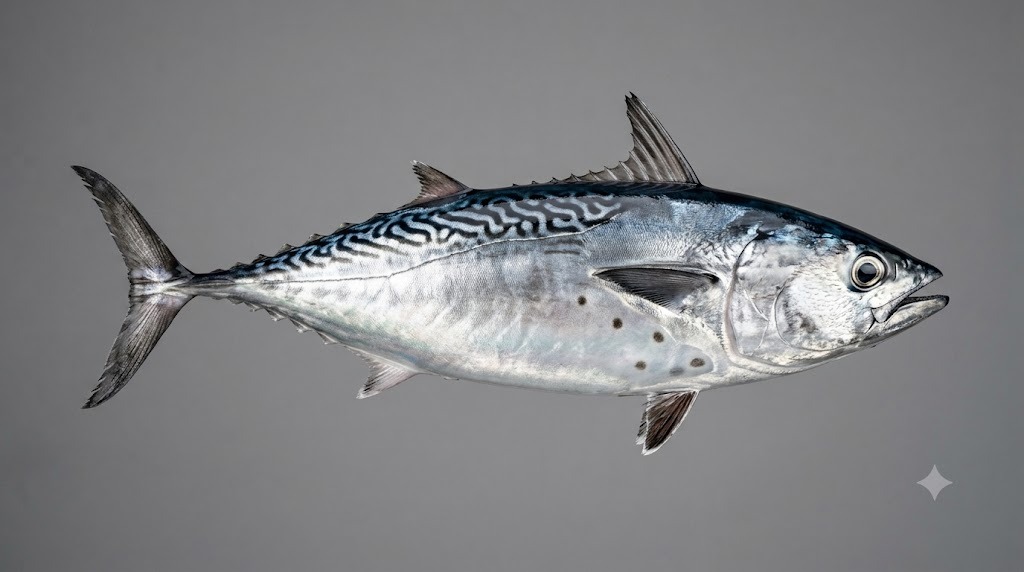
False albacore are sleek, robust, torpedo-shaped fish built for speed, with a smooth, scaleless body, a deeply forked tail, and the streamlined profile typical of the tuna and mackerel family. Their back is a steely blue-green marked with a distinctive pattern of wavy, worm-like dark lines and squiggles above the lateral line - a key field mark - while the lower flanks and belly are bright silvery white. A cluster of several dark spots is usually visible below the pectoral fin, between the pectoral and pelvic fins, which helps separate them from the similar Atlantic bonito. The finlets running along the back and belly toward the tail, the two dorsal fins, and the keeled tail base all mark them as members of the fast-swimming pelagic clan. Their eyes are large, their mouth holds small teeth suited to grabbing small baitfish, and their flesh is dark red and full of blood, reflecting a high-energy, constantly swimming lifestyle. The overall impression is of a small, muscular, beautifully marked tuna built entirely for chasing bait at speed.
Range & Habitat (US waters - inshore / offshore)
False albacore are a warm-water pelagic species ranging widely through the western Atlantic, found from roughly New England south along the entire Eastern Seaboard, around Florida, and throughout the Gulf of Mexico, with famous fall concentrations off the Carolinas - especially around Cape Lookout and the Crystal Coast of North Carolina - and strong runs through the Northeast from the Outer Cape, Rhode Island, Long Island, and the New Jersey coast. They are an iconic fall-run fish of the Atlantic and Gulf inshore.
False albacore are open-water roamers that follow bait. Unlike structure-bound bottom fish, they range along beaches, inlets, rips, points, and nearshore waters wherever schools of small baitfish gather, often within easy reach of small boats and sometimes within casting distance of the surf and jetties. They hold around tide rips, current edges, and bait concentrations, frequently in relatively shallow nearshore water during the fall, and can show up just off the beach one moment and a mile out the next. They are highly mobile and follow the bait, so finding albies means finding the bait and the activity rather than a fixed piece of cover.
Behavior & Feeding
False albacore are high-speed, schooling pursuit predators that hunt small baitfish in open water, and their entire feeding behavior is built around running down bait at speed. They herd schools of bay anchovies (rainfish), silversides, peanut bunker, small herring, and other tiny baitfish, then slash through them in fast, frenzied attacks, often pushing the bait to the surface where the feeding becomes visible as a "blitz" - birds working, bait showering, and chrome backs flashing as albies crash through. They feed by sight and speed, and they can be maddeningly selective when keyed on tiny bait, refusing anything that does not closely match the size and look of what they are eating. The takes are often violent, and the hallmark of the fish is the first run: the instant it feels the hook, a false albacore tears off an astonishing burst of line in a long, sizzling, drag-screaming run, then bores deep and fights in hard circles. They roam constantly, popping up to feed and then vanishing, which makes the fishing a fast-moving chase for the next showing school.
Best Seasons & Times to Catch
False albacore are the marquee fish of the fall run, and autumn is by far the prime season. As water cools from late summer into fall, huge concentrations of bait migrate along the coast and albies follow and gorge, producing the famous September-into-November blitzes that draw anglers from all over - the Cape Lookout, North Carolina, fall run is legendary, and the Northeast from the Cape through Rhode Island and Long Island lights up earlier in the fall. Timing varies by latitude, running later into fall and even winter the farther south you go and earlier up north. Within a day, the bite is often best in the cooler hours of early morning and evening, and around moving tide and current edges where bait stacks up, but blitzes can erupt at any time when the bait is around. Calm, clear conditions make it far easier to spot the surface activity and working birds that betray feeding schools, and many of the best days are flat-calm fall mornings when you can see fish busting for a mile. Wind and chop that hide the surface action make the sight-fishing much harder.
Where to Find Them - Reading the Water
Find the bait and the birds, find the albies. Because false albacore roam and feed at the surface, the game is visual: scan for working birds (terns and gulls diving on bait), nervous or showering bait, slicks, and the flashing, splashy surface eruptions of feeding fish. Productive areas are inlets and their rips, beaches and the surf line, points, current edges and tide rips, nearshore bars, and any place baitfish concentrate, often within a few miles of the beach in fall. Watch for the classic signs - diving birds are the biggest tell, and a fast-moving, splashy disturbance on the surface usually means albies rather than the slower swirls of bigger gamefish. The fishing is run-and-gun: spot a blitz, position upwind or up-current of it without running the boat through and scattering the school, and cast to the edges of the feed. Schools move fast and pop up unpredictably, so keep scanning, stay mobile, and be ready to make a quick, accurate cast the moment fish show. From shore, inlets, jetties, and points where current funnels bait give the surf and jetty angler a real shot at fish within casting range.
Tackle & Rigs
False albacore are a light-tackle and fly sportfish, and the setup is built for casting small lures accurately and surviving long, fast runs. For spinning, a 7- to 8-foot medium to medium-light fast-action rod paired with a quality 3000-5000 size spinning reel with a strong, smooth drag is the standard, loaded with 10-20 lb braid - the smooth drag matters enormously because the first run is brutal and a sticky drag pops fish off. A long fluorocarbon leader is important: albies are leader-shy in clear fall water, so 10-20 lb fluorocarbon, often a rod-length or more, tied to the braid with a slim, strong knot (such as an FG or double uni) makes a real difference in bites. Fly anglers use 8- to 10-weight rods with saltwater reels and strong drags, intermediate or floating lines, and long fluorocarbon leaders down to light tippet, casting small baitfish patterns. There is no bait rig here - this is a casting fishery. The priorities are a buttery drag, a long fluoro leader, and the ability to cast small offerings far and fast.
Best Baits & Lures
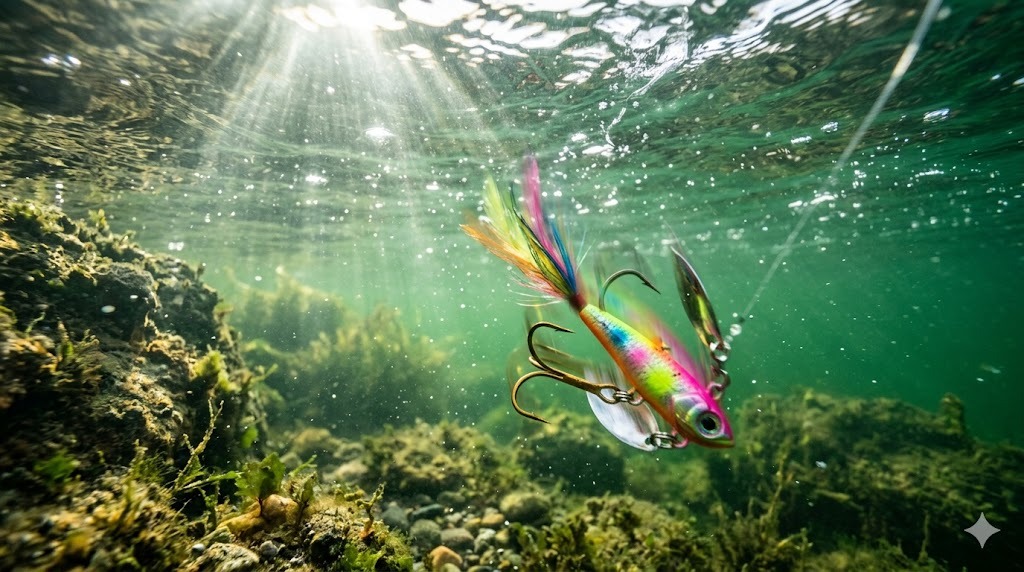
False albacore are overwhelmingly an artificial-lure and fly fishery, and the name of the game is matching the small bait they are eating and retrieving fast. Epoxy jigs and small heavy metals are the classic albie lures: compact, dense, baitfish-profile lures (epoxy jigs, small diamond and Deadly Dick style metals, slim casting spoons, and small soft-plastic jerkbaits on light jigheads) that cast a mile and imitate anchovies and silversides. The key is to match the hatch in size and profile - when albies are keyed on tiny rainfish, you often need a small, slim lure - and to retrieve it fast and steady, because albies chase down fleeing bait and a slow lure gets ignored. Fly anglers throw small white-and-chartreuse or olive baitfish patterns - epoxy minnows, Clousers, and anchovy imitations - again matching the small bait. Live bait is rarely used; this is a sight-casting fishery built around small metals, epoxy jigs, and flies fished fast. The reliable producer is a slim, baitfish-sized lure that matches what they are eating, cast to the feed and burned back.
Techniques - How to Fish for It
Albie fishing is fast, visual, run-and-gun sight-casting. Run and scan for working birds, busting fish, and bait until you find a feeding school, then approach carefully - position the boat upwind or up-current of the activity and cast to the edges, never running through the middle and scattering the fish. Make a long, accurate cast into or just ahead of the feed, let a metal or epoxy jig sink briefly if the fish are down, then retrieve fast and steady - albies want to chase a fleeing baitfish, and a quick, unbroken retrieve draws the violent strike. When the fish eats, hang on: the first run is searing, so let the smooth drag do its work and do not clamp down or you will break off. Keep the rod up, let the fish run, and fight it firmly but patiently through its hard, circling runs. Match the hatch closely when they are selective, downsizing to a slim lure that mirrors the tiny bait. Because schools move and sound quickly, work fast and stay ready to chase the next showing. From shore, time your casts to the moments fish push bait into range at an inlet or jetty. Speed of the retrieve, accuracy of the cast, and a smooth drag on the run are the whole technique.
Common Mistakes
The classic mistake is running the boat right into the feeding school, which scatters the fish and shuts down the blitz - approach the edges quietly and cast in, rather than plowing through the middle. Retrieving too slowly is another big error; albies chase fast-fleeing bait, and a lure crawled back gets refused, so burn it. Fishing too heavy a leader in clear fall water badly cuts your bites - albies are leader-shy, and going to lighter fluorocarbon often turns a slow day around. A sticky or poorly set drag is a fish-loser: the first run is so fast and hard that a drag that does not give smoothly pops the line or pulls the hook, so set it correctly and keep it smooth. Throwing a lure that is too big when the fish are keyed on tiny rainfish leaves you watching fish ignore your offering. And chasing every distant blitz frantically without ever getting set up for a good cast wastes the chances you do get - it pays to position and cast well rather than just race around.
Size, Records & Eating Quality
A typical false albacore runs about 5 to 12 pounds and a couple feet long, with good fish in the low double digits and trophies pushing the high teens; they are not huge, but they fight like fish twice their size. The IGFA all-tackle world record is a 36-pound little tunny caught off Washington Canyon, New Jersey, in 2006, an exceptional fish far above the usual run. On the table, false albacore are poor to fair at best and are generally not considered good eating - the flesh is dark red, bloody, and strong-flavored, very different from the pale, mild meat of true tunas like albacore or yellowfin, and most anglers release them rather than keep them. Some people do eat them by bleeding the fish immediately, icing it hard, and using the meat fresh for the strong flavor or as cut bait for other species, but the great majority of albie fishing is catch-and-release sport. They are not a regulated panic the way some species are, but because they are valued almost entirely as a sportfish, careful catch-and-release - quick fights, wet hands, minimal air time, and a prompt revive - is the norm and is strongly encouraged to keep these fast fighters swimming.
Pros & Cons (as a target species)
Pros: Explosive, drag-screaming light-tackle fighter with one of the best first runs of any inshore fish; thrilling, visual sight-fishing to busting schools and blitzes; superb fly-rod and light-spin target; abundant and accessible during the fall run, often within reach of small boats and even the surf; a pure sportfishing experience that rewards casting and stalking skill. Cons: Poor table fare - dark, bloody, strong meat, so essentially a catch-and-release fish; can be maddeningly selective and leader-shy, demanding light fluoro and small lures; fast-moving, unpredictable schools make for a run-and-gun chase that can be feast or famine; largely a fall-only fishery in many areas; the hard, fast runs are tough on light tackle and demand a flawless drag and good knots.
Best Suited For
False albacore are best suited to light-tackle and fly anglers who fish for the fight and the chase rather than the cooler, and who love fast, visual sight-fishing to feeding fish. They are a favorite of fall-run enthusiasts, fly fishermen, and run-and-gun light-spin anglers who relish spotting a blitz, making the cast, and hanging on through a sizzling run. Because they can be selective and the fishing is mobile and fast, they reward good casting, the right light leader and lure, and a willingness to chase the action - but a beginner with a smooth-drag spinning reel and a box of small metals can absolutely get into them during a hot fall blitz and will not soon forget the first run. In short, the false albacore is a sportsman's fish: a small, blazing-fast, beautifully marked speedster that is all about the thrill of the take and the run, made for anglers who release their fish and live for the fall.
FAQ
Is false albacore good to eat? Not really - the meat is dark, bloody, and strong-flavored, very different from true tuna, and most anglers release them. Some eat them if bled and iced immediately or use them as cut bait, but albies are valued as a sportfish, not table fare.
Is a false albacore a real tuna? It is in the tuna and mackerel family and looks like a small tuna, but it is not one of the prized eating tunas like albacore or yellowfin. The names "little tunny" and "false albacore" reflect that it resembles a tuna but eats nothing like one.
What is the best lure for false albacore? Small, dense, baitfish-profile lures - epoxy jigs and small metals like diamond jigs and Deadly Dick style spoons - retrieved fast, plus small baitfish flies for fly anglers. Match the size of the tiny bait they are eating.
Why won't the albies eat my lure? They are often keyed on tiny bait and are leader-shy in clear water. Downsize to a slimmer lure that matches the bait, lighten your fluorocarbon leader, and retrieve faster - albies chase fleeing baitfish.
When is the best time to catch false albacore? The fall run is prime, roughly September into November, when bait migrates and albies blitz - the Cape Lookout, North Carolina, and Northeast runs are famous. Calm, clear mornings make spotting the surface feeds much easier.