Great Barracuda
The great barracuda is the silver torpedo of warm coastal seas - a sleek, toothy, lightning-fast ambush predator that strikes a lure or bait with shocking violence and often greets the hookup with spectacular, cartwheeling jumps.
🗓️ Last reviewed: June 2026
Overview
The great barracuda is the silver torpedo of warm coastal seas - a sleek, toothy, lightning-fast ambush predator that strikes a lure or bait with shocking violence and often greets the hookup with spectacular, cartwheeling jumps. Long underrated and even dismissed as a nuisance by anglers chasing other species, the "cuda" has earned a devoted following among light-tackle and flats fishermen who appreciate its blistering speed, savage strikes, and acrobatic fights. They are everywhere in the tropics and subtropics, from shallow flats and reefs to wrecks and the open blue, and they are willing, aggressive, and accessible. Their menacing, gap-toothed appearance and habit of curiously shadowing divers and boats only add to their mystique. As a hard-pulling, easy-to-find, line-stripping gamefish, the great barracuda is one of the most underrated sport fish in saltwater.
Identification & Appearance
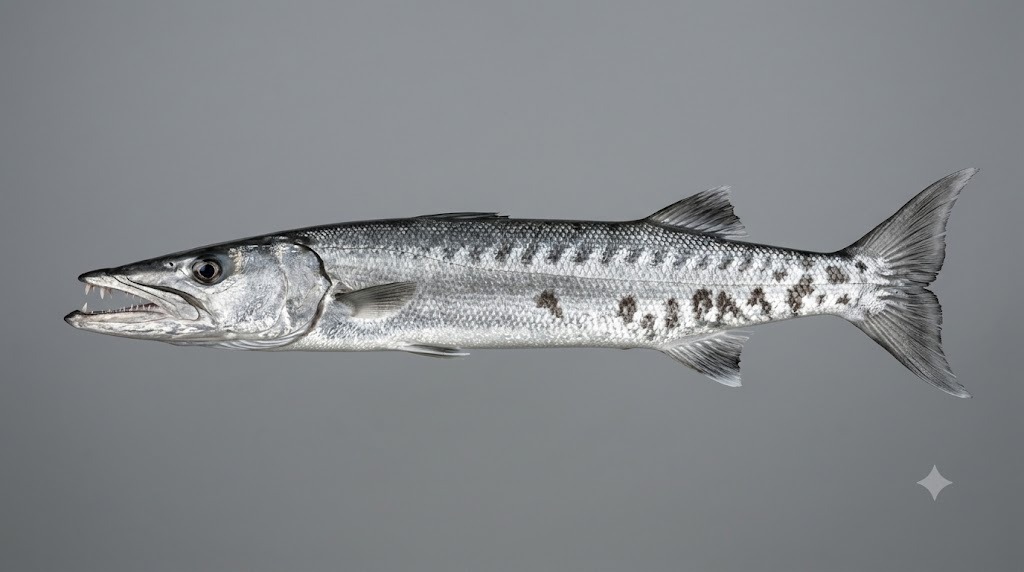
Great barracuda are unmistakable: long, slender, and torpedo-shaped, with a pointed head, a large jutting lower jaw, and a mouth full of formidable, dagger-like teeth designed for slashing prey in half. The body is silvery, with a darker greenish or bluish-gray back, a white belly, and a scattering of irregular dark blotches or spots usually concentrated on the rear half of the lower flanks - a useful field mark. The two well-separated dorsal fins, the deeply forked tail, and the sleek profile broadcast the fish's speed. Their eyes are large and predatory, and their entire build is engineered for explosive bursts of acceleration. Young barracuda are more strongly marked and often hang around mangroves and shallows, while large adults become heavy-bodied, chrome-flanked hunters. The combination of the long silver body, the spotted lower rear flanks, and the mouthful of teeth makes them easy to identify at a glance.
Range & Habitat (US waters - inshore / offshore)
Great barracuda inhabit warm tropical and subtropical seas worldwide. In US waters they are most abundant in South Florida, the Florida Keys, and throughout the Gulf of Mexico, ranging up both the Atlantic coast (as far north as the Carolinas as summer strays) and along the Gulf coast wherever water stays warm.
Barracuda are habitat generalists found from skinny inshore water to the open ocean. Inshore, they patrol shallow grass and sand flats, channel edges, mangrove shorelines, harbors, and around docks and bridges, where they hover almost motionless before exploding on prey. Around reefs and wrecks they are abundant, often hanging over or beside the structure. Offshore, they roam weed lines, floating debris, and the open blue, and they frequently follow boats, divers, and hooked fish out of sheer aggression and curiosity. They favor clear, warm water and good visibility, which suits their sight-based, ambush hunting style. From a kayak on a flat to a boat over a reef, barracuda are within reach of almost any warm-water angler.
Behavior & Feeding
Great barracuda are visual ambush predators of extraordinary speed. A barracuda typically hovers nearly motionless in the water, eyeing its surroundings, then accelerates in a sudden, devastating burst to slash at prey with its razor teeth, often cutting a baitfish clean in half and returning to eat the pieces. They feed mostly on fish - needlefish, mullet, jacks, small reef fish, and almost anything of the right size - and they hunt overwhelmingly by sight, which is why clear water and a fast-moving lure are so effective. They are intensely curious and aggressive, frequently shadowing larger hooked fish, lures, and even snorkelers, and they will charge a lure from a long distance once their interest is triggered. Barracuda are also famous for being lure-shy at times, following a bait right to the boat without committing, which makes a fast, erratic retrieve crucial to provoke the reaction strike. When they do commit, the strike is instantaneous and the ensuing run and jumps are explosive.
Best Seasons & Times to Catch
Across South Florida, the Keys, and the warm Gulf, great barracuda can be caught year-round, but their inshore and flats fishing peaks in the cooler months. In winter and early spring, big barracuda move onto the shallow flats to sun themselves and ambush bait, providing the famous sight-fishing for trophy "cudas" that Keys anglers prize, when the water over deeper reefs cools and pushes fish shallow. In the warmer months they are abundant around reefs, wrecks, and structure and remain aggressive throughout. They are most active in clear water and good light, since they are sight hunters, so bright, calm days are ideal for spotting and casting to flats fish. Within a day they will feed at any time, but clear visibility for both fish and angler makes midday flats sight-fishing surprisingly productive. As a rule, fish clear warm water with good light, and in winter look to the flats for the biggest fish.
Where to Find Them - Reading the Water
Barracuda relate to structure, edges, and bait in clear water. On the flats, scan for a long, dark, motionless "log" hovering over sand or grass - a basking barracuda is often hiding in plain sight, and learning to spot them is the key to flats fishing. Channel edges, the down-current side of flats, mangrove points, dock and bridge shadows, and the lanes between coral heads all hold fish. Over reefs and wrecks, look for them suspended over or beside the structure, often the most obvious silver shapes present. Offshore, check weed lines, floating debris, and any flotsam that gathers bait, and watch for barracuda trailing other hooked fish to the boat. Nervous bait, fleeing needlefish, and the sudden disappearance of baitfish from an area can all betray a lurking cuda. Because they hunt by sight in clear water, polarized glasses and a careful, quiet approach to spot fish before they spot you are invaluable on the flats.
Tackle & Rigs
Barracuda are not leader-shy in the way some fish are, but their teeth demand a bite-proof leader, so terminal tackle is the critical consideration. For flats and inshore fishing, a 7- to 7.5-foot medium to medium-heavy spinning rod with a 3000-5000 reel, 15-30 lb braid, and a long fluorocarbon shock leader is the base setup. The non-negotiable addition is a bite tippet of single-strand or multi-strand wire (or very heavy 60-100 lb fluorocarbon for fish that refuse wire) between the leader and the lure - without it, a barracuda simply slices off and swims away.
For tube lures and plugs, a foot or so of light single-strand wire (often number 3-5) twisted or crimped to the lure prevents cutoffs while keeping the action lively. For live bait, a similar wire leader to a single hook is standard. Around reefs and wrecks for bigger fish, scale up the rod, reel, braid (30-50 lb), and wire accordingly. Strong split rings and sharp hooks matter, as barracuda are violent strikers and acrobatic fighters that test every connection.
Best Baits & Lures
The single most iconic and effective barracuda lure is the tube lure - a long, brightly colored length of surgical tubing rigged with hooks and a wire leader, retrieved as fast as humanly possible across a flat. The frantic, fleeing action of a speeding tube is irresistible and triggers explosive reaction strikes from even reluctant fish. Beyond tubes, fast-worked plugs and topwaters, large flashy spoons, swimbaits, and big streamer flies all take barracuda, and the universal rule is speed - the faster and more erratic the retrieve, the better.
For bait, live fish are deadly: live needlefish, mullet, blue runners, pinfish, and small jacks fished on a wire leader will draw fierce strikes, free-lined or under a float around structure. Cut bait works around reefs and bridges as well. Whatever the offering, a wire bite leader is essential, and matching the long, slim profile of the barracuda's natural prey - needlefish and the like - is a reliable approach. Bright fluorescent colors on tubes (chartreuse, orange, pink) are flats favorites, while natural baitfish patterns shine in clearer, deeper water.
Techniques - How to Fish for It
The premier method is sight-fishing the flats. Pole or drift quietly, scanning for a hovering barracuda, then cast a tube lure several feet beyond and ahead of the fish, and retrieve it past the cuda as fast as you possibly can - the goal is to make it look like a panicked, fleeing baitfish. A barracuda will often track the lure briefly, then accelerate and crush it, frequently launching into a series of spectacular jumps on the hookup. Keep the rod tip working and the retrieve relentless; slowing down usually kills the strike. When a fish follows without eating, speed up even more or change the angle on the next cast. Over reefs and wrecks, cast or troll plugs and tubes near the structure, or free-line a live bait. When the strike comes, expect an immediate blistering run and aerial display, so keep the drag smooth and be ready to bow to jumping fish. Land them carefully - the teeth are dangerous - and use long pliers and a controlled grip to remove hooks, never putting fingers near that mouth.
Common Mistakes
The most catastrophic mistake is fishing without a wire (or extremely heavy) bite leader - a barracuda will slice through ordinary mono or fluorocarbon instantly and be gone with your lure. Retrieving too slowly is the next-biggest error; barracuda want speed, and a sluggish presentation gets followed but not eaten. Many anglers fail to spot the fish on the flats, casting blindly when learning to recognize that motionless silver log would put far more fish in range. Casting directly on top of a flats cuda, rather than leading it, spooks the fish. People also mishandle landed barracuda and risk serious bites - the teeth are razor sharp and the fish thrash violently, so casual handling is dangerous. Finally, anglers sometimes give up on a following fish too soon; a change of speed or angle often converts a curious follower into a savage striker.
Size, Records & Eating Quality
Great barracuda commonly run 2-4 feet and a few pounds up to the teens, with big flats and reef fish reaching 4-5 feet and 30-40 pounds, and the largest exceeding 50. The IGFA all-tackle world record is a 102-pound, 8-ounce great barracuda caught off Christmas Island (Kiribati) in 2013. On the table, great barracuda are eaten in some places and have firm, white meat, but they carry a significant and well-documented risk of ciguatera poisoning, a serious toxin that accumulates in larger reef predators and cannot be removed by cooking. For this reason, larger barracuda in particular are widely considered unsafe to eat and most anglers release them, especially big fish from reef areas. Smaller barracuda from certain regions are sometimes consumed, but anglers should heed strong local ciguatera advisories and, when in doubt, release the fish. Always check current local regulations and health advisories.
Pros & Cons (as a target species)
Pros: Blistering speed and savage, instantaneous strikes; spectacular aerial fights with cartwheeling jumps; abundant, widespread, and easy to find in warm clear water; accessible from flats, reefs, wrecks, bridges, and the open ocean; aggressive and willing, especially to a fast tube lure; a thrilling and underrated light-tackle sport fish. Cons: Serious ciguatera risk makes larger fish unsafe to eat - largely a catch-and-release species; dangerous teeth require a wire leader and very careful handling; can be frustratingly lure-shy, following without committing; their habit of cutting off hooked fish and stealing baits annoys anglers targeting other species; sight-fishing depends on clear water and good light.
Best Suited For
Great barracuda are ideal for light-tackle and flats anglers who crave fast, visual, explosive fishing and value the fight over the fillet. They are an outstanding sight-fishing target - spotting a hovering cuda and burning a tube lure past it is one of the most exciting moments in shallow-water fishing - and their abundance makes them reliable when other species are scarce. They are accessible enough for adventurous beginners fishing with a guide or experienced friend, though the wire leaders and the very real danger of their teeth mean handling should be taken seriously. In short, the barracuda is a perfect choice for anyone who wants screaming runs, big jumps, and savage strikes from a fish that is easy to find and willing to play, as long as you respect the teeth and skip the dinner plate on big reef fish.
FAQ
Can you eat great barracuda? It is risky - great barracuda, especially larger reef fish, frequently carry ciguatera toxin, which is dangerous and cannot be cooked out. Most anglers release them, and you should heed local advisories.
Do I need a wire leader for barracuda? Yes. Their teeth will instantly slice ordinary mono or fluorocarbon, so a single- or multi-strand wire bite leader (or very heavy fluoro for picky fish) is essential.
What is the best lure for barracuda? The classic tube lure - a long piece of bright surgical tubing - retrieved as fast as possible is the most iconic and effective. Fast plugs, spoons, and live needlefish also work well.
Why does a barracuda follow my lure but not bite? Barracuda can be lure-shy and often track a bait to inspect it. Speeding up the retrieve or changing the angle frequently triggers the reaction strike.
Are barracuda dangerous to anglers? Their teeth are razor sharp and they thrash violently, so they can cause serious injury at the boat. Use long pliers, keep fingers well away from the mouth, and handle them with care.