Hogfish
The hogfish is one of the most sought-after reef fish in the Southeast and the Caribbean - not for its fight, but for its table quality, which many anglers rank at the very top of all saltwater fish.
🗓️ Last reviewed: July 2026
Overview
The hogfish is one of the most sought-after reef fish in the Southeast and the Caribbean - not for its fight, but for its table quality, which many anglers rank at the very top of all saltwater fish. A member of the wrasse family, the hogfish earns its name from a long, pig-like snout that it uses to root through sand and rubble for crabs, mollusks, and other crustaceans. This rooting habit makes it a tricky target on hook and line, because a hogfish would rather crush a crab off the bottom than chase a bait. As a result, many are taken by spearfishers, while rod-and-reel anglers succeed with live shrimp on light tackle presented naturally near reefs and wrecks. Strict regulations protect this prized fish, so know the rules before you target it.
Identification & Appearance
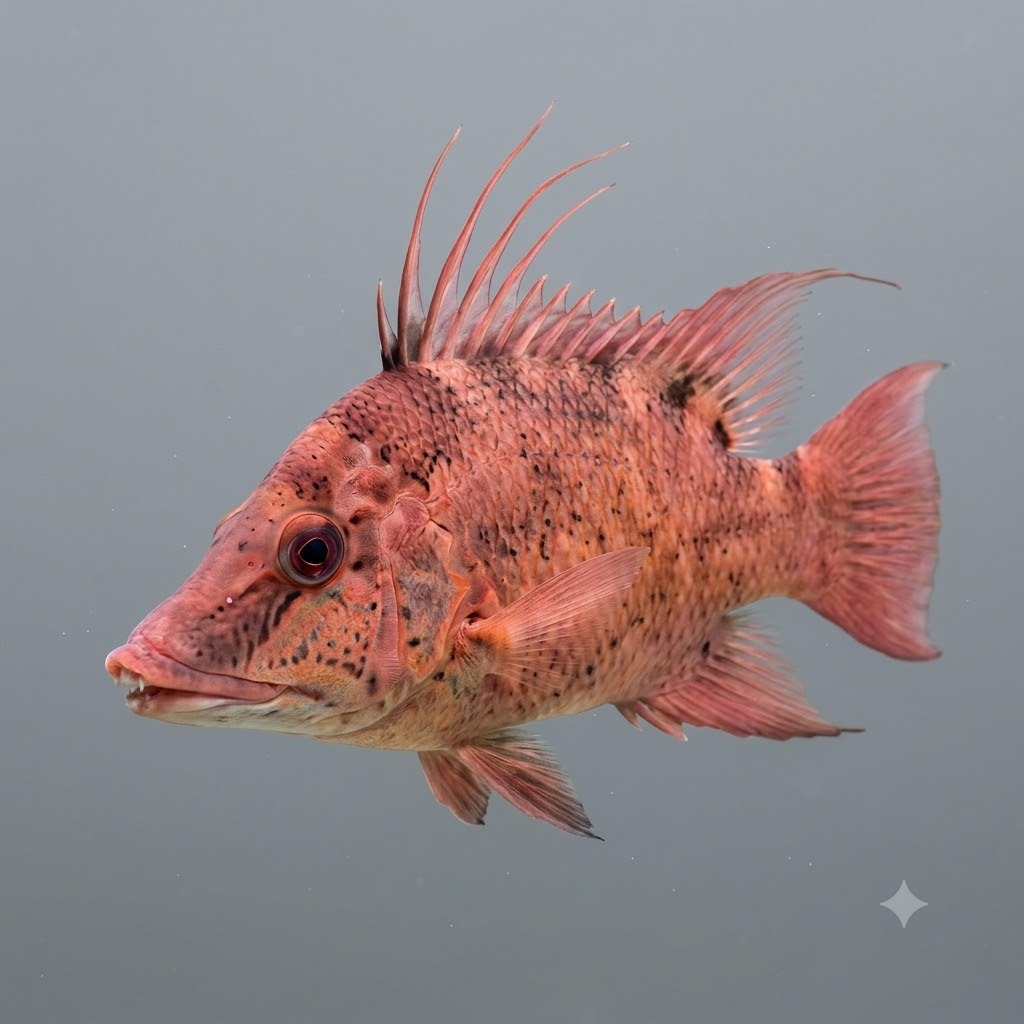
Hogfish are unmistakable once you know them. They have a deep, laterally compressed body and, most distinctively, a long, tapering, pig-like snout with a protrusible mouth built for rooting in the bottom. Color is remarkably variable and shifts with mood, size, and surroundings - from pale pinkish-white and mottled to deep reddish-brown and rosy. Larger males develop a striking dark blotch behind the head and along the back, a bold black patch across the eye region, and long, trailing tips on the dorsal fin. Like other wrasses, hogfish can change sex, and the biggest fish are typically males. Their eyes sit high on the head, and the overall look - especially that snout and those elegant fin filaments - makes a big hogfish one of the most handsome fish on the reef.
Range & Habitat (US waters - inshore / offshore)
In US waters, hogfish are found from the Carolinas south around Florida and throughout the Gulf of Mexico, with the greatest abundance in Florida - especially the Keys, the Gulf reefs, and the southeast Atlantic coast. They favor warm, clear subtropical water.
Hogfish are a reef and hard-bottom species. They live over coral reefs, rocky ledges, limestone bottom, rubble fields, and wrecks, usually in depths from around 20 to over 100 feet, though they can be found shallower and deeper. They relate tightly to structure that holds the crustaceans and mollusks they eat, and they often patrol sand patches and rubble adjacent to reef edges where they can root for prey. Clean, clear water over hard bottom is the classic hogfish setting.
Behavior & Feeding
Hogfish feed almost entirely on hard-shelled invertebrates - crabs, shrimp, small mollusks, sea urchins, and other crustaceans - which they root out of sand and rubble with that specialized snout and crush with strong teeth. They are diggers and grubbers, not open-water chasers, so their feeding is a slow, deliberate rooting behavior along the bottom. This is exactly why they are hard to hook: a hogfish is looking down at the sand, not up at a swimming bait. They tend to be wary and can be spooked by heavy tackle, boat noise, and unnatural presentations. Feeding is most active in daylight, and a natural bait crawling along the bottom near the reef edge is far more tempting to a hogfish than anything suspended in the water column.
Best Seasons & Times to Catch
Hogfish can be caught year-round in warm Florida waters, but seasons for harvest are set by regulation and vary by region, so the legal season is often the limiting factor rather than the fish's availability. Where and when harvest is open, cooler months can concentrate fish on certain reefs, and calm, clear-water days make for the best sight-conditions and presentations. Daytime is the time to target them, since they are visual bottom feeders that root during daylight. Light current that keeps a natural bait moving gently along the bottom often helps. Above all, check the current open season, as hogfish are tightly managed and closed periods are common.
Where to Find Them - Reading the Water
Find the right bottom and you find hogfish. Target coral reefs, rocky ledges, limestone hard bottom, rubble fields, and wrecks in clear water. The best spots often combine reef structure with adjacent sand or rubble patches, because that is where hogfish root for crabs and mollusks. Look for the transition edges where a reef or ledge meets open sand. A good sounder that marks hard, broken bottom is essential, and divers and spearfishers key on these same features. In clear water, hogfish can sometimes be spotted rooting near the bottom. Work the up-current side of structure so a natural bait drifts naturally into the zone where hogfish are grubbing.
Tackle & Rigs
Because hogfish are wary and often in clear water, light tackle wins. A medium-light spinning outfit with a sensitive tip works well, spooled with 10-20 lb braid and a length of fluorocarbon leader in the 15-25 lb range to stay stealthy over the reef. The clearer the water and warier the fish, the lighter and longer the leader should be.
A simple knocker rig or a light Carolina-style rig excels: a small egg sinker sliding to the hook (or a light sliding sinker above a swivel) keeps a live shrimp crawling along the bottom naturally. Use a small, strong hook - a modest circle hook is a good choice for a clean hookup and easier release of undersized fish. Just enough weight to hold near the bottom in the current is ideal; too much weight kills the natural presentation these fish demand.
Best Baits & Lures
Live shrimp is the classic and most effective hogfish bait - a lively shrimp crawling on the bottom near the reef is hard for a rooting hogfish to resist. Small live or fresh crabs and pieces of shrimp also work, matching the crustacean diet these fish are wired to eat. Fresh, natural bait fished right on the bottom is the whole game.
Artificial lures are rarely effective for hogfish because these are rooting bottom feeders, not chasers. This is a big reason so many hogfish are taken by spearfishers rather than on lures. If you fish bait, keep it fresh and natural, present it on the bottom, and let it move slowly and naturally with the current. Scent, softness, and a bottom-hugging presentation matter far more than flash.
Techniques - How to Fish for It
The key technique is a natural, bottom-crawling presentation on light tackle. Anchor or hold position up-current of reef and sand-patch structure, then send a live shrimp on a light knocker rig down to the bottom. Let it settle and crawl naturally with the current into the zone where hogfish are rooting. Keep the line lightly tensioned so you feel the subtle pickup - a hogfish bite can be soft. When you feel weight, make a smooth, firm lift rather than a violent yank, letting a circle hook find the corner of the mouth. Patience and stealth are everything; heavy tackle and crashing presentations spook these fish. Because they are hard to catch on hook and line, many divers turn to spearfishing to target them selectively where that method is legal.
Common Mistakes
The biggest mistake is fishing too heavy - thick leaders, big hooks, and heavy sinkers all spook wary hogfish and prevent the natural bottom presentation they require. Another is suspending the bait off the bottom; hogfish feed down in the sand and rubble, so a bait hanging in the water column is largely ignored. Setting the hook too hard and too fast pulls the bait away before the fish commits. Anglers also fish the wrong bottom - open sand or soft mud instead of reef and rubble edges - and never see a hogfish. And critically, many overlook the strict regulations: keeping undersized or out-of-season hogfish is a serious and common error, so always confirm the rules first.
Size, Records & Eating Quality
Hogfish range from small "keeper" fish up to impressive specimens; a good rod-and-reel hogfish is a couple of pounds, while big males can reach the mid-single digits and larger. The biggest fish are old males and are prized trophies. On the table, hogfish are legendary - the white, delicate, slightly sweet fillets are considered by many to be among the finest eating of any saltwater fish, superb whether pan-seared, grilled, or fried. This exceptional quality is exactly why hogfish are so heavily targeted and, in turn, so carefully regulated. Because reef-fish regulations vary by region and change over time, always check current size limits, bag limits, and open seasons before keeping any hogfish.
Pros & Cons (as a target species)
Pros: Among the very best eating of all saltwater fish; a beautiful, distinctive trophy; found on accessible reefs and wrecks in clear water; targetable on light tackle with simple live shrimp; also a prime spearfishing species. Cons: Notoriously hard to catch on hook and line because they are bottom-rooters, not chasers; wary and easily spooked by heavy tackle; strict, region-specific regulations with closed seasons; require reef and hard-bottom access, often meaning a boat and clear water.
Best Suited For
Hogfish suit the patient, detail-oriented angler who enjoys light-tackle finesse and a natural bottom presentation over reefs, as well as spearfishers who can target them selectively underwater. They are a rewarding species for anyone who values table quality above the fight, since the reward is truly outstanding eating. They are less suited to anglers who want fast, easy action, given how tricky they are to hook. For a careful angler fishing clear reef water with live shrimp, the hogfish is a top-tier prize.
FAQ
Is hogfish good to eat? Yes - hogfish are considered among the very best eating of all saltwater fish, with delicate, sweet, white fillets that shine seared, grilled, or fried.
Why are hogfish so hard to catch on a hook? Hogfish are bottom-rooters that feed by digging crabs and mollusks out of the sand with their pig-like snout, so they rarely chase baits. This is why many are taken by spearfishing instead.
What's the best bait for hogfish? Live shrimp fished right on the bottom near reef and rubble is the classic and most effective hogfish bait, matching their crustacean diet.
Do I need a boat to catch hogfish? Usually yes. Hogfish live over reefs, ledges, and wrecks, generally reached by boat, and they are also targeted by divers and spearfishers on these same structures.
Are there special rules for keeping hogfish? Yes - hogfish are strictly regulated, and size limits, bag limits, and seasons vary by region and change over time. Always check the current local rules before keeping any hogfish.