Lane Snapper
The lane snapper is the friendly, colorful little cousin in the snapper family - a small, beautiful, easy-to-catch reef and inshore fish that delivers steady action and fine eating without heavy tackle or a long offshore run.
🗓️ Last reviewed: July 2026
Overview
The lane snapper is the friendly, colorful little cousin in the snapper family - a small, beautiful, easy-to-catch reef and inshore fish that delivers steady action and fine eating without heavy tackle or a long offshore run. Dressed in pink and yellow stripes with a signature dark side spot, it is a favorite of anglers who want a fun, reliable bite on light gear, and a superb species for kids and newcomers cutting their teeth on saltwater. They gather in numbers around structure, hit small baits eagerly, and rarely require finesse. Add clean, sweet white fillets and you have a species that punches well above its modest size on both the reel and the plate.
Identification & Appearance
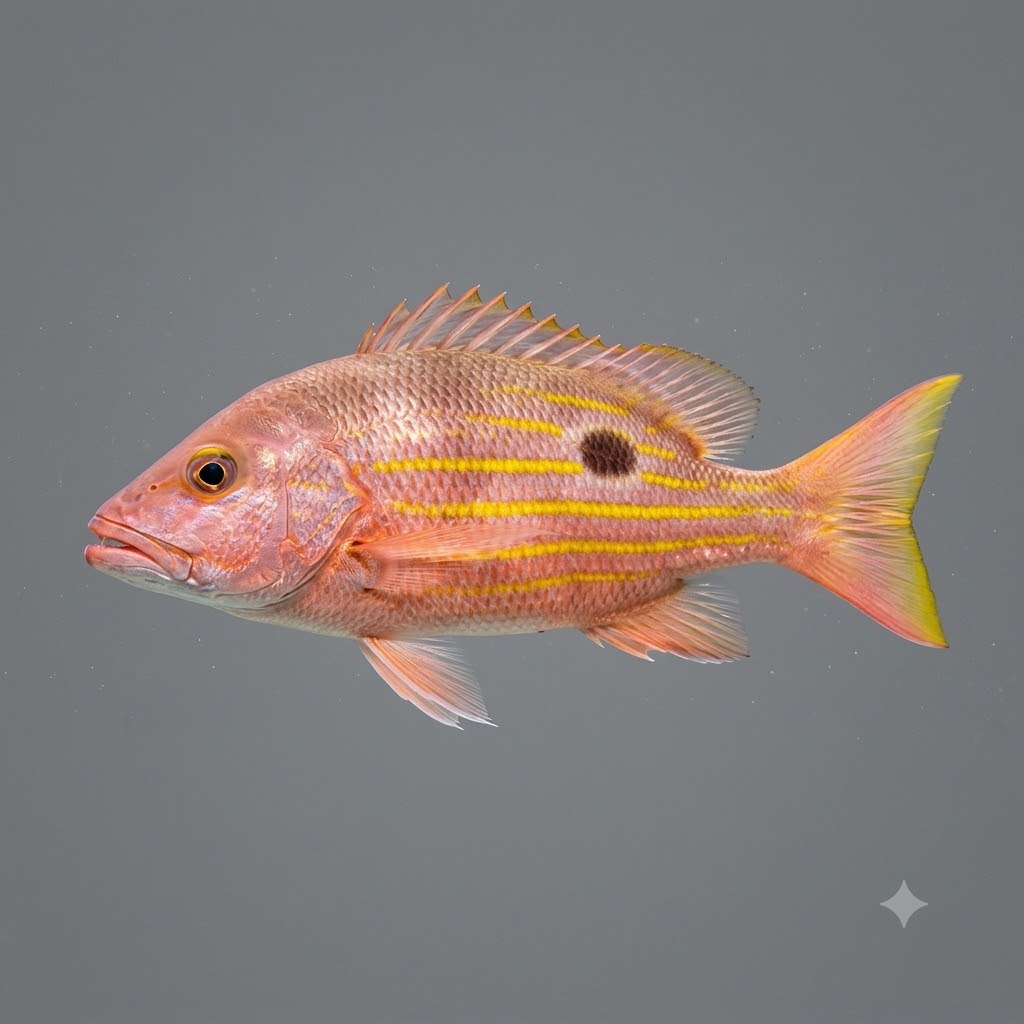
Lane snapper are among the most striking of the small snappers. The body is rosy to silvery-pink with horizontal yellow and pinkish stripes running along the flanks, and the fins often carry yellow tones. The clearest field mark is a diffuse dark spot high on the back near the lateral line, usually below the soft dorsal fin. Like other snappers they have the classic sloping profile and canine teeth, but they stay small. Their colors are most vivid fresh from the water and fade after handling. That combination of pink body, yellow stripes, and side spot makes the lane snapper easy to tell apart from its larger relatives.
Range & Habitat (US waters - inshore / offshore)
Lane snapper are found from the Carolinas south around Florida and throughout the Gulf of Mexico, most abundantly in South Florida, the Keys, and the warm waters of the eastern and southern Gulf. They are a warm-water species tied to structure and hard bottom.
They are flexible about depth. Inshore and nearshore, lane snapper hold around patch reefs, grass beds, hard bottom, channel edges, docks, jetties, and rubble in relatively shallow water, accessible to small boats and even shore anglers in the right spots. Offshore they inhabit coral reefs, ledges, and artificial reefs in deeper water, while juveniles favor shallow seagrass and inshore hard bottom. Because they use such a wide range of structure at modest depths, lane snapper are one of the more reachable reef species for casual anglers.
Behavior & Feeding
Lane snapper are active, opportunistic feeders that hunt near the bottom around structure. They eat small crustaceans, shrimp, small baitfish, worms, and other invertebrates, picking food off and just above hard bottom and reef. They often school in loose aggregations, and where you catch one you can usually catch several, since they compete to feed. They are generally not shy - a small, natural bait near the bottom draws quick, confident takes. Feeding picks up on moving current and low light. Their willingness to eat readily is a big part of why they are so beginner-friendly.
Best Seasons & Times to Catch
Lane snapper bite through much of the year in their warm range, with the warmer months typically most productive. As with all reef fish, a good moving tide or current matters more than the calendar on a given day - fish the stronger stages and the changes for the best action. Early morning and evening low light bring more aggressive feeding, and night fishing around lit structure can be excellent. Because they are relatively shallow and abundant, lane snapper offer dependable action even when larger, fussier reef fish are tough. Check local regulations for seasonal rules and size limits before keeping fish.
Where to Find Them - Reading the Water
Look for structure and hard bottom in modest depths. Patch reefs, rock piles, ledges, artificial reefs, rubble, dock pilings, jetty rock, and channel and grass-bed edges all hold lane snapper. Use a bottom machine to spot fish stacked over structure, or simply target visible hard-bottom features and drop small baits. Current sweeping past a piece of structure concentrates fish on its up-current edge. Because they school, once you catch one, hold position and keep working that spot. Areas with a mix of hard bottom and nearby grass are especially productive, offering both cover and feeding grounds.
Tackle & Rigs
Light tackle is the whole appeal here. A 7-foot light or medium spinning rod with a 2500-4000 size reel is plenty, spooled with 10-20 lb braid and a 15-25 lb fluorocarbon leader. Because the fish are small and often not leader-shy in current, you can keep everything modest and still land plenty.
Simple bottom rigs shine. A basic knocker rig or light Carolina rig with a 1/2 to 2 oz sinker (sized to hold in the current) and a small hook does the job. Two-hook chicken rigs also work well and can produce doubles. Use hooks in the 1/0 to 3/0 range - small enough for their modest mouths but strong enough to hold. A jighead with a small soft plastic or tipped with shrimp is another easy, effective option.
Best Baits & Lures
Lane snapper are not picky. Live or fresh shrimp is the classic go-to and hard to beat - a piece on a small hook near the bottom draws fast bites. Small cut baits such as squid strips, cut sardine, or bits of fish also produce steadily and stay on the hook well. Small live baitfish work when you want to select for slightly bigger fish.
For artificials, small jigs and soft plastics bounced along the bottom around structure will take lane snapper, especially tipped with a bit of shrimp for scent. But you rarely need anything fancy - a chunk of shrimp on a light rig is often the most effective bait in the box.
Techniques - How to Fish for It
The technique is refreshingly simple. Drop a small baited rig to the bottom near structure, keep contact with the sinker, and wait for the tap. Lane snapper often bite quickly and repeatedly, so stay alert and lift into the fish with a smooth motion rather than a violent swing. If you feel small pecks, give it a second and then come tight. Because they school, hold position over productive structure and rebait fast to keep the bite going. In current, let the bait settle on the up-current side and drift naturally toward the fish. Light drag and a soft rod tip help you feel the bite and land these scrappy fish without pulling hooks - a forgiving, hands-on style perfect for teaching new anglers.
Common Mistakes
The most common mistake is over-gunning the fish - heavy rods and thick leaders reduce bites and take the fun out of a light-tackle species. Hooks too large for their modest mouths cause missed strikes; downsize and you hook far more fish. Anglers also swing too hard on the small taps, pulling the bait away or tearing the hook loose - a smooth lift works better. Moving off a spot too soon is another error, since these fish school and the action often builds if you stay put. Finally, failing to check size and bag regulations can turn a fun day into a violation; know the local rules.
Size, Records & Eating Quality
Lane snapper are a small snapper, most commonly caught from about 8 to 14 inches and under a couple of pounds, with larger individuals reaching a few pounds. Their modest size is part of their charm as a light-tackle and beginner target. On the table they are excellent - clean, sweet, mild white meat that pan-fries beautifully whole or as small fillets, well regarded despite the fish's small size. Because even small snappers face harvest pressure, many regions apply minimum size and bag limits. Always check current state and federal regulations, since limits vary by area and change over time.
Pros & Cons (as a target species)
Pros: Easy to catch and beginner-friendly; colorful and pretty; accessible on light tackle in shallow, reachable structure; school up for steady action; fine, sweet table fare. Cons: Small size means modest fights and small fillets; still subject to size and bag limits; best action is tied to structure and current; not a trophy species for anglers seeking big fish.
Best Suited For
Lane snapper are ideal for beginners, kids, and families, and for any angler who wants dependable, low-fuss action on light tackle without a long offshore run. They are a perfect species to learn bottom fishing on - forgiving, abundant, colorful, and tasty. Experienced anglers enjoy them too as a fun light-tackle diversion or an easy meal fish. In short, the lane snapper is one of the friendliest introductions to saltwater reef fishing there is.
FAQ
Is lane snapper good to eat? Yes - lane snapper offers clean, sweet, mild white meat that fries and cooks beautifully, and it is well regarded despite the fish's small size.
How do I tell a lane snapper from other snappers? Look for the rosy-pink body with horizontal yellow stripes and a diffuse dark spot high on the side near the lateral line. Its small size and colorful stripes set it apart from larger snappers.
Do I need a boat to catch lane snapper? Not always. While a boat opens up more structure, lane snapper are caught from jetties, docks, piers, and shore around hard bottom and structure in the right areas.
What bait works best for lane snapper? Fresh or live shrimp on a small hook near the bottom is the classic and most effective bait. Small cut squid or fish also work well.
Are there limits on keeping lane snapper? Often yes. Many areas apply minimum size and bag limits to lane snapper, and rules vary and change. Check current state and federal regulations before keeping fish.