Lingcod
The lingcod - the toothy bruiser of the Pacific reefs - is one of the West Coast's most prized bottomfish, an aggressive, ambush-feeding predator with a huge mouth, a long mottled body, and a bad attitude.
🗓️ Last reviewed: June 2026
Overview
The lingcod - the toothy bruiser of the Pacific reefs - is one of the West Coast's most prized bottomfish, an aggressive, ambush-feeding predator with a huge mouth, a long mottled body, and a bad attitude. Lingcod fishing is a hard-bottom, structure-intensive pursuit beloved from Alaska down through British Columbia, Washington, Oregon, and California, practiced over rocky reefs, pinnacles, and offshore banks. They are not a true cod at all but a member of the greenling family, and they hunt by lying in wait among the rocks and exploding on anything that swims past - including rockfish, other lingcod, and the jig or bait you drop down to them. The reward is a brutal short fight from a thick-shouldered fish, a face full of needle teeth, and a slab of clean white fillets that sometimes start out an eerie blue-green and cook up snow white. For anglers who love working heavy gear over rocky structure and never knowing what size monster will inhale the lure, the lingcod is a Pacific bucket-list fish and a true groundfishing prize.
Identification & Appearance
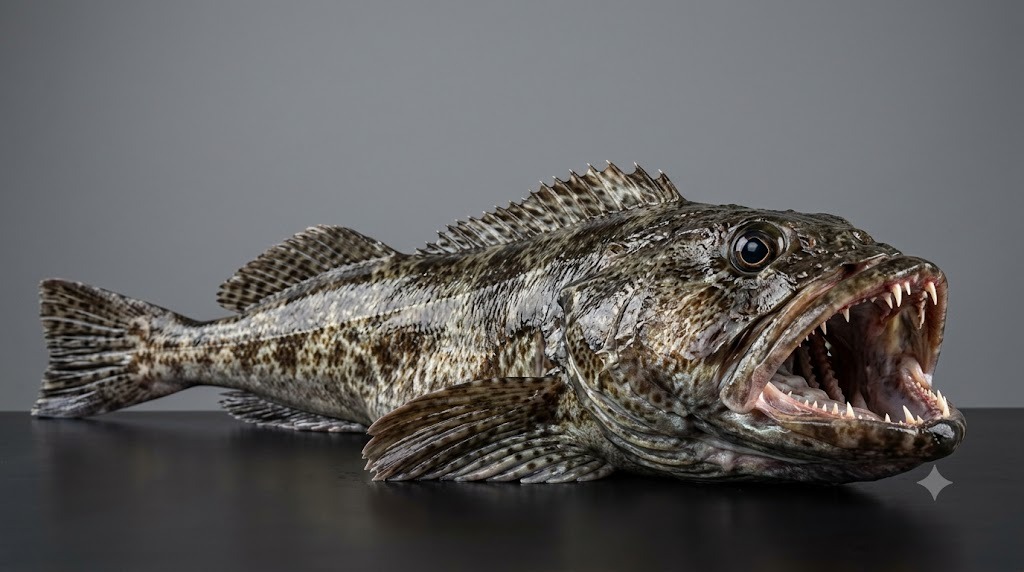
Lingcod are long, stout fish with a large, broad head, an oversized mouth, and an impressive set of sharp, irregular teeth that give them a fearsome, prehistoric look. They are members of the greenling family, and their color is highly variable - mottled and blotched in shades of brown, gray, olive, and tan, sometimes with coppery or rusty tones, and occasionally a striking blue or blue-green cast - all of it serving as camouflage among the rocks and kelp. The body is elongated with a long continuous dorsal fin running most of the back, a large mouth that opens enormously, and big pectoral fins. A distinctive feature is the flesh of some individuals, which can be a vivid blue or teal green when raw; this harmless pigment cooks out and the fillet turns white. The skin is smooth and slimy with small scales, and the head and jaws are large in proportion to the body. The overall impression is of a powerful, big-mouthed ambush predator built to engulf large prey on hard bottom.
Range & Habitat (US waters - inshore / offshore)
Lingcod are an eastern Pacific species, ranging from the Gulf of Alaska and the Aleutians south along the entire West Coast through British Columbia, Washington, Oregon, and California to roughly Baja California, with the heart of the fishery from Alaska and B.C. down through the Pacific Northwest and Northern and Central California. They are an iconic fish of the rocky Pacific coast and a cornerstone of West Coast groundfishing.
Lingcod are strongly structure-dependent. They live on and around hard bottom - rocky reefs, pinnacles, boulder fields, rocky ledges and dropoffs, offshore banks, and high-relief structure of every kind, often in and around kelp and current-swept rock. Inshore and in shallower water, smaller lingcod hold around kelp beds, jetties, rocky shorelines, and nearshore reefs, sometimes shallow enough for shore and kayak anglers. Larger fish tend to hold deeper, on offshore reefs, pinnacles, and banks, frequently in many tens to a few hundred feet of water. They relate tightly to a specific piece of high-relief structure, perch among the rocks, and ambush prey that swims by, rarely straying far from their cover.
Behavior & Feeding
Lingcod are aggressive ambush predators with a huge mouth and a willingness to eat almost anything they can fit it around. They lie in wait among rocks, ledges, and pinnacles, then explode on passing prey with a fast, short strike - their diet is heavy on rockfish, greenling, smaller lingcod, sculpins, squid, octopus, and crustaceans, and a big lingcod will readily eat surprisingly large prey. One of their most famous habits is the "double-header": a lingcod will clamp down on a hooked rockfish you are reeling up and refuse to let go, riding it all the way to the surface in its teeth, where a quick net can land a fish that was never even hooked. They hold extremely tight to structure and do not roam, relating to a specific reef or pinnacle and defending it, and big females in particular guard nests aggressively in winter. Their strike is a hard, committed thump rather than a subtle peck - when a ling decides to eat, it eats - but the challenge is that they live in such snaggy rock that the fight is an immediate tug-of-war to keep the fish from diving back into the structure. They feed by sight and ambush and are most reliably caught when a bait or lure is worked right down in their rocky lair.
Best Seasons & Times to Catch
Lingcod fishing is closely tied to season and to the regulations that govern it, and the prime windows vary by region but generally favor spring through fall when seasons are open and weather allows access to offshore rock. In many areas the fishery opens in spring and runs into fall, with early season often excellent as fish are active and feeding aggressively after the winter. Winter is the lingcod spawning season - males guard egg nests in the rocks and can be very aggressive - but many states close or restrict the fishery in winter to protect spawning fish, so seasons are a primary consideration. Where it is open, late spring and summer typically offer the best combination of active fish, accessible depths, and calm enough seas to fish offshore structure. Within a day, moving water often triggers feeding, and many anglers favor the periods around tide changes when current sweeps the reefs, though enough current to wash a bait through the rocks without making it impossible to hold bottom is the balance you want. Calm conditions that let you hold position over a precise piece of structure are key, as with most hard-bottom fishing. Always check current seasons, depth limits, and area closures before planning a trip, because the lingcod and rockfish fisheries are tightly and variably regulated.
Where to Find Them - Reading the Water
Find the high-relief rock, find the lingcod - the steeper and snaggier, the better. Productive spots are rocky reefs and pinnacles, boulder fields, rocky ledges and dropoffs, offshore banks and high spots, jetties and rocky shorelines, and kelp-edged rock. The very best lingcod spots are pinnacles and reefs that rise sharply off the bottom and concentrate fish, and precise boat positioning over them is everything. A good sounder and accurate boat control - drifting across the structure or holding on it with a spot-lock - separate successful lingcod anglers from the rest, because lings hold so tight that being off the rock by even a little can mean no bites. Look for hard, irregular, high-relief bottom on the sounder, the pinnacles and humps that rise off flatter ground, and the rocky transitions and ledges. From shore and kayak, fish tight to jetty rock, kelp edges, and nearshore reefs. As a rule, the snaggier and rockier the spot - the kind of place that eats tackle - the more likely it holds lingcod, and the high points of that structure hold the best fish.
Tackle & Rigs
Lingcod fishing demands a stout, powerful setup because you must drop heavy weight to the bottom, often in deep water and current, set the hook hard, and immediately wrench a strong fish away from snag-filled rock. A 7- to 8-foot medium-heavy to heavy fast-action conventional rod with a strong backbone is standard, matched to a sturdy conventional reel with a good drag and enough line capacity for deep water, loaded with 50-80 lb braid. Braid is essential for the sensitivity to feel the bottom and bites at depth and for the no-stretch power to turn a fish fast out of the rocks. A strong, abrasion-resistant leader of 40-80 lb completes the connection, since the rocks and the lingcod's teeth are both hard on line.
The terminal setups are straightforward and built to fish heavy. A common rig is a leadhead jig or a heavy metal jig fished vertically, or a swimbait on a heavy leadhead, dropped to the bottom and worked in the rocks. For bait, a dropper-loop or a simple bottom rig with a stout hook above a heavy bank or cannonball sinker (often 6-16 ounces or more depending on depth and current) holds a live or dead bait near the bottom. Heavy lead is the norm because you must hold bottom on high-relief rock in current. Because lingcod fishing is brutal on terminal tackle, bring plenty of jigs, hooks, and sinkers - you will lose them in the rocks. Strong, sharp hooks and heavy, direct rigs are the priorities.
Best Baits & Lures
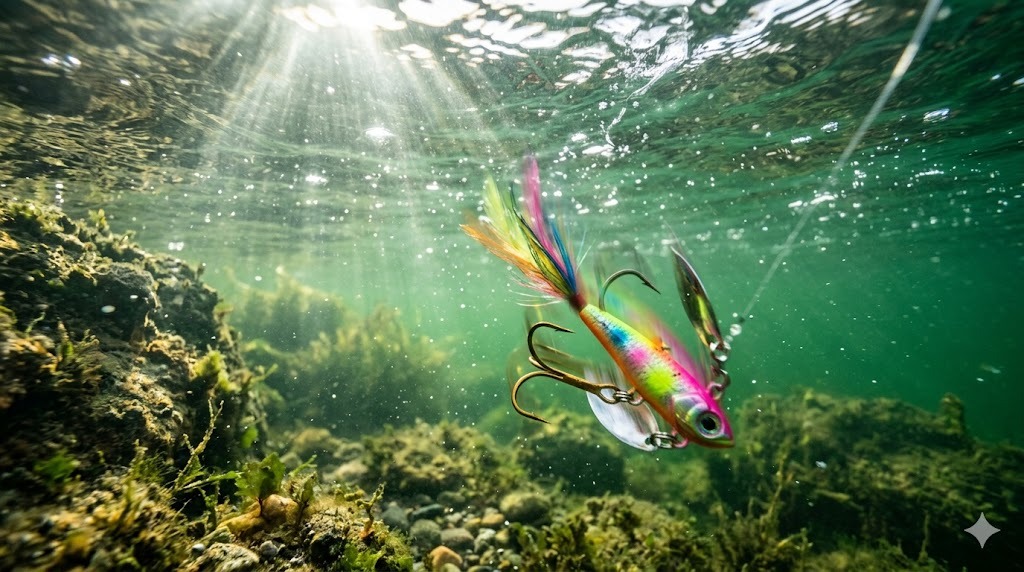
Lingcod are aggressive and will hit both lures and bait readily, which makes them a favorite for anglers who like to work a jig. Heavy metal jigs and leadhead jigs - bounced and worked vertically right in the structure - are top producers, and large soft-plastic swimbaits on heavy leadheads are deadly, imitating the rockfish and baitfish lings love to eat; white, blue, and other bright colors are popular. Big curl-tail grubs and bucktail-style jigs also take fish. The key with lures is to get them down to the bottom in the rocks and impart an enticing action while staying in contact with the structure.
For bait, live and dead fish are excellent. A live or fresh-dead rockfish, greenling, herring, mackerel, sardine, sanddab, or squid fished near the bottom will draw hard strikes, and big baits catch big lings - these fish are not shy about eating a large meal. Whole squid and strip baits work well too. Many anglers exploit the lingcod's habit of grabbing a hooked rockfish: when a ling rides a hooked rockfish to the surface, a ready net does the rest. Whether you prefer the active game of working a swimbait or jig, or soaking a big live bait near the rocks, lingcod will reward a presentation kept down in their structure.
Techniques - How to Fish for It
Lingcod fishing is heavy, vertical, structure fishing. Position the boat over a reef or pinnacle - drifting across the high-relief rock or holding on it with a spot-lock - and drop a jig, swimbait, or baited rig straight down to the bottom, keeping the line as vertical as you can and maintaining contact with the structure. Work a jig or swimbait by lifting and dropping it in the rocks, letting it flutter down where lings ambush prey, and stay sharp because the strike is a hard thump. When you feel the bite, set the hook firmly and immediately, then lift and crank with authority to pull the fish up and away from the rocks before it can dive back in and break you off - there is no playing a green lingcod near the structure, and the first few cranks must be aggressive. If you are reeling up a hooked rockfish and feel sudden dead weight, you may have a lingcod riding it to the surface; keep the pressure steady, do not rush, and have the net ready, because the ling is not hooked and can let go at any moment. Use enough lead to hold bottom in the current, lift the rig periodically to feel for structure and avoid hanging, and move to fresh rock if a spot goes quiet, since lings hold in specific pockets. Power and contact with the bottom are the whole game.
Common Mistakes
The classic mistake is fishing too light - an underpowered rod, light line, or too little lead cannot hold the bottom on high-relief rock in current or turn a hooked fish fast, and a green lingcod will simply dive into the rocks and break off before you react. Letting the fish run after the hookset, instead of immediately muscling it up and away from the structure, loses fish in the snags. Poor boat positioning is a major and underrated failure; being off the high spot or drifting past the structure dramatically cuts the bite, so sloppy boat control loses fish before the first drop. Rushing a lingcod that is riding up a hooked rockfish - lifting too fast or reaching too soon with the net - lets the unhooked fish release and vanish; patience and a ready net land those fish. Many anglers also bring too little terminal tackle and run out of jigs, hooks, and sinkers after the rocks claim their share. Finally, ignoring the regulations - fishing closed seasons, over depth limits, or keeping out-of-season or protected rockfish caught alongside lings - is both a legal problem and a conservation one, and not having a descending device on board when fishing deep rockfish water is a common and avoidable failure.
Size, Records & Eating Quality
A typical keeper lingcod runs about 24-36 inches and several pounds, with good fish in the 10-20 pound range and trophies reaching 30 pounds and beyond; the biggest lings, usually old females, can top 40 to 50 pounds and are exceptional. The IGFA all-tackle world record is a 82-pound, 9-ounce lingcod caught off Kodiak, Alaska, in 2025. On the table, lingcod are superb - lean, firm, mild, snow-white fillets that hold together well and are excellent grilled, baked, fried, in fish and chips, or as fish tacos, and the large size yields generous boneless portions. A well-known curiosity is that some lingcod have flesh that is a vivid blue or teal green when raw; this is a harmless natural pigment that cooks out completely, leaving the cooked fillet pure white, so blue meat is perfectly fine to eat. Because lingcod and the rockfish they share habitat with are vulnerable to overharvest on their concentrated structure, the fishery is tightly managed with size limits, bag limits, seasons, depth restrictions, and area closures that vary by state and change frequently, so always check current regulations before keeping fish. Where deep rockfish fishing is involved, descending devices to release barotrauma-affected fish are often required.
Pros & Cons (as a target species)
Pros: Aggressive, hard-hitting ambush predator that eats lures and bait readily and can reach impressive size; powerful short fight that tests heavy tackle; superb lean white-meat table fare excellent in fish and chips, tacos, and on the grill; the fun "double-header" habit of riding a hooked rockfish up; a cornerstone West Coast groundfish accessible by boat, kayak, and from some shore structure; engaging vertical jigging and swimbait fishing. Cons: Brutal on terminal tackle - constant snags and lost jigs, hooks, and sinkers; requires stout gear and heavy lead to fish high-relief rock and deep water; demands precise boat positioning over structure; tightly and variably regulated with seasons, depth limits, bag and size limits, and closures; deep fishing brings barotrauma and the need for descending devices; sharp teeth and big toothy jaws call for care when handling.
Best Suited For
Lingcod are best suited to anglers who enjoy heavy, hands-on structure fishing - working jigs and swimbaits over rocky reefs and pinnacles or soaking big baits near the bottom - and who want an aggressive, hard-fighting fish that also makes outstanding table fare. They are a favorite of West Coast groundfish and reef anglers from Alaska to California, and the demands of fishing high-relief rock - heavy gear, precise positioning, and fast, powerful hooksets - reward experience and good boat control. Beginners can absolutely catch lingcod, especially on a party or charter boat dropping jigs and baits on known reefs, and the aggressive, committed strike is forgiving compared with subtle-biting fish, so there is a strong sense of action. In short, the lingcod is a Pacific power fisherman's prize: a big-mouthed, hard-hitting, delicious reef ambusher for anglers who love working heavy gear over rocky structure and never knowing what size monster will eat.
FAQ
Is lingcod good to eat? Yes - lingcod are excellent eating, with lean, firm, mild, snow-white fillets that are great in fish and chips, tacos, grilled, or baked. Some fish have blue-green flesh when raw, which is harmless and cooks up white.
Why is some lingcod meat blue or green? Some lingcod naturally carry a harmless blue-green pigment in their flesh. It is perfectly safe to eat and the color cooks out completely, leaving a pure white cooked fillet.
What is the best bait or lure for lingcod? Heavy metal jigs and large soft-plastic swimbaits on heavy leadheads are top lures, and live or fresh-dead fish like rockfish, greenling, herring, mackerel, or squid make excellent bait. Big baits catch big lings.
Where do lingcod live? Tightly on high-relief hard bottom - rocky reefs, pinnacles, boulder fields, ledges, and offshore banks - from shallow nearshore kelp and jetties to deep offshore rock. They hold close to structure and do not roam.
What is a lingcod "double-header"? It is when a lingcod clamps onto a hooked rockfish you are reeling up and rides it to the surface in its teeth without being hooked. Keep steady pressure and have a net ready, because it can let go at any time.