Pinfish
The pinfish is the small, sharp-spined workhorse of inshore saltwater fishing - a fish most anglers know first as bait rather than a target.
🗓️ Last reviewed: July 2026
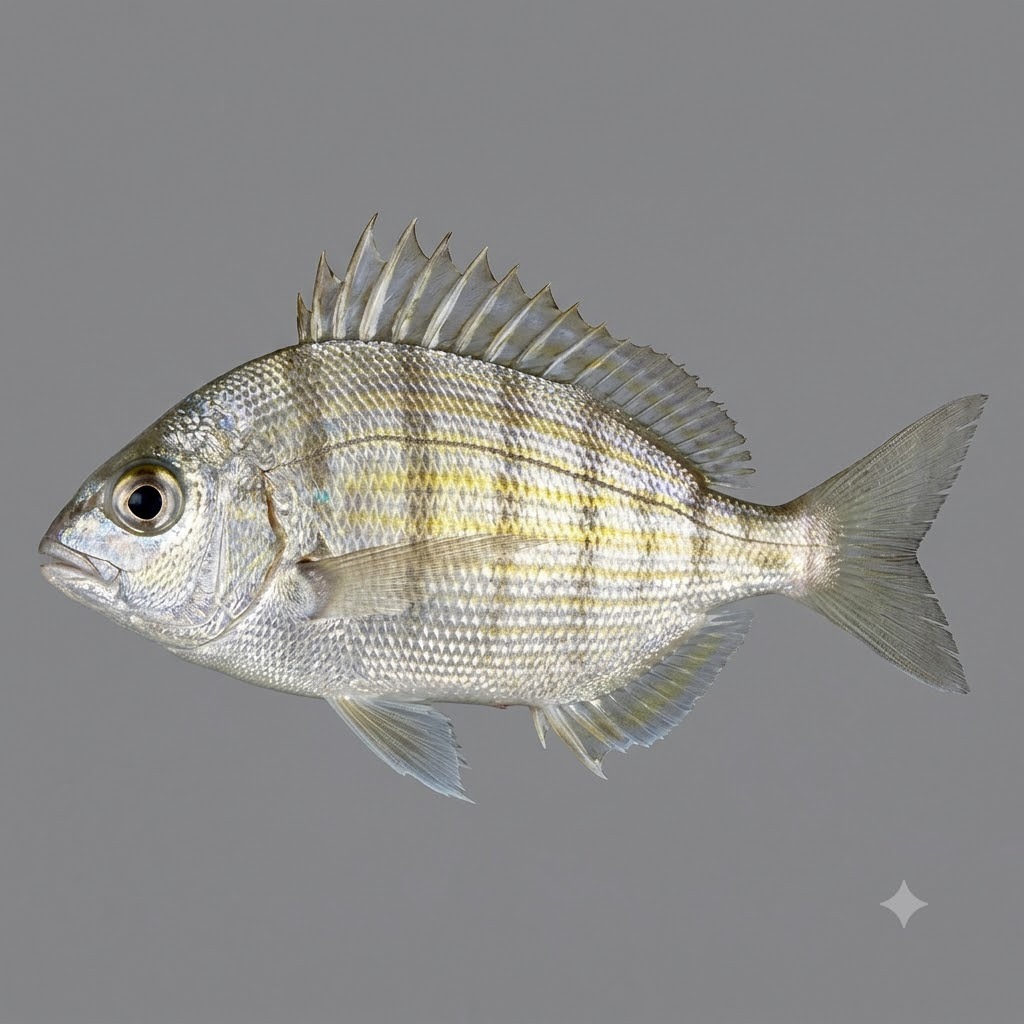
Overview
The pinfish is the small, sharp-spined workhorse of inshore saltwater fishing - a fish most anglers know first as bait rather than a target. Tough, abundant, and endlessly available around grass and structure, the pinfish earns its name from the stiff, needle-sharp spines in its dorsal fin that will jab an unwary hand. It is one of the most important live baits on the Gulf and South Atlantic coasts, prized for tempting big trout, redfish, snapper, and grouper. But there is more to it than bait duty: it is a scrappy, willing biter that provides nonstop action on the tiniest hooks, making it a fantastic fish for keeping kids busy, and its firm little fillets pan-fry into a fine snack. Humble as it is, the pinfish is woven into inshore fishing everywhere it lives.
Identification & Appearance
Pinfish are small, deep-bodied, oval "bream-shaped" fish, silvery with a greenish or bluish back and faint vertical bars along the sides. Their scales carry a golden sheen with fine yellow horizontal lines, and there is usually a dark spot near the shoulder behind the gill cover. The defining feature is the row of stiff, sharp spines at the front of the dorsal fin - handle carelessly and they will find your fingers. They have small mouths with sharp, notched incisor-like teeth used for nipping. Their compact, panfish-like shape and those spines make them easy to separate from the many other small silvery fish around the grass.
Range & Habitat (US waters - inshore / offshore)
Pinfish are found from the Mid-Atlantic south around Florida and throughout the Gulf of Mexico, and they are extremely common across their range wherever seagrass and structure occur in warm, shallow water.
This is an inshore fish through and through. Pinfish swarm seagrass beds, grass flats, dock and pier pilings, jetties, oyster bars, bridge fenders, and any hard structure holding cover and food. They are most abundant in shallow, protected waters and estuaries, though they move a bit deeper in cold weather. Because they concentrate right where anglers launch and wade, they are one of the easiest fish to find and catch. Wherever there is grass or structure in shallow salt or brackish water, there are usually pinfish, often in large numbers.
Behavior & Feeding
Pinfish are busy, aggressive little omnivores that pick constantly at food around grass and structure. They eat small crustaceans, worms, tiny mollusks, bits of vegetation, and just about any small morsel they can nip, using their sharp teeth to shred bait. They are famous for stealing bait off the hook, nibbling shrimp and cut baits to bare hooks in seconds. They gather in loose schools around cover and feed actively through the day. This boldness makes them dead-easy to catch on tiny baits - drop something small and edible near grass or a piling and pinfish find it almost immediately, competing to eat.
Best Seasons & Times to Catch
Pinfish are available nearly year-round in warm inshore waters, but the warmer months bring the biggest concentrations as they crowd the grass flats and structure. In summer they are almost impossible to avoid around bait spots, which is exactly why they are so easy to gather. Cooler weather thins and scatters them and can push them deeper. Time of day matters little for such an eager biter - daylight hours around grass and structure produce steadily. For anyone gathering live bait before a trip, an early stop over a grass bed or dock usually fills a bait well quickly. Check local rules on bait harvest and limits before you gather.
Where to Find Them - Reading the Water
Finding pinfish is about as easy as inshore fishing gets: look for seagrass and structure in shallow water. Grass flats, grass-bed edges, dock and pier pilings, bridge fenders, jetty rock, and oyster bars all hold pinfish, often in numbers. Around a dock or piling, drop a small bait straight down and watch for the immediate nibble. Over grass, a small bait under a float or on a light bottom rig draws fish fast. Chumming with crushed bait or fish scraps pulls pinfish in tight and turns a slow spot into a swarm. Because they are so widespread, once you find any grass or hard bottom in the shallows, you have almost certainly found pinfish.
Tackle & Rigs
Catching pinfish takes the lightest tackle you own. A light spinning rod or even a simple hand line, cane pole, or panfish setup works fine, since these are small fish caught close to structure. A small reel with light line - 6-15 lb - is plenty, and you rarely need a leader.
The key is a very small hook. Tiny long-shank or bait hooks in sizes like 4 to 8 suit their small mouths, baited with a sliver of shrimp or squid. A basic setup is a small split-shot a foot above the hook, or a small float over a baited hook at the grass or piling. Many anglers gather pinfish in numbers using a baited trap or a small cast net over chum, which fills a bait well far faster than rod and reel.
Best Baits & Lures
Pinfish will eat almost any small morsel. A tiny piece of fresh shrimp is the classic and most reliable bait - hard to beat and cheap. Small bits of squid, cut fish, or clam work well too and stay on the hook better than soft shrimp. Because pinfish are such voracious nibblers, a sliver of anything edible on a small hook draws instant bites.
Lures are largely beside the point for a fish this small, though a bait-tipped hook can catch them. For anglers whose goal is using pinfish as bait, gathering them with shrimp on tiny hooks, a baited trap, or a cast net over chum is the standard approach.
Techniques - How to Fish for It
Fishing for pinfish is simple, hands-on, and forgiving - perfect for beginners and kids. Bait a tiny hook with a sliver of shrimp, drop it near grass, a piling, or the bottom, and be ready for the immediate nibble. Because pinfish strip bait fast, come tight with a small, quick lift as soon as you feel the tap. A float lets you watch the bite and keeps the bait in the strike zone. To gather live bait, toss out chum to draw a school and catch them steadily on small hooks, or set a baited trap while you fish for other species. Handle pinfish carefully - grip them behind the sharp dorsal spines to avoid a jab, especially when rigging them as live bait.
Common Mistakes
The classic mistake is using a hook that is too big - pinfish have small mouths, and an oversized hook means endless stolen bait and few hookups. Downsize and your catch rate soars. Another is grabbing the fish carelessly and getting stabbed by the dorsal spines; always handle them behind the spines. Anglers targeting bigger fish get frustrated by pinfish stealing bait, when the fix is heartier baits or relocating away from heavy grass. When gathering live bait, forgetting to chum wastes time - a little chum turns a trickle into a swarm. And mishandling or crushing pinfish shortens how long they stay lively as bait.
Size, Records & Eating Quality
Pinfish are small by nature, typically a few inches to around 6-8 inches, with larger ones occasionally reaching a bit more. Their size is exactly what makes them ideal live bait and easy fun for kids, not a trophy pursuit. On the table they are edible and quite good when handled right - the firm fillets pan-fry nicely, and some anglers deep-fry them whole after scaling and trimming the spines, though the small size means a lot of fish for a meal. Most pinfish, though, end up on a hook as bait rather than a plate. Regulations are generally light, but bait-harvest and gear rules can apply, so check local rules before gathering large numbers.
Pros & Cons (as a target species)
Pros: Extremely easy to catch and abundant; perfect for kids and beginners; the premier inshore live bait for many gamefish; found right around docks, grass, and pilings; edible and tasty pan-fried. Cons: Very small with little fight; sharp spines can jab careless hands; notorious bait-stealers when you are after other species; not a trophy or sport target in their own right.
Best Suited For
Pinfish are best suited for anglers who need live bait and for kids and beginners who want nonstop, easy action. Serious inshore anglers gather them by the dozen to fish for trout, redfish, snapper, and grouper, while families use them to keep young anglers hooked with constant bites. They are the ultimate utility fish - not glamorous, but indispensable. Anyone learning to fish, or needing a bait well full of livies, will find the humble pinfish endlessly useful.
FAQ
Are pinfish good to eat? Yes, in a modest way - their firm little fillets pan-fry well and some anglers fry them whole after scaling and trimming the spines. Because they are small, though, most are used as bait rather than eaten.
Why do pinfish keep stealing my bait? They are aggressive nibblers with sharp teeth that shred shrimp and cut bait fast. Use tougher baits, smaller hooks, or move away from heavy grass if they pester your rig.
How do I catch pinfish for bait? Use tiny hooks baited with bits of shrimp near grass and pilings, chum to draw a school, or use a baited trap or cast net to gather them quickly.
Why are pinfish called pinfish? Because of the stiff, sharp spines - "pins" - at the front of the dorsal fin, which can jab your hand if you grab the fish carelessly.
Can kids catch pinfish? Absolutely - they are one of the best fish for kids: abundant, eager biters on tiny baits near docks and grass, and constant action. Just watch the spines when handling.