Pollock
Pollock are the cod's harder-fighting, faster-moving cousin - a member of the same family that trades some of the cod's bottom-hugging habits for speed and aggression higher in the water column.
🗓️ Last reviewed: July 2026
Overview
Pollock are the cod's harder-fighting, faster-moving cousin - a member of the same family that trades some of the cod's bottom-hugging habits for speed and aggression higher in the water column. Where a cod bulldogs, a pollock charges: they hit jigs and teasers with real force and pull hard on the way up, making them a favorite of anglers who fish the cold North Atlantic wrecks and rockpiles. They gather over structure, often stacking above wrecks and reefs to chase baitfish, and they respond beautifully to jigs, teasers, and soft plastics worked through the water column. Fresh pollock are also very good eating, with white, flaky fillets best enjoyed soon after the catch. For the angler who wants the northern groundfish experience with an extra dose of fight, pollock deliver.
Identification & Appearance
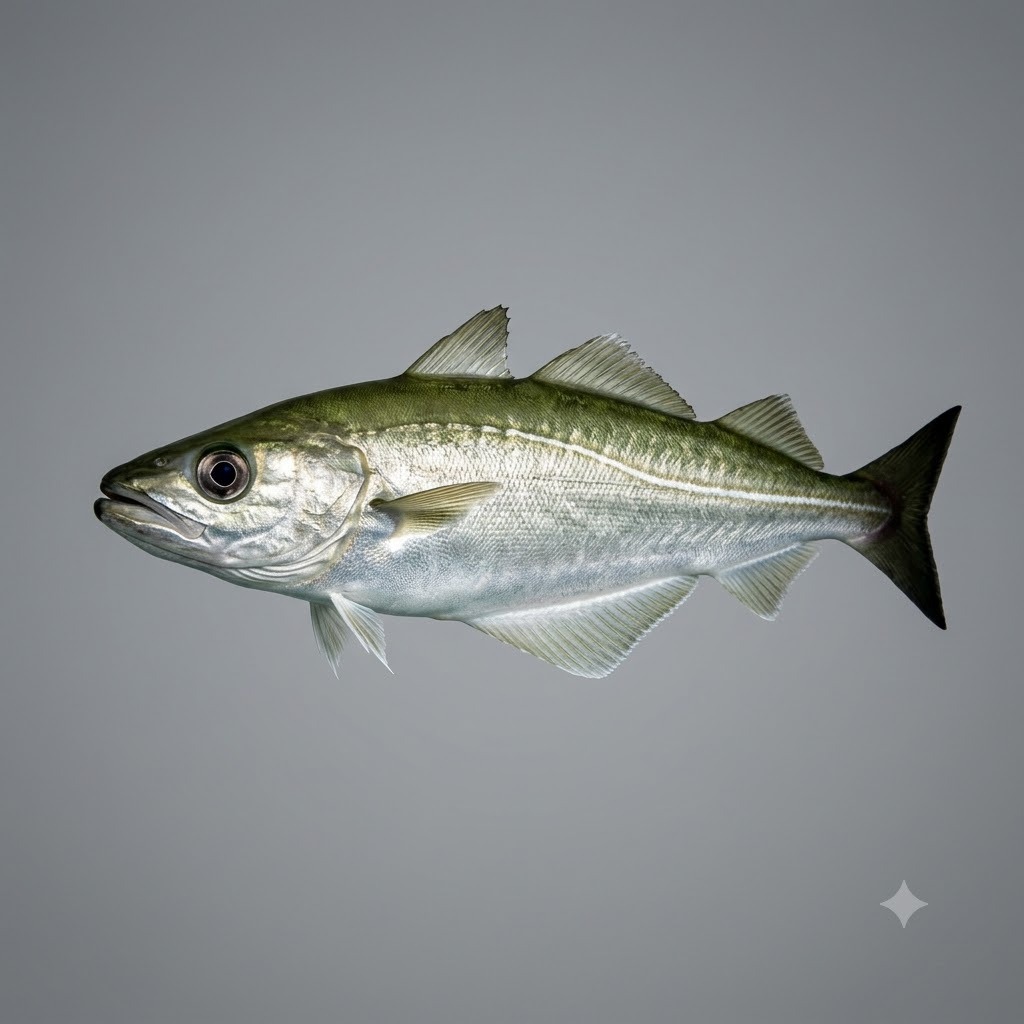
Pollock are a streamlined, elongated member of the cod family with the same three dorsal fins and two anal fins, but a leaner, more athletic build suited to their active lifestyle. Coloration is a giveaway: a greenish to brownish-olive back, bright silvery sides, and a pale belly, often with a distinct pale, nearly straight lateral line. Unlike the cod, pollock have little or no chin barbel - it is tiny or absent - and they lack the heavy dark speckling of cod, giving them a cleaner, more silvery look. The lower jaw usually projects slightly, a nod to their habit of feeding upward on baitfish. The forked or slightly notched tail and trim body reflect a fish built to move and chase rather than root along the bottom. A big pollock is a handsome, powerful-looking fish.
Range & Habitat (US waters - inshore / offshore)
In US waters, pollock inhabit the cold North Atlantic from the Gulf of Maine and Georges Bank south along New England, overlapping much of the cod's range, with the fishery centered off Massachusetts, New Hampshire, Maine, and Rhode Island. They favor cool water and structure.
Pollock relate to hard bottom and structure like cod, holding around wrecks, rocky reefs, ledges, and boulder fields - but they differ in that they often suspend higher in the water column above that structure to chase baitfish, rather than pinning to the bottom. Depths range from inshore rockpiles in cold months to offshore banks and deep wrecks. Because pollock roam and rise off the structure to feed, anglers frequently mark them stacked above a wreck or reef, and reading the whole water column, not just the bottom, is key to finding them.
Behavior & Feeding
Pollock are active, schooling predators that feed largely on baitfish - herring, sand eels, small fish - as well as shrimp, squid, and other invertebrates. Their key behavioral difference from cod is that pollock readily leave the bottom to chase bait higher in the column, sometimes well up off the structure. They hunt by sight and speed, ambushing and running down prey, which is why they respond so aggressively to moving jigs, teasers, and soft plastics. When a school of pollock is fired up over a wreck, the action can be fast and the strikes jarring. They tend to travel in schools, so locating one usually means locating many, and a lure worked through the column can trigger repeated hookups as the fish compete.
Best Seasons & Times to Catch
Like cod, pollock are a cold-water fishery, and the best angling generally comes in the colder months - late fall, winter, and spring - when pollock move onto inshore and mid-depth structure and are actively feeding in cool water. As water warms in summer, they tend to move deeper and offshore. Where regulations set seasons and limits, those rules can shape when and how many fish you keep, so check the current local rules. Beyond season, look for moving current over structure, which positions baitfish and switches pollock on. Calm-weather windows in the cold months, fished over the right wrecks and rockpiles, offer the best combination of comfortable access and aggressive, feeding fish.
Where to Find Them - Reading the Water
Find structure holding bait, and read the whole water column. Pollock relate to wrecks, rocky reefs, ledges, humps, and boulder fields, but unlike bottom-glued cod they often stack above the structure to chase baitfish. A quality sounder is essential - look not just for hard bottom but for clouds of bait and fish marks suspended above the wreck or reef. When you see fish holding well off the bottom, that is classic pollock behavior. Current-swept structure that concentrates bait is prime, and the up-current side and tops of wrecks are reliable. Because pollock roam and suspend, be ready to work your lure through the middle of the column, not just on the bottom, and adjust to the depth where the marks appear.
Tackle & Rigs
Pollock's harder fight and habit of suspending call for stout but responsive tackle. A medium-heavy conventional or spinning outfit of 6.5 to 7 feet with a quality reel handles them well, spooled with 30-50 lb braid for low stretch, thin diameter, and good feel in current and depth. A tough leader stands up to abrasive wreck and rock structure.
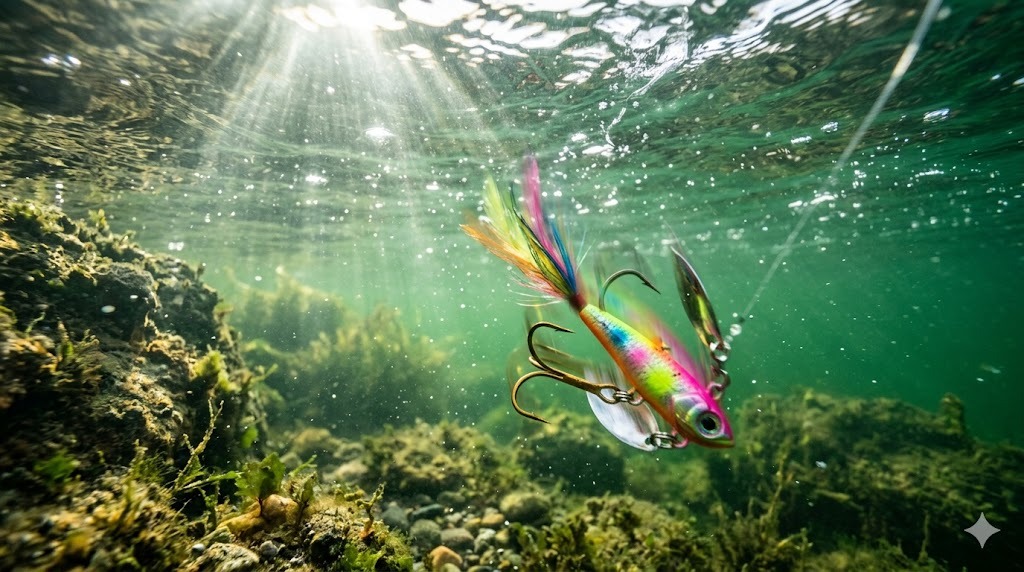
Jigging rigs shine for pollock. A heavy diamond or metal jig of several ounces, dropped to the structure and worked up through the column, is a top choice - and adding one or two teasers (a fly or soft-plastic on a dropper above the jig) is deadly, since pollock often crush the teaser as it rises. Soft plastics on heavy jigheads also excel. For bait, a bottom or high-low rig with cut fish or squid works, but the active jig-and-teaser approach best matches how pollock feed.
Best Baits & Lures
Because pollock chase baitfish, lures that imitate fleeing bait are the stars. Heavy diamond jigs and metal jigs are the mainstay, fluttering and darting like a baitfish as they rise and fall. Teasers - a fly or soft-plastic on a dropper above the jig - are especially effective, often out-fishing the jig itself as pollock rush the rising "bait." Soft plastics such as paddletails and jerk-style baits on heavy jigheads also draw hard strikes, and they let you work different depths in the column.
Natural baits still catch pollock: cut fish like herring and mackerel, squid, and other bait fished on a bottom or high-low rig will produce, especially near the structure. But given how aggressively pollock attack moving offerings, the jig-and-teaser and soft-plastic approach usually delivers both more fish and more excitement.
Techniques - How to Fish for It
The signature pollock technique is jigging through the water column. Drop a heavy jig, often with a teaser above it, down to the structure, then work it back up with a rhythmic lift-and-drop, covering the depths where you mark fish - remember pollock often hold well off the bottom, so do not fish only on the deck. Vary your retrieve speed and the height of your lifts until you find the level and cadence the fish want; a rising jig or teaser triggers slashing strikes. When a pollock hits, it hits hard, so hold on and keep steady pressure as it fights and runs. With bait, keep it near the structure and stay in contact, but be ready to lift into the column if fish are suspended. Once you locate a school, work it thoroughly, as pollock feed in numbers.
Common Mistakes
The most common mistake is fishing only on the bottom - unlike cod, pollock frequently suspend above the structure, so an angler pinned to the deck misses fish holding in the middle of the column. Another is working the jig too slowly; pollock chase, so a livelier lift-and-fall and a rising teaser often trigger far more strikes. Using tackle too light to control a hard-fighting pollock near snag-filled wrecks leads to lost fish. Anglers also overlook teasers, missing out on one of the most productive pollock presentations. And, as with any managed groundfish, ignoring current seasons and limits is a costly error - always check the local rules before keeping fish.
Size, Records & Eating Quality
Pollock grow to a good size and fight above their weight. Typical fish run several pounds, quality pollock reach the low double digits, and big specimens are larger still, giving anglers a strong, satisfying pull from deep structure. On the table, pollock are good eating, with white, flaky, mild fillets that are excellent when fresh - baked, fried, or in chowder. Their one quirk is that the flesh is best enjoyed soon after the catch, as freshness makes a real difference in quality. Because groundfish regulations vary by area and change over time, always check current size limits, bag limits, and open seasons before keeping any pollock.
Pros & Cons (as a target species)
Pros: Harder-fighting than cod, with fast, jarring strikes; feed aggressively through the water column on jigs, teasers, and soft plastics; school up over wrecks and structure for fast action; good, flaky white eating when fresh; a rewarding cold-water gamefish. Cons: A cold-water fishery, often meaning rough weather and offshore runs; usually requires a boat, party boat, or charter to reach the structure; flesh is best eaten fresh and does not hold as long; subject to groundfish regulations that vary and change.
Best Suited For
Pollock suit anglers who want the northern groundfish experience with more fight and more action than cod - those who enjoy active jigging, working teasers and soft plastics through the column, and feeling a hard strike from a fast, schooling predator. Party-boat and charter anglers fishing wrecks and rockpiles are the core of the fishery, since reaching the structure usually means a boat. Pollock reward anyone who likes to stay engaged, casting and jigging rather than sitting on a bottom bait, and who values fresh white fillets. For the angler chasing cold-water action with a bend in the rod, pollock are a top pick.
FAQ
Is pollock good to eat? Yes - pollock have white, flaky, mild fillets that are very good eating, especially when fresh. They are excellent baked, fried, or in chowder soon after the catch.
How is pollock different from cod? Pollock are leaner and more silvery with a greenish back, have little or no chin barbel, and often feed higher in the water column, fighting harder than the heavier, bottom-hugging, speckled, barbeled cod.
What's the best way to catch pollock? Jigging with a heavy diamond jig, often with a teaser above it, worked up through the water column is the top method, since pollock chase baitfish and often suspend above structure. Soft plastics also work well.
Do I need a boat to catch pollock? Usually yes. Pollock hold over offshore and mid-depth wrecks, reefs, and rockpiles best reached by boat, party boat, or charter, though cold-month fish sometimes come within reach of shore.
Why should I eat pollock fresh? Pollock fillets are at their best soon after the catch; freshness makes a real difference in flavor and texture, so plan to cook them promptly.