Red Grouper
The red grouper is one of the most prized bottom fish on the reefs and hardbottom of the Gulf of Mexico and South Atlantic.
🗓️ Last reviewed: July 2026
Overview
The red grouper is one of the most prized bottom fish on the reefs and hardbottom of the Gulf of Mexico and South Atlantic. It is a workhorse of the offshore fishery - abundant on the right structure, willing to eat a well-placed bait, and celebrated as some of the finest eating fish in the sea. A red grouper does not run far, but it fights with sudden, muscular determination, trying to bulldog back into the rocks the instant it feels the hook. Anglers love the red grouper for the whole package: the thrill of stopping a strong fish from reaching its hole, the reliability of a good bottom spot, and the reward of firm white fillets on the table. It anchors many a day of Gulf bottom fishing.
Identification & Appearance
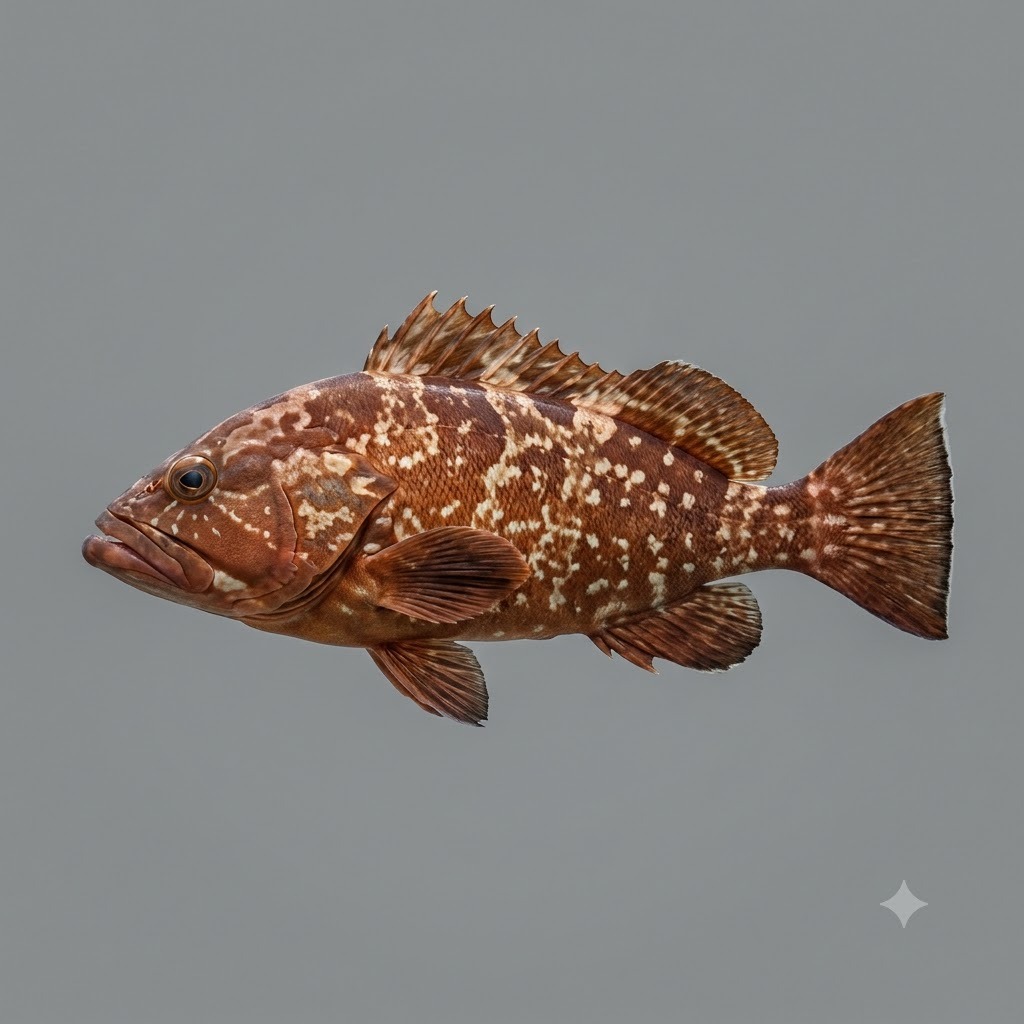
Red groupers are a warm reddish-brown to rusty orange over the back and sides, often with pale blotches and scattered small spots, fading to a lighter belly. The body is stout and typical grouper-shaped, with a large mouth and a distinctive squared-off, slightly notched tail. A reliable clue is the mostly straight, even margin of the spiny dorsal fin, and the lining of the mouth is often a scarlet or orange hue. They lack the more heavily blotched pattern of some cousins and the black-edged tail of the gag. Fresh from the bottom they can flush a deeper brick-red. Overall the red grouper looks like a classic reef grouper: robust, big-headed, and built to hug the structure it lives on.
Range & Habitat (US waters - inshore / offshore)
Red groupers are an offshore and nearshore reef fish of the Gulf of Mexico and the South Atlantic. In US waters they are especially abundant off Florida's Gulf coast, from the Panhandle through the Big Bend and down the peninsula, and they range along the Atlantic side up toward the Carolinas.
They live on hardbottom, rock ledges, limestone reefs, coral outcrops, and the low-relief structure that carpets much of the Gulf floor. Interestingly, red groupers engineer their own habitat, excavating pits and clearing spots in the bottom that concentrate life around them. Depths range widely, from relatively shallow nearshore ledges to deep offshore reefs. As a rule, wherever there is solid bottom with holes, ledges, and relief, red grouper are likely to be nearby.
Behavior & Feeding
Red groupers are bottom-oriented ambush predators. They hold tight to structure and dart out to grab crabs, shrimp, octopus, and smaller fish, then retreat to their hole. Like other groupers they hunt by inhaling prey in a sudden gulp, using the vacuum of that big mouth. They are strongly territorial and site-attached, often defending a favorite ledge or self-dug pit. When a bait drops into their zone, the take can be immediate and hard. The moment they feel resistance, their instinct is to power straight back down into the rocks - a short, violent, dogged fight rather than a long run. Reds feed most actively when current is moving across the structure and food is being swept past.
Best Seasons & Times to Catch
Red grouper can be caught much of the year on Gulf and Atlantic reefs, but access is often governed as much by regulation as by season - open harvest seasons vary and change, so anglers must plan around them. Fishing tends to be strongest when water temperatures are moderate and current is running well across the bottom structure. Moving tide and stable weather generally improve the bite, as current concentrates bait and keeps the fish active. Overcast days and lower light can help. In the heat of summer, fish may pull to slightly deeper, cooler structure. As a rule: fish moving current over good bottom, watch the weather window, and always confirm the season is open before targeting them.
Where to Find Them - Reading the Water
Red grouper live and die by bottom structure, so finding them means reading the sounder as much as the surface. Look for rock ledges, hardbottom, limestone reefs, drop-offs, and the low-relief spots and pits that reds favor. On the sounder, hard bottom returns, ledges, and marks holding tight to the structure are the target. A patch of solid bottom surrounded by sand can be a magnet. Current sweeping across a ledge positions the fish to feed. When you drop a bait and get an immediate hard thump followed by a dive, you have found them. Building a milk run of proven bottom spots is the classic way to stay on red grouper day after day.
Tackle & Rigs
Red grouper fishing calls for stout bottom gear, because you must lift a strong fish away from sharp structure quickly. A powerful, heavy-action bottom rod paired with a strong conventional reel and heavy braided line gives the backbone needed. A tough monofilament or fluorocarbon leader resists abrasion on rock.
The go-to rig is a bottom setup that gets bait down and holds it near the structure: a sturdy circle hook above a bank or egg sinker heavy enough to hold in the current, either as a knocker rig with the weight riding to the hook or a fish-finder style rig. Circle hooks are widely required and are the smart choice anyway, since they hook the corner of the jaw and aid clean release of undersized fish. Everything is built strong to survive the first violent dive.
Best Baits & Lures
Natural bait is the mainstay. Live baits such as pinfish, grunts, and other small reef fish are excellent, and fresh cut baits - squid, sardines, mullet, and cut fish strips - produce steadily because reds hunt partly by scent. Live shrimp and small crabs also draw strikes. A lively or fresh bait dropped right into the structure is hard to beat.
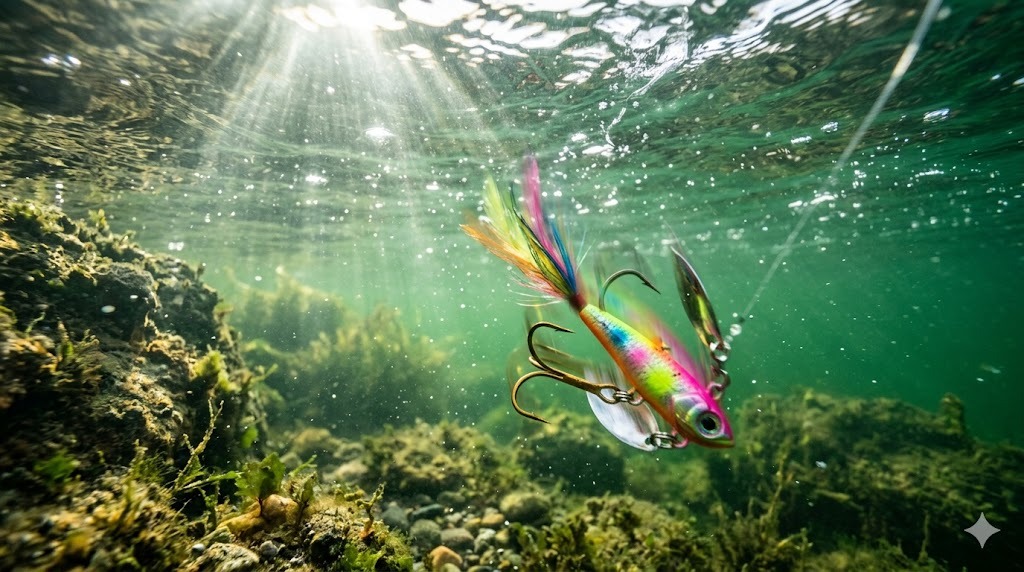
Among artificials, heavy bucktail and vertical jigs worked near the bottom can be very effective, especially tipped or fished aggressively over a good spot. Slow-pitch and vertical jigging has become a popular way to target reds without live bait. Whether bait or jig, the key is presenting it right on the bottom structure where the fish are holding, ready for an immediate hookup.
Techniques - How to Fish for It
The essential technique is precise bottom fishing over structure. Drop the bait straight down to the bottom, keep it near the structure, and stay in contact so you feel the take. When a red grouper eats, the strike is often a sharp knock followed by weight; with a circle hook, do not swing hard - simply come tight and lift steadily, using the rod and reel to turn the fish's head up and away from the rocks in those first critical seconds. If the fish reaches its hole it can lock in, so early, firm pressure is everything. For jigging, work the lure just off the bottom with sharp lifts, then be ready for the fish to slam it on the drop. Keep the fish coming once it clears the structure.
Common Mistakes
The biggest mistake is being too slow or too soft on the initial lift - hesitate, and the fish buries into the rocks and breaks off. Undersized tackle that cannot turn a strong fish leads to the same result. Fishing off the structure, in clean sand away from ledges and holes, simply produces fewer bites. Swinging hard to set a circle hook actually pulls the bait free; the rod should load instead. Anglers also lose fish by not staying in contact with the bottom, drifting the bait too high above the structure. And ignoring the regulations - season, size, and bag limits - is a costly error with a tightly managed species.
Size, Records & Eating Quality
Red groupers are a solid, meaty fish - many caught by anglers run in the low-to-middle double digits of pounds, with larger fish reaching well beyond that on prime offshore structure. They grow slowly and can live a long time, which is part of why they are carefully managed. On the table they are outstanding: firm, white, mild, and clean-flavored flesh that holds up beautifully to almost any preparation, and it is widely regarded as premium seafood. Because red grouper are subject to strict and changing regulations, always confirm current season dates, minimum size, and bag limits before keeping any fish. Harvesting responsibly within the rules keeps this excellent fishery healthy.
Pros & Cons (as a target species)
Pros: Excellent, premium-quality eating; a strong, dogged fighter that tests your gear; reliably found on good bottom structure; takes both natural bait and jigs; a rewarding, classic bottom-fishing target. Cons: Requires access to offshore or nearshore structure, usually by boat; strict and shifting seasons and limits restrict harvest; needs stout tackle to stop in the rocks; can bury and break off if you are slow; success depends heavily on finding productive bottom.
Best Suited For
Red grouper suit anglers who enjoy purposeful bottom fishing and value a fish that eats as well as it fights. They are a great target for boat anglers building a network of proven reef and hardbottom spots, and for anyone who wants to bring home premium fillets within the rules. Beginners can succeed with a guide over known structure, while experienced anglers refine their jigging and spot-hunting to consistently find quality fish. Above all, they suit those who fish the regulations closely and take pride in a clean, well-managed harvest.
FAQ
Is red grouper good to eat? Yes - it is among the best eating fish in the sea, with firm, white, mild flesh that is widely prized and versatile in the kitchen.
Can I keep red grouper year-round? Not necessarily - red grouper are subject to strict, changing seasons, size minimums, and bag limits. Always confirm the current regulations before keeping any fish.
What is the best way to catch red grouper? Precise bottom fishing over rock ledges and hardbottom with live or fresh cut bait on a circle hook, or vertical jigging worked right along the bottom structure.
Why do I keep losing them in the rocks? Red grouper dive straight for their hole when hooked. Use stout tackle, come tight fast, and lift steadily to turn the fish's head up in the first few seconds.
Do I need circle hooks? Circle hooks are widely required in these fisheries and are the smart choice regardless, since they hook the jaw corner and make releasing undersized fish far cleaner.