Tautog
The tautog - known up and down the Northeast coast as "tog" or "blackfish" - is the bulldog of the structure-fishing world, a thick-bodied, blunt-faced wrasse that lives in the rocks and fights with stubborn, unrelenting power straight back toward cover.
🗓️ Last reviewed: June 2026
Overview
The tautog - known up and down the Northeast coast as "tog" or "blackfish" - is the bulldog of the structure-fishing world, a thick-bodied, blunt-faced wrasse that lives in the rocks and fights with stubborn, unrelenting power straight back toward cover. Tog fishing is a deeply tactical, structure-intensive pursuit beloved by hardcore Northeast anglers, often practiced in cold weather when most other fisheries have shut down. They feed on crabs and shellfish with crushing teeth, hold tight to wrecks, jetties, mussel beds, and rock piles, and demand a fast hookset and immediate muscle to pry them away from the snag-filled bottom they call home. The reward is a brawny fight and some of the finest, sweetest white fillets in the cold Atlantic. For anglers who love a chess match against a tough, structure-hugging fish, the tautog is a cult favorite and a true cold-water prize.
Identification & Appearance
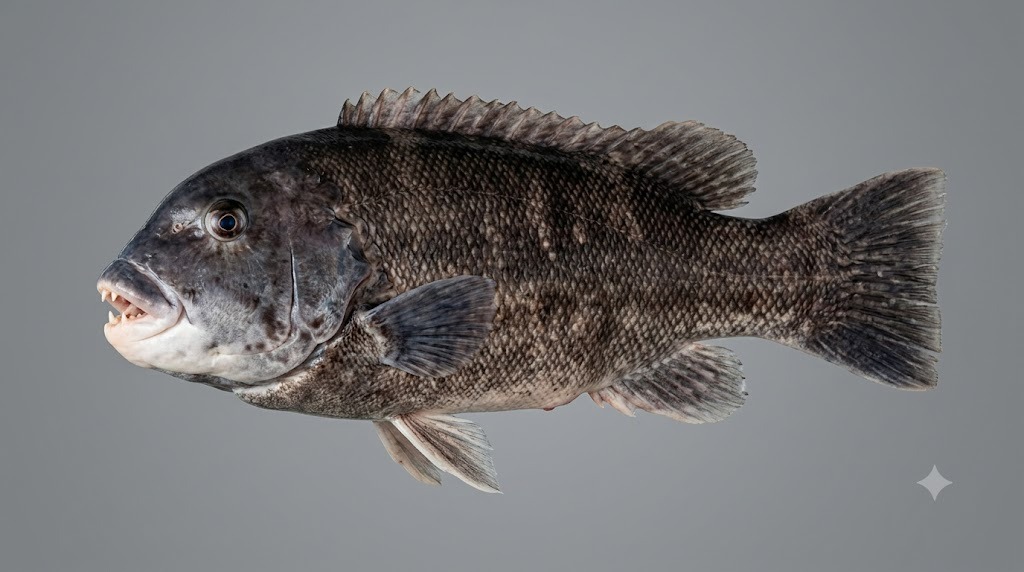
Tautog are stout, deep-bodied fish with a steep forehead, thick rubbery lips, and a powerful set of jaws built for crushing shellfish. They are members of the wrasse family, and their color ranges from dark olive, brown, and gray to nearly black, usually mottled with irregular darker blotches and bars that provide excellent camouflage among rocks and weed. Many fish, especially larger males, show a paler chin and a distinctive white patch or "blaze" on the flank, and old bull tog develop a notably blunt, rounded forehead and thick, whitish lips - earning them the nickname "white chin." The dorsal fin is long, with a stout spiny front portion. The skin has a tough, leathery feel and a slimy coating. Their crushing front canine teeth and flat grinding pharyngeal teeth in the throat are the tools that let them eat crabs, mussels, and barnacles. The overall impression is of a stocky, powerful, well-armored rock dweller.
Range & Habitat (US waters - inshore / offshore)
Tautog are a Northwest Atlantic species, ranging from roughly Nova Scotia and the Canadian Maritimes south to about South Carolina and Georgia, with the heart of the fishery from Cape Cod and southern New England down through New York, New Jersey, Delaware, Maryland, and into the Chesapeake region. They are an iconic fish of the rocky Northeast and Mid-Atlantic coast.
Tautog are utterly structure-dependent. They live on and around hard bottom of every kind - rock piles, boulder fields, mussel and oyster beds, jetties and breakwaters, bridge and pier pilings, shipwrecks, artificial reefs, and rubble. Inshore in spring and fall, they hold close to jetties, rocky shorelines, and shallow wrecks and reefs in relatively shallow water, accessible even to shore anglers. As water cools in late fall and winter, larger tog move to deeper offshore wrecks and rock piles, sometimes in well over a hundred feet, to overwinter. They are strongly homebodies that relate to a specific piece of structure, rarely straying far from cover.
Behavior & Feeding
Tautog are crab-and-shellfish specialists with crushing jaws and a deliberate, structure-bound lifestyle. They use their powerful canine teeth to pluck and grab crabs, mussels, barnacles, and other crustaceans off the rocks, then grind the shells with the flat teeth in their throat - they are essentially built to make a living on hard, shelly bottom that few other fish can exploit. They hold extremely tight to structure, often tucked into crevices and along the bases of rocks and wreckage, and they do not roam; a tog relates to its rock pile and ambushes food that comes within reach. Their bite is famously subtle and tricky - a series of light taps and pecks as the fish mouths and tests the bait - followed by a solid pull when it commits, and the instant it feels the hook it powers straight back into the structure to break off. They are most active in moderate, not frigid, water temperatures and feed by a combination of sight and the sensitivity of their lips and mouth. The whole game is timing the hookset and winning the immediate tug-of-war away from the rocks.
Best Seasons & Times to Catch
Tautog are a classic cool-weather fishery, and the two prime windows are spring and fall. In spring, as inshore water warms into a comfortable range, tog move onto the shallow jetties, rock piles, and reefs to feed, offering excellent shore and shallow-water action. The fall run is the marquee season for many anglers: from roughly October into December, tog feed heavily inshore before moving out, and cooling water concentrates them on accessible structure, with some of the biggest fish of the year taken in late fall. As winter deepens and inshore water turns frigid, the fishery shifts to deeper offshore wrecks where larger tog hold, and dedicated anglers brave the cold for trophy "bulldogs." Summer fishing is possible but generally slower and less targeted, as the prime bite favors moderate temperatures. Within a day, slack or slow-moving tide is often best because it lets you hold a bait precisely in the structure, and many tog anglers specifically fish the periods around slack water. Calm conditions that allow you to anchor and stay locked on a small piece of structure are key.
Where to Find Them - Reading the Water
Find the rocks, find the tog - and the more precise you are, the better. Productive spots are jetties and breakwaters, rocky shorelines and points, boulder fields, mussel and oyster beds, bridge and pier pilings, shipwrecks, artificial reefs, and any rubble or hard bottom. The very best tog spots are often small, isolated, snaggy pieces of structure that hold a concentration of fish, and precise boat positioning over them is everything. A good sounder and accurate anchoring (or spot-locking) directly over the structure separate successful tog anglers from the rest, because tog hold so tight that being even a short distance off the rock can mean no bites. From shore, fish tight to the base of jetty rocks and along the edges of structure. Look for hard, irregular bottom on the sounder, mussel-encrusted rock, and the transition edges where rock meets sand. As a rule, the snaggier and rockier the spot - the kind of place that eats tackle - the more likely it holds tautog.
Tackle & Rigs
Tog fishing demands a stout, sensitive setup because you must feel a subtle bite, set the hook instantly, and immediately wrench a powerful fish away from snag-filled bottom. A 6.5- to 7.5-foot medium-heavy to heavy fast-action conventional or spinning rod with a sensitive tip and a strong backbone is standard, matched to a sturdy conventional reel (or heavy spinner) loaded with 30-50 lb braid. Braid is essential for the sensitivity to detect the light pecks and for the no-stretch power to turn a fish fast. A short, abrasion-resistant leader of 30-50 lb completes the connection.
The classic terminal setup is a tog rig: a single dropper or a snafu (two-hook) rig with stout, short-shank hooks - often number 4 to 1/0 or specialized tog hooks - tied above a bank sinker heavy enough to hold bottom in the current (commonly 2-8 ounces). The sinker is fished on the bottom with the baited hook just above it, and many anglers favor a simple rig that lets them feel the rocks and minimize snags. Because tog fishing is brutal on terminal tackle, bring plenty of sinkers and hooks - you will lose them in the rocks. Strong, sharp hooks and a direct, no-nonsense rig are the priorities.
Best Baits & Lures
Tautog are overwhelmingly a bait fishery, and crabs are the undisputed top bait. Green crabs are the everyday standard up and down the coast, fished whole or halved depending on size; Asian (Japanese) shore crabs, fiddler crabs, and white-legger (hermit) crabs are all excellent and sometimes preferred for big fish; and pieces of blue crab work well too. Clams, particularly when other baits are scarce, and shrimp will also take tog. The key with crab baits is to hook them so they stay on through the pecking and present a natural, crab-shaped meal - many anglers remove the legs and thread the hook through the body so the point stays clear.
Lure fishing for tog is a smaller but growing niche: tog will hit specialized jigs - tog jigs and bucktail-style jigs tipped with crab - fished tight to the structure, which can be an effective and engaging way to target them and to feel the bottom more directly. The jig-and-crab method has gained popularity for its sensitivity and its ability to fish vertical structure. Still, for most anglers most of the time, a fresh crab on a stout bottom rig is the reliable producer.
Techniques - How to Fish for It
Tog fishing is precise, vertical, structure fishing. Anchor or spot-lock directly over a piece of rock, wreck, or other hard bottom, and drop a crab-baited rig straight down so the sinker rests on the bottom and the bait sits just above it, tight to the structure. Keep the line nearly vertical and maintain contact with the bottom, lifting occasionally to feel for the structure and to avoid snagging. The bite is the crux: tog peck and tap as they test and mouth the crab, and the art is to ignore the light taps, wait for the rod to load with a solid pull, and then set the hook hard and immediately - and the instant you are hooked, lift and crank with authority to pull the fish up and away from the rocks before it can dive back in and break you off. There is no playing a green tog near the structure; the first few cranks must be aggressive. If you are getting pecked clean without hooking up, downsize the bait or the hook and sharpen your timing. Move to fresh structure if a spot goes quiet, since tog hold in specific pockets. Patience reading the bite combined with explosive power on the hookset is the whole technique.
Common Mistakes
The classic mistake is setting the hook on the light pecks instead of waiting for the committed pull - tog test the bait with taps, and swinging early means a clean-stolen crab and no fish. The opposite error, waiting too long or fishing with a soft rod and stretchy line, lets a hooked tog dive into the rocks and break off before you can react. Poor boat positioning is a major and underrated failure; being even slightly off the structure dramatically cuts the bite, so sloppy anchoring loses fish before the first drop. Using too light a rig that cannot turn a fish fast, or too light a sinker that washes off the structure, both hurt. Many anglers also bring too little terminal tackle and run out of sinkers and hooks after the rocks claim their share. Finally, fishing fast-moving tide when you cannot hold bottom precisely, instead of the slower stages, makes the whole game harder than it needs to be.
Size, Records & Eating Quality
A typical keeper tautog runs 14-21 inches and a few pounds, with good fish in the 5-8 pound range and trophy "bulldogs" reaching the low double digits; fish over 10 pounds are prized and over 20 exceptional. The IGFA all-tackle world record is a 28-pound, 13-ounce tautog caught off Ocean City, New Jersey, in 2015. On the table, tautog are superb - dense, firm, sweet, snow-white fillets that many Northeast anglers rank among the very best eating fish in the cold Atlantic, excellent in chowder, fried, baked, steamed, or as sashimi when impeccably fresh, and the cheeks are a particular delicacy. The skin is tough and the fish are a bit of work to clean, but the quality of the meat rewards the effort. Because tog grow slowly and are vulnerable to overharvest on their concentrated structure, they are tightly managed with strict size limits, bag limits, and seasons that vary by state and change frequently, so always check current regulations before keeping fish.
Pros & Cons (as a target species)
Pros: Powerful, bulldogging fighter that tests tackle and skill; superb, sweet white-meat table fare among the best in the cold Atlantic; provides a prime cool-weather fishery when little else bites; accessible from jetties, piers, and shore as well as by boat; deeply tactical and rewarding for anglers who enjoy reading subtle bites and precise structure fishing. Cons: Brutal on terminal tackle - constant snags and lost sinkers and hooks; the subtle, tricky bite frustrates newcomers and demands practice; requires precise boat positioning and stout gear to pull fish from structure; tough skin makes them a chore to clean; strictly regulated with restrictive, frequently changing size and bag limits and seasons; largely a bait-only fishery.
Best Suited For
Tautog are best suited to patient, tactically minded anglers who relish a structure-fishing puzzle and a stubborn fight, and who do not mind cold weather and lost tackle in exchange for outstanding eating. They are a favorite of dedicated Northeast bottom fishermen and jetty anglers, and the precise demands - reading the bite, timing the set, and muscling fish from the rocks - reward experience and skill. Beginners can certainly catch tog, especially fishing crabs from a jetty in spring or fall, but the subtle bite means there is a real learning curve to mastering them. In short, the tautog is a connoisseur's cold-water fish: a tough, delicious, structure-loving bulldog for anglers who enjoy outsmarting a wary fish in its rocky home.
FAQ
Is tautog good to eat? Yes - tog (blackfish) are among the finest eating fish in the cold Atlantic, with dense, sweet, firm white fillets that are excellent fried, baked, in chowder, or as sashimi when very fresh.
Why do I keep getting my bait stolen by tog? Tautog peck and test the bait with light taps before committing. If you are getting cleaned out, you are likely setting too early - wait for the solid pull - or you should downsize the bait and hook.
What is the best bait for tautog? Crabs, especially green crabs, are the top bait, with fiddler, Asian shore, white-legger, and blue crab pieces also excellent. Clams and shrimp will work too.
Where do tautog live? Tightly on hard structure - rock piles, jetties, mussel beds, bridge pilings, wrecks, and reefs - inshore in spring and fall and on deeper offshore wrecks in winter. They hold close to cover and do not roam.
Why is tog fishing so hard on tackle? Because tog live in snag-filled rock and wreck structure and must be pulled away from it fast, you constantly hang and lose sinkers and hooks. Bring plenty of spares.