Thresher Shark
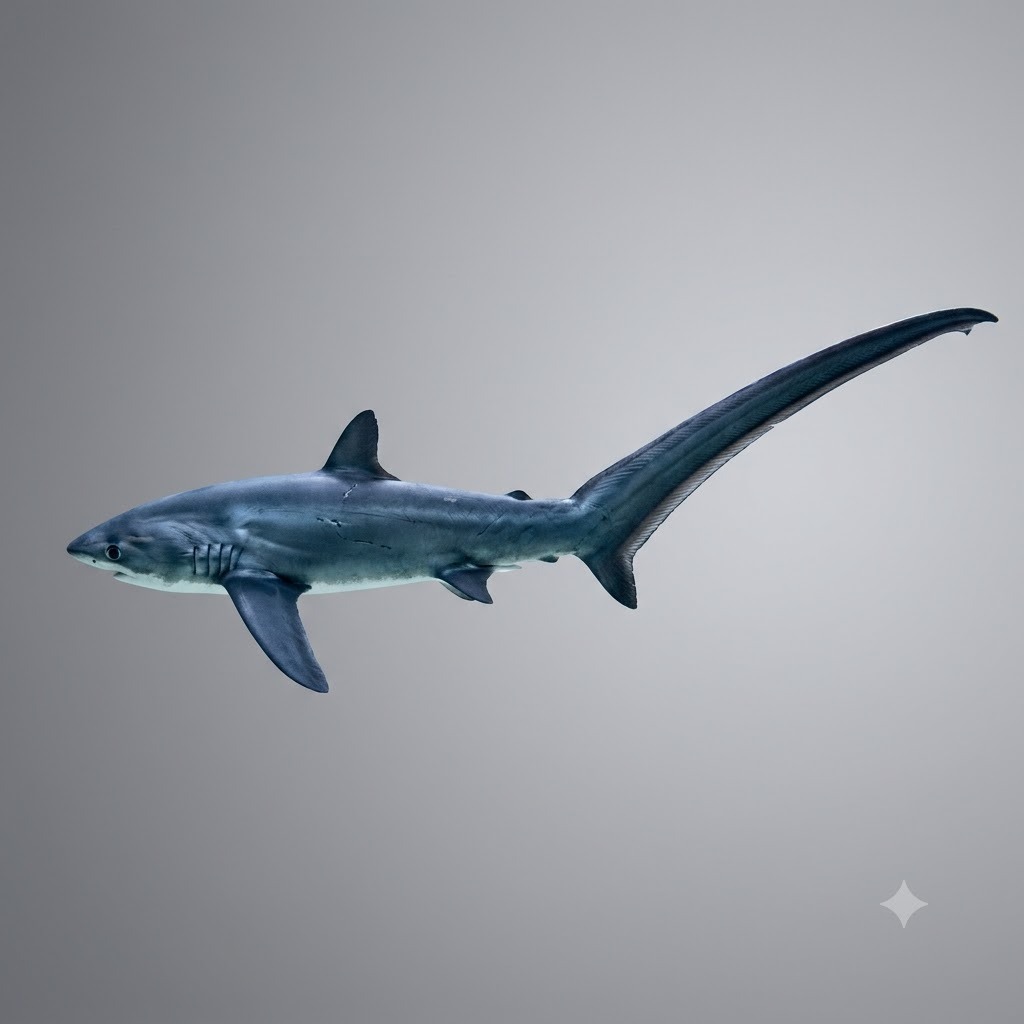
The thresher shark is instantly recognized by its enormous scythe-like tail, which it uses to stun prey, and it is a powerful, high-jumping offshore game fish.
🗓️ Last reviewed: July 2026
Overview
The thresher shark is instantly recognized by its enormous scythe-like tail, which it uses to stun prey, and it is a powerful, high-jumping offshore game fish. Strong and acrobatic, it is a prized catch on the West Coast and beyond, with careful handling essential.
Identification
Threshers have a stout body, small mouth, and an extraordinarily long upper tail lobe nearly as long as the body - the unmistakable feature. They are brown to blue-gray above and pale below.
Range & Habitat
They roam temperate and subtropical open oceans worldwide, ranging offshore and sometimes closer to the coast along both US coasts, especially the West.
Behavior & Diet
Threshers herd and stun schooling fish like sardines and mackerel with slashing strikes of the tail, then circle back to feed. Hooked fish run hard and leap.
Best Seasons
Targeted in the warm months when bait and water temperatures bring them within range, especially off Southern California.
How to Catch Them
Slow-trolling and drifting live or rigged baits offshore; because they strike with the tail, tail-hooked fish and long fights are common, so heavy tackle helps.
Tackle & Rigs
Heavy offshore conventional gear, 40-80 lb class, wire or heavy leaders and strong hooks for a big, tail-slapping shark.
Landing, Handling & Release
Handle with great care around the powerful tail, and release fish that are undersized or over the limit; keep sharks in the water for release.
Table Quality
Thresher is good eating - mild, firm meat - but stocks and mercury mean modest, well-regulated harvest at most.
Common Mistakes
Underestimating the dangerous tail at the boat and undergunning a strong fish.
Regulations & Conservation
Threshers are managed with size and bag limits, seasons and a federal HMS permit, and some populations are of concern. Always confirm the current regulations before keeping one. We do not give legal advice.
FAQ
Why the long tail? They use it to stun schooling prey.
Dangerous to land? The powerful tail is the main hazard - handle with care.