Vermilion Rockfish
The vermilion rockfish - called "red snapper" on California party boats even though it is not a true snapper at all - is one of the most striking and sought-after members of the West Coast rockfish family, a brilliant orange-red reef fish that lives deep on rocky pinnacles and reefs from Baja to British Columbia.
🗓️ Last reviewed: June 2026
Overview
The vermilion rockfish - called "red snapper" on California party boats even though it is not a true snapper at all - is one of the most striking and sought-after members of the West Coast rockfish family, a brilliant orange-red reef fish that lives deep on rocky pinnacles and reefs from Baja to British Columbia. Rockfishing for vermilion is classic Pacific bottom fishing: drop a baited rig or a heavy jig straight down to hard structure in anywhere from sixty to several hundred feet of water, feel the bottom, and hang on when a thick red fish loads the rod. They are a staple of the deepwater "rockcod" trip, often caught alongside coppers, chinas, gophers, and other rockfish, and prized above most of them for both their good size and their excellent firm white fillets. Because they are pulled up from depth, they almost always suffer barotrauma, which makes a descending device essential gear for releasing any fish you cannot or do not keep. For anglers who love straightforward, productive bottom fishing over Pacific reefs, the vermilion is a bright, brawny, and delicious centerpiece of the West Coast groundfish scene.
Identification & Appearance
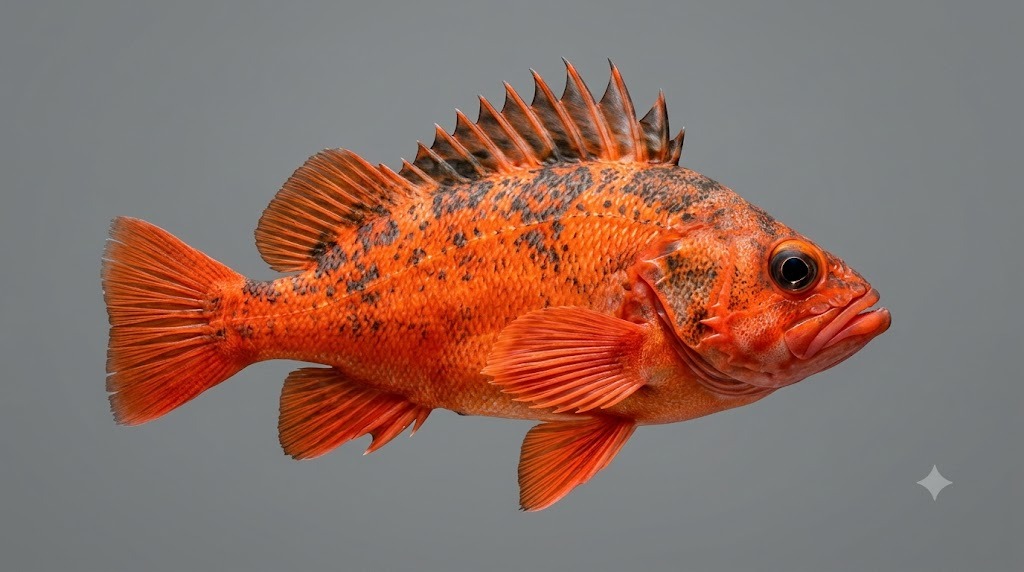
Vermilion rockfish are deep-bodied, robust rockfish with the spiny dorsal fin, large head, and big mouth typical of the genus Sebastes. As the name suggests, they are vividly colored - bright orange to deep red over most of the body, often with gray or black mottling on the back, and a paler red to whitish belly. The fins are red, and the edges of the fins frequently show a darker margin. Adults typically have black flecks or fine gray mottling scattered over the red, and the inside of the mouth is reddish. Key identifying features include rough, finely scaled jaws that feel raspy to the touch, dark to reddish fin tips, and strong spines on the gill cover and head - care is needed handling them because the dorsal and gill spines are sharp. They are sometimes confused with the similar canary rockfish and with younger yelloweye, but vermilion run a deeper, more uniform red with that raspy lower jaw and gray-mottled back. The overall impression is of a stout, heavy-shouldered, brilliantly red reef fish well armored with spines.
Range & Habitat (US waters - inshore / offshore)
Vermilion rockfish are an eastern Pacific species, ranging from Baja California north along the West Coast through California, Oregon, and Washington up to British Columbia and the Gulf of Alaska, with the heart of the recreational fishery off California, especially central and Southern California. They are one of the signature rockfish of the West Coast groundfish complex.
Vermilion are a hard-bottom, rocky-reef species and are strongly structure-oriented. They live on and around rocky reefs, ridges, pinnacles, boulder fields, high-relief rock, and the edges of deep banks. Younger, smaller fish tend to hold in shallower water, sometimes in as little as fifty to a hundred feet, while larger adults move progressively deeper, commonly inhabiting depths from roughly a hundred to several hundred feet, with big fish well below two hundred feet over offshore reefs and pinnacles. They relate closely to high-relief structure and the transitions where rock meets sand, often suspending just off the bottom near the rocks. Because they are tied to deep, rocky habitat, they are overwhelmingly a boat fishery reached by dropping over offshore reefs, and many of the best spots are submerged pinnacles and rock piles miles from shore.
Behavior & Feeding
Vermilion rockfish are opportunistic, ambush-oriented predators that hold near rocky structure and feed on whatever moves within reach. Their diet is broad - small fish such as anchovies, sardines, juvenile rockfish, and other baitfish, along with squid, octopus, shrimp, crabs, and other crustaceans. They use the cover and relief of the reef to ambush prey, typically holding just off the rocks and rising to take food drifting or swimming past. They are not long-distance roamers; like most rockfish they relate to a specific piece of structure and stay close to it. Their bite is usually a solid, committed thump rather than the subtle pecking of some bottom fish, and once hooked they pull hard with the heavy, head-shaking resistance typical of a stout reef fish, though they lack the blistering runs of pelagic species. A critical biological note for anglers: rockfish have a gas-filled swim bladder and no way to vent it quickly, so when brought up from depth they suffer barotrauma - the bladder over-expands, the eyes bulge, and the stomach may push out of the mouth. This means a fish you release at the surface will float and die unless it is sent back down with a descending device, which is why barotrauma management is central to ethical rockfishing.
Best Seasons & Times to Catch
Vermilion rockfish are available much of the year, but access is governed heavily by regulation, since the West Coast groundfish fishery is managed with seasons and depth restrictions that open and close rockfishing by area and time of year. Where the season is open, fishing is productive across the warmer months and into fall, with summer and early autumn being the classic, weather-friendly window for offshore rockcod trips out of California ports. Calm seas matter as much as the calendar - because the fishery is deep and often miles offshore, a flat ocean that lets you hold position and feel the bottom is far more important than any particular time of day. Within a day, the bite over a good reef can be steady from morning on, and slack or moderate current that lets your gear get straight down to the structure tends to fish better than ripping tide that sweeps the rig off the rocks. The single most important seasonal factor for vermilion is simply checking the current regulations: depth limits, area closures, and seasons change and dictate when and where you can legally target them.
Where to Find Them - Reading the Water
Find high-relief rock in the right depth and you find vermilion. Productive structure includes rocky reefs and ridges, submerged pinnacles, boulder fields, rock piles, and the steep edges and drop-offs of offshore banks where rock meets sand. A good sounder is essential: look for hard, irregular bottom returns and the marks of fish stacked on or just above the relief, and position the boat to drift or hold directly over the rock. Larger vermilion generally hold deeper than the smaller fish, so working progressively deeper structure - from around a hundred feet down to several hundred - tends to sort out bigger fish, within whatever depth the regulations allow. The transitions where a reef rises sharply off the sand, the tops and edges of pinnacles, and isolated high spots all concentrate fish. Because rockfish hold tight to specific structure, precise boat positioning over the marks matters; being off the rock means dropping into barren sand. As a rule, the steeper and rockier the relief on the sounder, the better the odds it holds vermilion and other rockfish.
Tackle & Rigs
Rockfishing for vermilion in deep water demands a stout, heavy setup that can carry weight to the bottom, handle multiple fish, and crank them up from depth. A 7- to 8-foot medium-heavy to heavy conventional rod with a strong backbone, matched to a sturdy conventional reel with a good drag, is standard, loaded with 50-80 lb braid. Braid is strongly preferred because its thin diameter cuts through current and lets a lighter weight reach the bottom, and its low stretch transmits the bite and helps move fish from the rocks. A heavy fluorocarbon or mono leader of 30-60 lb completes the connection.
The classic terminal setup is a multi-hook bottom rig: a shrimp fly or "rockcod" gangion - typically two or three dropper hooks or shrimp-fly flies tied above a heavy sinker - lets you fish several baits at different heights near the structure. Sinkers commonly run from 8 to 16 ounces or more depending on depth and current, heavy enough to get straight down and hold the bottom. Hooks in the 2/0 to 4/0 range are typical. Heavy metal jigs - diamond jigs and similar - in the same weight class are the other main rig, fished on the same stout outfit. Because deep rock eats tackle, carry plenty of sinkers, rigs, and jigs. And the one piece of gear no rockfish angler should be without is a descending device, rigged and ready to send released fish back to depth.
Best Baits & Lures
Vermilion rockfish are not picky and take both bait and lures readily. For bait, strips or whole small baitfish - anchovies, sardines, squid, and mackerel strips - on a shrimp-fly or bait rig are the everyday producers, and squid in particular is a tough, effective bait that stays on the hook through the drop and the bite. Many anglers fish pre-tied shrimp-fly gangions that combine a flashy fly with a baited hook, getting the best of both. Cut bait and strip baits fished near the bottom on the dropper rig account for huge numbers of vermilion.
On the lure side, heavy metal jigs are the classic artificial - diamond jigs and similar slabs dropped to the bottom and worked with a lift-and-drop near the structure draw hard strikes and let you cover the water column efficiently. Larger soft-plastic swimbaits on heavy leadheads have also become popular for targeting bigger rockfish, fished slowly near the rocks. Jigs and swimbaits appeal to anglers who like a more active, hands-on approach than soaking bait, and they can be deadly on quality fish. For most anglers most of the time, though, a baited shrimp-fly rig dropped onto good structure is the simple, reliable way to put vermilion on the deck.
Techniques - How to Fish for It
Vermilion fishing is vertical, structure-focused deep bottom fishing. Use the sounder to find high-relief rock holding fish, position the boat over it, and drop a baited shrimp-fly rig or a heavy jig straight down until the sinker hits bottom. Then lift the weight just off the bottom so the baits or jig hover near the structure, and stay in contact - lifting and lowering occasionally to feel the rocks and to keep from snagging. The bite is usually a firm thump or a sudden load on the rod; when you feel it, reel down and lift into the fish, then crank steadily to bring it up. With multi-hook rigs, it often pays to wait a moment after the first bite to load additional hooks before reeling, since vermilion and other rockfish frequently bite in numbers over good structure. Because the fish come from depth, reel at a steady pace and be ready at the surface. The most important part of the technique is what happens after the catch: any fish that is undersized, out of season, or that you choose to release must be sent back down immediately with a descending device, because a barotrauma-stricken rockfish left at the surface will die. Working the rock precisely, getting the rig straight to the bottom, and handling and releasing fish responsibly are the whole game.
Common Mistakes
The most serious mistake in rockfishing is releasing barotrauma-stricken fish at the surface without a descending device - a floating rockfish is a dead rockfish, and failing to send unwanted or out-of-season fish back down both wastes the resource and runs afoul of the conservation ethic the fishery depends on. Beyond that, using too light a sinker that will not reach or hold the bottom in current is a common failure, as is fishing too light an outfit that cannot crank fish up from depth or move them off the rocks. Poor boat positioning over the structure is a major and underrated error; drop onto sand instead of rock and you simply will not get bit. Many anglers also ignore the regulations - fishing the wrong depth or a closed area - which can mean fines and harms the carefully managed fishery. Bringing too little terminal tackle and running out of sinkers and rigs after the rocks claim their share is another frequent problem. Finally, jigging or dropping in conditions too rough or current too strong to hold position and feel the bottom makes the whole effort far harder than it needs to be.
Size, Records & Eating Quality
A typical keeper vermilion runs roughly 12 to 20 inches and a couple of pounds, with good fish in the 4-6 pound range and large adults reaching the high single digits and low double digits; fish over ten pounds are excellent and the species can grow larger still. They are a relatively slow-growing, long-lived rockfish that can live for decades, which is part of why the fishery is managed conservatively. On the table, vermilion rockfish are superb - firm, mild, white fillets that are among the best of the rockfish complex, excellent fried, baked, grilled, in tacos, or as the classic "rockcod" fish and chips, and the firm texture holds up well to almost any preparation. The fish are straightforward to fillet once you mind the sharp spines. Because rockfish grow slowly, live long, and are vulnerable to overharvest on their concentrated structure, they are tightly managed with size limits, bag and sub-bag limits, depth restrictions, and seasons that vary by state and area and change frequently, so always check current regulations before keeping fish - and carry and use a descending device for everything you release.
Pros & Cons (as a target species)
Pros: Brilliantly colored, good-sized, hard-pulling reef fish that is one of the prizes of West Coast rockfishing; outstanding firm white table fare among the best of the rockfish complex; straightforward, productive, beginner-friendly bottom fishing that reliably puts fish on the deck; often caught in numbers and alongside many other rockfish species; available much of the year where seasons are open. Cons: Almost always suffers barotrauma from depth, making a descending device mandatory gear and careful release essential; strictly regulated with size limits, depth restrictions, and frequently changing seasons and area closures; requires a boat and heavy deepwater gear, so it is largely inaccessible from shore; deep rock is brutal on terminal tackle; sharp dorsal and gill spines demand careful handling; the deepwater fight lacks the blistering runs of pelagic gamefish.
Best Suited For
Vermilion rockfish are well suited to anglers who enjoy productive, no-nonsense Pacific bottom fishing and want both a good fight and excellent eating, and they are an ideal target for newcomers to saltwater fishing because the technique - drop to the rocks and reel up - is simple and the action over good structure is often fast. They are a staple of California and West Coast party-boat and private-boat rockcod trips, rewarding anyone willing to find the right rock, get a heavy rig to the bottom, and handle their catch responsibly. The one real demand the species places on every angler is conservation discipline: because these fish come up with barotrauma, anyone targeting them needs a descending device and the willingness to use it. In short, the vermilion rockfish is a bright, brawny, delicious West Coast classic - an accessible and rewarding reef fish for any boat angler who fishes the rocks thoughtfully and releases the fish they cannot keep the right way.
FAQ
Is vermilion rockfish good to eat? Yes - vermilion are among the best eating of the West Coast rockfish, with firm, mild, white fillets that are excellent fried, grilled, baked, or in tacos and classic fish and chips.
Why is vermilion rockfish called "red snapper"? On California party boats, several red rockfish including the vermilion are sold and nicknamed "red snapper," but they are rockfish in the genus Sebastes, not true snappers - it is a market and slang name, not a scientific one.
Do I need a descending device for rockfish? Yes - rockfish brought up from depth suffer barotrauma and will float and die if released at the surface, so a descending device to send unwanted or out-of-season fish back down is essential gear and central to the fishery's conservation.
Where do vermilion rockfish live? On rocky reefs, pinnacles, ridges, and boulder fields along the West Coast, with smaller fish shallower and larger adults deeper, commonly from around a hundred feet down to several hundred feet over offshore rock.
What is the best bait for vermilion rockfish? Squid, anchovies, sardines, and mackerel strips on a shrimp-fly or rockcod bait rig are the everyday producers, with squid especially tough and effective; heavy metal jigs and swimbaits also work well.