Weakfish
The weakfish is a beautiful, hard-hitting inshore gamefish of the Atlantic coast, prized for its speckled good looks and aggressive strike.
🗓️ Last reviewed: July 2026
Overview
The weakfish is a beautiful, hard-hitting inshore gamefish of the Atlantic coast, prized for its speckled good looks and aggressive strike. Despite the name, the "weak" has nothing to do with its fight - it refers to the fish's soft, tender mouth, which tears easily and lets hooks pull free if you fight the fish too hard. A cousin of the seatrout, it is often called "gray trout" in the Mid-Atlantic and fills the same niche: an ambush predator that prowls sounds, bays, and surf for baitfish and shrimp. When the fish are around, dawn and dusk sessions can be spectacular. It is worth knowing that weakfish stocks have swung dramatically over the decades, from boom years to lean stretches, so abundance varies a lot by year and location.
Identification & Appearance
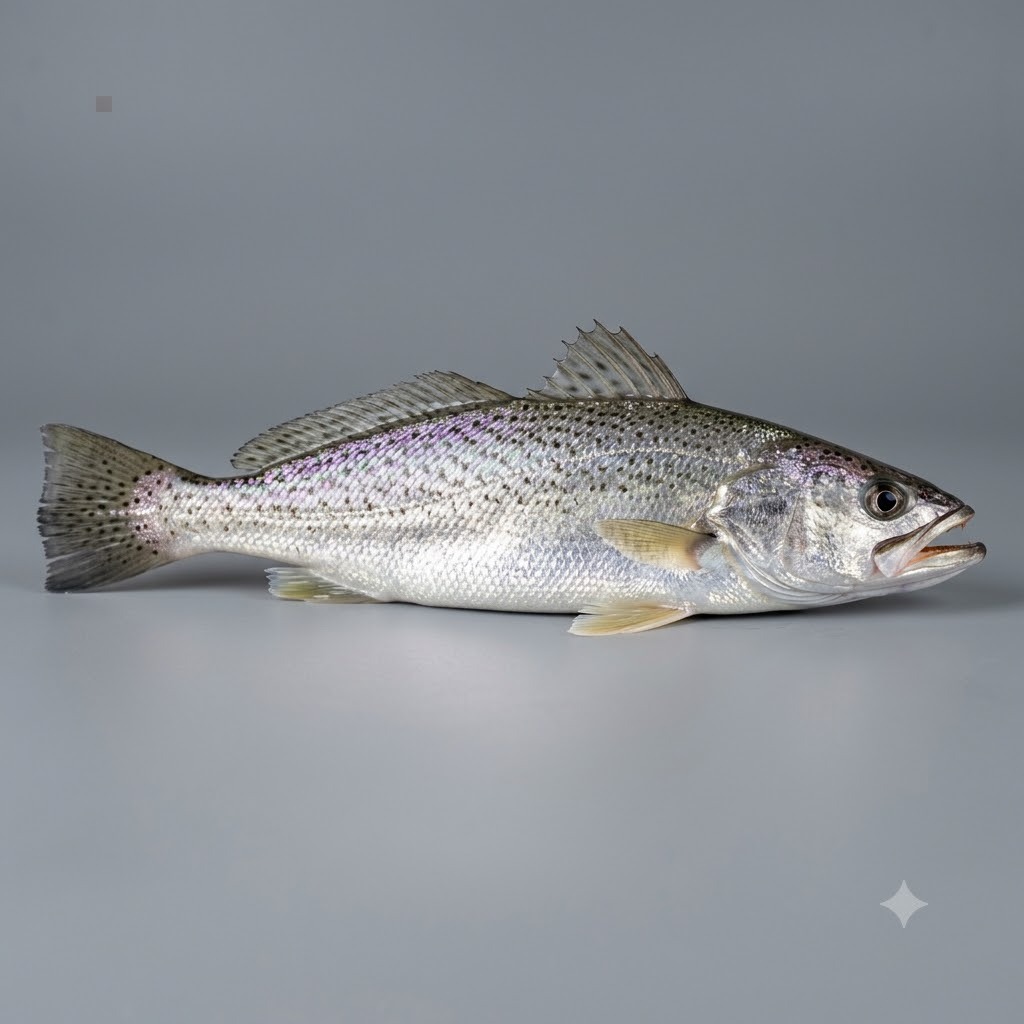
Weakfish are striking, olive to greenish or bluish on the back with iridescent purple, green, and copper reflections along the flanks, fading to a silvery-white belly. Scattered across the upper body are small dark spots that form loose wavy lines, giving a speckled, watercolor look. The body is slender and streamlined. The mouth is large with a pair of prominent canine teeth at the tip of the upper jaw, and the tissue around the mouth is notably soft and easily torn - hence the name. Weakfish resemble spotted seatrout, but their spots are smaller, more numerous, and do not extend onto the tail and dorsal fin the way a spotted seatrout's bold round spots do.
Range & Habitat (US waters - inshore / offshore)
Weakfish are an Atlantic coast species, ranging from the Northeast - southern New England and New York - south through the Mid-Atlantic strongholds of New Jersey, Delaware Bay, and the Chesapeake, down to the Carolinas. The Mid-Atlantic bays and sounds are the classic weakfish waters.
Inshore, weakfish use sounds, bays, tidal rivers, and estuaries, holding over sand and mud bottoms, along channel edges and drop-offs, around structure, and in the surf zone. They favor areas where current and structure concentrate bait, and larger fish often patrol deeper channels and inlets. They move seasonally, entering the bays in the warmer months to feed and spawn and moving off to deeper water as the season cools.
Behavior & Feeding
Weakfish are active, schooling predators that hunt baitfish, shrimp, small crabs, and worms. They often feed in low light and after dark, using dawn, dusk, and night to ambush bait, though they can be caught during the day, especially in stained water or under cloud cover. They hold near the bottom and along edges in bright daylight and move up to feed as light fades. Moving tide is a major trigger. When feeding schools are present, the action can be fast, with fish slamming baits aggressively before the school moves on.
Best Seasons & Times to Catch
Weakfish are a warm-season inshore fish, showing up in the bays and surf in spring and providing action through fall before moving off as water cools. Late spring and early summer often bring a strong run as fish enter the estuaries, and fall can offer excellent fishing as weakfish feed heavily before departing. The best times of day are the low-light windows - dawn, dusk, and after dark - ideally on a moving tide. Year-to-year abundance varies with the health of the stock, so some seasons are simply better than others.
Where to Find Them - Reading the Water
Focus on edges and current. Channel drop-offs, the edges of sandbars and flats, inlet mouths, points, and structure that breaks the tide all hold weakfish, because these features concentrate bait. In the bays, work the deeper edges during the day and the shallower flats as light fades. In the surf, fish the troughs and cuts between bars. Bridges, jetties, and channel markers are worth a cast, especially after dark when weakfish move in to feed under the lights and along the shadow lines. Look for signs of bait - nervous water, jumping shrimp, working birds - and fish the current seams where clean water meets a rip or a color change.
Tackle & Rigs
A medium-light to medium spinning outfit is ideal - a 7- to 7.5-foot rod with a 2500-4000 size reel spooled with 10-20 lb braid and a 15-25 lb fluorocarbon leader. The soft mouth is the whole story: set your drag on the lighter side and avoid a hard, jarring hookset, because too much pressure tears the hook right out of that tender tissue.
For lures, a jighead of 1/8 to 3/8 ounce dressed with a soft plastic is the everyday choice. For bait, a simple fish-finder rig or a high-low bottom rig with size 1 to 2/0 hooks works well. Circle hooks help by finding the corner of the jaw, which also reduces tearing. Keep terminal tackle light, as weakfish can be line-shy in clear water.
Best Baits & Lures
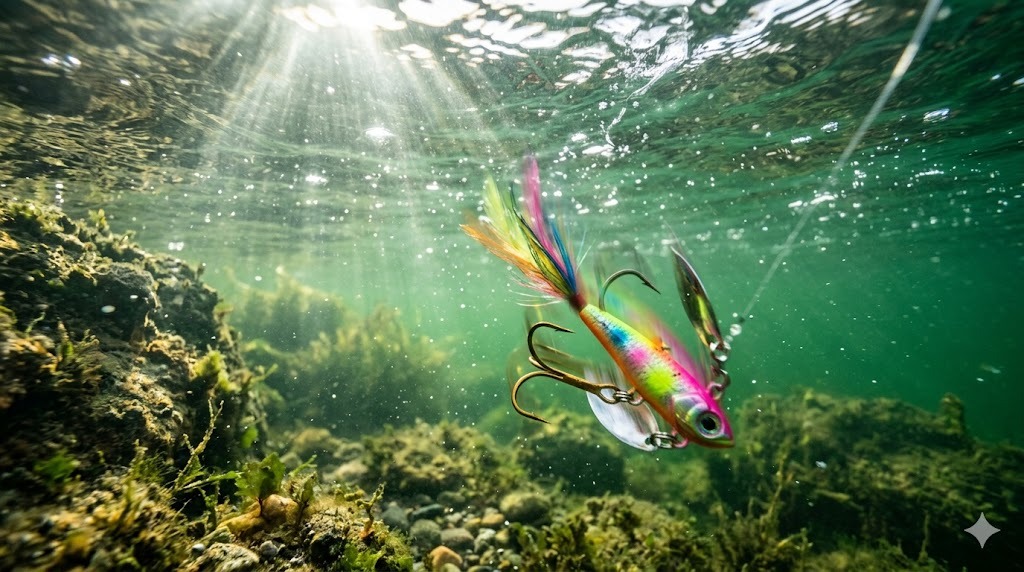
Weakfish respond to both bait and artificials. For natural bait, live or fresh shrimp is a top choice, along with squid strips, sandworms and bloodworms, and small live baitfish such as mullet or spot. For lures, soft plastic paddletails and shad-style baits on a jighead are the workhorse, worked with a slow lift-and-drop along the bottom. Small swimming plugs, bucktail jigs, and shrimp imitations also produce. Natural and light colors shine in clear water, while chartreuse, pink, and darker shades earn their keep in stained water or low light.
Techniques - How to Fish for It
Fish the low-light windows and the moving tide. A productive approach is casting a soft plastic on a jighead across a channel edge, letting it sink, and working it back with a slow lift-and-fall so it ticks along the bottom where weakfish hold. When bait fishing, position up-current of an edge and let the current present your shrimp or worm naturally. The critical technique is the hookset and the fight: when you feel the take, lift smoothly into the fish rather than swinging hard, then keep steady, moderate pressure with a lighter drag so the soft mouth does not tear. Let a bent rod and a smooth drag absorb the head-shakes, and be ready for the fish to pull free if you horse it.
Common Mistakes
The single biggest mistake is fighting a weakfish too aggressively - a hard hookset or heavy drag tears the soft mouth and pulls the hook, so lighten up. Fishing only in bright midday and skipping the dawn, dusk, and night bites is another missed opportunity, since low light is when weakfish feed best. Ignoring the tide leads to slow sessions; moving water is the trigger. Working lures too fast can also hurt, as a slow, deliberate retrieve near the bottom usually outproduces a frantic one. Finally, expecting consistent numbers every year overlooks the reality that weakfish abundance fluctuates.
Size, Records & Eating Quality
Weakfish commonly run from around a foot up to a couple feet long, with larger fish - sometimes called "tiderunners" - being noticeably heavier and thicker, a genuine prize when the big ones are around. Sizes vary with the health of the stock. On the table, weakfish are fine eating, with white, delicate, mild flesh that is best enjoyed very fresh because it is soft and does not keep as long as firmer species - ice it down promptly and cook it soon. Because weakfish stocks have fluctuated and regulations have changed over the years to protect them, always check current state size and bag limits before keeping fish, and consider releasing larger breeders.
Pros & Cons (as a target species)
Pros: Beautiful, hard-striking inshore gamefish; accessible from surf, bridges, jetties, and boats; eats both bait and lures; excellent low-light and night action; fine, mild table fare when fresh. Cons: Soft mouth means hooks pull easily and fish are lost if fought hard; abundance varies significantly year to year; can be line-shy in clear water; flesh is soft and must be handled and eaten fresh.
Best Suited For
Weakfish suit inshore anglers who enjoy light-tackle fishing during the atmospheric dawn, dusk, and night bites, and who appreciate a fish that rewards finesse over force. Because the soft mouth demands a gentle hand, they make a good species for practicing careful drag settings and smooth fighting technique. Shore-bound anglers do well from surf, bridges, and jetties, while boat anglers can work channel edges and drops. Anyone who savors a fresh, mild fillet and the thrill of a low-light bite will enjoy chasing weakfish when the run is on.
FAQ
Why is it called a weakfish? The name refers to the soft, tender mouth tissue, which tears easily, not to any weakness in its fight.
Is a weakfish the same as a seatrout? They are close cousins. Weakfish are often called gray trout, while the spotted seatrout is a separate species with larger, bolder spots that extend onto the tail and dorsal fin.
What is the best time to catch weakfish? Low light is key - dawn, dusk, and after dark, ideally on a moving tide.
Are weakfish good to eat? Yes, they have delicate, mild white flesh that is very good eating, but it is soft and best enjoyed very fresh, so ice your catch promptly.
How should I set the hook on a weakfish? Gently. Lift smoothly rather than swinging hard, keep a lighter drag, and maintain steady, moderate pressure so the soft mouth does not tear.